

Litecoin (LTC)
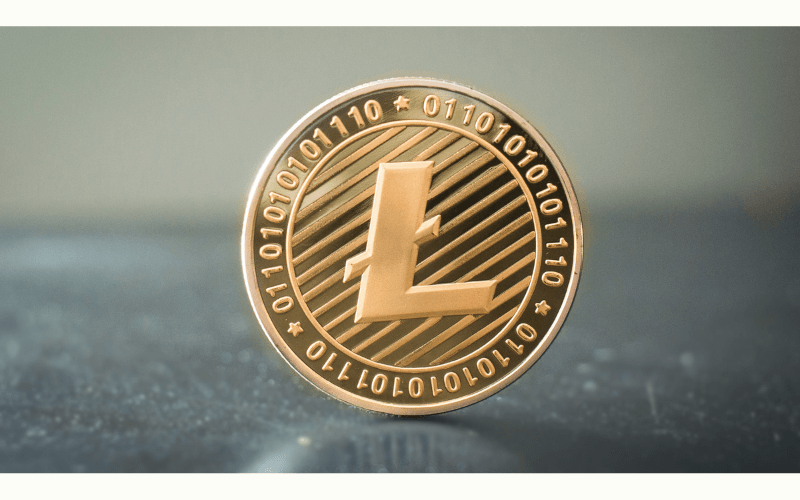
Litecoin (LTC) is a decentralized cryptocurrency created by Charlie Lee in 2011 and often called "digital silver." It uses the Scrypt algorithm, produces a block roughly every 2.5 minutes, and is capped at 84 million coins — combining fast settlement and very low fees for everyday payments. LTC completed its third halving in 2023 (block reward cut to 6.25 LTC), with the next due around 2027; in 2026 the first U.S. spot LTC ETF launched, lifting institutional attention further.
When Bitcoin fees spike and confirmations slow down, Litecoin (LTC) offers a lighter, faster alternative — quicker blocks and lower transfer costs have long made it the go-to "everyday payments" complement to Bitcoin.
This article walks through Litecoin's features, how it differs from Bitcoin and Ethereum, the factors that drive its price, and how to trade it through a CFD platform — so you can quickly grasp this classic crypto asset.
- Litecoin was created by Charlie Lee in 2011 as a payment-focused "digital silver"
- Core features: Scrypt, 2.5-minute blocks, an 84M cap, and very low fees
- How LTC differs from Bitcoin and Ethereum in speed, supply, and positioning
- What moves LTC's price: internal tech plus external markets, halving, and ETFs
- How to trade LTC CFDs on Titan FX with up to 100x leverage
1. What Is Litecoin (LTC)?
Litecoin (LTC) is a decentralized, peer-to-peer (P2P) cryptocurrency created in 2011 by former Google engineer Charlie Lee. Positioned as a "lighter" version of Bitcoin and as digital silver, it offers faster transactions and lower fees, giving it real-world value for everyday payments and small transfers.
Positioning Relative to Bitcoin
Litecoin is not meant to replace Bitcoin but to complement it. Bitcoin behaves more like a "store of value," while Litecoin focuses on efficient everyday payments, making it well suited to retail spending and small cross-border transfers.
Its Own Blockchain and Wallets
Litecoin runs on its own main chain (the Litecoin Blockchain) rather than on top of another network. The official Litecoin Core full-node wallet, along with many third-party and hardware wallets, lets users store and send LTC securely.
Real-World Use Cases
Thanks to fast transactions and low fees, LTC is widely used for moving funds between exchanges, merchant payments, and personal remittances — giving it an edge among payment-oriented cryptocurrencies.
Development and Technical Evolution
Litecoin's developers and community have continuously maintained and upgraded the network — for example, adopting SegWit early, supporting the Lightning Network, and introducing MWEB (extension blocks) in 2022. These updates improve efficiency, privacy, and usability.
2. Key Features of Litecoin
Feature 1: Faster Block Generation
Litecoin produces a block roughly every 2.5 minutes, four times faster than Bitcoin's 10 minutes. Shorter confirmation times suit everyday spending and high-frequency payments, improving liquidity for merchants and users alike.
Feature 2: Larger Total Supply
LTC's total supply is 84 million coins, four times Bitcoin's 21 million, with around 75 million currently in circulation. A larger supply spreads distribution more widely, boosting liquidity and reducing the price influence of any single large holder.
Feature 3: Scrypt Algorithm
Litecoin uses Scrypt rather than Bitcoin's SHA-256. Being more memory-bound, Scrypt lowers the barrier to mining and limits ASIC dominance over hash power, helping keep mining more decentralized.
Feature 4: Low Transaction Costs
LTC's fees are extremely low — typically under $0.01, even when the network is busy. This makes Litecoin an ideal tool for cross-border remittances and small payments, with almost no concern about high gas fees.
Feature 5: A Lasting Community and Active Development
Since its 2011 launch, LTC has maintained an active community and a stable development team. It adopted SegWit early and is compatible with the Lightning Network, improving scalability. The MWEB upgrade introduced in 2022 adds optional privacy, further strengthening usability and security.
3. Litecoin vs. Bitcoin and Ethereum
The table below summarizes the core differences between LTC, BTC, and ETH:
| Comparison | Litecoin (LTC) | Bitcoin (BTC) | Ethereum (ETH) |
|---|---|---|---|
| Block generation speed | ~2.5 minutes | ~10 minutes | ~12–15 seconds |
| Total supply | 84 million | 21 million | No cap |
| Algorithm | Scrypt (PoW) | SHA-256 (PoW) | PoS |
| Market positioning | Digital silver, payments | Digital gold, store of value | World computer, smart contracts |
| Transaction fees | Low | Medium–high | High (gas fees vary) |
Difference 1: Transaction Speed and Use Cases
LTC generates blocks four times faster than Bitcoin, making it better for "small and frequent" payments. Ethereum is faster still, but high gas fees mean it is rarely used for everyday transfers in practice.
Difference 2: Supply and Scarcity
Bitcoin's cap of just 21 million makes it "digital gold." Litecoin's 84 million gives it lower scarcity but favors wide circulation. Ethereum has no supply cap — a different, dynamic-issuance design.
Difference 3: Market Roles
Bitcoin is used as a store of value for long-term investing, while Ethereum powers smart contracts behind DeFi and NFTs. Litecoin is closer to an "everyday payment currency" and a complement to Bitcoin.
Difference 4: Degree of Decentralization
Bitcoin's hash power tends to concentrate in a few large mining pools. Litecoin's Scrypt algorithm lets more small and mid-sized miners participate, helping preserve a relatively high level of decentralization.
4. Factors Behind Litecoin Price Movements
Litecoin's price is shaped by both internal technology and ecosystem factors and external market and macroeconomic forces. The table below gives a quick overview:
| Type | Main factor | Notes |
|---|---|---|
| Internal | Technical development | Upgrades and new features (e.g., MWEB privacy) affect demand |
| Ecosystem growth | More merchant adoption expands real payment use | |
| Volume & liquidity | Deeper liquidity makes prices more stable | |
| External | Bitcoin's trend | BTC's rises and falls tend to pull LTC along |
| Market sentiment | News and social media amplify short-term swings | |
| Regulation | Supportive policy lifts demand; strict rules suppress it | |
| Macroeconomics | Inflation, rates, and the dollar drive capital flows | |
| Halving & ETFs | Slower issuance and institutional adoption shape medium-term demand |
Internal Factors
Internal Factor 1: Technical Development
Upgrades such as MWEB privacy and Lightning support improve the user experience and investor confidence. Major updates often act as short-term price catalysts.
Internal Factor 2: Ecosystem Growth
As more merchants, payment platforms, and wallets support Litecoin, real-world usage rises, which can lift demand for LTC.
Internal Factor 3: Volume and Liquidity
Higher volume and deeper liquidity make the market more stable and reduce the impact of large orders; thin liquidity makes prices more volatile.
External Factors
External Factor 1: Bitcoin's Trend
As the market leader, Bitcoin strongly influences the overall market. LTC is highly correlated with BTC and tends to rise alongside it during major rallies.
External Factor 2: Market Sentiment
Media coverage, influencer posts, and community hype can drive sharp rallies or sell-offs in a short time — and LTC is no exception.
External Factor 3: Regulation
Government policy shifts directly affect investor confidence. Clear support for crypto payments can raise LTC demand, while strict restrictions can trigger sell-offs.
External Factor 4: Macroeconomics
Inflation, rising rates, and moves in the dollar index affect whether capital flows into crypto. In uncertain times, some investors treat LTC as a hedge.
External Factor 5: Halving and Institutional Adoption (ETFs)
Litecoin completed its third halving in 2023, cutting the block reward to 6.25 LTC, with the next due around 2027 — a slowing of new supply that supports medium-term scarcity. In 2026, the first U.S. spot LTC ETF launched, drawing attention as a catalyst for institutional participation and liquidity.
5. How to Trade Litecoin (LTC) CFDs
1. Choose a Trading Platform
Titan FX offers cryptocurrency CFD trading with up to 100x leverage. It supports trading on MT4 and MT5 platforms, enabling efficient and flexible market participation.
Litecoin (LTC) Trading Options on Titan FX
On Titan FX, investors can trade the following pairs:
LTC/USD (Litecoin/US Dollar)
LTC/JPY (Litecoin/Japanese Yen)
Titan FX Cryptocurrency Trading Hours:
| Trading Day | Time |
|---|---|
| Monday | 00:01 - 23:59 |
| Tuesday | 00:01 - 23:59 |
| Wednesday | 00:01 - 23:59 |
| Thursday | 00:01 - 23:59 |
| Friday | 00:01 - 23:55 |
| Saturday | 00:01 - 23:55 |
| Sunday | 00:01 - 11:00, 13:00 - 23:55 |
Note that trading hours may change due to maintenance or upgrades. Pay attention to margin balances, stop-loss (S/L) and take-profit (T/P) levels.
What is Titan FX? Features, Leverage, Instruments, and Platforms2. Open a Trading Account:
Titan FX offers a fast and simple account opening process with no requirement for ID or address verification.
Titan FX provides Standard and Blade account types. Traders can choose their preferred type during registration.
Titan FX Account Opening Guide3. Deposit Funds:
After registration, deposit funds into your account. Titan FX supports multiple deposit methods, with credit card deposits being the fastest and most convenient, usually processed instantly.
Titan FX Credit Card Deposit Guide4. Download and Install Trading Platforms (MT4/MT5):
Titan FX offers MT4 and MT5 platforms for Windows, Mac, iOS (iPhone/iPad), and Android.
Titan FX MT5 Installation and Login
Titan FX MT4 Installation and Login
5. Place Trades:
Log into the MT4 or MT5 platform, select your trading instrument, and start buying or selling.
MT5 Interface and Order Methods
MT4 Interface and Order Methods
Titan FX Provides Free Trading Tools (Custom Indicators and EAs)
Titan FX is dedicated to providing traders with advanced trading support, including free trading tools such as custom indicators and EAs (Expert Advisors). These tools are designed to enhance traders' efficiency and strategy precision.
Custom indicators help traders analyze market trends more accurately and identify potential trading opportunities.
Meanwhile, EAs can automatically execute pre-set trading strategies, avoiding emotional interference and ensuring that each trade is executed accurately.
With these free tools, Titan FX helps you gain an edge in the competitive financial market and improve your trading performance.
All Custom Indicators EA Trading Program RankingsTrade Litecoin (LTC) CFDs with Titan FX
Titan FX offers Litecoin (LTC) CFDs with up to 100:1 leverage — go long or short with no wallet or private-key management.
6. Frequently Asked Questions (FAQ)
Q1: How is Litecoin related to Bitcoin?
Litecoin is a fork of Bitcoin, designed to be a faster and cheaper payment-focused cryptocurrency. Bitcoin is framed as a "store of value," while Litecoin is closer to an "everyday means of payment" — the two are complementary.
Q2: What can LTC be used for?
LTC can be used for payments, cross-border transfers, and investment trading, and some merchants accept it directly. Because transfers are fast and cheap, it is also widely used to move funds between exchanges.
Q3: Does Litecoin's price follow Bitcoin?
Yes. LTC is highly correlated with Bitcoin, and BTC's moves tend to pull Litecoin in the same direction — though the magnitude can differ, so watch LTC-specific factors too.
Q4: How do I buy Litecoin (LTC)?
You can swap fiat or other crypto for LTC on major exchanges (such as Binance or Coinbase) and store it in an exchange wallet or a self-custody wallet (Litecoin Core, Trust Wallet). If you prefer not to hold the spot asset, you can also gain exposure to its price via CFDs on platforms like Titan FX.
Q5: How often does Litecoin halve, and what is the current block reward?
Litecoin halves roughly every 840,000 blocks (about four years). It has completed three halvings — in 2015, 2019, and 2023 — and the current block reward is 6.25 LTC, set to fall to 3.125 LTC at the next halving around 2027.
Q6: Is there a spot Litecoin ETF?
Yes. In 2026 the first U.S. spot Litecoin ETF launched (such as the Canary Litecoin ETF on Nasdaq). Regulators had already treated LTC as a commodity, and the ETF is seen as a key milestone for institutional adoption and liquidity.
7. Conclusion
Litecoin (LTC), as one of the earliest cryptocurrencies, still holds an important place in the market. Through faster block generation, low fees, and wide circulation, it has demonstrated its role as "digital silver."
Unlike Bitcoin and Ethereum, Litecoin does not focus on storing value or smart contracts but on everyday payments and fast transfers, giving it an edge in cross-border and small-value transactions.
LTC's price is influenced by technical development, ecosystem growth, Bitcoin's trend, macroeconomics, and factors such as halving and ETFs. Investors who want exposure can trade it through CFD platforms like Titan FX — always paired with sound risk management.
Overall, Litecoin is both an important witness to blockchain history and a leading example of a payment-oriented cryptocurrency, remaining an asset worth watching in the global crypto market.
Further Reading
- Cryptocurrency Basics for Beginners
- What Is Bitcoin (BTC)?
- What Is Ethereum (ETH)?
- What Is Blockchain?
Titan FX's financial-market research team. We cover a broad set of instruments — foreign exchange, commodities (crude oil, precious metals, agricultural products), equity indices, US equities, and digital assets — producing educational content for investors.
Primary Sources (by Category)
- Official & technical docs: Litecoin official site, Litecoin Foundation
- Market data: CoinMarketCap — Litecoin, CoinGecko — Litecoin
- Halving & ETF: Litecoin Halving, Canary Litecoin ETF (SEC EDGAR)