

US Stocks
This column offers an in-depth look at the U.S. stock market structure, investment strategies, and analysis techniques, covering stock selection, financial reports, and methods of technical and fundamental analysis. It aims to equip investors with key ele

Baidu (BIDU) Stock Explained: AI at Half of Revenue, Apollo Go, and the Hong Kong 9888 Dual Primary Listing
Baidu (NASDAQ: BIDU) is a Chinese search and AI company listed on both Nasdaq and Hong Kong, trading in the US as American depositary shares (ADS) that each represent eight Class A ordinary shares. This guide breaks down the second-quarter 2026 revenue mix (AI-powered business up 25% and half of General Business for a second quarter, traditional online marketing down 19%), the 1:8 relationship between the ADS and the Hong Kong-listed 9888 shares, the dual primary listing and Stock Connect inclusion that took effect in September 2026, the four forces moving the share price including June's addition to the US Department of Defense Chinese military companies list, the three numbers to watch in results, the first dividend policy adopted in 2026, and how to trade BIDU with its costs and risks.

JD.com (JD) Stock Explained: First-Party E-commerce and Logistics, Profit Recovery after the Food Delivery War, ADS and 9618
JD.com (NASDAQ: JD) is a Chinese first-party e-commerce and logistics company listed on both Nasdaq and Hong Kong, trading in the US as American depositary shares (ADS) that each represent two Class A ordinary shares. This guide breaks down the three segments in the second quarter of 2026 (a record JD Retail margin for a promotional season, JD Logistics up 24% including the reporting effect of the on-demand delivery transfer, and the New Businesses loss narrowing from RMB 14.8 billion to RMB 9.9 billion), the 1:2 relationship between the ADS and the Hong Kong-listed 9618 shares, the four forces moving the share price, the four numbers to watch in results including inventory turnover days, and how to trade JD with its costs and risks.

What Are Chinese ADRs? ADR, VIE, Hong Kong Listings and Delisting Risk Explained
Chinese concept stocks, usually called Chinese ADRs, are shares of companies whose business is in China but which are listed overseas; most US-listed names trade as American depositary shares (ADS) backed by an offshore holding company, with part of the business controlled through VIE contracts. This guide covers the definition and scale of Chinese ADRs, the ADS ratios and Hong Kong listing status of leading names such as Alibaba, Baidu and JD.com, the ADR and VIE structures, the difference between secondary and dual primary listings, regulatory and delisting risk on both the US and Chinese sides, and four ways to trade them: ADRs, Hong Kong shares, ETFs and CFDs.

Alibaba (BABA) Stock Explained: Segments, ADR and 9988, AI Spending and Risk
Alibaba Group (NYSE: BABA) is a Chinese e-commerce and cloud computing company listed in both New York and Hong Kong, where its US listing takes the form of American Depositary Shares and each ADS represents eight ordinary shares. This guide covers the four reporting segments after the June 2026 reorganization (e-commerce still the revenue base at 4% growth, AI Cloud and Compute growing 45% with adjusted EBITA up 133%, and AI Labs still lossmaking), the one-to-eight relationship with Hong Kong's 9988 and what the dual primary listing changed, the four forces that move the stock including the HK$80 billion August 2026 placement and the dilution it brings, the three numbers to track each quarter and the accounting trap in customer management revenue, and how CFDs differ from owning shares along with gap risk and VIE exposure.
What Are Dividend Aristocrats? Criteria, the List, ETFs, and Risks
Dividend Aristocrats are S&P 500 companies that have raised the dividend per share for at least 25 consecutive years, and also a formal index run by S&P Dow Jones Indices — about 69 members in 2026. This guide covers the four eligibility thresholds, the equal-weight and annual-review mechanics, the sector mix and best-known members, how Aristocrats differ from Dividend Kings and Achievers, and what to check before investing through stocks or ETFs.
What Are Blue-Chip Stocks? US Blue Chips, Traits, Risks, and How to Invest
A blue-chip stock is a large, financially sound company that leads its industry and has a long operating record. This guide covers the origin of the name, the five things to check, the Dow 30 as the usual US proxy and its sectors, how the label relates to growth, value, and small-cap stocks, and the real risks — from growth ceilings to disruption and the loss of blue-chip status.
What Is Earnings Season? US Reporting Calendar and Trading Guide
Earnings season is when US-listed companies report quarterly results in concentrated waves. Learn the four-round calendar and release conventions, how the earnings release differs from the 10-Q and 10-K, reading EPS, guidance, and GAAP versus adjusted figures, and managing gap risk.

What Is a Pre-Listing / Emerging Stock Board? Features, Risks, and vs. a Full Listing

What Is a Listed Company? Why Firms List, Market Tiers, and What to Watch
What Is Gross Margin? Formula, What Drives It, and How to Use It for US Stocks
What Is the Debt Ratio? What Level Is Healthy, the Formula, and How to Screen Stocks
What Are Stock Dividends? US-Stock Payout Logic, Ex-Rights Math, and Pros & Cons
What Are Cash Dividends? Payout Process, Yield, and How to Use Them for US Stocks
What Is Operating Margin? Formula, Benchmarks, and How to Use It for US Stocks
What Is Net Profit Margin? Formula, Meaning in Financials, and How to Use It
What Is Market Cap Ranking? Calculation, US-Stock Rankings, and How to Use It
What Is Dividend Yield? Formula, Payout Ratio, and How to Use It for US Stocks
What Is TSMC ADR? Mechanism, Price Drivers, and Recent Trends
A guide to TSMC ADR (NYSE: TSM): its definition and mechanism, the key factors that move its price, recent price trends and market changes, FAQs, and how to trade US-stock CFDs at Titan FX.

What Is US Pre-Market Trading? Times, Rules, and Strategy
A guide to US pre-market trading (Pre-Market): the definition, hours and market structure, the ECN/ATS mechanism, traits and risks, when to use it, and how to trade US-stock CFDs at Titan FX.

What Is US After-Hours Trading? Times, Rules, and Strategy
A guide to US after-hours trading (After-Hours): the definition, the four trading sessions, the ECN mechanism, advantages and risks, when it is appropriate, and how to trade US-stock CFDs at Titan FX.

How to Invest in Tesla (TSLA)? Positioning, Price Cycles, and CFD Trading
A guide to Tesla (TSLA): company positioning, its share-price cycle, the core factors driving the stock, growth engines beyond EVs, investment risks, and how to invest via stocks, ETFs, and US-stock CFDs.

What Is US-Stock Sub-brokerage? Pros, Cons, and How It Differs from CFDs
What sub-brokerage is, its pros and cons, and how it differs from overseas brokers and CFDs, plus Titan FX's US-stock CFD option as an alternative way to access US stocks.
NVIDIA (NVDA) Stock Analysis: The AI-Era Tech Giant and the Compute Revolution
A guide to NVIDIA (NVDA): company overview, share-price history, the factors driving the stock, its CUDA and AI growth engines, investment risks, and how to invest via stocks, ETFs, and US-stock CFDs.

Netflix (NFLX) Investing Guide: Price History, Risks, and Growth
A guide to Netflix (NFLX): its subscription business model, share-price history, the core factors driving the stock, competitive advantages and growth drivers, and how to invest via stocks, ETFs, and US-stock CFDs.
Microsoft (MSFT) Investing Guide: Overview, Drivers, and Trading
A guide to Microsoft (MSFT): company overview, share-price history, the factors driving valuation, AI and cloud growth engines, and how to invest via stocks, ETFs, and US-stock CFDs.
Is META a Good Stock? Meta's Business, Drivers, and How to Invest
A beginner's guide to Meta (META, formerly Facebook): company overview, share-price history, the factors that drive the stock, its growth engines, and how to invest via stocks, ETFs, and US-stock CFDs.

What Is the Magnificent 7? Members, Influence, and How to Invest
A beginner's guide to the Magnificent 7 (Apple, Microsoft, Alphabet, Amazon, Nvidia, Meta, Tesla): what it means, why it became the market's core, the risks, and how to invest via stocks, ETFs, and US-stock CFDs.

What Is GAFAM? Member Companies, Business Traits, and How It Differs From FAANG and the Magnificent 7
GAFAM groups Google, Apple, Meta, Amazon, and Microsoft. Learn what the label means, the role each company plays, how it differs from FAANG and the Magnificent 7, and how to invest.

What Is FAANG? A Beginner's Guide to the Big Tech Stocks and How to Use the Concept
FAANG groups Facebook (Meta), Apple, Amazon, Netflix, and Google. It is a concept, not a tradable index. Learn the members, their shared traits, and how to gain exposure.
Apple (AAPL) Stock Analysis: Fundamentals, Growth Engines, Risks, and How to Trade US-Stock CFDs
A clear guide to Apple (AAPL): its devices-plus-services model, five growth engines, valuation logic, main risks, and how to trade AAPL as a US-stock CFD.
Amazon (AMZN) Stock Investing Guide: Business Model, Growth Engines, and CFD Trading
A structured guide to Amazon (AMZN) stock covering its business model, AWS and advertising profit engines, growth drivers, key risks, and how to trade AMZN US-stock CFDs at Titan FX.
How to Read Financial Statements: Income, Balance & Cash Flow
Financial statements are the foundation of US-equity investing. This guide breaks down the three core statements (income, balance, cash flow), their linkages, the recommended reading order, and the practical checkpoints investors use to read a company's health.
Income Statement Explained: From Revenue to Net Income
The income statement (P/L) is one of the three core financial statements, recording revenue, costs, and final profit over a period. This guide walks through the nine structural components, three margins, quality of earnings, and three-statement linkage.
What Is a Cash Flow Statement? Three Components & Free Cash Flow Explained
The cash flow statement, one of the three core financial statements, records a company's real cash inflows and outflows across operating, investing, and financing activities. This guide covers the three components, free cash flow, cross-statement linkage, and sign-combination reading logic for fundamental analysis.
What Is a Balance Sheet? Formula, Three Components & How to Read It
A balance sheet (B/S) is one of the three core financial statements, showing a company's financial structure at a point in time. This guide covers the accounting equation, three components, beginner reading logic, and key ratios to build a foundation in fundamental analysis.
What Is Delisting? Causes, Process, and Investor Impact Explained

What Are Small-Cap Stocks? Definition, Growth Potential, Risks, and Strategies

What Is a Unicorn Company? Definition, Traits, and Famous Global Examples

Value Investing Complete Guide: Principles, Key Metrics, and Risks
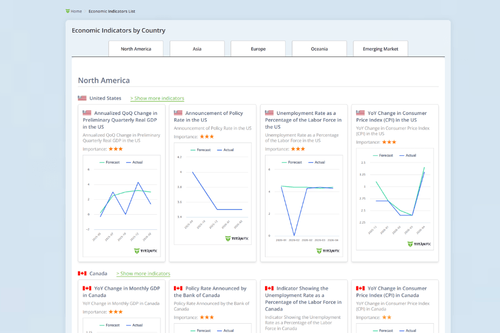
US Value Stock Primer: Definition, Traits & Avoiding the Value Trap

What Was Black Monday? 1987 Dow Crash Causes & Lessons
On Black Monday — October 19, 1987 — the Dow Jones Industrial Average plunged 22.61% in a single session, still the largest one-day percentage drop in US stock market history. This article unpacks the causes (panic-driven sentiment, mechanical institutional selling, and program-trading feedback loops), the regulatory response (the birth of circuit breakers), and the practical lessons for today's investors — helping you build a risk-management framework for what to do before, during, and after a crash.
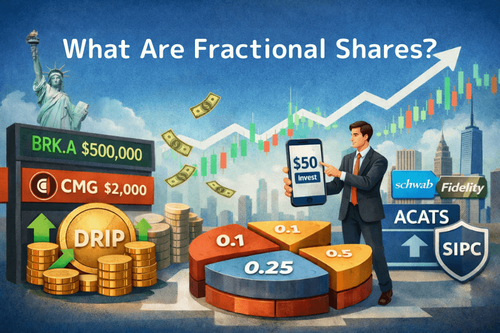
What Are Fractional Shares? Benefits, Risks & Broker Rules
Fractional shares let investors buy slices of a US stock when full-share prices are out of reach, lowering the barrier to entering the US market. This article unpacks what fractional shares mean within the US equity ecosystem, how they differ from whole shares in voting rights and execution, the upside they bring to dividend reinvestment (DRIP) and dollar-cost averaging, and the practical pitfalls — account transferability, instrument coverage, and execution quality — investors must check before committing capital.

What Is a Shareholders' Meeting? Proxy Voting & Governance
A shareholders' meeting is a cornerstone of corporate governance for US-listed companies. This article explains how annual and special meetings differ, what investors actually vote on — director elections, executive compensation, shareholder proposals — and how the proxy voting process works, helping you understand the link between governance dynamics and investment decisions.

What Are Growth Stocks? Valuation, Risks & U.S. Examples
Growth stocks are companies the market is willing to pay a premium valuation for, in exchange for high-speed future expansion. Investors are not buying today's earnings — they are buying the next several years of revenue and cash-flow trajectory. This article starts from the realities of the US equity market and walks through the essence of growth stocks, the valuation logic behind them, the structural advantages they enjoy, the three core risks investors face, and the practical investment workflow — helping you participate in the long-term innovation premium with a clear, rational framework.

What Is Investor Relations? How to Read IR for U.S. Stocks
Investor Relations (IR) is the corporate function responsible for communicating with shareholders, analysts and the broader capital market — covering disclosure, regulatory compliance, ongoing market relations, and investor-facing events. This guide explains how IR works, the influence of earnings-season guidance, the must-read resources on a company's IR site, advanced reading techniques, and the link between IR communications and valuation moves — helping newer and mid-level investors close the information gap and build a sharper framework for US stock decisions.
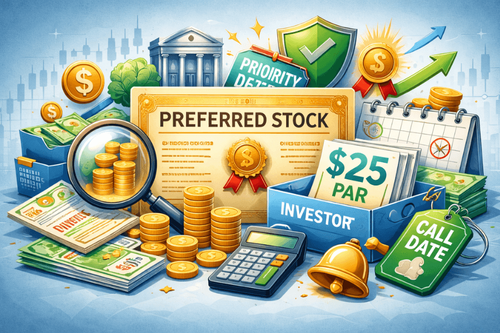
Preferred Stock vs Common Stock: Definition, Benefits, and Risks

US Stock Overnight Trading: Hours, ATS, Advantages, and Risks Explained
US Stock Overnight Trading is the extended session between the after-hours close and the next pre-market open, matched on Alternative Trading Systems (ATS). This guide covers overnight session hours, NYSE Arca's 22-hour plan, advantages, risks, and how overnight trading compares with index futures and CFDs.
Micro Cap Stocks: Complete Guide to Russell Microcap, OTC Markets, and Risk Management
Micro-cap stocks are US-listed companies with market capitalization typically below USD 300 million (Russell Microcap Index covers ranks #2,001 to #4,000 of US equities). They are often marketed as the next ten-bagger entry point, but their true risk comes from trading structure and disclosure quality rather than size alone. This guide covers SEC micro-cap and penny stock definitions, the NASDAQ / NYSE American / OTC Markets 4-tier structure (OTCQX, OTCQB, OTCID, Pink Limited, Expert Market), Rule 15c2-11 post-2021 reality (2,000+ companies shifted to Expert Market, 3,336 securities currently gated), Cross-Border Task Force enforcement (13 Asia-based suspensions Q4 2025), Russell Microcap Index methodology and IWC ETF access, a 10-step research checklist, and a practical playbook for global retail investors in the US, EU and Asia-Pacific.

Stock Split: Meaning, Mechanics, Corporate Motives, and Investor Impact—Complete Guide
A stock split is a corporate action that divides existing shares into multiple new shares, lowering per-share price while keeping market cap, voting rights, and investor holdings unchanged. This guide covers the mathematics (share count, EPS, dividend per share), the three primary corporate motives (investor accessibility, liquidity, signaling), tax and account implications, historical cases from Apple 2020, Nvidia 2021/2024, Tesla 2020/2022, Amazon 2022, Alphabet 2022, Walmart 2024, and Chipotle 2024, reverse-split warning signals, index-weighting differences (DJIA vs S&P 500), and how to trade split names via Titan FX CFD.

Philadelphia Semiconductor Index (SOX): The Complete Guide to Components, ETFs, and Trading Strategies
The Philadelphia Semiconductor Index (SOX) tracks 30 U.S.-listed semiconductor companies and is widely regarded as the leading indicator for the global chip cycle. This guide explains the 12/10/8/4% tiered capping methodology, top-10 weightings led by NVIDIA, Broadcom, and AMD, ETF choices (SOXX, SMH, SOXQ, UCITS alternatives), historical performance versus the S&P 500, the impact of AI CapEx and CHIPS Act subsidies, and practical trend-following, contrarian, and event-driven trading strategies.
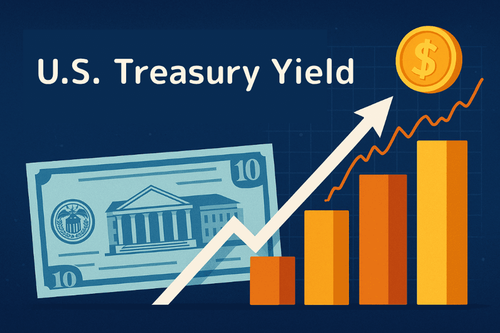
What Is the U.S. Treasury Yield? 10-Year Rates, Curve Inversion, and Impact on U.S. Stocks
The U.S. Treasury Yield is the annualized return on U.S. government debt and the world's risk-free rate benchmark, driving U.S. equity valuations, the dollar, and gold. This guide covers the definition, YTM formula, yield-curve inversion signal, six major drivers, and how to translate yield moves into Titan FX CFD trading strategies.
Book Value Per Share (BPS): Definition, Graham Number, and Value Investing Applications
Book Value Per Share (BVPS or BPS) is a foundational financial metric for value investing, representing the net asset value of a company attributable to each common share. This comprehensive guide systematically covers the definition and calculation formula (Stockholders' Equity divided by Common Shares Outstanding), Benjamin Graham's Graham Number formula (square root of 22.5 times EPS times BVPS) from his 1949 classic 'The Intelligent Investor', sector-specific P/B differences across global markets (banks 0.8-1.5x, tech 6-15x, software 8-20x), the bidirectional effect of share buybacks on BVPS, the McDonald's negative USD 17.2 billion BVPS case as of 2025, the four major limitations of BVPS (intangibles, historical cost, impairment, sector bias), and the integrated use of BVPS with ROE and DuPont analysis for long-term compound growth.
Capital Reduction: Types, Impacts, and Strategies Unveiled
Capital reduction reshapes a company’s finances by cutting shares. Learn types, effects on stock prices, and investor strategies to navigate risks and rewards.

US Stock Market Hours: Trading Times, Pre-Market & Holiday Calendar
Complete guide to US market hours, time conversions for Asia, pre/after-market trading, and holiday schedules.

Quadruple Witching Day: How It Works, Impact & Strategies
Explains quadruple witching, market impact, and risk management. 2026 dates are Mar 20, Jun 18, Sep 18, and Dec 18 because Jun 19 is a Juneteenth market holiday.
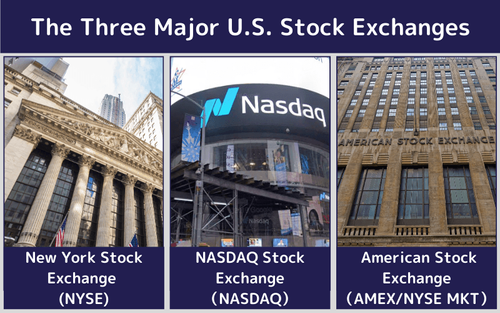
The Three Major U.S. Stock Exchanges: NYSE, NASDAQ, and AMEX (NYSE MKT)
This article explores the three major U.S. stock exchanges: NYSE, NASDAQ, and AMEX (now NYSE MKT), highlighting their history, functions, and unique roles in global financial markets, offering key insights for investors.
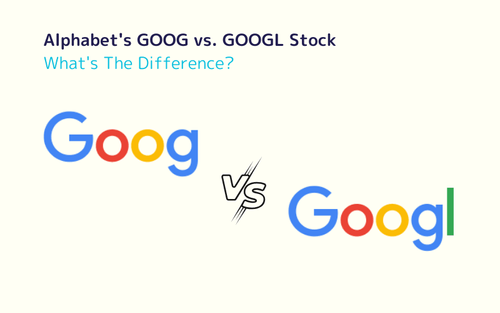
GOOG vs GOOGL: Which Google Stock Should You Buy?
Google has two stock symbols, GOOG and GOOGL, representing different share classes. This article explains their differences, focusing on voting rights, price, and how to choose between them for investment.