

Apple (AAPL) Stock Analysis: Fundamentals, Growth Engines, Risks, and How to Trade US-Stock CFDs
From a single iPhone to an entire ecosystem, how did Apple grow from a hardware brand into one of the world's most profitable tech giants—and is its stock, AAPL, worth holding for the long run?
This article lays out Apple's business model, main growth drivers, the core variables that move its share price, and its risks, along with how to trade it via U.S. stocks or CFDs.
- Two cores: Apple now runs on hardware plus high-margin, recurring services revenue.
- Five growth engines: on-device AI, Vision Pro, services, Apple Silicon, and health wearables.
- Valuation: rising services weight earns Apple software-like, premium multiples.
- Main risks: iPhone cycle, App Store regulation, TSMC supply chain, rates and FX.
- How to trade: buy stock or ETFs, or use CFDs; Titan FX offers AAPL CFDs up to 20x leverage.
- 1. Apple Company Overview: Brand Positioning and Core Product Lines
- 2. Apple Stock Price History: From the iPhone Era to the AI Era
- 3. Core Factors Driving Apple's Stock Price: Valuation Logic and Key Market Variables
- 4. Apple's Growth Engines: The Key Drivers for the Next Five Years
- 5. How to Trade Apple (AAPL) US-Stock CFDs: Steps and Useful Tools
- 6. Frequently Asked Questions (FAQ)
- 7. Conclusion
1. Apple Company Overview: Brand Positioning and Core Product Lines
Apple Inc. (ticker: AAPL) was founded in 1976 and is one of the most iconic technology companies in the world. Starting out in personal computers, it gradually built a complete technology platform made up of devices, an ecosystem, and services.
Apple's products sustain unusually high user loyalty over time, and the core reason is its distinctive integration of hardware and software, which lets different devices work together naturally within a single ecosystem for a consistent, seamless experience.
About Apple: Founding Background and Global Tech Standing
Apple was founded by Steve Jobs, Steve Wozniak, and Ronald Wayne, with personal computers as its main early product. With the launch of the iPod, iPhone, and Mac, the company built an integrated advantage across hardware and software, then expanded the scale of its ecosystem through the App Store and its services business.
Today, Apple is not only the most valuable technology brand in the world but also a pivotal player in consumer electronics, cloud services, and chip development.
Apple's Brand Positioning
Apple's product philosophy centers on three core themes: clean design, privacy and security, and consistency across hardware and software. These elements set Apple apart in a highly competitive market and keep its ecosystem expanding.
For consumers, Apple's value comes not from any single product but from a complete experience built from a full set of devices and services working together.
Apple's Product and Ecosystem Architecture
Devices: An Overview of the Main Product Lines
The table below summarizes Apple's current core devices and how each is positioned:
| Product Line | Positioning | Primary Use |
|---|---|---|
| iPhone | Core revenue driver | Mobile, imaging, entertainment, payments |
| Mac | Productivity tool | Creators, developers, office work |
| iPad | Entertainment and productivity | Notes, drawing, education, business |
| Apple Watch | Health and wearables | Fitness, health tracking, notifications |
| AirPods | Audio device | Calls, music, Siri integration |
With the iPhone as the central gateway, these devices form a sticky, multi-device usage pattern that makes it easier for consumers to keep upgrading and staying within the ecosystem.
Ecosystem: The Key Technologies Behind Hardware-Software Integration
Apple's ecosystem is built on tight hardware-software integration, mainly comprising the following technologies and services:
| Ecosystem Element | Core Role |
|---|---|
| iOS / macOS / watchOS | Maintain a consistent experience through unified operating systems |
| App Store | Provides the app platform and drives services revenue growth |
| iCloud | Data sync and backup, deepening multi-device integration |
| Apple Silicon | In-house chips boost performance and efficiency, sharpening product differentiation |
This complete architecture keeps Apple ahead on device performance, system stability, and privacy and security.
Apple's Business Model Positioning
Apple has shifted from a company driven mainly by hardware sales to a technology brand with two cores: devices plus services. Hardware expands device penetration, while services provide a stable, high-margin source of long-term revenue.
This model not only makes earnings more predictable but also strengthens users' reliance on the ecosystem, giving Apple a durable advantage in the global technology market.
2. Apple Stock Price History: From the iPhone Era to the AI Era
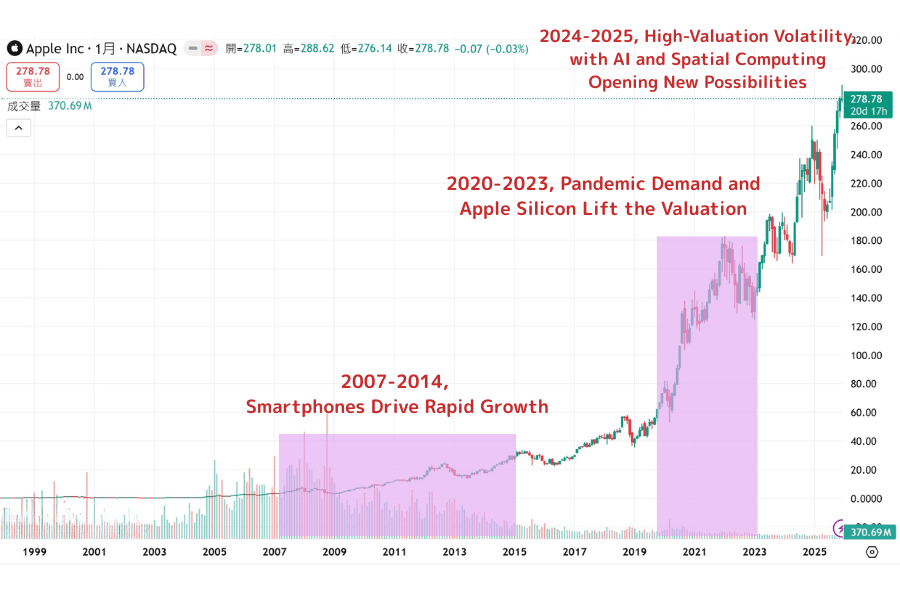
Apple's share price has tracked the shifts in the technology industry and reflects how its business focus has evolved over time. Each phase carried a different market narrative and growth engine.
Phase 1: 2007-2014, Smartphones Drive Rapid Growth
The iPhone launch reshaped the global consumer-electronics market and turned Apple from a computer brand into a leader in mobile devices. The stock rose quickly in this period, driven largely by the rapid rise in smartphone penetration.
Phase 2: 2015-2019, Services Growth and the Rise of Wearables
As the global phone market approached saturation, Apple began strengthening its services business. Revenue from Apple Music, iCloud, and the App Store grew year after year, reducing the company's reliance on the iPhone alone. Strong Apple Watch and AirPods sales also deepened ecosystem lock-in.
Phase 3: 2020-2023, Pandemic Demand and Apple Silicon Lift the Valuation
The pandemic boosted demand for the Mac, iPad, and wearables. The launch of Apple Silicon improved Mac performance while lowering costs, prompting the market to re-rate Apple's product strategy and pushing the stock higher.
Phase 4: 2024-2025, High-Valuation Volatility, with AI and Spatial Computing Opening New Possibilities
In a high-rate environment, tech-stock valuations faced corrections, and Apple saw volatility too. The Vision Pro launch refocused attention on spatial computing, while the on-device AI strategy became a key part of the future growth story.
3. Core Factors Driving Apple's Stock Price: Valuation Logic and Key Market Variables
Apple's stock moves are not decided by any single event but shaped together by product performance, services growth, technological competitiveness, and the macro market. The following five areas cover the core factors that most often move AAPL, each tied directly to how Apple is valued.
Factor 1: Product Cycles and Hardware Sales Performance
Apple's revenue mix is still built on hardware, where the iPhone replacement cycle is especially sensitive for quarterly revenue, while wearables and accessories provide relatively steady demand. The Mac and iPad are more exposed to the business cycle.
The more complete the hardware lineup, the better it spreads the impact of any single product's swings, smoothing the overall revenue curve and improving the market's view of Apple's stability.
Factor 2: A Rising Services Mix Lifts the Valuation
Services such as the App Store, iCloud, Apple Music, and TV+ carry high margins and clearly improve profitability.
As the subscription base scales, services revenue increasingly underpins Apple's valuation, moving the company closer to a software- and platform-centric business model.
The market broadly sees services growth as improving Apple's long-term predictability, which in turn supports a higher valuation level.
Factor 3: Technology and Ecosystem Build Lasting Competitiveness
Apple Silicon chips strengthen device performance and battery life, keeping its products ahead in the mobile and laptop markets. Tight ecosystem integration increases user reliance, and its privacy and security settings have become an important source of brand trust.
These technology and ecosystem moats make Apple resilient to any single competitor and reinforce the stability of its long-term valuation.
Factor 4: How the Macro Environment Affects Tech-Stock Valuations
Interest-rate policy and the direction of the US dollar are important factors for Apple's short-term share price.
A rising-rate environment lifts the discount rate, adding valuation pressure on tech stocks, while exchange-rate moves affect overseas revenue.
In addition, supply-chain costs, the business cycle, and shifts in consumer spending influence Apple's quarterly operations, giving the stock a certain sensitivity to macro news.
Factor 5: Competitive Landscape and Regulatory Uncertainty
Apple competes with Google, Samsung, and Microsoft across phones, cloud, smart wearables, and online platforms.
Government scrutiny of the App Store's commission structure and platform policies is another source of risk; any future change to the fee model could affect the profitability of the services business.
These variables make regulatory policy a long-term factor that cannot be ignored in Apple's valuation.
4. Apple's Growth Engines: The Key Drivers for the Next Five Years
Apple's growth is gradually shifting from being driven by hardware alone to advancing along multiple axes of technology, ecosystem, and services. The five drivers below are the most influential growth sources over the next five years; they reinforce one another, helping Apple stay resilient across market cycles and create new demand.
Engine 1: AI and On-Device AI Drive a New Upgrade Cycle
On-device AI processes data directly on the user's device, delivering faster responses and stronger privacy protection. Apple uses its A-series and M-series chips as the foundation for AI computing, giving the iPhone and Mac more complete AI capabilities.
If AI applications keep expanding, they could become an important reason for users to upgrade their iPhones and other devices, letting Apple create fresh demand even in mature markets.
Engine 2: Vision Pro and the Spatial-Computing Build-Out
Vision Pro marks Apple's formal entry into spatial computing. Although the market is still small today, its platform nature means use cases can extend to entertainment, work, and education.
If a developer ecosystem gradually takes shape, Vision Pro could become an important interaction interface after the smartphone, giving Apple a long-term advantage in an entirely new market.
Engine 3: Services Expansion Strengthens Profitability
Services revenue spans the App Store, iCloud, Music, TV+, and Arcade. The subscription model is stable and high-margin, making it an important source of Apple's long-term profit.
As more users join the ecosystem and adopt multiple services, services revenue can cushion against economic swings, giving the overall financial structure greater durability.
Engine 4: Apple Silicon Keeps Improving Performance and Integration
Apple Silicon raises product performance while lowering power consumption, clearly strengthening competitiveness in the laptop and tablet markets. A unified chip architecture also makes multi-device collaboration smoother, encouraging users to upgrade and use devices together, further reinforcing ecosystem lock-in.
Engine 5: Wearables and Health Tech Open Up Expansion Opportunities
The Apple Watch's health-monitoring features have expanded year after year, with everything from heart-rate to blood-oxygen detection now a key daily tool for users.
Health tech still has long-term room to grow; adding more medical-grade features or partnering with professional medical institutions in the future could create entirely new product value.
In addition, AirPods and other wearables have upgrade and expansion potential, making wearables another steady source of growth.
5. How to Trade Apple (AAPL) US-Stock CFDs: Steps and Useful Tools
Investors can choose different ways to take part in Apple (AAPL) price action based on their strategy, risk appetite, and capital. Because CFDs (contracts for difference) allow you to go long or short, offer flexible leverage, and require no ownership of the underlying shares, they are a common tool for short-term and strategy-focused investors.
The table below summarizes common ways to invest in AAPL and who they suit:
| Method | Key Features | Best Suited For |
|---|---|---|
| Buy AAPL stock directly | Capture company growth and long-term value | Long-term investors |
| ETF / index allocation | Spread risk across a sector or the broad market | Medium-term asset allocators |
| CFDs | Leverage, go long or short, high strategic flexibility | Those focused on volatility and active strategy |
Trading Steps: How to Trade Apple CFDs on Titan FX
If you want to take part in Apple's two-way swings with a lower barrier to entry, CFDs (contracts for difference) offer a highly flexible way to trade.
Titan FX's US-stock CFDs offer up to 20x leverage, letting investors take part in Apple's price rises or falls with less capital.
The steps below help you quickly handle account opening, funding, and trade preparation.
| Stage | Instructions |
|---|---|
| Step 1: Register an account | Go to the Titan FX account-opening page, enter your email and password to register. Your account activates once verification is complete. |
| Step 2: Fund your account | Log in to the Titan FX client portal, choose a funding method (credit card, e-wallet, bank transfer, and more), and follow the prompts to deposit. |
| Step 3: Download the MT5 platform | US-stock CFDs are traded on MT5. Titan FX offers MT5 downloads for Windows, Mac, iOS, Android, and Web. |
| Step 4: Start trading Apple CFDs | Launch MT5, log in to your trading account, add Apple under "Market Watch," then choose buy (long) or sell (short) to start trading. |
Free Trading Tools from Titan FX
To help investors track the rhythm of US stocks more effectively, Titan FX offers several practical tools you can use alongside your analysis:
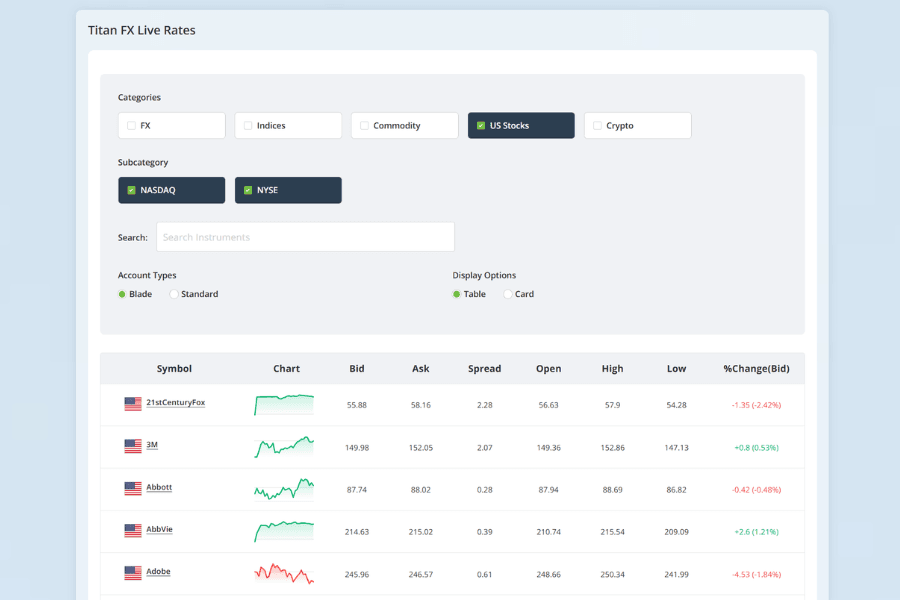
Live Rate
The live rate provides the latest bid/ask, spread, intraday high and low, and a small trend chart, serving as a base price feed for short-term trading and strategy analysis.
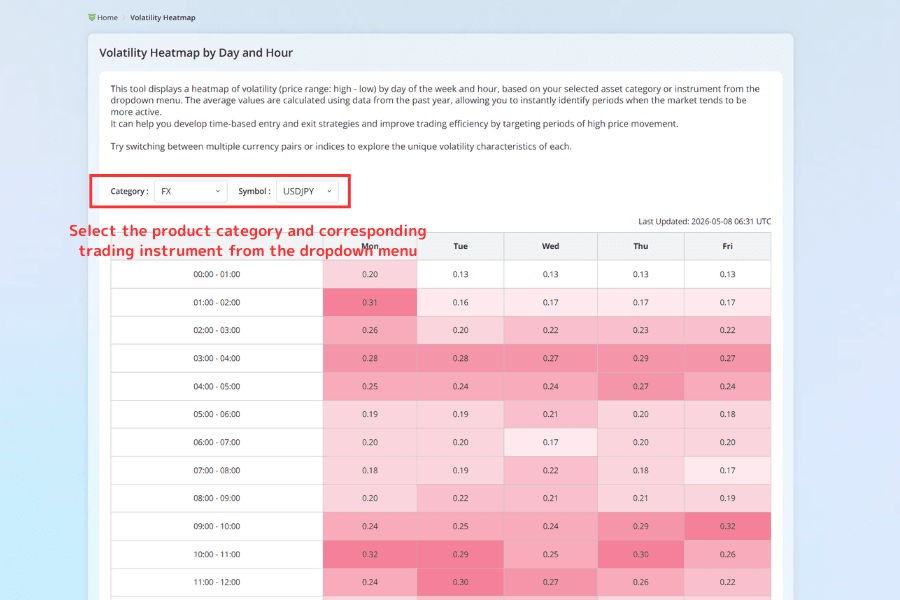
Volatility Heatmap
The volatility heatmap uses historical data to show how strong or weak an instrument's swings are at different times of day, helping you pick the trading hours that best fit your approach.
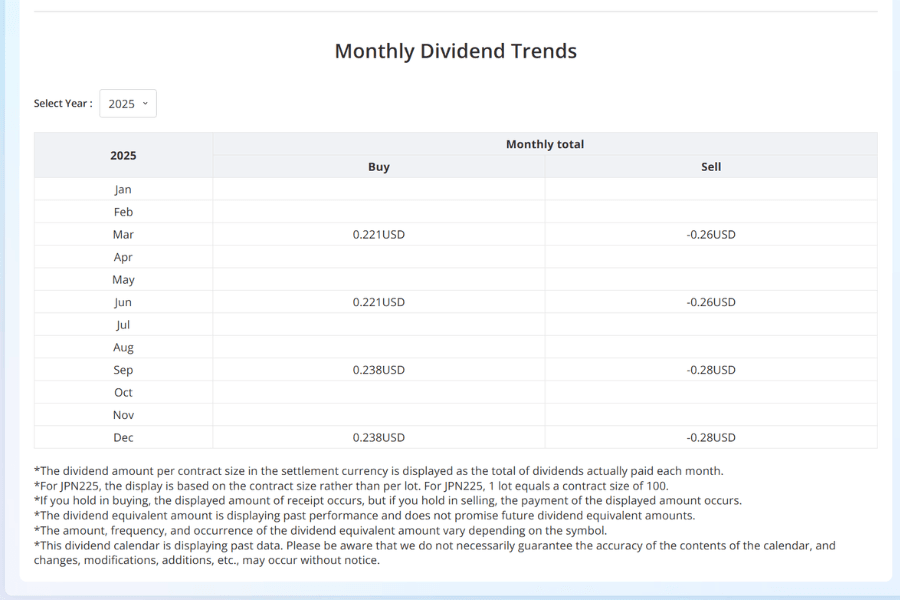
Dividend Calendar
View daily and monthly dividend records for US-listed companies in one place, including the actual dividend amounts on buy/sell positions, helping you track payout timing, compare yields, or plan a dividend strategy.
Trade AAPL CFDs with Titan FX
Titan FX offers Apple (AAPL) stock CFDs with up to 20:1 leverage, tight spreads, and the flexibility to go long or short without owning the shares.
6. Frequently Asked Questions (FAQ)
Q1. What are Apple's main risks, and which variables should investors watch?
Apple's risks center on three areas:
-
- Cyclical product demand: if iPhone upgrade momentum weakens, short-term results can fluctuate.
-
- Regulatory pressure: App Store commissions and platform policies draw scrutiny from US and EU regulators, which could push changes to the business model.
-
- Supply-chain reliance: chip production depends heavily on TSMC, and geopolitical tensions or capacity bottlenecks can add uncertainty.
Overall, most of these risks are manageable, but investors should keep tracking earnings and policy developments.
Q2. Does Apple still offer long-term investment value?
Yes. Apple's brand strength, product stickiness, growing services revenue, and steady cash flow give it long-term allocation value. Short-term growth may be affected by the macro environment, but the company's business model remains resilient.
Q3. Apple seems to have less momentum than AI companies. Is it falling behind in AI?
Apple pursues an on-device AI strategy that differs from cloud-AI companies. It does not aim to provide large models but rather to bring AI closer to how hardware is used, such as photo processing, voice interaction, and real-time personalization. If it can successfully drive device upgrade demand, there is still meaningful room for growth.
Q4. Is AAPL suitable for dollar-cost averaging?
Yes. Apple has strong cash flow, a long-term brand moat, and a mature global market. The stock fluctuates with the business cycle, but its long-term trend is steady. For those new to US stocks, dollar-cost averaging helps spread valuation risk.
Q5. Why is Apple valued higher than a typical hardware company?
Because Apple's revenue no longer depends only on hardware sales. As the services mix has risen, margins and stability have improved markedly, leading the market to value Apple more like a software and platform company. As a result, Apple often trades at a higher valuation than traditional electronics makers.
Q6. Can I trade Apple (AAPL) on Titan FX?
Yes. Titan FX offers US-stock CFDs (contracts for difference) on Apple (AAPL) and other equities, with up to 20x leverage, two-way trading, and no need to hold the underlying shares. US-stock CFDs are traded on the MT5 platform. Before trading, it is wise to understand AAPL's volatility characteristics and set up sound stop-loss and money management.
7. Conclusion
Apple's brand strength, ecosystem integration, and accumulated technology form a strong, durable competitive moat. Its two-core structure of hardware and services keeps it growing steadily through economic cycles. For investors looking to build a long-term technology allocation, Apple balances growth and defensiveness, making it a core holding worth including in a portfolio.
Further Reading
- What Is a CFD (Contract for Difference)?
- What Is the Business Cycle?
- What Is Leverage in Trading?
- How to Install MT5
Titan FX Research. Investor-education content covering forex (FX), commodities (oil, precious metals, agricultural products), stock indices, US equities, and crypto assets across global markets.
Primary Sources by Category
- Official data and disclosures: Apple Inc. investor relations (10-K annual and 10-Q quarterly reports); U.S. SEC EDGAR filings
- Industry and research: consumer-electronics, semiconductor, and digital-services market research; major investment-bank tech-sector analysis
- Market data: Titan FX live quotes and US-stock CFD prices; US equity market analysis from major financial media