

Exchange Rates
In the world of foreign exchange (FX) trading, the exchange rate is the single most important concept every trader has to understand. Whether you are just stepping into the market or already have experience, knowing how exchange rates work—and what drives the swings—lays the foundation for any disciplined trading strategy.
This article walks through what an exchange rate is, the two regime types, and the main forces moving exchange rates, so you finish with a working baseline for market sense and trade discipline.
- Exchange rate basics. The conversion ratio between two currencies, expressed as a pair. The rate shows how many units of the quote currency you need to buy one unit of the base currency.
- Two regimes. Floating (market-driven) and fixed (central-bank-managed). Most developed economies run floating; HKD–USD is the canonical fixed example.
- Nine drivers. Rate differentials, inflation, politics, growth, trade balance, fiscal and credit ratings, central-bank intervention, commodity prices, and global risk on/off.
- FX trading link. Trading is the act of taking exposure to currency-pair moves. The bid–ask spread is the real-world cost.
- Titan FX line-up. About 60 currency pairs (major, cross, EM) and up to 1,000× leverage, plus a full set of analysis tools.
1. What Is an Exchange Rate?
An exchange rate is simply the price of one currency expressed in another. In the FX market, currencies are quoted in pairs. Common formats include:
- EUR/USD (Euro/US Dollar)
- USD/JPY (US Dollar/Japanese Yen)
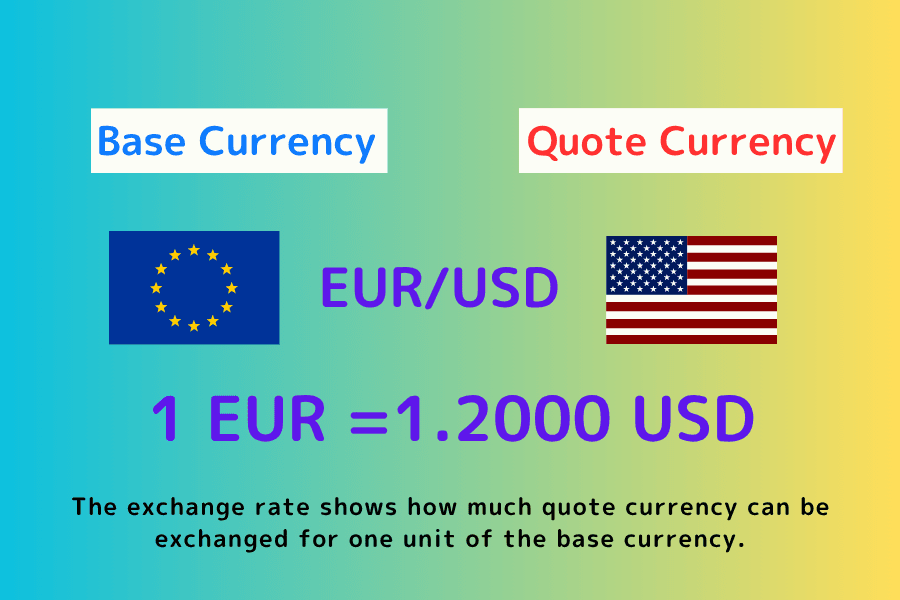
The first currency is the base currency, the second is the quote currency. The rate represents the amount of quote currency required to buy one unit of the base currency.
Example
When EUR/USD = 1.2000, "1 Euro = 1.2000 US Dollars". You need 1.2000 USD to buy one Euro.
Why Exchange Rates Matter
Exchange rates are not just numbers you watch when traveling or shopping abroad. Multinationals, importers and exporters, investors, and policy makers all feel the impact of rate moves. In FX trading, analyzing the swings opens up currency conversion, speculative positioning, and risk hedging as a single workflow.
2. Two Types of Exchange Rate Regime
Globally, exchange-rate regimes generally fall into two categories: floating and fixed. Knowing the difference helps make sense of how different currencies behave—and shapes the trading strategy you can run against each.
2.1 Floating Exchange Rate
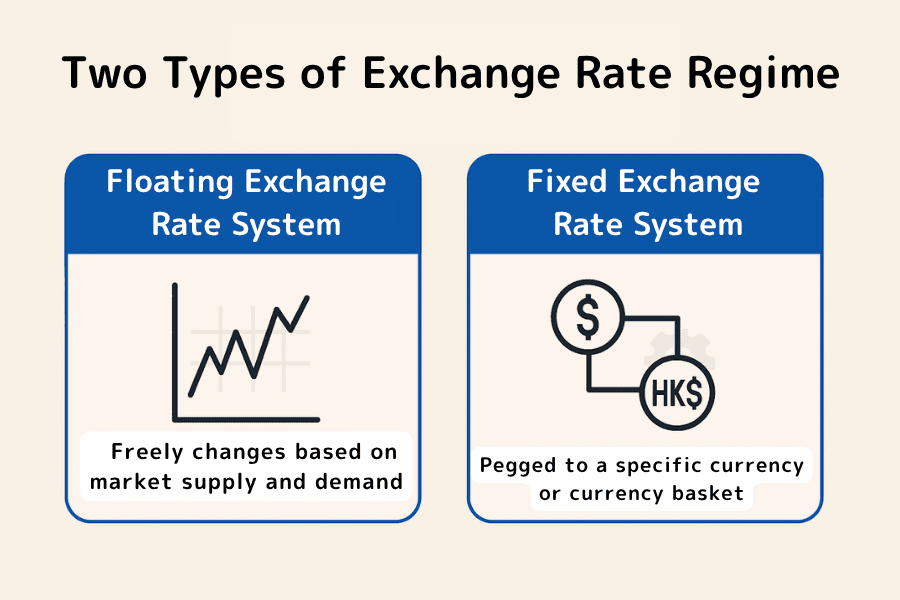
Most developed economies run on this. Rates aren't set by the government directly—they move freely based on supply and demand in the market.
Common drivers of the moves:
- Rate differentials
- Political and economic uncertainty
- Investor risk appetite
- Cross-border capital flows
For example, the US dollar, Euro, and British pound are all floating-rate currencies. When markets price in stronger US economic data, capital tends to chase dollar assets, lifting USD against the rest.
2.2 Fixed Exchange Rate
The central bank pegs the local currency to another currency or a basket, and uses FX intervention to keep the rate inside that range. This reduces volatility risk for trade and capital flows, but it costs the country some monetary-policy flexibility.
For example, the Hong Kong dollar (HKD) has long been pegged to the US dollar in the 7.75–7.85 band. When buy or sell pressure builds, the HKMA intervenes (buying or selling HKD) to keep the rate inside the corridor.
3. Key Factors That Move Exchange Rates
Exchange rates shift continuously, and behind those moves are economic conditions, monetary policy, and market expectations. Understanding what drives those moves is the foundation for trading and macro analysis.
3.1 Rate Differentials
When one country offers higher rates than another, foreign capital tends to chase the yield—lifting demand for that currency and pushing the rate higher.
Example: when the Fed hikes, dollar-denominated assets become more attractive, and the dollar tends to firm.
3.2 Inflation
Higher inflation eats into the purchasing power of a currency. Foreign investors then trim exposure, and the currency tends to weaken over time.
Countries with stable, low inflation typically run with more stable—often appreciating—currencies.
3.3 Political Stability
Stable political conditions attract long-term investment and capital inflows.
The opposite—coups, election uncertainty, social unrest—triggers outflows, putting downward pressure on the currency.
3.4 Economic Growth
A higher GDP growth rate signals a more active economy: capex picks up, employment improves, and foreign capital flows in. Together those lift currency demand and the exchange rate.
3.5 Trade Balance
When a country exports more than it imports, foreign buyers need to buy the local currency to settle trade—lifting demand and supporting the rate.
Persistent trade deficits, conversely, tend to weigh on the currency.
3.6 Government Debt and Credit Rating
Excessive government debt raises default-risk concerns, eroding confidence in the currency.
A credit-rating downgrade typically accelerates outflows and strengthens the currency-weakening pressure.
3.7 Central Bank Intervention
Central banks can move exchange rates through direct FX intervention, rate adjustments, or policy communication.
The Bank of Japan (BOJ) and the Swiss National Bank (SNB), among others, have a track record of explicit intervention to limit excess moves in their currencies.
3.8 Commodity Prices
Countries heavily dependent on commodity exports—Australia (iron ore), Canada (crude), New Zealand (dairy)—often see their currencies track commodity price moves.
When commodity prices rise, terms of trade improve and the currency tends to strengthen.
3.9 Global Risk Appetite
When markets turn risk-off, capital rotates into safe-haven currencies—US dollar (USD), Japanese yen (JPY), and Swiss franc (CHF) being the canonical names.
Conversely, risk-on currencies (AUD, CAD) tend to weaken during these periods.
4. Exchange Rates and FX Trading
In the FX market, exchange rates are not only a reflection of international economics—they are also the direct trading instrument. The essence of FX trading is taking exposure to currency-pair price changes for profit or for capital-allocation reasons.
4.1 Volatility Creates Opportunity
The up-and-down move of an exchange rate creates both buy and sell setups. Traders predict the direction of a pair and take a long (buy the base currency) or short (sell the base currency) position.
- Expect EUR to strengthen → long EUR/USD
- Expect JPY to weaken → long USD/JPY
Understanding the logic and drivers behind a move is what separates intuitive prediction from disciplined trading.
4.2 How to Read a Currency Pair
FX quotes appear as currency pairs. For example, EUR/USD = 1.2000 means "1 Euro = 1.20 US Dollars".
A Quote Has Two Prices
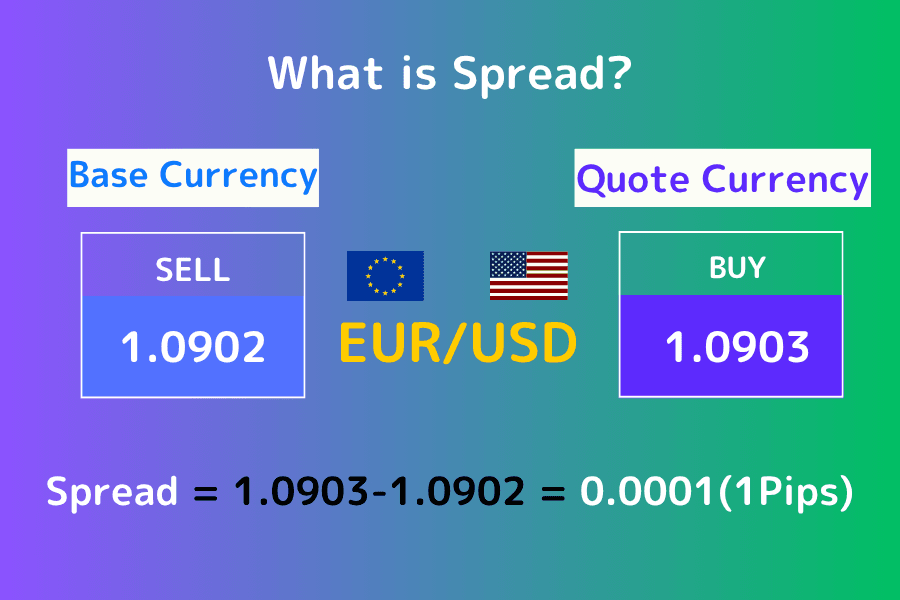
- Bid: the price at which the market is willing to buy the base currency.
- Ask: the price at which the market is willing to sell the base currency.
The gap between Bid and Ask is called the spread, and it represents the effective transaction cost.
4.3 Major Currency Pair Categories
By trading volume and liquidity, currency pairs split into three broad categories:
| Category | Description | Representative pairs (live rates) |
|---|---|---|
| Major pairs | USD-paired majors. High liquidity, tight spreads, the core of FX trading. | EUR/USD, USD/JPY, GBP/USD |
| Cross pairs | No USD on either side. More volatile; suited to experienced traders. | EUR/JPY, GBP/JPY, AUD/NZD |
| Emerging-market pairs | One side is an EM currency. Lower liquidity, higher volatility and risk. | USD/TRY, USD/ZAR |
Volatility, liquidity, and trading cost vary significantly across categories. Choosing pairs that match your style is one of the elements that lets a trading strategy actually function.
5. Titan FX: Currency Pair Line-up and Analysis Tools
As a professional FX and CFD broker, Titan FX offers around 60 currency pairs (live rates) covering majors, crosses, and emerging-market pairs. Stock indices (US, Japanese), precious metals (gold, silver), crude oil, and crypto are also part of the CFD line-up.
Leverage is available up to 1,000×, giving traders flexibility to match different risk profiles.
To sharpen execution and risk management, Titan FX bundles a set of advanced analysis tools and automated-trading resources, designed to support strategic decisions in real-world conditions.
Advanced Tools and Features
| Tool | Function | Link |
|---|---|---|
| Margin calculator | Calculates required margin from trade size, leverage, and pair | Use it |
| Effective exchange-rate analysis | Visualizes how one currency moves against multiple others—useful for trend identification | Check it |
| Custom technical indicators | Free indicators for MT4/MT5 | Download |
| EA ranking | Top-performing Expert Advisors for strategy reference | Browse |
| CFTC positioning | Track institutional positioning on major currency pairs | View report |
| Percent-change ranking | Compare assets and pairs across time frames | See ranking |
| Order and position chart | Visualizes market order clustering and open-position concentration zones | Check it |
6. FAQ: Exchange Rates and Trading
Q1. Is there a time of day when exchange rates move the most?
Yes. The London–New York overlap (approximately 13:00–17:00 UTC) carries the deepest liquidity and the widest intraday moves. Major data releases (US non-farm payrolls, CPI, FOMC decisions) typically produce 5–15 minute spikes around the print. Newer traders should be especially cautious about adding or trimming positions during these windows.
Q2. If EUR/USD goes "down", is the Euro stronger or weaker?
EUR/USD going down means the Euro is weaker (and the US dollar is stronger). When EUR/USD moves from 1.2000 to 1.1500, fewer dollars are needed to buy one Euro. The reverse holds when the rate rises. "The pair's first currency is the main character" is a useful mental anchor.
Q3. Do fixed-rate currencies move at all? Can you trade them?
They do move, just within a tight band. The Hong Kong dollar (USD/HKD), for example, trades inside the 7.75–7.85 corridor enforced by the HKMA. Within that band, intraday moves exist but are small. Short-term traders generally find more value in floating-rate pairs; fixed-rate pairs are more interesting for long-term holds or carry-trade-style positioning.
Q4. Should I prioritize fundamental or technical analysis for exchange rates?
A combined approach is the practical answer. Fundamental analysis (rates, inflation, growth, geopolitics) frames the medium-term direction; technical analysis (chart patterns, support and resistance, indicators) sharpens short-term entry and exit timing. Anchor a macro bias from fundamentals, then use technicals to time the actual trade—it strengthens the logical consistency of the decision. technical analysis (chart patterns, support and resistance, indicators) sharpens short-term entry and exit timing. Anchor a macro bias from fundamentals, then use technicals to time the actual trade—it strengthens the logical consistency of the decision.
Q5. Are EM currency pairs (USD/TRY, USD/ZAR) suitable for beginners?
Generally no. Higher volatility and wider spreads make risk-management mistakes more costly. The practical path is to develop discipline on the majors (EUR/USD, USD/JPY) first, then add EM pairs as a small satellite allocation once the fundamentals of risk control are in place.
7. Summary
Exchange rates are the starting point for any FX trade. Understanding the regime types (floating, fixed) and the drivers (rate differentials, inflation, political stability, trade balance, commodity prices, risk appetite, and the rest) gives you a coherent framework for reading currency-pair behavior from the macro down.
Combining Titan FX's roughly 60-pair line-up with the platform's analysis tools—effective-rate analysis, CFTC positioning, EA ranking—lets traders at every level work the market with discipline and a real edge.
Titan FX Live RatesFurther Reading
- Forex trading basics: margin, pips, and order flow in one read
- Global central banks: governors and policy stances
- Credit rating agencies (S&P, Moody's, Fitch) and FX impact
- Business cycle: four phases and key indicators
- Spread basics and FX trading costs
Titan FX Research and Review Team — covering forex (FX), commodities (oil, precious metals, agricultural products), stock indices, US equities, and crypto assets, producing educational content for retail and institutional investors.
Primary Sources by Category
- Official data and regulators: Federal Reserve, European Central Bank, Bank of Japan, Bank for International Settlements (BIS) Triennial Central Bank Survey, IMF Annual Report on Exchange Arrangements and Exchange Restrictions (AREAER).
- Market data and liquidity: Bloomberg FX, Reuters, CFTC Commitments of Traders Report, World Federation of Exchanges (WFE).
- Academic research: Maurice Obstfeld and Kenneth Rogoff, "Foundations of International Macroeconomics"; Paul Krugman, Maurice Obstfeld, and Marc Melitz, "International Economics"; Lars E.O. Svensson, "Exchange Rate Issues in Monetary Policy".
- Industry and third-party references: Investopedia (Exchange Rates), IMF Working Papers, OANDA / Refinitiv FX Data Guides, Titan FX Research economic indicators calendar.