

Crack Spread: A Key Indicator of Refinery Profitability
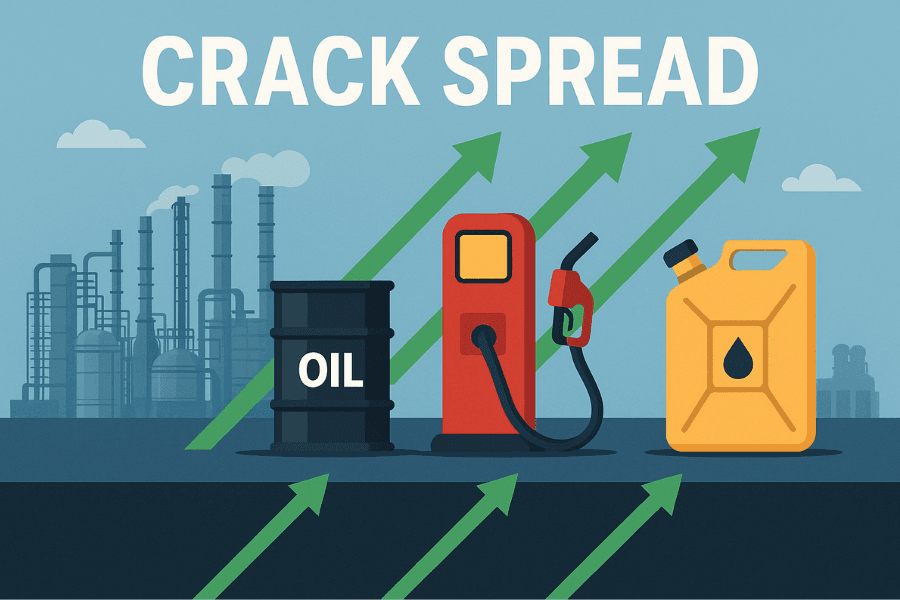
The crack spread is the price difference between crude oil and the refined products made from it (mainly gasoline and diesel), and is the core gauge of refinery profitability.
In the refining industry, the crack spread is a critical economic indicator measuring the profitability of converting crude oil into refined products like gasoline and diesel.
This term describes the price difference between the cost of crude oil inputs and the market price of the final products.
The crack spread's value directly reflects market conditions and profit levels in the refining sector. For refiners, understanding and utilizing this metric is essential.
Amid global energy demand fluctuations and volatile crude oil prices, the crack spread provides vital financial insights, enabling refiners to adjust production strategies and optimize operational efficiency.
- The crack spread measures refinery profit from turning crude into gasoline and diesel
- The standard 3:2:1 formula: (2 × gasoline + diesel) − (3 × crude oil)
- Crude prices, product demand, refinery operations, and the macro cycle drive the spread
- A widening spread lifts refinery output, investment, and share prices
- Traders apply it to hedging, futures, long-short strategies, and sentiment analysis
1. Definition and Calculation of Crack Spread
The crack spread is calculated by determining the difference between the cost of crude oil and the revenue generated from selling refined products, mainly gasoline and diesel.
The most common crack spread is the 3:2:1 crack spread, representing the ratio where three barrels of crude oil yield two barrels of gasoline and one barrel of diesel.
This ratio reflects a typical refining process output and serves as the standard method for evaluating refinery profitability.
The formula for calculating the crack spread is as follows:
Crack Spread= ( 2x Gasoline Price + Diesel Price) - (3 x Crude Oil Price)
Here, the gasoline and diesel prices refer to the market price per barrel, while the crude oil price represents the cost per barrel.
By performing this calculation, refiners can assess the potential profitability of refining under current market conditions.
The crack spread's fluctuations are influenced by various factors, including seasonal demand changes, geopolitical events, and global crude oil supply levels.
2. Key Factors Affecting Crack Spread
The crack spread's volatility arises from multiple factors influencing crude oil and refined product prices. Major influencing factors include:
Crude Oil Prices
As the foundation of crack spread calculations, crude oil price changes directly impact the spread. These prices can fluctuate due to geopolitical events, global supply-demand dynamics, and market speculation.
Demand for Refined Products
The demand for products like gasoline and diesel, often driven by seasonal variations, plays a significant role. For example, increased driving during summer can boost gasoline demand and widen the crack spread.
Refinery Operations
Maintenance, upgrades, or unplanned shutdowns at refineries can affect the supply of refined products, subsequently influencing the crack spread.
Macroeconomic Conditions
During periods of economic growth, increased energy consumption by industries and transportation can elevate refined product prices, widening the crack spread.
3. Economic Impact of Crack Spread on the Refining Industry
The size of the crack spread is directly tied to the profitability of the refining industry. A higher crack spread typically indicates more profitable refining activities, leading to the following effects:
Production Decisions
Refineries may increase output during periods of high crack spreads to maximize profits. Conversely, during low crack spreads, they might reduce production or conduct maintenance.
Investment and Expansion
Sustained high crack spreads can encourage refiners to invest in new technologies or expand refining capacity to capitalize on favorable market conditions.
Stock Performance
For publicly traded refiners, the crack spread significantly impacts stock performance. Investors closely monitor this metric as a gauge of profitability and industry outlook.
4. Applications of Crack Spread in Investment Strategies
The crack spread is not only a crucial operational and profitability indicator for the refining industry but also serves as a valuable analytical tool for investors and traders in the energy market. Below are some ways the crack spread is applied in investment strategies:
Supporting Investment Decisions
Investors can use crack spread fluctuations to evaluate the profitability outlook for the refining sector. For instance, a widening crack spread often signals an improving profit environment, which might be an opportune time to invest in refinery stocks.
Hedging Strategies
Businesses directly linked to crude oil or refined products, such as airlines or logistics companies, can use crack spread derivatives to manage risks. By hedging fuel costs, these companies can mitigate the impact of oil price volatility on their operating expenses.
Futures Market Trading
Traders can leverage crack spread futures for speculation or hedging. By buying or selling combinations of crude oil and refined product futures, they can directly trade on crack spread movements and profit from its fluctuations.
Long-Short Strategies
Investors can adopt long-short hedging strategies by simultaneously buying undervalued assets and shorting overvalued ones. For example, if a refinery's stock declines due to a narrowing crack spread, while another company's efficient cost management makes it more resilient, one might go long on the latter and short the former.
Market Sentiment Analysis
Trends in the crack spread can serve as an indicator of market sentiment, providing signals for entering or exiting the market. A rapid widening of the crack spread may suggest increasing demand for refined products, while a narrowing spread may indicate declining demand.
Trade Energy CFDs with Titan FX
Titan FX offers crude oil (WTI, Brent), natural gas and gasoline CFDs with up to 100:1 leverage on crude oil and 500:1 on natural gas and gasoline, and the flexibility to go long or short without holding the physical commodity.
5. Frequently Asked Questions (FAQ)
Q1. What is the 3:2:1 crack spread?
It is the most common crack spread ratio, assuming three barrels of crude oil yield two barrels of gasoline and one barrel of diesel — the standard way to gauge refinery profitability (see §1).
Q2. How is the crack spread calculated?
Crack Spread = (2 × gasoline price + diesel price) − (3 × crude oil price), using per-barrel market prices for the products and the per-barrel cost of crude (see §1).
Q3. Why does the crack spread widen in summer?
Increased driving lifts gasoline demand, pushing refined-product prices up relative to crude — a typical seasonal driver of a wider spread (see §2).
Q4. How do investors use the crack spread?
It supports refinery-stock decisions, fuel-cost hedging for airlines and logistics firms, crack-spread futures trading, and long-short positioning (see §4).
Q5. What does a narrowing crack spread indicate?
It typically signals weakening demand for refined products and thinner refining margins, which can weigh on refiners' output and share prices (see §3).
6. Summary
The crack spread distills refinery economics into a single number: the gap between what refiners pay for crude oil and what their gasoline and diesel sell for. Driven by crude prices, seasonal product demand, refinery operations, and the macro cycle, it works both as a profitability gauge for the refining industry and as a practical signal for energy traders — from hedging fuel costs to reading market sentiment.
Further Reading
- What Is Brent Crude?
- What Is WTI Crude?
- Oil CFD Trading Basics
- How Many Liters in a Barrel of Oil?
- FX Trading Basics
The financial markets research team at Titan FX. We produce educational content across a broad range of instruments, including forex (FX), commodities (crude oil, precious metals, agricultural products), equity indices, U.S. stocks, and crypto assets.
Primary Sources by Category
- Official Data: U.S. Energy Information Administration (EIA) — prices, inventories, and refining-margin data
- Exchange: CME Group — WTI crude, RBOB gasoline, and ULSD diesel futures