

What Is Silver vs US Dollar (XAGUSD)? A Trader’s Guide
View the live chart and technical analysis for Silver vs US Dollar (XAGUSD)
- XAGUSD is the US dollar price of one troy ounce of silver
- Silver is both a safe-haven asset and an industrial metal
- It is more volatile than gold and tends to move inversely to the dollar and real yields
- Solar and semiconductor demand supports silver prices over the long term
- The gold-silver ratio helps gauge relative value; leverage magnifies risk
- 1. What Is Silver vs US Dollar (XAGUSD)?
- 2. Why do traders follow Silver vs US Dollar?
- 3. What market characteristics define Silver vs US Dollar?
- 4. What moves the price of Silver vs US Dollar?
- 5. How can traders access Silver vs US Dollar? Common methods compared
- 6. What risks and market signals matter when trading Silver vs US Dollar?
- 7. FAQ: Common questions about Silver vs US Dollar
- 8. Conclusion: Understand Silver vs US Dollar before building a trading plan
1. What Is Silver vs US Dollar (XAGUSD)?
XAGUSD represents the price of one troy ounce of silver quoted in US dollars. Often referred to as spot silver, silver spot, or simply XAG/USD, it is a key financial instrument combining the precious-metal sentiment with industrial demand exposure. Silver is unique among metals because it acts both as a store of value and as an industrial metal, with significant usage in sectors such as solar energy and semiconductors.
Traders watch XAGUSD as a gauge of precious metal strength relative to the US dollar, which itself is a dominant global reserve currency. Movements in XAGUSD reflect a complex interplay between precious metal investment demand, industrial consumption, and the strength or weakness of the US dollar.
For a dynamic view of silver price movements, traders can refer to the Silver Price Instruments Page which provides updated charts and data.
2. Why do traders follow Silver vs US Dollar?
Silver’s dual role as both a precious metal and an industrial metal makes it a versatile trading instrument. Traders follow XAGUSD to:
- Hedge against inflation and currency depreciation, as silver often retains value when fiat currencies weaken.
- Capitalize on cyclical demand shifts driven by industrial sectors like solar panel manufacturing and semiconductor production.
- Exploit the relationship with gold through the gold-silver ratio, which can signal relative value opportunities.
- Respond to changes in real yields and US dollar strength, which inversely influence silver prices.
Unlike gold, silver’s price is more sensitive to economic cycles due to its industrial uses. This makes it a favored instrument for traders who want exposure to both safe-haven and growth themes.
3. What market characteristics define Silver vs US Dollar?
Silver’s market is influenced by a blend of fundamental and technical factors, with characteristics including:
| Characteristic | Description |
|---|---|
| Dual Demand | Precious metal investment and industrial consumption (solar, electronics) |
| Volatility | Generally higher than gold due to smaller market size and industrial sensitivity |
| Correlation | Often inversely correlated with the US dollar and real yields |
| Gold-Silver Ratio | Measures relative value; a high ratio may indicate silver undervaluation |
| Cyclical Sensitivity | Reacts strongly to global economic sentiment and risk appetite |
Silver’s price can exhibit sharp moves during periods of economic uncertainty or shifts in US monetary policy. Its smaller market size compared to gold and copper can amplify volatility.
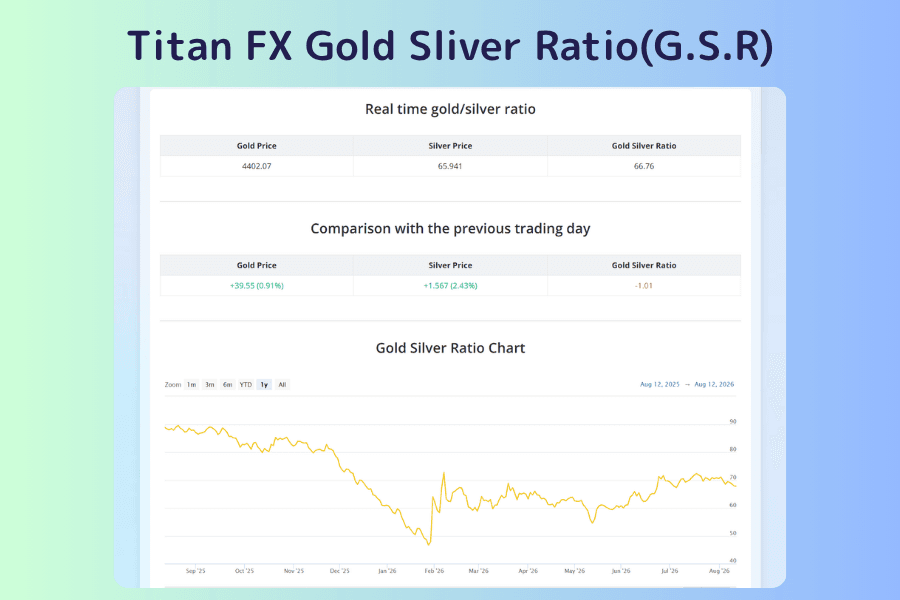
A classic gauge of silver's relative strength is the gold-silver ratio (gold price ÷ silver price); you can view the live figure and its history in the Titan FX Gold Silver Ratio tool:
4. What moves the price of Silver vs US Dollar?
Several key drivers influence XAGUSD price dynamics:
1. US Dollar Strength
Silver is priced in US dollars, so a stronger dollar generally depresses silver prices, making it more expensive for holders of other currencies.
2. Real Yields
Real yields (inflation-adjusted interest rates) impact the opportunity cost of holding non-yielding assets like silver. Lower or negative real yields tend to support silver prices.
3. Industrial Demand
Silver’s use in solar panels and semiconductors has grown, linking its price to technological cycles and renewable energy trends.
4. Gold-Silver Ratio
Traders watch this ratio to identify relative value opportunities. A historically high ratio may signal silver is undervalued compared to gold.
5. Cyclical Risk Sentiment
In risk-on environments, industrial demand and economic optimism can lift silver. Conversely, during risk-off periods, safe-haven demand may shift more to gold.
6. Supply Factors
Mining output, recycling rates, and geopolitical events in major silver-producing countries can influence supply and thus prices.
5. How can traders access Silver vs US Dollar? Common methods compared
Traders have multiple avenues to gain exposure to XAGUSD, each with distinct characteristics:
| Instrument | Description | Pros | Cons |
|---|---|---|---|
| Spot Silver (XAG/USD) | Direct trading of silver priced in USD via CFDs or forex platforms | Tight spreads, immediate execution | No physical delivery, margin requirements |
| Futures Contracts | Standardized contracts traded on exchanges like COMEX | High liquidity, leverage, transparent pricing | Requires margin, expiration dates, rollover costs |
| Silver ETFs | Exchange-traded funds holding physical silver or silver derivatives | Easy access, no storage concerns | Management fees, potential tracking errors |
| Physical Silver | Buying actual silver bars or coins | Tangible asset, no counterparty risk | Storage costs, less liquid, premium over spot price |
CFDs and spot silver trading are popular among retail traders for their accessibility and leverage. Futures offer deeper liquidity but require more capital and understanding of contract mechanics. ETFs provide a convenient way to invest without handling physical metal but come with fees.
6. What risks and market signals matter when trading Silver vs US Dollar?
Trading XAGUSD involves several risks and requires attention to key market signals:
- Volatility Risk: Silver can experience rapid price swings, especially during geopolitical or economic shocks.
- Leverage Risk: Many silver trading instruments allow leverage, increasing both potential gains and losses.
- US Dollar Fluctuations: Unexpected moves in the dollar can significantly impact silver prices.
- Interest Rate Changes: Central bank policies affecting real yields can alter silver’s appeal.
- Industrial Demand Shifts: Changes in technology adoption or economic cycles can affect silver’s industrial use.
- Liquidity Risk: Some silver instruments may have lower liquidity outside of peak trading hours.
Traders should monitor macroeconomic data, US Federal Reserve announcements, and sector-specific news (solar, semiconductors) to anticipate price moves. Technical analysis can also help identify entry and exit points but should be combined with fundamental insights.
Start Trading Silver vs US Dollar
Trade XAGUSD CFDs with Titan FX and access flexible leverage, competitive spreads, and opportunities in both rising and falling markets.
7. FAQ: Common questions about Silver vs US Dollar
Q1. How is the gold-silver ratio useful for trading XAGUSD?
The gold-silver ratio compares gold’s price to silver’s and helps traders identify relative value. A high ratio may suggest silver is undervalued, potentially signaling a buying opportunity.
Q2. Can I trade XAGUSD 24/7?
Most spot silver CFDs and forex platforms offer extended trading hours, but liquidity and spreads can vary. Futures contracts have defined trading sessions depending on the exchange.
Q3. How do real yields affect silver prices?
Lower or negative real yields reduce the opportunity cost of holding silver, often boosting demand and prices. Rising real yields can pressure silver prices downward.
Q4. What is the difference between spot silver and silver futures?
Spot silver reflects the current market price for immediate delivery, while futures are contracts to buy or sell silver at a future date. Futures have expiration dates and may involve rollover costs.
Q5. Why does silver have higher volatility than gold?
Silver’s smaller market size and significant industrial demand cause it to react more sharply to economic changes and investor sentiment compared to gold.
Q6. Are silver ETFs a good alternative to trading XAGUSD directly?
Silver ETFs offer easy access and avoid physical storage but come with management fees and may not perfectly track spot prices. They suit longer-term investors more than active traders.
For detailed pricing and chart analysis, traders can visit the Silver Price Instruments Page.
View the live chart and technical analysis for Silver vs US Dollar (XAGUSD)
8. Conclusion: Understand Silver vs US Dollar before building a trading plan
Silver vs US Dollar (XAGUSD) is a compelling trading instrument blending precious metal investment characteristics with industrial demand exposure. Its price is influenced by a complex set of factors including US dollar strength, real yields, industrial demand, and cyclical risk sentiment. Understanding these drivers alongside the unique market characteristics of silver helps traders navigate its volatility and identify opportunities.
Access to XAGUSD is available through spot CFDs, futures, ETFs, and physical silver, each with pros and cons that suit different trading styles and risk tolerances. Beginners should be especially mindful of leverage risks, market volatility, and the importance of monitoring macroeconomic signals like interest rates and currency movements.
A well-informed trading plan that integrates fundamental insights with technical analysis and risk management strategies is essential for success in trading silver versus the US dollar.
For ongoing price updates and market tools, visit the Silver Price Instruments Page to support your trading decisions.
Further Reading
- How to Read the Silver Price: Live Quotes, Drivers, and Ways to Invest
- Silver Bars: A Complete Guide to Prices, Sizes, Buying, and Risks
- Introduction to Precious Metals Trading: Types, Applications, Price Drivers, and Trading Methods
- What is Gold CFD Trading? Exploring its Benefits, Risks, Costs, and Trading Methods
The financial markets research team at Titan FX. We produce educational content for investors across a wide range of instruments, including forex, commodities (oil, precious metals, agriculture), stock indices, US equities, and crypto assets.
Primary Sources (by Category)
- Market & Industry Bodies: London Bullion Market Association (LBMA), The Silver Institute
- Market Data: CME Group (COMEX)