

Three Rivers Pattern:Morning Star and Evening Star in Market

When analyzing fluctuations and trends in foreign exchange, stocks, cryptocurrencies, and other financial markets, the Three Rivers pattern from the Japanese Sakata Method is often used to predict future market direction.
The Three Rivers pattern, with its various forms, is an essential tool for financial traders in capturing market turning points.
This article will explore the different types of the Three Rivers pattern and their applications in market analysis, helping traders better understand and utilize this powerful and ancient technical analysis method.
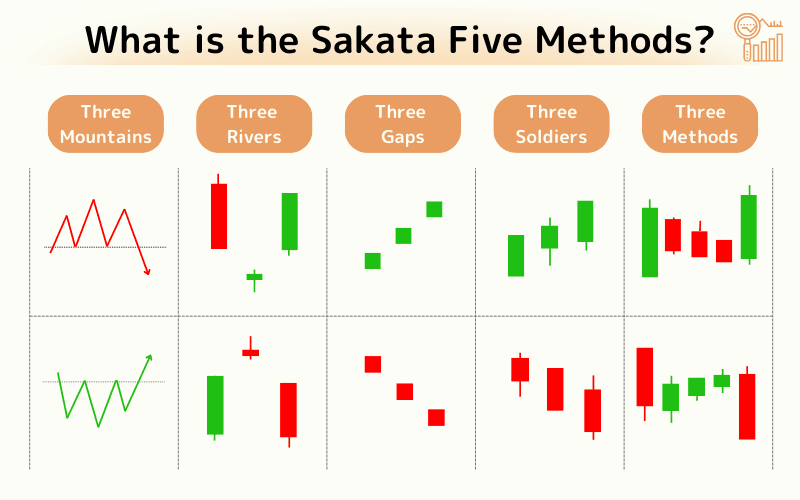
Basic Concept of Three Rivers
The Three Rivers pattern consists of three candlesticks.
It includes a primary long candlestick (either bullish or bearish), followed by shorter candlesticks with a gap (window) between them, and concludes with a long candlestick in the opposite direction of the first one.
While some view "Three Rivers" as the opposite of "Three Mountains" (such as the Triple Bottom), the widely accepted understanding is that the Three Rivers focuses on the arrangement of candlesticks in the chart, serving as a core element in the Sakata Method system.
Notably, the pattern appears at market tops or bottoms, signaling potential reversals, with the "Morning Star" and "Evening Star" being the most well-known forms of this pattern.
Other combinations, such as the "Harami" pattern, "Engulfing" pattern, and "Tweezer Bottom," also contribute to the structure of the Three Rivers.
Unlike the Three Mountains pattern, which shows overall chart shapes, the Three Rivers emphasizes the arrangement of three candlesticks.
Basic Elements of the Three Rivers Pattern
Here are the key elements that define the Three Rivers pattern:
| Element | Description |
|---|---|
| Number of Candles | The Three Rivers pattern consists of three candlesticks, with arrangement and characteristics being crucial. |
| Gap (Window) | In certain Three Rivers patterns, such as the Morning Star and Evening Star, a gap between candlesticks may appear, signaling market reversal. |
| Candlestick Types | Includes both bullish and bearish candlesticks; characteristics like length, shadow, and body size are key to identifying the pattern. |
| Direction | The Three Rivers pattern indicates a potential change in market trend, from downtrend to uptrend or vice versa. |
| Relative Position | Especially the position of the third candlestick relative to the first two, which is key in judging the strength of the reversal signal. |
Morning Star (Three Rivers Morning Star)
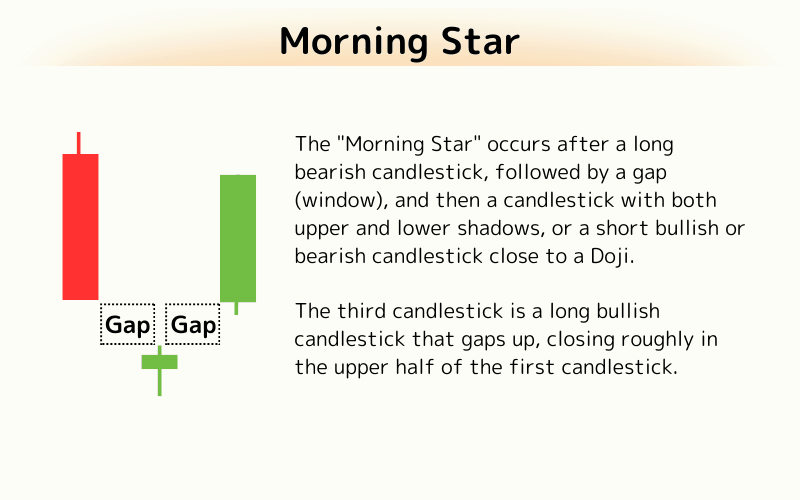
The "Morning Star" occurs after a long bearish candlestick, followed by a gap (window), and then a candlestick with both upper and lower shadows, or a short bullish or bearish candlestick close to a Doji.
The third candlestick is a long bullish candlestick that gaps up, closing roughly in the upper half of the first candlestick.
Note: Although the second candlestick often shows a gap, in actual trading, gaps rarely occur. Therefore, it's more important to focus on the arrangement of the three candlesticks to judge the pattern.
Evening Star (Three Rivers Evening Star)
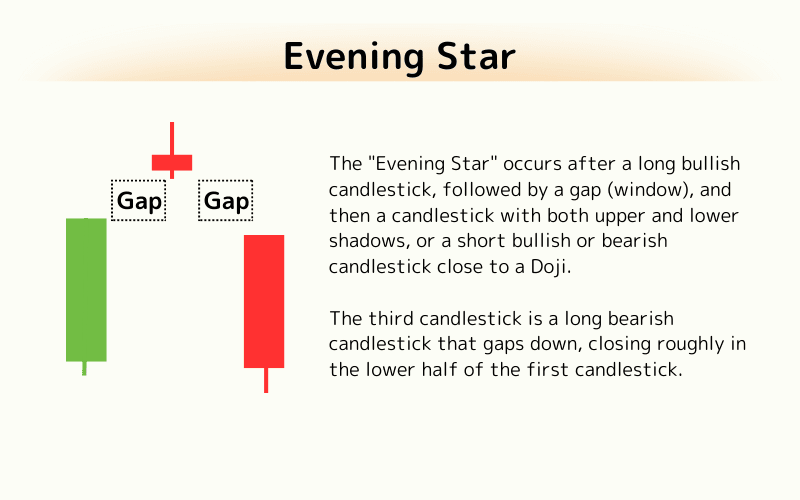
The "Evening Star" occurs after a long bullish candlestick, followed by a gap (window), and then a candlestick with both upper and lower shadows, or a short bullish or bearish candlestick close to a Doji.
The third candlestick is a long bearish candlestick that gaps down, closing roughly in the lower half of the first candlestick.
Note: Similarly, while a gap often appears between the second candlestick and others, gaps are rare in actual trading. The arrangement of the three candlesticks is the primary focus in identifying the pattern.
Conclusion
The detailed analysis of the Morning Star and Evening Star shows their significant role in market analysis. These two patterns provide crucial signals that a market trend may be about to reverse.
By understanding and applying these patterns correctly, traders can make more informed decisions, potentially improving their trading strategies.