

The Three Major U.S. Stock Exchanges: NYSE, NASDAQ, and AMEX (NYSE MKT)
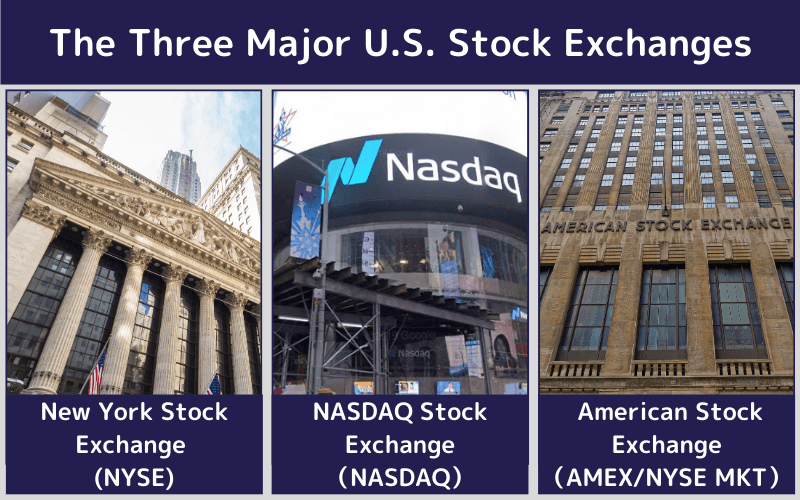
In the global financial market, the U.S. stock market holds a central position, shaping economic trends worldwide and drawing close attention from international investors.
As the world’s largest economy, the United States is home to several of the most renowned and influential stock exchanges on the planet — and the differences between them are larger than they first appear.
Each venue has its own listing standards, the type of companies it attracts, and its own trading mechanism. Below, we look at the features of these three major exchanges one by one and compare them side by side, so you can read the U.S. market with greater clarity.
- NYSE: Oldest (1792), largest by market cap, home to blue-chip stocks
- NASDAQ: First electronic market (1971); hub for tech and growth firms
- AMEX/NYSE MKT: Small- to mid-cap focus; pioneered ETFs; now in the NYSE group
- Key difference: Listing standards, trading mechanism, and companies attracted
- Why it matters: Each venue’s role shapes major indices and investor choices
1. New York Stock Exchange (NYSE)
The New York Stock Exchange (NYSE) is one of the largest and oldest stock exchanges in the world.
Established in 1792, the NYSE originated from the "Buttonwood Agreement," signed under a buttonwood tree on Wall Street, New York City, by brokers and merchants. This laid the foundation for what would become the NYSE.
Today, it has evolved into a centralized platform for trading the stocks of the world's largest companies, whose combined market capitalization exceeds that of any other exchange.
Key Trading Types and Features
The NYSE is renowned for its stable trading platform and stringent listing standards.
It primarily deals with blue-chip stocks, representing large, stable companies like Coca-Cola, IBM, and Disney. Additionally, the NYSE serves as a preferred venue for many major financial services and industrial firms.
Influence and Global Ranking
As one of the world's largest stock markets, the NYSE's trading volume and market capitalization establish its significance in the global financial landscape.
It serves as a key indicator of the U.S. economy and is a crucial reference for global investors assessing market sentiment.
Recent Developments and Market Trends
In recent years, the NYSE has embraced digital trends by introducing high-frequency trading and electronic trading platforms to enhance efficiency and transparency.
Amid changing global economic conditions, the NYSE continuously adapts its strategies to attract more international companies and emerging industries.
2. NASDAQ Stock Exchange
The NASDAQ Stock Exchange (National Association of Securities Dealers Automated Quotations), founded in 1971, is the world’s first electronic stock market.
Known for its innovative trading technology and focus on technology stocks, NASDAQ has become the go-to exchange for global tech giants and startups.
Key Trading Types and Features
NASDAQ emphasizes technology and biotechnology sectors, facilitating the trading of companies like Apple, Google, and Amazon.
Its market structure supports high liquidity and rapid trade execution, making it suitable for high-growth investment strategies.
Influence and Global Ranking
NASDAQ is one of the largest electronic stock markets globally, holding a significant position in terms of market capitalization and trading volume.
Its indices, particularly the NASDAQ Composite Index, are widely used to gauge the performance of the tech sector.
Recent Developments and Market Trends
NASDAQ continues to drive market innovation by enhancing its digital trading platforms and security features.
With the rapid growth of the global tech industry, NASDAQ is expanding its global influence, attracting more international companies and investors.
3. American Stock Exchange (NYSE MKT)
The American Stock Exchange (AMEX), now known as NYSE MKT, was originally established in 1908 as the "New York Curb Market," earning its name from its early practice of outdoor trading.
This exchange was recognized for its open trading style and focus on smaller, innovative companies. It was officially renamed the American Stock Exchange in 1921. Later, in 2009, it became NYSE Amex Equities and was rebranded as NYSE MKT in 2012.
Key Trading Types and Features
AMEX was known for catering to small- and mid-cap companies that did not meet the stringent listing requirements of the New York Stock Exchange (NYSE).
It was also a pioneer in innovative financial products, becoming one of the first exchanges to introduce and popularize exchange-traded funds (ETFs).
Influence and Global Ranking
At its peak, AMEX was one of the three major U.S. stock exchanges, holding a significant position among small and growth-oriented companies.
Its trading mechanisms and product innovations have left a lasting impact on the financial market.
Recent Developments and Market Trends
In 2008, AMEX was acquired by NYSE Euronext and gradually integrated into the larger NYSE Group.
Since then, it has been rebranded as NYSE MKT and has focused on providing a platform for small- to mid-sized companies while continuing its tradition of financial innovation, particularly in offering diversified financial products.
4. Comparison of the Three Major U.S. Stock Exchanges
The table below provides a comparison of the New York Stock Exchange (NYSE), NASDAQ, and American Stock Exchange (AMEX/NYSE MKT) in terms of their founding year, primary trading types, market positioning, and global influence.
| Feature | New York Stock Exchange (NYSE) | NASDAQ | American Stock Exchange (AMEX/NYSE MKT) |
|---|---|---|---|
| Founded | 1792 | 1971 | 1908 (as New York Curb Market) |
| Primary Trading Types | Blue-chip stocks | Tech stocks, innovative companies | Small- to mid-cap companies, innovative products (e.g., ETFs) |
| Market Position | One of the largest global stock markets | Largest electronic stock market | Primarily serves small- to mid-cap companies |
| Innovation and Features | Stability, stringent listing standards | Focus on technology and internet companies | Pioneer of innovative financial products like ETFs |
| Key Developments | Shift to electronic trading; key global market indicator | Leader in high-frequency trading and technology innovation | Acquired by NYSE Euronext in 2008; rebranded as NYSE MKT |
5. Conclusion
The New York Stock Exchange (NYSE), NASDAQ, and American Stock Exchange (AMEX, now NYSE MKT) each play distinctive and critical roles in the U.S. and global financial markets. NYSE, as one of the largest stock markets, serves as the primary platform for blue-chip stocks and has a profound impact on the global economy. NASDAQ is renowned for its advanced electronic trading systems and its focus on attracting tech giants, making it a hub for innovation. Although AMEX was later integrated into NYSE and rebranded as NYSE MKT, it continues to provide a growth platform for small- and mid-cap companies while maintaining its legacy of financial product innovation.
Together, these exchanges offer a diverse range of trading products and services, reflecting the varying needs and preferences of market participants. From stringent listing standards to cutting-edge financial tools, from stable investment options to high-risk, high-reward opportunities, their unique strengths and focus contribute to a dynamic and complementary market ecosystem.
As global economic conditions shift and technology advances, these exchanges will continue to evolve and adapt to meet the changing needs of investors and markets. For investors, understanding the characteristics of these exchanges and their roles in the financial markets can help in making informed investment strategies and decisions.
Trade US Stock CFDs with Titan FX
Titan FX offers 100+ US stock CFDs on MT4/MT5 with up to 20:1 leverage, tight spreads, and full long/short flexibility.
6. Frequently Asked Questions (FAQ)
Q1. What is the main difference between the NYSE and NASDAQ?
The NYSE is an auction market with a physical trading floor and strict listing standards, traditionally home to large-cap blue-chip companies. NASDAQ is a fully electronic dealer market and has become the leading venue for technology and high-growth firms. See 1. New York Stock Exchange (NYSE) and 2. NASDAQ Stock Exchange.
Q2. Does the American Stock Exchange (AMEX) still exist?
Not under its original name. AMEX was acquired by NYSE Euronext in 2008, became NYSE Amex Equities in 2009, and was rebranded NYSE MKT in 2012. It now operates within the NYSE group, focused on small- to mid-cap companies. See 3. American Stock Exchange (NYSE MKT).
Q3. Which exchange lists major technology companies such as Apple and Google?
NASDAQ. Founded in 1971 as the world’s first electronic stock market, it concentrates on technology and biotechnology firms and hosts many of the world’s largest tech companies. See 2. NASDAQ Stock Exchange.
Q4. Which is the oldest and largest U.S. stock exchange?
The NYSE is the oldest, established in 1792, and ranks among the largest in the world by total market capitalization. See 1. New York Stock Exchange (NYSE).
Q5. How can individual investors gain exposure to U.S.-listed stocks?
Besides buying shares directly, investors can use CFDs to trade price movements in both directions without owning the underlying shares. Titan FX offers U.S. stock CFDs — for example, you can check the live price of Coca-Cola.
Further Reading
- U.S. Stock Trading Hours
- U.S. After-Hours Trading
- U.S. Stock Trading
- What is an IPO (initial public offering)?
Titan FX Trade Strategy Research Lab covers forex (FX), commodities (oil, precious metals, agricultural products), stock indices, U.S. equities, and crypto assets — producing educational content for retail investors across asset classes.
Primary Sources (by Category)
- Exchanges: NYSE, NASDAQ
- Reference: Investopedia — NYSE vs. NASDAQ
- Media & Research: Bloomberg, Reuters, and WSJ coverage of U.S. equity markets