

Forex Fundamental Analysis: Concepts, Objectives, Influencing Factors,, and Analytical Methods

Forex trading is one of the largest financial markets in the world, with daily trading volumes exceeding trillions of dollars. To succeed in this market, traders typically use two primary analysis methods: "Fundamental Analysis" and "Technical Analysis".
In addition to these two main methods, some traders also use other approaches such as "Sentiment Analysis" and "Quantitative Analysis".
This article will focus on fundamental analysis in forex trading, exploring how economic and political factors can be used to predict market trends.
What is Fundamental Analysis?
Fundamental analysis is a method of evaluating the true value of a currency by studying macroeconomic factors such as economic indicators, central bank policies, political events, and international relations. It aims to understand how these factors affect the supply and demand for currencies, and thus predict the future trends of currency pairs.
Main Objectives of Fundamental Analysis:
1. Evaluate the True Value of a Currency:
Fundamental analysis helps traders determine whether a currency is overvalued or undervalued, enabling them to make buy or sell decisions.
2. Predict Long-term Trends:
By analyzing long-term economic data and trends, traders can forecast the long-term movement of currency pairs and develop corresponding trading strategies.
3. Understand Market Dynamics:
Fundamental analysis allows traders to understand the driving factors behind the market, such as economic growth, inflation rates, and interest rate changes, helping them better seize market opportunities.
4. Reduce Risk:
By gaining a comprehensive understanding of the macroeconomic environment, traders can manage and reduce trading risks more effectively.
Key Fundamental Factors Affecting the Forex Market
The forex market is influenced by various fundamental factors that drive currency price fluctuations. Below are some of the key factors:
1. Economic Indicators
Gross Domestic Product (GDP):
Gross Domestic Product (GDP) reflects the economic health and growth potential of a country. Strong GDP growth typically enhances the attractiveness of the country’s currency.
Read more about GDPConsumer Price Index (CPI):
The Consumer Price Index (CPI) measures changes in the price of a basket of goods and services, serving as a primary indicator of inflation. A rising CPI usually signals increasing inflation, which could lead to currency depreciation.
Read more about CPIInflation Rate (IR):
The Inflation Rate (IR) affects a country's currency purchasing power. High inflation typically leads to currency depreciation, while low inflation may encourage currency appreciation.
Read more about Inflation RateNon-Farm Payrolls (NFP):
Non-Farm Payrolls (NFP) indicate the health of the job market. An increase in employment usually signifies a strong economy and positively impacts the currency.
Read more about NFPUnemployment Rate (UR):
The Unemployment Rate (UR) is a key indicator of economic health. A low unemployment rate typically signals a healthy economy and may drive currency appreciation, while high unemployment may lead to currency depreciation.
Retail Sales (RS):
Retail Sales (RS) reflect consumer spending and are an important indicator of economic activity. Growing retail sales generally have a positive impact on currency.
2. Central Bank Policies
Interest Rate Decisions:
Interest rate changes directly affect currency values. High interest rates generally attract foreign investment, boosting the currency, while low rates may lead to currency depreciation.
Monetary Policy Announcements:
Central bank policy statements provide clues about future monetary direction, influencing market expectations and currency trends.
Quantitative Easing:
When central banks increase the money supply to stimulate the economy, it usually results in currency depreciation.
Read more about the U.S. Federal Reserve (Fed)3. Political Events
Government Elections:
Election outcomes can lead to policy changes, which can impact market confidence and currency value.
Political Instability:
Political unrest and instability increase market risk and often lead to currency depreciation.
Trade Wars and Tariffs:
Changes in trade policies, such as tariff increases, can affect economic relationships between countries and influence currency values.
4. International Relations
International Economic Cooperation:
Good international economic relations help stabilize and strengthen currency values.
Geopolitical Conflicts:
Conflicts and tensions increase market uncertainty, typically having a negative impact on currencies.
Read more about Geopolitical Risk5. Natural Disasters and Unexpected Events
Natural Disasters:
Natural disasters, such as earthquakes and hurricanes, negatively impact the economy and lead to currency depreciation.
Public Health Emergencies:
Emerging health crises, such as pandemics, affect economic activity and market sentiment, significantly impacting currencies.
How to Perform Fundamental Analysis
Performing fundamental analysis requires systematically collecting, analyzing, and interpreting various economic data and information to forecast forex market trends. Below are the main aspects of fundamental analysis:
1. Methods for Collecting and Analyzing Data
Use Economic Calendars:
Economic calendars list upcoming economic indicators along with their expected and historical values. By monitoring the release times and market expectations, traders can prepare in advance.
Follow Financial News and Reports:
Financial news websites, newspapers, and TV news programs provide the latest economic and political events. Staying updated helps understand short-term factors that might affect the forex market.
Analyze Economic Data and Indicators:
Regularly analyze key economic indicators (like GDP, CPI, Non-Farm Payrolls, etc.) and central bank policy statements to evaluate economic health and predict market trends.
2. Interpreting and Predicting Market Reactions
Market Expectations Before Data Releases:
Before the release of economic data, the market usually has an expected value. Understanding these expectations can help traders predict potential market reactions. If the actual data significantly differs from expectations, the market often experiences large fluctuations.
Market Reactions After Data Releases:
After the release of economic data, traders need to quickly interpret the data and determine its impact on the market. For example, stronger-than-expected Non-Farm Payrolls data could lead to a rise in the USD, while a higher-than-expected CPI might trigger expectations of an interest rate hike.
3. Practical Application in Trading
Combine with Technical Analysis:
Although fundamental analysis mainly focuses on economic data and macroeconomic factors, combining it with technical analysis can provide a more comprehensive market forecast. For example, chart analysis around major economic data releases can help determine the optimal entry and exit points.
Develop a Trading Strategy:
Based on the results of fundamental analysis, create a clear trading plan that includes entry points, stop-loss levels, and profit targets. Maintain strict risk management to protect capital during market fluctuations.
4. Common Fundamental Analysis Tools
Economic Calendar:
Provides a schedule of upcoming economic data and events, helping traders prepare in advance.
Financial News Websites:
Websites like Bloomberg, Reuters, and CNBC provide the latest economic and political news.
Research Reports and Publications:
Reports from central banks, government economic forecasts, and financial institution research provide in-depth market analysis and predictions.
Practical Applications of Fundamental Analysis (Case Studies)
1. Interest Rate Decisions and Their Impact on Currency Pairs:
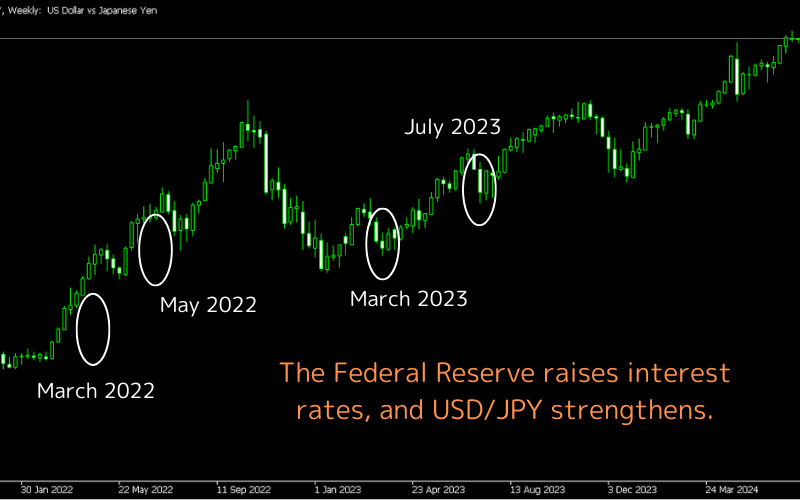
When the Federal Reserve announces an interest rate hike, the USD typically appreciates. This is because higher interest rates attract more investment, increasing demand for USD.
The USD tends to strengthen against other currencies like the EUR or JPY, causing fluctuations in currency pairs.
2. Political Events and Currency Fluctuations:
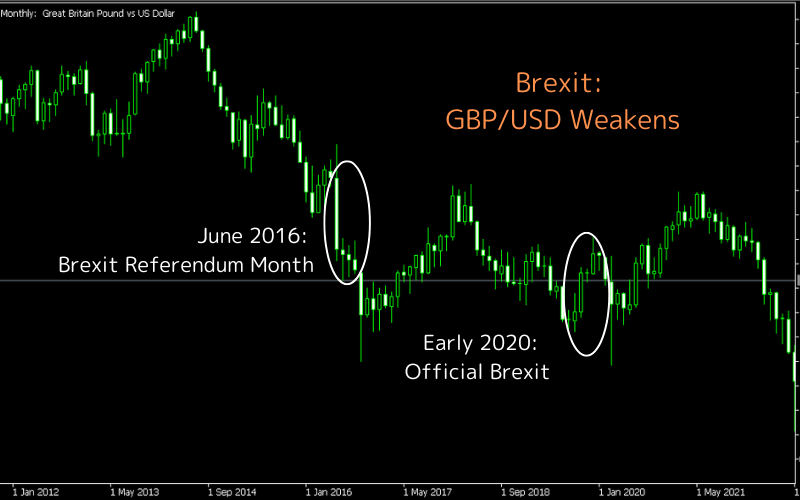
On June 23, 2016, the UK held a referendum to decide whether to leave the EU. The result, with 52% in favor of Brexit, led to a sharp increase in uncertainty regarding the UK's economic outlook, causing a significant depreciation of the British Pound. GBP/USD fell from 1.48 to 1.32, the lowest level since 1985.
After years of negotiations and political fluctuations, the UK officially left the EU on January 31, 2020, entering a transition period to finalize a new trade deal. As the official Brexit date approached, the GBP experienced further volatility due to market uncertainty over future trade arrangements and economic impacts.
Advantages and Limitations of Fundamental Analysis
As an essential method in forex trading, fundamental analysis has many unique advantages but also certain limitations. By understanding its pros and cons, traders can better use fundamental analysis to develop effective trading strategies and improve success rates. Here are the main advantages and limitations:
Advantages
1. Assess Long-Term Trends:
Fundamental analysis helps traders understand a currency’s real value and economic fundamentals, predicting long-term trends. This is especially important for long-term investment strategies.
2. Understand Market Drivers:
By analyzing economic indicators and policy changes, traders can understand the driving forces behind the market. This helps traders make more informed decisions by gaining a comprehensive understanding of market dynamics.
3. Respond to Sudden Events:
Fundamental analysis allows traders to quickly respond to major economic and political events, adjusting trading strategies to minimize losses or seize opportunities.
4. Diverse Sources of Information:
Fundamental analysis relies on a variety of information sources, such as economic data, news reports, and government and central bank statements, providing traders with a broad view of the market.
Limitations
1. Difficulty Predicting Short-Term Fluctuations:
Fundamental analysis focuses on long-term trends and often cannot predict short-term market fluctuations. Market sentiment and unforeseen events can cause significant short-term volatility.
2. Data Lag:
Economic data and reports are often delayed, meaning traders may not immediately reflect the latest market developments. This can lead to missed opportunities or delayed responses to risks.
3. Complexity and Information Overload:
Fundamental analysis requires handling large amounts of complex information and data, placing high demands on traders' knowledge and analytical skills. Additionally, too much information can lead to confusion and decision paralysis.
4. Strong Subjectivity:
Fundamental analysis can be subjective when interpreting data and predicting market reactions. Different traders may interpret the same event differently, leading to varying strategies.
Conclusion
Fundamental analysis, as a core method in forex trading, helps traders assess a currency’s real value and predict market trends by examining economic indicators, central bank policies, political events, and international relations.
While fundamental analysis excels in evaluating long-term trends, understanding market drivers, and responding to unexpected events, it also has limitations, such as difficulty predicting short-term fluctuations, data delays, complexity, and subjectivity.
Therefore, traders should combine fundamental analysis with technical analysis and other methods to gain a comprehensive view of the market, develop effective trading strategies, and reduce risk.
By fully leveraging the advantages of fundamental analysis and acknowledging its limitations, traders can enhance their competitiveness in the forex market.