

Bottom Fishing
Bottom fishing is an investment strategy where a trader buys an asset after a significant price decline, anticipating a rebound from depressed levels. It is a form of contrarian trading -- entering when sentiment is bearish and the majority of participants are selling.
The strategy offers potentially high returns but carries substantial risk. Misjudging the bottom can result in catching a falling knife.
This article explains what bottom fishing is, how to identify reversal timing, practical entry and risk management techniques, and how to select stocks suited to a bottom-fishing approach.
- What bottom fishing means and why it attracts investor attention
- How to use technical indicators, support zones, and volume to identify potential bottoms
- Staged-entry and stop-loss techniques for managing downside risk
- Criteria for selecting stocks that are suited to bottom fishing
1. What Is Bottom Fishing?
Bottom fishing refers to buying a stock, index, or other asset after its price has fallen sharply, based on the expectation that a reversal is imminent. The buyer enters near what they believe is the lowest point, aiming to profit from the subsequent recovery.
This approach is inherently contrarian: the trader acts against prevailing market sentiment, purchasing when fear is high and most participants are reluctant to buy.
While bottom fishing can generate significant returns, it requires careful analysis and disciplined execution for two main reasons.
Potential Reward: High Return If the Call Is Correct
- If the asset rebounds after a panic-driven sell-off, early buyers capture the largest gains. This is especially true for fundamentally sound stocks that have been oversold.
- Combining technical signals -- such as an RSI oversold reading or a MACD golden cross -- with fundamental analysis can improve the probability of success.
Primary Risk: Misidentifying the Bottom
- The true bottom can only be confirmed after the fact. Entering too early in a downtrend exposes the trader to further losses as the decline continues.
- The expression "catching a falling knife" describes this hazard: what appears to be a bottom may simply be a pause in a longer downturn.
Bottom fishing is not an impossible strategy, but it demands thorough technical analysis and robust risk management. Entering on gut feeling or guesswork is a recipe for loss.
2. How to Identify Bottom Timing
Successful bottom fishing depends on accurately judging whether the market has reached a floor. No single indicator is sufficient; the strongest signals emerge when multiple factors align. The following five elements form the core of bottom identification.
Element 1: Technical Indicators Showing Reversal Signals
Technical tools provide the first layer of evidence that selling pressure may be exhausting.
RSI (Relative Strength Index): When RSI falls below 30, the market is oversold. A turn back upward from that zone can signal a pending reversal.
MACD: A golden cross (signal line crossing above the MACD line) or a shrinking histogram indicates that bearish momentum is fading.
Candlestick patterns: Hammer candles, engulfing patterns, and double bottoms suggest that short-term support is forming.
Element 2: Support Zone Tests and Stabilization
When price approaches a historically significant support area -- such as a long-term moving average, a Fibonacci 61.8% retracement level, or a previous swing low -- observe whether the decline stalls.
A pattern of declining volume as price holds at support, followed by a reversal candle with increasing volume, can indicate that institutional buyers are accumulating.
Element 3: Extreme Pessimism in Market Sentiment
Bottoms frequently form amid peak fear and irrational capitulation. When media coverage turns overwhelmingly negative, the VIX spikes, and retail investors rush to exit, the market may be approaching emotional exhaustion.
Extreme sentiment alone does not confirm a bottom, but when combined with technical evidence, it strengthens the case for a near-term floor.
Element 4: Unusual Volume Changes
Volume reveals institutional activity. After a sustained decline, look for:
- Volume contraction with sideways price action: Selling pressure is being absorbed.
- A rebound accompanied by rising volume: Buyers are returning with conviction.
This volume sequence -- contraction during the base, expansion during the initial bounce -- is a classic accumulation signature.
Element 5: Fundamental Improvement or Exhaustion of Negative Catalysts
Beyond charts and sentiment, real changes in fundamentals can anchor a bottom. Policy support, a shift toward rate-cut expectations, improving corporate earnings, or recovering industry demand can all provide a floor for prices.
When the negative catalysts that caused the decline have been fully priced in, sellers become exhausted and the market can stabilize.
3. Practical Strategies and Risk Management
Once bottom conditions appear, execution quality determines the outcome. Even a correct read on timing can lead to losses if the entry and risk management are poorly handled.
Technique 1: Staged-Entry Strategy
Avoid committing the entire position at once. Divide capital into multiple tranches:
- Tranche 1: An initial probe position at the technical support zone.
- Tranche 2: Add after a confirmed reversal signal (bullish candle with rising volume).
- Tranche 3: Deploy the remainder once price breaks above short-term resistance (5-day or 10-day moving average).
This approach averages entry cost, limits drawdown, and retains flexibility to respond if conditions deteriorate.
Technique 2: Strict Stop-Loss and Exit Rules
No signal is perfect. A predetermined stop-loss level prevents small losses from compounding into large ones.
A time-based stop is also effective: if the expected rebound does not materialize within a set period (for example, 5 to 7 trading sessions), consider exiting to free capital rather than remaining in a stagnant position.
Technique 3: Adjusting Strategy to Market Conditions
Market regime affects bottom-fishing success rates.
- During a confirmed bear market: Observe rather than act; limit positions to small probes.
- During stabilization: When the broader index has found support and sector rotation becomes visible, more aggressive positioning is appropriate.
- Idiosyncratic vs systemic risk: If the decline is limited to a specific stock or sector, flexibility is higher. During systemic events -- such as central bank tightening or a financial crisis -- spread capital over time and avoid concentrated bets.
4. How to Select Stocks for Bottom Fishing
Success in bottom fishing depends not only on timing but also on choosing the right instrument. Not every fallen stock rebounds; some decline because their fundamentals are genuinely deteriorating.
Key Metric: Deviation Rate for Short-Term Oversold Screening
The deviation rate measures how far the current price has diverged from its moving average. A large negative deviation (for example, more than -10% from the 20-day or 60-day moving average) suggests the price has overshot to the downside and may revert.
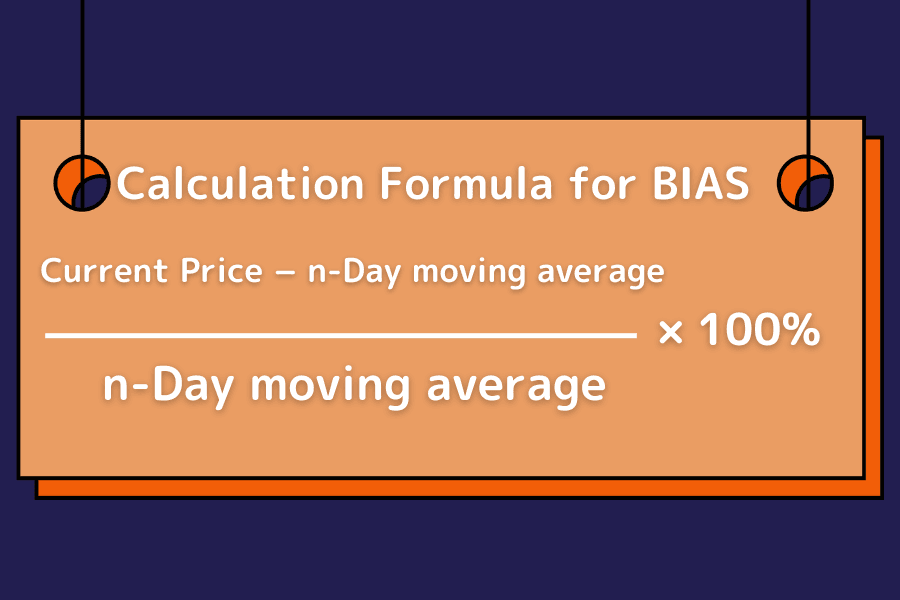
- When a stock trades well below its 20-day or 60-day moving average and technical stabilization signals appear (bullish candle, declining volume, RSI recovery), it becomes a candidate for a short-term rebound trade.
- Confirm that the moving average trend is flattening or turning upward. A stock that has fallen sharply but whose moving averages are still sloping downward may continue to decline.
Stocks to Avoid: Weak Fundamentals or Pure-Theme Plays
- Companies with deteriorating earnings, consecutive losses, or excessive dependence on speculative themes are unlikely to form a genuine support floor even after a large decline.
- Bottom fishing should target stocks with real fundamental value that have been unfairly sold down by short-term sentiment -- for example, industry leaders or cyclical blue chips at trough valuations.
Positive Factors: Stable Fundamentals and Institutional Presence
- Revenue and profit growth -- or at least stability -- over recent quarters confirms that the company's core business has not collapsed.
- Check whether institutional investors still hold positions. If institutions have not fully exited, it signals that the market sees recovery potential for the company.
5. FAQ
Q1: Do you have to buy at the absolute lowest price for bottom fishing to work?
No. Successful bottom fishing does not aim to catch the exact lowest tick. The goal is to enter at a level near the bottom where reversal conditions are in place -- confirmed support, stabilization signals, and favorable risk-reward. In practice, it is a "strategic entry," not a "price-guessing game."
Q2: Is bottom fishing suitable for long-term investors?
It can be, but with a different approach. Long-term investors should combine bottom fishing with fundamental analysis (healthy earnings, clear oversold conditions) and use dollar-cost averaging or staged buying over an extended period. This reduces the psychological pressure of short-term volatility and lowers the average cost basis gradually.
Q3: What are the most common mistakes in bottom fishing?
Frequent errors include: focusing only on how far the price has dropped without analyzing the trend or supply-demand structure; failing to set stop-losses or use staged entries; averaging down after a failed bottom-fishing attempt, which compounds losses; and ignoring macro risks such as rate hikes or systemic financial stress. Establishing clear trading rules and avoiding emotional decisions is essential.
6. Summary
Bottom fishing offers the potential for high returns, but it is fundamentally a contrarian operation and carries meaningful risk. Traders should cross-verify multiple factors -- technical indicators (RSI, MACD, candlestick patterns), key support levels, volume behavior, and market sentiment -- before making an entry decision.
In execution, use staged entries, set stop-losses, and adapt strategy to market conditions. Prioritize stocks where the deviation rate signals reversion potential and fundamentals remain intact. The goal is to avoid blindly buying cheap assets and becoming a victim of the falling knife.
Beginners should start with a demo account to practice entry timing and risk management before committing real capital. Discipline and strategy together are what improve bottom-fishing success rates over time.
Further Reading
Titan FX's financial market research and analysis team produces investor education content across a wide range of financial instruments, including foreign exchange (FX), commodities (crude oil, precious metals, and agricultural products), stock indices, U.S. equities, and crypto assets.
Primary Sources by Category
- Technical analysis education: CME Group -- Technical Analysis resources; CMT Association -- Dow Theory and market analysis methodology
- Market data and volatility: CBOE -- VIX Index methodology and historical data; FRED -- Historical financial market data
- Investor education and regulation: SEC -- Investor.gov educational resources; FINRA -- Investment glossary and market fundamentals