

NOK(Norwegian Krone)
Among the world’s currencies, the Norwegian Krone stands out for how closely it tracks crude oil prices and for the large swings typical of a resource-driven currency. Behind it sit one of the world’s largest sovereign wealth funds, built on energy-export revenues, and a tradition of disciplined public finances.
The Norwegian Krone holds significant influence in the foreign exchange market, largely due to Norway's role in the global energy market. This connection makes its currency closely tied to global energy prices.
This article explores the historical background of the Norwegian Krone, the key factors influencing its exchange rate, its unique characteristics, and its future prospects.
- NOK as a petroleum-linked currency and its role in the Nordic economy
- How oil prices uniquely drive NOK exchange rate movements
- Impact of Norges Bank monetary policy on NOK valuation
- Practical approaches to trading USD/NOK in the forex market
- History of the Norwegian Krone
- Key Factors Influencing the Norwegian Krone’s Exchange Rate
- Characteristics of the Norwegian Krone
- Key Economic Indicators for the Norwegian Krone (NOK)
- The Role of the Norwegian Krone in the Global Financial System
- Future Outlook for the Norwegian Krone
- How to Trade NOK (Norwegian Krone)
- Frequently Asked Questions (FAQ)
- Summary
History of the Norwegian Krone
The history of the Norwegian Krone dates back to 1875 when Norway joined the Scandinavian Monetary Union, which included Denmark, Norway, and Sweden. These countries adopted a Krone-based system tied to the gold standard.
However, as the gold standard was gradually abandoned after the two World Wars, currencies were no longer pegged to gold, and the Norwegian Krone entered a floating exchange rate system. Since then, its exchange rate has been determined by market supply and demand, particularly influenced by Norway’s economy and the energy market.
The Norges Bank, established in 1816, manages domestic monetary policy and oversees financial stability. It also intervenes in the foreign exchange market when necessary. Under the floating exchange rate regime, the central bank’s policies have a direct impact on the fluctuations of the Krone’s exchange rate.
The Gold Standard is a monetary system where the value of currency is directly linked to gold. Each unit of currency is backed by a specific amount of gold and can be exchanged accordingly.
What is the Gold Standard? An Introduction to Its History, Mechanism, and Pros & Cons
Under the gold standard, a country's money supply was limited by its gold reserves, effectively preventing inflation and promoting currency stability. However, as economies expanded and international trade grew, the flexibility of this system became increasingly constrained. Many countries abandoned the gold standard in the 20th century in favor of floating exchange rate systems.
Key Factors Influencing the Norwegian Krone’s Exchange Rate
The Norwegian Krone’s exchange rate is influenced by multiple factors, including Norway’s economic performance, global energy prices, central bank policies, and international market dynamics.
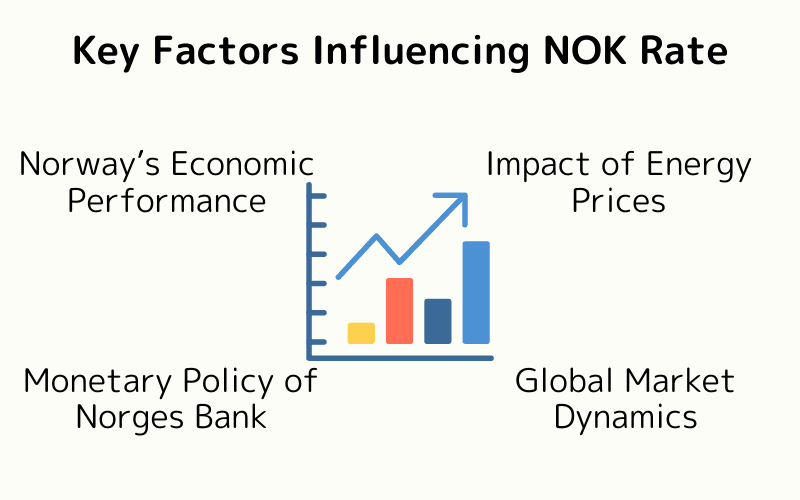
1. Norway’s Economic Performance
Norway's economy is heavily dependent on energy resource exports, especially oil and natural gas. Key economic indicators such as gross domestic product (GDP), unemployment rate, and inflation rate play a significant role in the Krone’s exchange rate.
When Norway’s economy experiences strong growth, the Krone often appreciates due to increased investor confidence. Conversely, economic slowdowns or rising unemployment rates can put downward pressure on the Krone’s value.
2. Impact of Energy Prices
As a major global producer of oil and natural gas, energy prices have a direct impact on the Norwegian Krone’s exchange rate.
When oil and gas prices rise, Norway’s export revenue increases, leading to higher demand for the Krone and an appreciation in its value. Conversely, falling energy prices may result in depreciation. As a result, the Norwegian Krone is considered a "commodity currency" in the foreign exchange market, closely linked to global energy markets.
3. Monetary Policy of Norges Bank
The monetary policy of Norges Bank significantly impacts the Krone’s exchange rate. When Norges Bank raises interest rates, the Krone typically appreciates as higher rates attract international capital inflows. On the other hand, when the central bank lowers rates or implements expansionary monetary policy, the Krone may depreciate.
Norges Bank may also intervene in the foreign exchange market when needed to maintain currency stability.
4. Global Market Dynamics
Uncertainty in international markets can also affect the Norwegian Krone’s exchange rate.
During periods of global economic instability or heightened geopolitical risks, investors often shift towards safe-haven currencies, which can put pressure on the Krone. In particular, fluctuations in energy markets or reduced global demand can impact its value.
Characteristics of the Norwegian Krone
The Norwegian Krone possesses unique characteristics that give it a special role in the international monetary system.
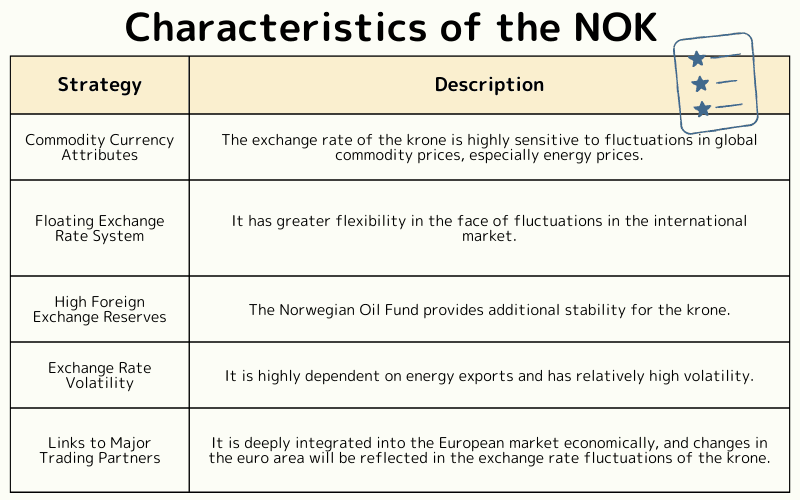
1. Commodity Currency Attributes
Due to Norway’s role as a major global exporter of oil and natural gas, the Norwegian Krone is classified as a "commodity currency." This means its exchange rate is highly sensitive to global commodity prices, especially energy prices. When oil prices rise, the Krone tends to appreciate, whereas falling oil prices can lead to depreciation.
Commodity currencies are currencies whose exchange rates are significantly influenced by the price fluctuations of commodities such as oil, natural gas, and metals. These currencies typically originate from resource-dependent countries like Norway, Australia, and Canada.
2. Floating Exchange Rate System
Since Norway abandoned its fixed exchange rate system in the 1970s, the Krone has operated under a floating exchange rate regime. This means its value is determined by supply and demand in the foreign exchange market, giving it greater flexibility in responding to international market fluctuations.
3. Strong Sovereign Wealth Fund and Fiscal Buffer
Norway maintains the Government Pension Fund Global (GPFG), one of the world's largest sovereign wealth funds as part of its proactive currency management strategy. The Government Pension Fund Global (commonly referred to as the Oil Fund) is one of the largest sovereign wealth funds globally, providing additional stability to the Krone and helping Norway cope with uncertainties in international financial markets.
The Oil Fund, established by the Norwegian government, stores revenues from domestic oil and gas resources to prepare for future resource depletion and provide financial security for future generations.
The fund invests globally in assets such as stocks, bonds, and real estate. Its existence reduces Norway’s dependence on oil revenues and ensures fiscal stability.
Sovereign Wealth Funds (SWF) are government-owned and managed investment funds typically derived from petroleum revenue and fiscal surpluses, trade surpluses, or natural resource revenues (like oil and gas). These funds aim to diversify risk, grow wealth, and provide fiscal security for future needs. They invest in assets such as equities, bonds, real estate, and infrastructure.
Sovereign wealth funds help countries reduce reliance on single economic sources, ensure fiscal stability, and support public spending during economic downturns.
4. Exchange Rate Volatility
The Norwegian Krone is relatively volatile due to its heavy reliance on energy exports.
As a result, the Krone’s exchange rate is often influenced by international oil price changes and global economic conditions. While this volatility presents opportunities for investors, it also increases risks.
5. Links to Major Trading Partners
Norway has close trade ties with Europe, particularly EU countries. The economic performance and policy changes in the Eurozone significantly impact the Krone’s exchange rate. Although Norway is not a member of the EU, its economy is deeply integrated into European markets, making the Eurozone’s developments often reflected in Krone fluctuations.
Key Economic Indicators for the Norwegian Krone (NOK)
| Indicator | Description |
|---|---|
| GDP | Measures the overall size and growth of Norway's economy. Higher GDP growth generally supports NOK appreciation. |
| Inflation Rate | Reflects changes in consumer price levels, influencing central bank interest rate decisions and exchange rates. |
| Unemployment Rate | Indicates the health of the domestic labor market. Lower unemployment usually signals a strong economy, supporting NOK. |
| Energy Exports | Norway's energy exports, particularly oil and natural gas, are major contributors to its trade surplus, driving demand for NOK. |
| Interest Rate Policy | Changes in interest rates set by Norway's central bank directly impact NOK's investment appeal, with higher rates supporting its value. |
Free Economic Indicator Lookup by Titan FX
Titan FX provides access to economic data indicators from major global economies, including the US, Europe, Japan, and China. You can search indicators based on release time, country, and importance.
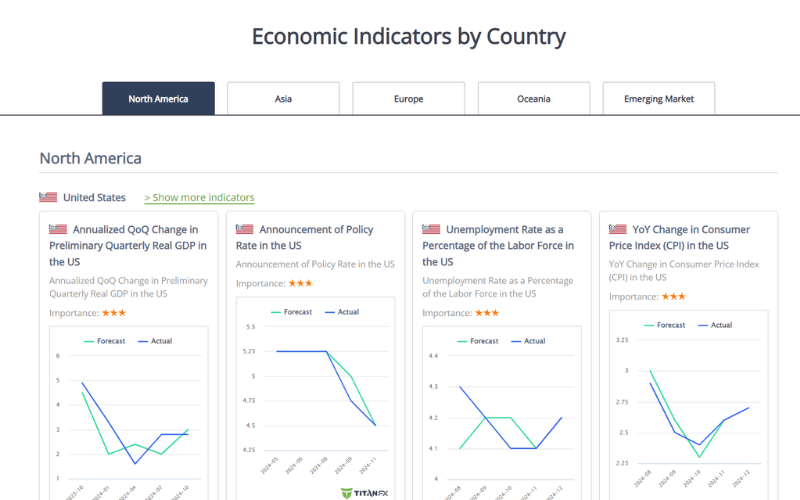
How to Check Economic Indicators Economic Indicator Lookup Page
The Role of the Norwegian Krone in the Global Financial System
Although Norway is a relatively small economy, the Norwegian Krone holds significant importance in the global financial system, particularly in the forex and commodity markets.
The Norwegian Krone is often used as a tool to hedge energy price fluctuations. During periods of intense oil price volatility, investors view NOK as a currency that tracks energy prices.
Additionally, Norway’s fiscal stability and substantial foreign reserves contribute to the Krone’s solid position in international financial markets.
Future Outlook for the Norwegian Krone
1. Changes in the Global Energy Market
With the growing demand for renewable energy, the prominence of oil and natural gas might gradually diminish, directly affecting the performance of the Norwegian Krone. Norway is actively pursuing energy transition, and policies or economic adjustments during this process will play a crucial role in NOK’s future.
2. Economic Structural Transformation
Norway is striving to diversify its economy and reduce its reliance on energy. The success of this economic transformation could impact future stability and the NOK exchange rate. A successful shift may provide NOK with greater long-term stability.
3. Monetary Policy of the Central Bank of Norway
The central bank’s future interest rate decisions will depend on domestic economic performance and the global economic environment. If inflationary pressures rise, the central bank may raise interest rates, which would support NOK. Conversely, in a global economic slowdown, more accommodative policies could exert downward pressure on NOK.
How to Trade NOK (Norwegian Krone)
Trading the Norwegian Krone (NOK) can be conducted through various methods, with forex margin trading being the most common. This trading method offers leverage, enabling investors to control larger positions with smaller amounts of capital.
Forex margin trading also allows for bidirectional operations, where investors can profit from both rising and falling markets depending on market fluctuations.
Additionally, the forex market operates 24 hours a day, making it the largest market in the world by trading volume. This provides high flexibility and liquidity, accommodating a range of trading strategies and risk tolerance levels.
Further Reading: Introduction to Forex Margin Trading
Titan FX offers up to 500:1 leverage on NOK pairs (USD/NOK, EUR/NOK, etc.).
Trading Forex with Titan FX
1. Open a Trading Account:
Titan FX offers a fast and simple account opening process with no requirement for ID or address verification.
Titan FX provides Standard and Blade account types. Traders can choose their preferred type during registration.
Titan FX Account Opening Guide2. Deposit Funds:
After registration, deposit funds into your account. Titan FX supports multiple deposit methods, with credit card deposits being the fastest and most convenient, usually processed instantly.
Titan FX Credit Card Deposit Guide3. Download and Install Trading Platforms (MT4/MT5):
Titan FX offers MT4 and MT5 platforms for Windows, Mac, iOS (iPhone/iPad), and Android.
Titan FX MT5 Installation and Login Titan FX MT4 Installation and Login4. Selecting Currency Pairs
Titan FX offers around 60 currency pairs. Due to the close economic ties between Norway and the European Union, the trading volume of the Euro against the Norwegian Krone is relatively high. The most commonly traded currency pair involving the Norwegian Krone (NOK) is the Euro (EUR), specifically EUR/NOK (Euro/Norwegian Krone).
Query for all currency pairs5. Place Trades:
Log into the MT4 or MT5 platform, select your trading instrument, and start buying or selling.
MT5 Interface and Order Methods
MT4 Interface and Order Methods
Titan FX Provides Free Trading Tools (Custom Indicators and EAs)
Titan FX is dedicated to providing traders with advanced trading support, including free trading tools such as custom indicators and EAs (Expert Advisors). These tools are designed to enhance traders' efficiency and strategy precision.
Custom indicators help traders analyze market trends more accurately and identify potential trading opportunities.
Meanwhile, EAs can automatically execute pre-set trading strategies, avoiding emotional interference and ensuring that each trade is executed accurately.
With these free tools, Titan FX helps you gain an edge in the competitive financial market and improve your trading performance.
All Custom Indicators EA Trading Program RankingsFrequently Asked Questions (FAQ)
Q1: Why is NOK considered a commodity currency?
Norway is one of the world's largest oil and gas exporters. Oil revenue accounts for a significant share of government income, making NOK highly sensitive to crude oil price movements.
Q2: When is the most active trading period for USD/NOK?
The London session offers the highest liquidity for NOK pairs, especially during the overlap with the New York session. Norwegian economic data releases during European hours also drive volatility.
Q3: How does Norges Bank policy affect NOK?
Norges Bank's interest rate decisions directly impact NOK. Rate hikes attract foreign capital and strengthen NOK, while dovish signals or rate cuts tend to weaken it.
Q4: Is NOK suitable for carry trades?
Norway has maintained relatively higher interest rates compared to some major economies, making NOK occasionally attractive for carry trades. However, oil price volatility adds risk.
Q5: How does NOK compare to other Scandinavian currencies?
Unlike SEK (Swedish Krona) which is more tied to manufacturing, NOK is primarily driven by energy markets. Both have similar liquidity profiles but different fundamental drivers.
Summary
The Norwegian Krone (NOK) occupies a unique position in the global forex market as a petroleum-linked currency backed by the Government Pension Fund Global (GPFG), one of the world's largest sovereign wealth funds. Its exchange rate is driven by oil prices, Norges Bank monetary policy, and global risk sentiment. For traders, NOK offers both carry trade potential and short-term volatility opportunities.
Related Articles
Titan FX Research. We produce educational content for investors, covering a wide range of financial instruments including forex, commodities (crude oil, precious metals, agricultural products), stock indices, U.S. equities, and digital assets.
Primary Sources (by category)
- Central Bank: Norges Bank — Monetary Policy
- Energy: EIA; Norwegian Petroleum Directorate
- Market: Bloomberg; Reuters