
 Home
Home- User How to Use for MT4 (Windows Version)
- Common Forex Scams and How to Spot MT4/MT5 Platform Fraud
Common Forex Trading Scams and Sales Tactics: How to Quickly Spot MT4/MT5 Platform Fraud

To avoid MT4/MT5 scams, download the platform only through a regulated broker's official channels, verify its license and deposit/withdrawal details, and stay wary of "guaranteed profit" or "managed account" pitches.
In the forex market, MetaTrader 4 (MT4) and MetaTrader 5 (MT5) are two of the most widely used trading platforms. However, some bad actors exploit the reputation of these platforms to commit fraud.
To help investors steer clear of fake and rogue platforms, this article explains the common methods scammers use with fake MT4 and MT5 platforms, along with tips on how to spot them. We hope this information helps you better protect your investments.
1. What are MT4/MT5, and how are they related?
MT4 and MT5 are two trading platforms/software widely used in forex (margin) trading. MT4 (MetaTrader 4) and MT5 (MetaTrader 5) were developed by MetaQuotes Software and are computer programs designed specifically for forex trading.
They provide a user-friendly interface that lets investors trade forex through a broker.
The two platforms are related in that they share the same developer, but they differ in some features and uses. See the table below.
| Feature | MetaTrader 4 (MT4) | MetaTrader 5 (MT5) |
|---|---|---|
| Release year | 2005 | 2010 |
| Supported instruments | Forex, CFDs | Forex, CFDs, futures, options, stocks, etc. |
| Number of timeframes | 9 | 21 |
| Pending order types | 4 | 6 |
| Network protocol | Based on NetTcp | Based on WebSockets |
| Market depth access | Not supported | Supported |
| Independent orders and execution | Complex | More flexible, supports multiple execution modes |
| Number of technical analysis tools | 30 | 38 |
| EA (trading program) language | MQL4 | MQL5 |
| EA (trading program) optimization | Available | More advanced optimization tools |
| Multi-strategy testing | Available | More advanced backtesting |
| Supported OS | Windows, Mac, iOS, Android, Web | Windows, Mac, iOS, Android, Web |
This table outlines the main differences between MT4 and MT5. Investors can choose which platform to use based on their needs and trading preferences.
2. Common forex margin trading scams and sales tactics
Forex margin trading is a high-risk, high-reward form of investment, but its complexity and the market's huge liquidity also make it an easy target for bad actors.
Below are some common malicious tactics seen in forex margin trading.
Common forex scam tactic 1: Promises of low risk and high returns
Investing inherently involves risk. No investment tool or strategy can guarantee zero risk or stable high returns.
When a platform or broker promises low risk and high returns, investors should be highly vigilant. Such promises are usually exaggerated, because legitimate financial institutions and regulators are prohibited from guaranteeing specific returns.
Genuine investing should be based on rational analysis and risk management. Any overly attractive promise of high returns may be a sign of fraud. Investors should carefully assess risk and avoid being misled by unrealistic promises.
Common scam scripts/tactics:
-
"Register on our platform now—just deposit $1,000 and instantly get a $500 bonus!"
-
"Use our trading platform completely risk-free, with a guaranteed 50% return every month!"
Common forex scam tactic 2: Through social media
On social platforms such as Facebook, Instagram (IG), and LINE, scammers often start chatting with you while posing as attractive men or women.
They may begin with casual, unrelated topics, gradually building familiarity to gain your trust. Once trust is established, they recommend various "guaranteed-profit" financial investment products.
Some scams also involve impersonating a broker's seemingly official social media account, disguising themselves as a legitimate institution to commit fraud.
When using social media, stay alert and keep away from such suspicious recommendations from strangers that may involve financial fraud.
Common scam scripts/tactics:
-
"Hi! I saw your post and I'm really interested in getting to know you—I'd love to chat about investing!"
-
"I've made a lot recently on an investment platform. I really recommend it—the returns are stable!"
Common forex scam tactic 3: Phishing sites/fake websites
As online trading has become more popular, fake forex brokers use counterfeit websites to commit fraud. They may impersonate legitimate brokers and promote these fake sites through ads on Google, Facebook, and elsewhere.
The URLs of these scam sites can closely resemble those of legitimate brokers—sometimes differing by just one or two characters—making it easy for inexperienced investors to click by mistake. The sites can look very similar to legitimate brokers, with near-identical logos and web design.
Common fake URLs may add letters or use a different domain extension (such as .net). The site may also lack internal detail or show error pages (such as 404)—all warning signs.
Common scam scripts/tactics:
-
"Register now and get up to 100% bonus cashback!"
-
"Click here to open an account instantly and enjoy risk-free investing!"
Common forex scam tactic 4: Manipulating quotes
Some rogue brokers may manipulate quotes to harm investors' interests. They may provide false quotes that don't match actual market prices, or deliberately delay quote updates so investors execute at outdated prices.
These brokers may also widen the bid-ask spread to increase trading costs. They might use fake market depth or price charts to make investors believe the quotes are genuine.
Common scam scripts/tactics:
-
"Our quotes are better than anywhere else on the market—come trade now!"
-
"With just a small amount of capital, you can trade at prices better than the market!"
Common forex scam tactic 5: Slippage
Slippage refers to the difference between the actual execution price and the price the investor expected during a forex trade.
When the market is highly volatile or liquidity is insufficient, an order may not execute at the expected price, causing the execution price to deviate from the intended price. This price difference is slippage.
Under normal conditions, slippage is part of market fluctuation, but some dishonest trading platforms may exploit it to gain extra profit.
These rogue platforms may deliberately provide inaccurate quotes, or intentionally delay order execution when liquidity is low, widening slippage and causing investors greater losses.
Common scam scripts/tactics:
-
"Our trading platform guarantees minimal slippage—you won't suffer any losses!"
-
"Slippage won't affect your trades, because our system adjusts automatically for you!"
Common forex scam tactic 6: Automated (algorithmic) trading scams
Automated trading, also known as forex EA trading (Expert Advisors), is popular among active traders. It uses programmed rules to buy and sell automatically, reducing human error, improving efficiency, and even making money while you sleep.
As appealing as it sounds, automated trading is actually very complex, costly to develop, and requires knowledge of trading systems and programming. Currently, only a few brokers and professional investors can use it successfully.
Bad actors may exploit this demand by selling fake automated trading software and charging users high subscription fees or trading commissions. These fake systems can lead to significant losses.
Common scam scripts/tactics:
-
"Just buy our automated trading system and earn steady profits with no trading experience required!"
-
"Register now and enjoy our exclusive automated trading software—guaranteed high returns every month!"
Common forex scam tactic 7: Suspending and freezing trades
Some rogue platforms may deliberately close or freeze trading during periods of high volatility to protect their own interests. This leaves investors unable to respond to market changes in time, resulting in losses.
This behavior is common when liquidity is low; scam platforms may claim system maintenance or risk control for various reasons, preventing investors from trading.
This not only obstructs normal trading operations but also makes it difficult for investors to close positions quickly or make necessary adjustments.
Common scam scripts/tactics:
-
"Due to market volatility, we have temporarily frozen trading and will resume once the market stabilizes."
-
"The system is under maintenance. Please be patient. Thank you for your understanding and support."
Common forex scam tactic 8: Changing leverage without authorization
Some rogue platforms may change trading leverage at will without notifying investors, exposing them to unexpected risks.
For example, when the market is highly volatile, the platform may lower the leverage ratio, affecting investors' trading strategies and potential returns. Conversely, if the platform arbitrarily raises leverage when the market is stable, it may amplify investors' losses.
Common scam scripts/tactics:
-
"For your safety, we have temporarily adjusted leverage and will restore it once the market stabilizes."
-
"Due to recent market changes, we must adjust leverage to protect your investment."
Common forex scam tactic 9: Hiding fees and commissions
Some rogue platforms may deliberately hide trading fees or commissions, making it hard for investors to notice the actual costs when trading. This increases investors' burden and significantly reduces their final returns.
Common scam scripts/tactics:
-
"Our trading is completely free—no need to worry about any extra fees!"
-
"These commissions are invisible in your trades and won't affect your profits!"
3. How to quickly spot/avoid forex margin platform scams

Quickly identifying scams on forex margin trading platforms (such as MT4 and MT5) is crucial. Below are some methods that can help traders quickly tell whether a platform may be involved in fraud.
Method 1: Look up the website's domain information directly
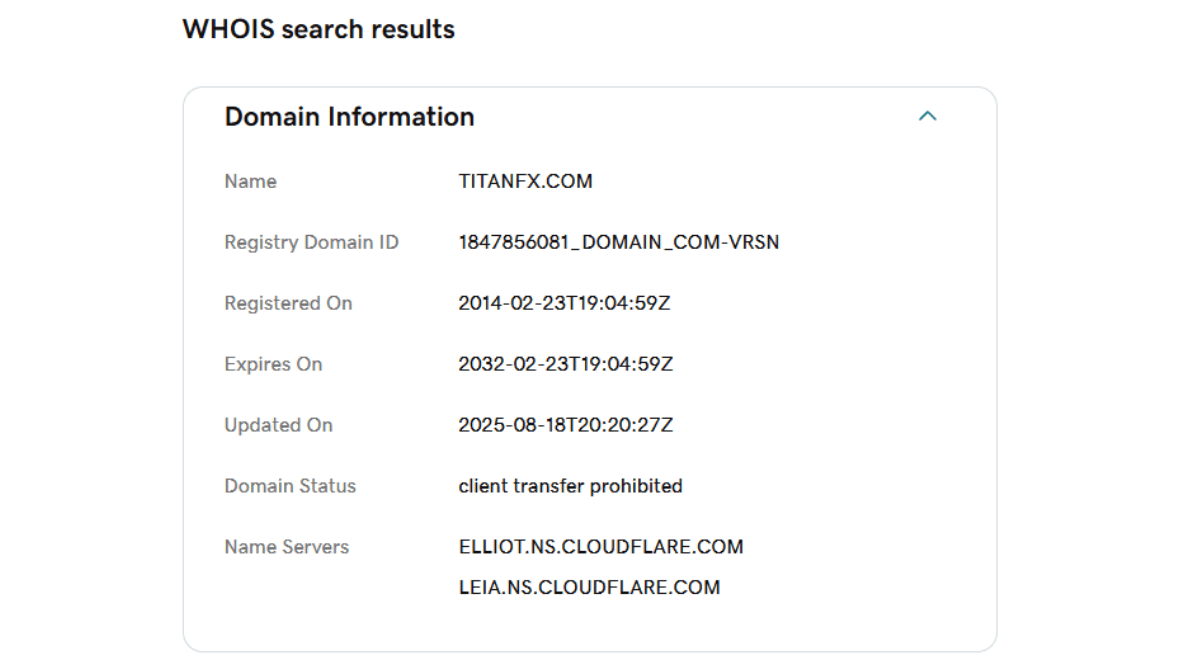
Fake websites often have domains and designs very similar to legitimate forex sites, so it's essential for traders to tell the real from the fake. We can use a tool called "whois" to look up the registration information of major websites worldwide.
If you find that a forex broker's domain was registered very recently, it's best to avoid registering, as it may well be a scam operation. For example, looking up Titan FX shows a registration date of "2014-02-23," consistent with the 2014 stated on the official site.
Method 2: Check regulatory licenses
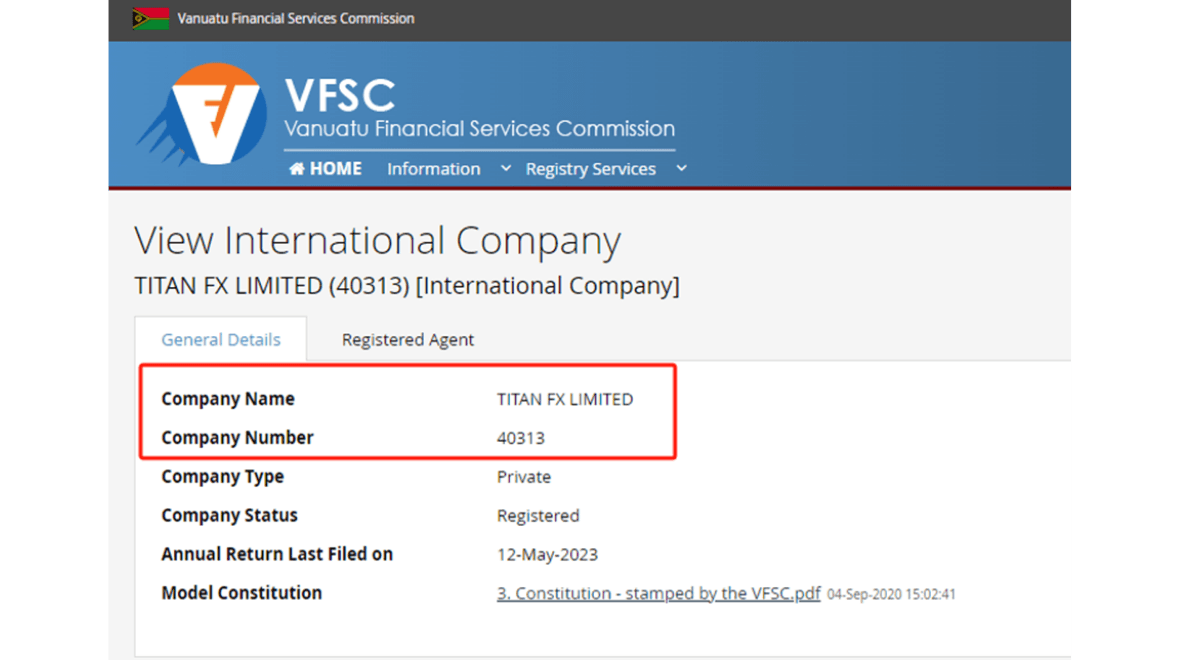
There are many regulatory licenses around the world, and no broker holds all of them. Before choosing a broker, we strongly recommend verifying that the regulatory licenses stated on its official site are genuine.
One of the licenses held by Titan FX (license number: 40313) is registered with and regulated by the Vanuatu Financial Services Commission. It can be verified on the Vanuatu Financial Services Commission (VFSC) official site.
The entire Titan FX group currently holds four financial regulatory licenses.
| Operating company | Regulator | License/permit |
|---|---|---|
| Titan FX Limited | Vanuatu Financial Services Commission (VFSC) | 40313 |
| Goliath Trading Limited | Seychelles Financial Services Authority (SFSA) | SD138 |
| Titan Markets | Mauritius Financial Services Commission (FSC) | GB20026097 |
| Atlantic Markets Limited | British Virgin Islands Financial Services Commission (BVIFSC) | 2080481 |
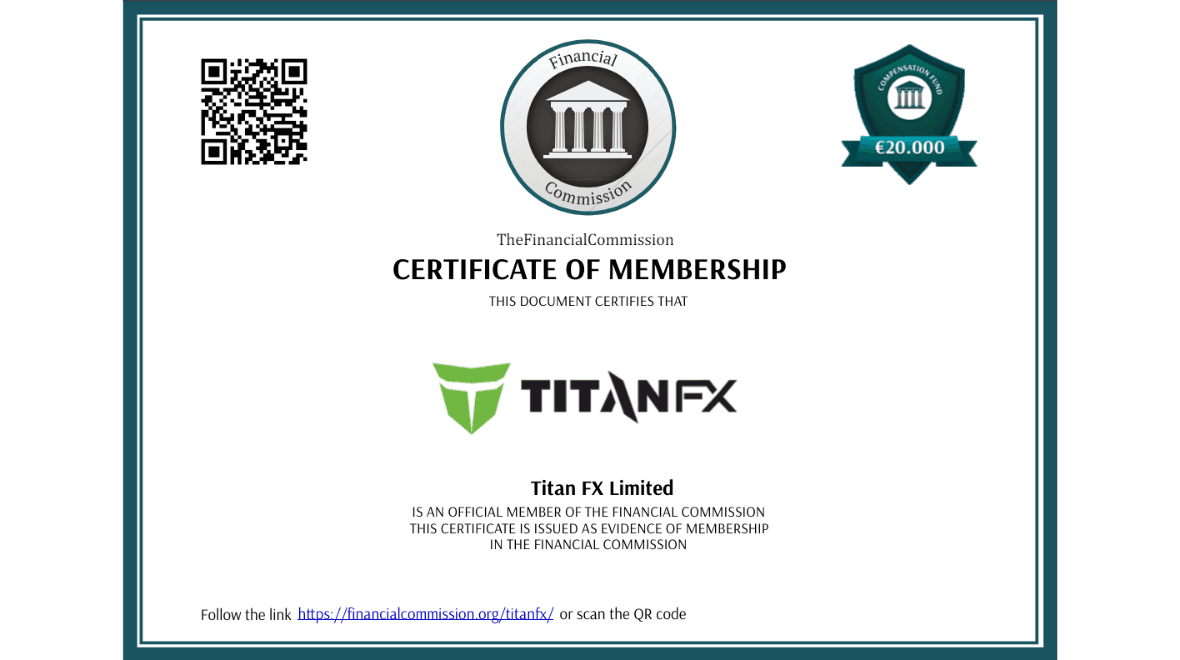
In addition, Titan FX is a member of organizations such as the Vanuatu Financial Centre Association and the Vanuatu Financial Markets Association.
Method 3: Verify the official site's customer support contact methods
Brokers generally provide contact methods such as live chat, email, and phone. Before registering, you can try contacting the broker via live chat or email to experience the speed and professionalism of their support, helping you spot anything unreasonable.
Titan FX provides multiple contact methods.
4. Where to download the legitimate MT4/MT5 trading platform/software
The desktop version (Windows or Mac) can be downloaded from each broker's official site. The iOS and Android versions can be downloaded directly from the App Store/Google Play.
Titan FX offers MT4/MT5 platforms for Windows, Mac, iOS, Android, and Web.
MT4/MT5 resources
| Platform | Overview | Installation guide |
|---|---|---|
| MT4 | What is MT4? Detailed overview | Download and install MT4 |
| MT5 | What is MT5? Detailed overview | Download and install MT5 |
Once you register a Titan FX account, you can download and install MT4/MT5 for free and use them to trade forex and CFDs.
5. Frequently Asked Questions (FAQ)
Q1: Are MT4/MT5 themselves a scam?
MT4 and MT5 are just trading software developed by MetaQuotes—they are not scam tools in themselves. The party that actually handles your money is the broker, so whether you are safe depends on choosing a legitimate, regulated broker, not on the MT4/MT5 platform itself.
Q2: How can I quickly tell whether a forex platform is a scam?
Check three things: (1) use whois to see the domain's registration date and be wary if it is very recent; (2) verify that the regulatory licenses the site claims are real and valid; (3) test the official support team's response speed and professionalism. If you also see "guaranteed high returns, zero risk" pitches, you can treat it as a high-risk platform.
Q3: What should I do if I suspect I have already deposited with a scam platform?
Stop making any further deposits immediately, keep all trading records, conversations, and transfer receipts, and report it to your local financial regulator or police as soon as possible. Also contact your bank or payment provider to see whether the funds can be frozen or recovered.
Q4: Is Titan FX a legitimate, regulated broker?
Yes. The Titan FX group holds four financial licenses (such as VFSC 40313), its domain registration details match the official site, and it offers multiple contact methods—live chat, email, and phone—all verifiable through the official site and public whois data.
Q5: How should I respond to "guaranteed steady monthly profit" pitches?
All investing carries risk, and legitimate financial institutions are prohibited from guaranteeing specific returns. Any pitch promising "guaranteed profit, zero risk, or sure gains" is almost always a sign of a scam—stay alert and avoid dealing with them.
6. Conclusion
The core of MT4/MT5-branded forex scams is not the platform software itself, but rogue brokers who deceive investors through fake platforms, false promises, and price manipulation.
This article walked through the common scam methods and sales tactics, along with ways to spot them—from whois lookups and license verification to testing customer support. Spending a little extra time on due diligence before you register can greatly reduce your risk of falling into a rogue-platform trap.
Choosing a broker like Titan FX—regulated across multiple jurisdictions and transparent with its information—and downloading the legitimate MT4/MT5 only through official channels is the fundamental way to protect your investments.