
 Home
Home- Investment Guide: Strategies for Stocks, Forex, and Metals
- How Much Capital Is Needed to Start Forex Trading?
How Much Capital Is Needed to Start Forex Trading?

You can start forex trading with as little as $100: micro lots and leverage give you real market access, though small capital is best treated as tuition for learning rather than a profit engine.
Before stepping into the world of forex trading, many new traders often ask, "How much money should I invest to make a profit from forex?" If you want to start with a cent (CENT) account, a few dollars will suffice. However, if you want to make substantial profits in the forex market, it's recommended to prepare at least $100 as your initial deposit.
- What $100 realistically buys you in forex: learning and live practice, not riches
- How micro lots (0.01) and leverage lower the barrier to entry
- The four advantages and four risks of trading with small capital
- Seven beginner strategies and five steps from account setup to first trade
- Choosing cent/micro accounts and keeping risk to 1-2% of capital per trade
1. Basic Facts about Starting Trading
Starting with $100 in forex trading can help you gain basic trading experience and emotional control. However, this amount isn't enough to make significant profits.
When trading with $100, it's advisable to limit your position size to 0.01 to 0.05 lots per trade to ensure that the risk doesn’t exceed 5% of your deposit. Moreover, using maximum leverage is essential for effective trading, as it helps reduce the margin frozen by your broker.
2. Can You Really Trade Forex with $100?
In forex trading, the position size is measured in lots. For example, 1 standard lot usually represents 100,000 units of the base currency. If you want to buy 100,000 GBP (GBP/USD), you'll need $130,000 in capital.
However, the minimum trading size is 0.01 lots, which means you can buy 1/100 of a standard lot, or 1,000 GBP. The required trading capital for this would be $1,300.
Therefore, it's possible to trade and profit with a small amount of capital, as long as your broker offers leverage. For example, with Titan FX’s 1000x leverage, a $100 deposit can control $100,000 in capital. This allows you to trade even the smallest position sizes while keeping your risk within reasonable limits.
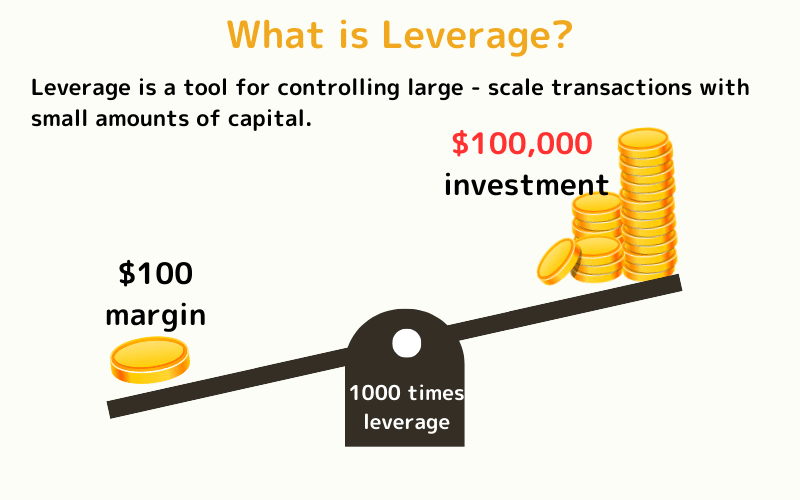
For example, EUR/USD at 200x leverage requires only 0.5% of the trade amount as margin. This means you only need to deposit 0.5% of the trade amount to start trading.
● 1,000 units (0.01 lot): $1,000 x 0.5% = $5
● 10,000 units (0.1 lot): $10,000 x 0.5% = $50
What is a lot? What is leverage? How to use leverage3. Pros and Cons of Trading with Small Capital
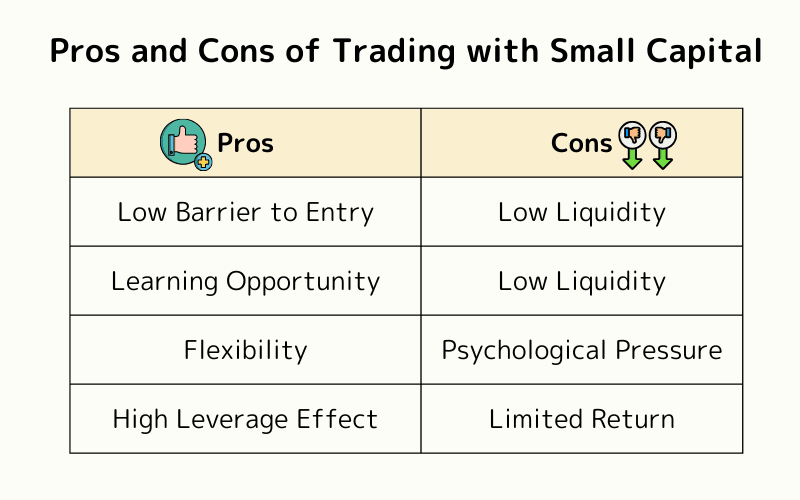
Pros
1. Low Barrier to Entry
The low entry threshold of forex trading means beginners can start practicing with a small amount of capital without putting too much pressure on their finances, encouraging more people to participate.
2. Learning Opportunity
Starting with $100 allows beginners to learn in a real market environment, experiencing market fluctuations and trading psychology while gaining practical experience without worrying about significant losses.
3. Flexibility
Traders can adjust positions or close trades at any time, which is crucial for those needing to respond quickly to market changes and seize short-term trading opportunities.
4. High Leverage Effect
The forex market often offers leverage up to 100:1 or higher, meaning traders can control larger trade amounts with smaller capital, potentially achieving higher returns.
Cons
1. Low Liquidity
Small amounts of capital may face liquidity issues in some trades, which could result in difficulty executing trades at desired prices.
2. Cost
Fees and spreads could take up a large portion of the return from small trades, impacting overall profitability.
3. Psychological Pressure
Beginners may feel pressured by small losses in small capital trades, which could affect their judgment and decision-making.
4. Limited Return
Returns from investing $100 are usually small, making it difficult to achieve significant financial growth in the short term, which might lead traders to lose patience.
4. Trading Strategies for Beginners with Small Capital
1. Choose the Right Broker
When selecting a broker, in addition to considering the spread and transaction fees, you should also evaluate the platform's stability and customer support to ensure you get the necessary assistance during the trading process.
2. Develop a Risk Management Plan
Each trade's risk should be strictly controlled to 1-2% of the account balance, which helps avoid significant losses from a single trade and ensures the safety of your capital.
3. Simplify Trading Strategies
Beginners should focus on simple trading strategies, such as using moving averages and Relative Strength Index (RSI), to better understand market trends without being overwhelmed by too many complex signals.
4. Use a Demo Account
Before trading live, use a demo account for at least a few weeks to get familiar with platform operations and market dynamics, avoiding mistakes in real trading.
5. Set Stop-Loss and Take-Profit Levels
Always set clear stop-loss and take-profit levels for each trade. This not only helps manage risk effectively but also ensures traders lock in profits when they reach their target, preventing missed opportunities due to market fluctuations.
6. Continuous Learning and Adjusting
As your trading experience grows, you should regularly review and adjust your strategies, learning new trends and technical indicators to stay competitive.
7. Stay Calm and Disciplined
No matter how the market moves, staying rational is key to successful trading. Avoid making emotional decisions based on short-term losses or gains and stick to your trading plan.
5. Steps for Beginner Traders with Small Capital
Step 1: Explore the Forex Trading Platform Using a Demo Account
A demo account is an ideal option for familiarizing yourself with the trading platform without taking on any risk. You can use the virtual funds provided by the broker to trade and gain real market experience. It’s recommended to set up your demo account with the same deposit amount as a real account to simulate actual risks.
Step 2: Study the Forex Market
Successful trading often depends on a deep understanding of the market. Learn to perform technical and fundamental analysis to identify potential trading opportunities. This includes understanding how news events affect market movements and using various indicators to confirm your trading decisions.
Titan FX offers rich technical and investment education materials, including a lot of tutorials designed for beginners. It also provides economic calendars and data indicators for major countries like the U.S., Europe, Japan, and China, which help users stay updated on the market.
Step 3: Deposit Funds into Your Trading Account
Before making a deposit, you will need to complete identity verification and provide necessary documentation. Ensure that the payment method you choose is convenient and secure, and understand the minimum deposit requirements and associated fees.
Titan FX offers several deposit methods. The fastest and most convenient option is credit card deposit, which usually reflects in your account immediately.
Titan FX Credit Card Deposit GuideStep 4: Calculate Required Margin and Leverage
Understanding margin calculation is crucial. Using leverage means you can control larger amounts of capital with less funds, increasing your trading capacity. However, it also requires careful risk management. It’s recommended that each trade risk be controlled within 3-5% of your deposit.
Step 5: Choose Your Trading Strategy
Finding a strategy that suits your trading style is vital. Whether it’s scalping, day trading, or long-term holding, each strategy comes with its risks and reward potential. Test out strategies in your demo account before using them in live trades.
6. Frequently Asked Questions (FAQ)
Q1. Can you make money trading forex with $100?
Yes, but the profit potential is limited. Treat $100 as hands-on tuition for learning leverage, stop-losses, and risk management; building consistent profits usually requires gradually adding capital.
Q2. How much can $100 earn in a month?
It depends on leverage, position size, and strategy. For a beginner who controls risk, a monthly return of 3-10% is realistic — roughly $3-10 on a $100 account. Do not expect rapid doubling.
Q3. Is forex trading legitimate?
The forex market itself is a real, global financial market. Legitimacy depends on the broker — always choose a regulated platform and avoid unlicensed brokers or high-risk schemes.
Q4. Is a small account easy to blow up?
With excessive leverage, oversized positions, or no stop-loss — yes. Reduce the risk by capping each trade at 1-2% of capital, starting with micro lots (0.01), and always setting a stop-loss instead of averaging down indefinitely.
Q5. What account type suits a forex beginner?
Cent or micro accounts are the best fit: they let you join the real market with small capital while experiencing genuine spreads, slippage, and leverage — closer to live conditions than a demo account.
Q6. How long does it take to double $100?
Doubling quickly is highly unlikely without extreme leverage and the risk of a margin call. Rather than aiming to double, focus on risk control and steady growth — even at a sustained 5% monthly return, doubling takes about 15 months.
7. Limitations and Suggestions
Trading with $100 in forex comes with some limitations, such as restricted potential profits and limited trade frequency. However, this capital is still suitable for honing your trading skills. If you seek greater returns, you may consider investing in the stock market or other assets for long-term growth.
Further Reading:
How to Choose Currency Pairs for Beginners
Further Reading
- What Is Forex Leverage?
- FX Trading Basics
- What Is a Position in FX Trading?
- How to Open an MT5 Demo Account
- Forex Fundamental Analysis
The financial markets research team at Titan FX. We produce educational content across a broad range of instruments, including forex (FX), commodities (crude oil, precious metals, agricultural products), equity indices, U.S. stocks, and crypto assets.
Primary Sources by Category
- Investor Education: Investor.gov (U.S. SEC) — risks of leveraged and margin trading
- Market Data: Bank for International Settlements (BIS) — global FX turnover surveys