

Hawks

In financial markets, "hawkish" is one of the most important terms for understanding monetary policy direction. It refers to a policy stance that prioritizes inflation control through tightening measures, even at the cost of slower economic growth.
When a central bank adopts a hawkish posture, the effects ripple across forex, equities, bonds, and commodities. Understanding hawkish policy is essential for interpreting rate decisions, anticipating market moves, and adjusting investment strategy.
This article covers the definition of hawkish, how it compares with dovish, the transmission channels through which hawkish policy affects asset prices, and the hawk-dove distribution within major central banks.
What You Will Learn
- The definition of "hawkish" and its meaning in monetary policy
- How hawkish and dovish stances differ across key dimensions
- How hawkish policy affects forex, equities, bonds, and commodities
- Investment strategy and asset allocation in a hawkish environment
- The hawk vs dove distribution within the FRB, ECB, BOE, and BOJ as of August 2025
1. What Is Hawkish? Definition in Monetary Policy
What Hawkish Means in Finance
"Hawkish" (also Hawk, Hawks, or Monetary Hawk) is widely used in monetary policy discussions. Originally a political term for a hardline stance, in economics it refers to central bank policymakers or market views that favor tighter monetary policy and aggressive action against inflation.
Hawks typically advocate rate hikes, balance-sheet reduction, and reducing market liquidity to contain overheating price pressures and ensure long-term price stability. The core hawkish position is that high inflation erodes purchasing power, destabilizes the economic outlook, and threatens long-term stability.
Origin of the Term "Hawk"
The hawk symbolizes alertness, decisiveness, and a defensive policy posture. In contrast, the dove (dovish) represents a moderate and accommodative approach. This hawk-dove metaphor reflects the fundamental attitudes policymakers hold toward balancing inflation against economic growth.
Key Hawkish Policy Characteristics
| Dimension | Hawkish Characteristics |
|---|---|
| Policy stance | Supports rate hikes, balance-sheet reduction, and quantitative tightening (QT) |
| Risk priority | Inflation risk outweighs the risk of economic slowdown |
| Decision style | Tends to act preemptively against anticipated inflation rather than waiting for lagging data confirmation |
| Market impact | Currency appreciation, equity weakness, rising bond yields |
Example: The Fed's Hawkish Action in 2022
In 2022, the Federal Reserve (FRB) adopted an aggressively hawkish stance after inflation reached a 40-year high, delivering 11 consecutive rate hikes. This is a textbook example of hawkish policy in action -- rapidly tightening liquidity to anchor inflation expectations.
2. Hawkish vs Dovish: The Two Ends of the Policy Spectrum
In central bank deliberations, "hawkish" and "dovish" represent opposite monetary policy orientations. Understanding both helps investors decode rate decisions, inflation forecasts, and shifts in market sentiment.
What Is Dovish?
"Dovish" describes policymakers who support maintaining accommodative monetary policy. They consider economic growth and employment promotion more important than inflation suppression, a position most commonly seen during recessions or the early stages of recovery.
The dove symbolizes peace, caution, and restraint -- a sensitivity to growth risks and a conservative approach to policy choices.
Dovish Policy Characteristics
| Dimension | Description |
|---|---|
| Policy direction | Supports rate cuts, quantitative easing (QE), and maintaining low rates to stimulate activity |
| Economic view | Judges unemployment and stagnation risks as greater than inflation risk; prioritizes liquidity supply |
| Market impact | Tends to push equities higher, currency lower, and yields down |
Example: After the COVID-19 pandemic in 2020, the Fed, ECB, BOJ, and other central banks adopted dovish policies -- cutting rates to near zero and expanding QE to prevent economic collapse.
Hawkish vs Dovish Comparison
| Dimension | Hawkish | Dovish |
|---|---|---|
| Policy direction | Tightening: rate hikes, balance-sheet reduction, QT | Easing: rate cuts, QE, low-rate maintenance |
| Primary goal | Inflation suppression | Economic growth and employment |
| Market impact | Currency appreciation, equity weakness, yield rises | Currency depreciation, equity strength, yield declines |
| Favored assets | Defensive assets (USD, short-term bonds) | Risk assets (equities, gold, crypto) |
The Third Stance: Centrist (Owl)
Beyond hawks and doves, the centrist (Owl) stance represents policymakers who do not lean clearly in either direction. They respond flexibly to economic data without a predetermined bias. The owl symbolizes prudence and wisdom, reflecting a data-driven decision-making style.
3. How Hawkish Policy Affects Financial Markets
Hawkish policy is not merely a policy label -- it is a structural force that reshapes financial markets. When a central bank signals rate hikes, balance-sheet reduction, or inflation-suppression priority, the effects cascade across forex, equities, bonds, and commodities.
The Hawkish Transmission Mechanism
Hawks believe price stability is the key to economic health and prioritize financial tightening to suppress inflation.
| Policy Tool | Purpose |
|---|---|
| Rate hikes | Raise market interest rates, cool overheated consumption and investment, reduce inflationary pressure |
| Balance-sheet reduction | Shrink the central bank's asset holdings, withdrawing liquidity from the financial system |
| Quantitative tightening (QT) | Halt or reverse QE, further restricting the flow of funds into markets |
Forex: Hawkish Policy Supports the Domestic Currency
Hawkish measures increase the domestic currency's attractiveness by raising yields and restricting money supply.
When the Fed takes a hawkish stance, investors shift capital toward the dollar to capture higher interest returns. This drives USD appreciation and puts downward pressure on non-dollar currencies such as EUR/USD and USD/JPY.
These exchange rate movements affect not only FX trading strategy but also international investment flows and trade-exposed corporate earnings.
Equities: Tightening Weighs on Risk Assets
Tighter monetary policy raises corporate borrowing costs, compresses profit margins, and pushes equity valuations lower.
When the market prices in higher future funding costs, growth stocks -- particularly technology names that depend on cheap capital -- face the most severe valuation pressure.
Investors tend to rotate into defensive sectors (financials, energy, consumer staples) as growth expectations are revised downward.
Bonds: Yields Rise, Prices Fall
Rate hikes directly push bond yields higher. As newly issued bonds offer better yields, existing bonds lose relative value, and their prices decline. Portfolios holding long-duration bonds face capital loss risk.
At the same time, rising yields attract investors seeking stable income, making short-term government bonds relatively more appealing.
Commodities: Dollar Strength Pressures Prices
A stronger dollar is a hallmark of hawkish policy. Since most commodities are priced in dollars, USD appreciation raises the cost for non-dollar buyers, reducing demand and pressuring prices.
Gold, which generates no yield, becomes relatively less attractive in a rising-rate environment as the opportunity cost of holding it increases.
4. Investment Strategy in a Hawkish Environment
Hawkish policy accelerates rate hikes and contracts market liquidity, creating an environment where pressure and opportunity coexist. Tracking hawkish dynamics accurately enables timely position adjustments and trend-change identification.
Monitor Key Individuals
The market impact of a hawkish comment depends on who is speaking. Priority targets include:
- Central bank governors and board members: Fed Chair Jerome Powell, ECB President Christine Lagarde, and their senior colleagues.
- Voting members: Within the FOMC, voting regional Fed presidents (such as New York Fed President John Williams) carry significantly more weight than non-voting participants.
- Senior fiscal officials: US Treasury Secretary statements can also shape market expectations indirectly.
Key point: Track central bank meetings and officials' public speeches, paying particular attention to voting members' remarks.
Analyze the Content of Remarks
Hawkish language typically clusters around three themes:
- Inflation outlook: "Inflation risks are rising" signals potential rate hikes.
- Economic outlook: "The economy remains robust" supports a case for continued tightening.
- Policy guidance: "Further rate increases may be necessary" directly shifts market expectations.
Track Policy Shifts
Changes in the balance of hawks and doves drive monetary policy direction:
- Hawkish momentum growing: More committee members leaning hawkish increases the probability of rate hikes or accelerated balance-sheet reduction. This supports currency appreciation and weighs on equities.
- Hawkish momentum fading: A shift toward dovish positions raises the likelihood of easing, supporting equities and weakening the currency.
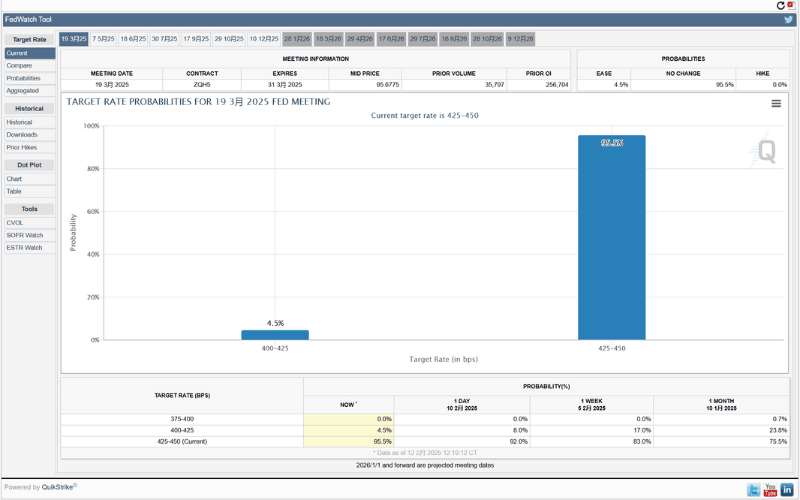
Tool: The CME FedWatch tool tracks the market's probability expectations for Fed rate hikes and cuts in real time.
Asset Allocation in a Hawkish Environment
| Asset Class | Strategic Focus | Rationale |
|---|---|---|
| Forex | Go long the stronger currency | Hawkish policy widens the interest-rate differential; in a strong-dollar environment, USD/JPY and USD/CAD longs are options |
| Equities | Rotate to defensive sectors | Financials, energy, and consumer staples tend to be more resilient; tech and growth stocks face elevated volatility |
| Bonds | Favor short-duration | Long-duration bonds are highly rate-sensitive and lose value faster; short-term bonds offer yield with lower risk |
| Gold and commodities | Expect short-term downside pressure | A strong dollar and rising rates suppress gold and commodity prices; more suited to short-term tactical trading |
5. Major Central Banks: Hawk vs Dove Distribution (as of August 2025)
The following tables are based on public statements and stances around August 2025. These classifications reflect observations at that point in time and may shift as economic conditions and policy evolve.
FRB / FOMC (US Federal Reserve)
The FOMC (Federal Open Market Committee) sets US monetary policy. It consists of:
- 7 FRB Governors
- 5 regional Federal Reserve Bank Presidents (on a voting rotation)
| Stance | Members |
|---|---|
| Hawkish | Michelle Bowman (FRB Governor), Alberto Musalem (St. Louis Fed President), Jeffrey Schmid (Kansas City Fed President) |
| Centrist | Jerome Powell (FRB Chair), Michael Barr (FRB Governor), Christopher Waller (FRB Governor), John Williams (New York Fed President), Susan Collins (Boston Fed President) |
| Dovish | Philip Jefferson (FRB Vice Chair), Lisa Cook (FRB Governor), Adriana Kugler (FRB Governor), Austan Goolsbee (Chicago Fed President) |
ECB (European Central Bank)
ECB policy is determined by the Governing Council, composed of:
- 6 ECB Executive Board members
- Central bank governors of the 19 euro area member states
| Stance | Members |
|---|---|
| Hawkish | Klaas Knot (Dutch central bank governor), Robert Holzmann (Austrian central bank governor), Peter Kazimir (Slovak central bank governor), Joachim Nagel (Bundesbank president), Isabel Schnabel (ECB Executive Board member) |
| Dovish | Philip Lane (ECB Executive Board member), Piero Cipollone (ECB Executive Board member), Fabio Panetta (Bank of Italy governor) |
BOE (Bank of England)
The BOE's monetary policy is set by the Monetary Policy Committee (MPC), which has 9 members (including the Governor and Deputy Governors) and meets eight times per year.
| Stance | Members |
|---|---|
| Hawkish | Megan Greene (MPC member), Catherine Mann (MPC member) |
| Dovish | Swati Dhingra (MPC member), Dave Ramsden (MPC member) |
BOJ (Bank of Japan)
The BOJ's monetary policy is set by the Policy Board, which consists of:
- 1 Governor
- 2 Deputy Governors
- 6 Board members
| Stance | Members |
|---|---|
| Hawkish | Naoki Tamura (Board member) |
| Leaning hawkish | Hajime Takata (Board member), Junko Koeda (Board member) |
| Centrist | Kazuo Ueda (Governor), Shinichi Uchida (Deputy Governor), Ryozo Himino (Deputy Governor), Junko Nakagawa (Board member) |
| Dovish | Toyoaki Nakamura (Board member), Asahi Noguchi (Board member) |
6. FAQ
Q1: How do hawkish and dovish stances affect the stock market?
Hawkish policy (rate hikes, balance-sheet reduction) raises corporate funding costs, compresses margins, and pressures valuations, so the stock market tends to face selling pressure. Conversely, dovish policy (rate cuts, easing) lowers rates, stimulates consumption and investment, and generally supports equities. The actual impact depends on the business cycle and how much the market has already priced in.
Q2: Can central bank members change their stance?
Yes. Hawkish and dovish positions are not permanent labels. Members adjust their views as economic conditions evolve -- for instance, inflation data, unemployment trends, or financial stability concerns. In early 2020, many officials who had been hawkish shifted decisively dovish to support the pandemic-hit economy.
Q3: How can investors track hawkish officials' views?
Effective channels include:
- Official statements and meeting minutes on central bank websites
- Public speeches at official events
- Real-time coverage by Bloomberg, Reuters, and other major outlets
- Policy expectation tools such as the CME FedWatch tool and economic calendars
Q4: Which central bank officials are considered hawkish as of August 2025?
Based on recent statements and stance assessments:
- FRB: Michelle Bowman, Alberto Musalem
- ECB: Klaas Knot, Isabel Schnabel
- BOE: Megan Greene, Catherine Mann
- BOJ: Naoki Tamura
These classifications may shift as economic conditions and public statements evolve. They should be treated as reference points, not permanent labels.
Q5: Why does the market sometimes not react to hawkish signals?
Market reactions depend on the "expectations gap." If the market has already priced in a rate hike, a hawkish remark will have limited additional impact. Conversely, if the market had been expecting a dovish pivot and a hawkish signal arrives unexpectedly, the resulting price movement can be sharp. Interpreting hawkish signals always requires comparing the signal against what the market has already anticipated.
7. Summary
Hawkish is one of the defining categories in monetary policy, reflecting a central bank's resolve to fight inflation. Its effects on interest rates, liquidity, and capital costs ripple across forex, equities, bonds, and commodities -- driving volatility and triggering asset repricing.
This article has covered the definition of hawkish, the comparison with dovish, the specific market transmission channels, and the hawk-dove balance within major central banks as of August 2025.
With global inflationary pressures still present, major central banks including the Fed and ECB continue to lean toward the hawkish side. The gap between the projected rate path and market expectations remains a key driver of asset price volatility. Tracking central bank statements, officials' remarks, and incoming economic data -- and adjusting asset allocation dynamically -- is essential for managing risk and capturing opportunities in a tightening cycle.
Hawkish policy is not the market's enemy; it is a compass for the macro environment. Understanding the logic behind tightening decisions is a foundational skill for any participant in modern financial markets.
Further Reading
- What Is Dovish? Central Bank Doves Explained
- What Is FOMC? Understanding the US Monetary Policy Decision Process
- FX Basics
Titan FX's financial market research and analysis team produces investor education content across a wide range of financial instruments, including foreign exchange (FX), commodities (crude oil, precious metals, and agricultural products), stock indices, U.S. equities, and crypto assets.
Primary Sources by Category
- Central bank official materials: Federal Reserve (FOMC statements, minutes, and dot plot), ECB (monetary policy decisions), BOE (MPC decisions), BOJ (monetary policy meetings)
- Market data and analysis tools: CME Group (FedWatch Tool) -- rate-hike and rate-cut probability tracking
- Educational resources: Titan FX Research (FOMC explainer, FX basics, dovish glossary)