

Introduction to Crude Oil CFD Trading: Features, Risks, Types, and Trading Methods

Crude oil (Oil), as one of the key drivers of the global economy, has always been a commodity of significant interest to investors. Its price fluctuations are influenced by various factors, including geopolitical events, supply and demand dynamics, and the global economic situation.
With the development of financial markets, Contracts for Difference (CFD) have provided investors with a flexible and efficient way to trade crude oil, allowing them to profit whether prices rise or fall.
This article will explore the concept of crude oil investment through CFDs, how they work, and their importance in modern financial markets.
- Crude oil CFD = a derivative tracking WTI/Brent prices; trade both ways without owning physical oil
- Features: high leverage, low barrier, two-way T+0, small contract size, flexible hours
- Costs: spread, commission (by account type), and overnight swap for held positions
- Risks: leverage magnifies losses, market volatility, forced liquidation on low margin
- Main grades: WTI (XTI/USD, U.S. benchmark) and Brent (XBR/USD, global benchmark)
1. What is Oil CFD?
A Contract for Difference (CFD) is a derivative financial instrument that allows traders to speculate on the price movements of an asset without owning the asset itself.
Crude oil CFDs refer to contracts that allow traders to speculate on the price changes of the crude oil market. These CFDs reflect the market prices of specific types of crude oil, such as WTI (West Texas Intermediate) or Brent Crude.
Mechanism of Crude Oil CFDs
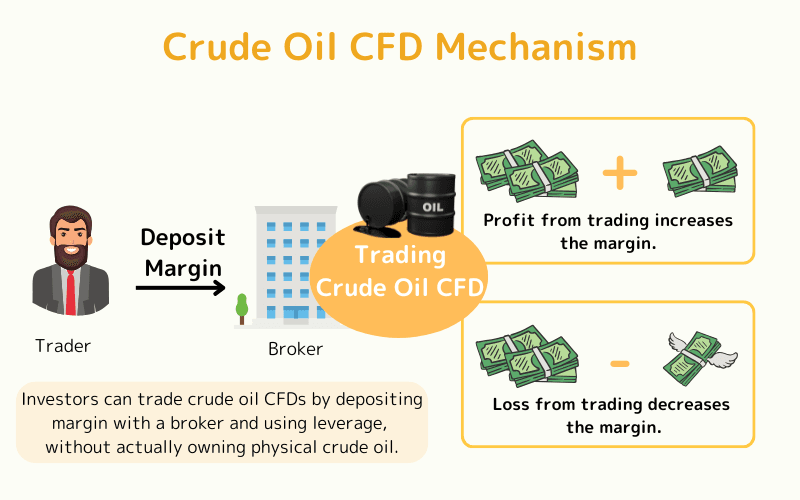
Trading crude oil CFDs typically involves two main prices: the bid price and the ask price.
Investors can choose to go long (expecting the price to rise) or go short (expecting the price to fall).
When trading crude oil CFDs, investors are not actually buying or selling physical crude oil. Instead, they are trading contracts that are linked to the price movements of crude oil.
This type of trading can be done using leverage, allowing traders to control larger market positions with a smaller amount of capital.
Leverage:
Leverage allows investors to control larger trade sizes with a smaller amount of capital. This means both potential returns and risks are amplified.

Learn more about the pros and cons of leverage, its calculation, and usage tips.
Margin:
To open a leveraged position, investors must deposit a certain percentage of the trade value as margin.
Spread:
Trading crude oil CFDs also involves a spread, which is the difference between the buy and sell price. This is part of the trading cost.
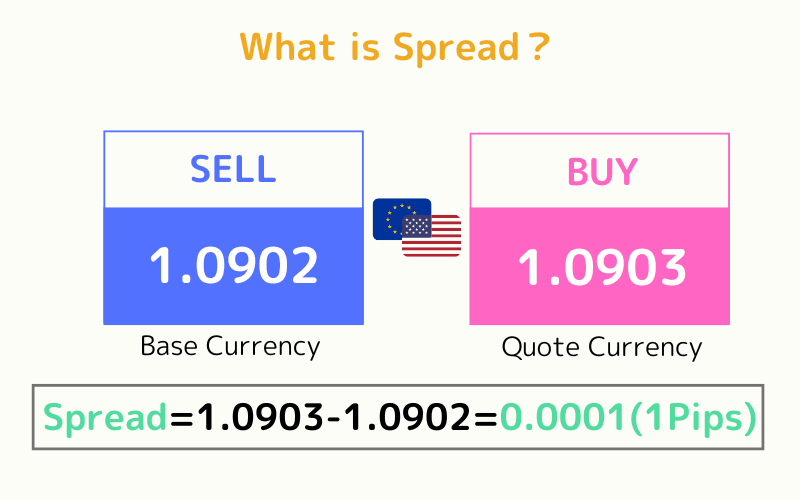
Through Crude Oil CFD trading, investors can flexibly respond to market fluctuations, with opportunities to profit whether the market is rising or falling.
2. Features of Crude Oil CFD Trading
Crude Oil CFDs (Contracts for Difference) offer a range of advantages that make them a popular financial trading tool. Below are the key benefits (features) of Crude Oil CFD trading:
1. Leverage Trading
A key feature of Crude Oil CFDs is their high leverage capability. Investors can control larger amounts of oil with a relatively small investment, significantly lowering the entry barrier.
For example, if the international WTI crude oil spot price is $80 per barrel, a traditional spot oil trade would require the full $80,000 to buy 1,000 barrels of oil. However, with WTI Crude Oil CFDs and a 100x leverage ratio, the same trade can be made with only $800 in margin.
2. Smaller Contract Sizes
Crude Oil CFDs allow investors to trade in much smaller units compared to traditional spot or futures markets.
Investors can trade as little as 10 barrels of oil, making it more flexible and accessible for small-scale investors.
※ Typically, one lot is equal to 100 barrels, so 10 barrels is 0.1 lot.
3. Two-Way T+0 Trading
Crude Oil CFDs support two-way trading, meaning investors can go long (buy) or short (sell) based on market trends. Whether the market is rising or falling, investors have the opportunity to profit.
Additionally, the T+0 trading mechanism means investors can open and close positions at any time, making it ideal for short-term trading opportunities.
4. Low Trading Costs
The costs of trading Crude Oil CFDs are generally lower than traditional oil trading, as they eliminate costs associated with the physical delivery and storage of oil.
5. Flexible Trading Hours
Crude Oil CFDs offer highly flexible trading hours, aligned with the international oil market. They can be traded almost 24 hours a day, providing greater convenience for global traders.
3. Risks of Crude Oil CFD Trading
Crude Oil CFD trading often involves higher leverage, which can amplify potential profits but also increases the potential for significant losses. Even small market price fluctuations can lead to large capital losses.
1.Market Risk:
Like all financial trades, Crude Oil CFD trading carries market risk. Market volatility can cause prices to move in a direction unfavorable to the investor, potentially leading to trading losses.
2.High Leverage Risk:
Crude Oil CFDs allow trading with high leverage, meaning investors can control larger market positions with relatively small capital.
While this can significantly increase potential profits, it also raises the risk of larger losses. Even small unfavorable market moves can quickly amplify losses, potentially exceeding the initial investment amount.
3.Loss Cut Risk:
In margin trading, if the account balance drops below the required margin level, positions are automatically closed to prevent further losses. This process is referred to as a Loss Cut.
This may compel investors to close positions at a loss, particularly during unfavorable market conditions.
What Is Loss Cut? Understanding Its Calculation, Pros and Cons, and Ways to Avoid Margin Calls.
4. What Are the Costs of Crude Oil CFD Trading?
While crude oil CFD trading offers investors convenient market access and high flexibility, it also involves specific trading costs. Below are the common cost types in crude oil CFD trading:
1. Trading Spreads
The spread, the difference between the bid and ask price, is one of the most direct costs in crude oil CFD trading.
Investors pay this cost when opening a position. The size of the spread is a crucial indicator of trading costs; smaller spreads mean lower entry costs.
2. Commission Fees
Some crude oil CFD brokers may offer accounts with commission fees.
Such accounts usually feature much tighter spreads compared to standard accounts, allowing investors to choose an account that suits their needs.
3. swap fees
If investors hold crude oil CFD positions overnight, they are required to pay overnight interest (swap fees).
What Is Overnight Interest (Swap Fees)?.
5. Types of Crude Oil CFDs
Crude oil CFDs are typically categorized into two main types: WTI Crude Oil (XTI/USD) and Brent Crude Oil (XBR/USD).
WTI Crude Oil (XTI/USD):
West Texas Intermediate (WTI) is a high-quality, light crude oil produced in the United States. Its low sulfur content and light characteristics make it ideal for refining into gasoline and diesel.
In CFD markets, WTI crude oil is commonly traded as XTI/USD, representing WTI crude oil priced in U.S. dollars.
Basic Knowledge and Trading Methods for WTI Crude Oil.
Brent Crude Oil (XBR/USD):
Brent crude oil, extracted from the North Sea, is considered a global benchmark for oil prices. It represents a blend of crude oils from the North Sea, and its price reflects the overall supply and demand dynamics in the global oil market.
In CFD markets, Brent crude oil is traded as XBR/USD, also priced and traded in U.S. dollars.
Basic Knowledge and Trading Methods for Brent Crude Oil.
Trade Crude Oil CFDs with Titan FX
Titan FX offers WTI (XTI/USD) and Brent (XBR/USD) crude oil CFDs with up to 100:1 leverage, tight spreads, and the flexibility to go long or short without holding the physical commodity.
6. Frequently Asked Questions (FAQ)
Q1: How is a crude oil CFD different from buying oil directly (futures/spot)?
A crude oil CFD does not hold physical oil; it lets you trade both ways with leverage, with a low entry barrier and no delivery or storage. Oil futures have fixed delivery months and larger contracts, while spot requires physical storage and transport. For most traders, CFDs offer more flexibility and lower cost.
Q2: Are crude oil CFDs suitable for beginners?
The low entry barrier makes them beginner-friendly, but high leverage magnifies losses too. Beginners should start small, set strict stops, keep leverage modest, and practice on a demo account before trading live.
Q3: What is the difference between WTI and Brent crude?
WTI (XTI/USD) is U.S. West Texas Intermediate, the Americas benchmark; Brent (XBR/USD) is North Sea crude, the pricing benchmark for Europe and much of the world. The Brent-WTI spread reflects supply, demand, transport, and geopolitics and is a key gauge of the oil market.
Further Reading
- What Is a CFD?
- What Is Leverage and How to Use It
- What Is Spread?
- What Is Financing Cost (Swap)?
- Brent Crude Oil
Titan FX Research Team. We cover a broad set of financial instruments — foreign exchange, commodities (crude oil, precious metals, agricultural products), equity indices, US equities, and digital assets — producing practical, research-backed educational content for investors.
Primary Sources (by Category)
- Energy market benchmarks: WTI (NYMEX) / Brent (ICE) crude oil futures markets
- Platform: Titan FX Crude Oil CFD