

Bid

The bid price is a core concept in forex trading. It represents the price at which a broker is willing to buy a currency pair from a trader. From the trader's perspective, the bid is the price received when placing a sell order.
The counterpart is the ask price -- the price the broker offers to sell the currency to the trader. The difference between the bid and ask is known as the spread, which is one of the main costs in FX trading.
This article covers the bid price definition, how it appears on trading platforms, its role in trading costs, and practical use cases.
- The definition of the bid price and its relationship to the ask price
- How price quoting works from both the broker's and the trader's perspective
- How bid prices appear on MT4/MT5 platforms
- The connection between spreads and the bid price, and how it affects trading costs
1. Bid Price Definition
In FX trading, the bid price is the price a broker quotes for buying a currency pair from the trader. Because the trader sells at this price, it functions as the trader's selling price.
In a two-way price quote, the bid is always lower than the ask price. The gap between them is the spread, which represents a key component of trading costs.
How the Bid and Ask Work
| Term | Broker's Perspective | Trader's Perspective |
|---|---|---|
| Bid | Buying price | Selling price |
| Ask | Selling price | Buying price |
On trading platforms, the bid and ask are displayed together as a two-way price, giving traders immediate visibility into both sides of the market.
2. Bid vs. Ask
The bid is the price at which a trader can sell, and the ask is the price at which a trader can buy. These two prices are always quoted as a pair and form the foundation of every FX quote.
Broker's Perspective
- Bid (buying price): The price the broker pays when buying a currency pair from the trader.
- Ask (selling price): The price the broker charges when selling a currency pair to the trader.
Trader's Perspective
- Bid (selling price): The price a trader receives when selling. A market sell order or position close executes at the current bid.
- Ask (buying price): The price a trader pays when buying. A market buy order executes at the current ask.
This two-way price structure is the standard quoting method in FX markets. It reflects real-time supply and demand on both sides. Understanding the roles of bid and ask is essential for timing entries and exits and for evaluating spread costs.
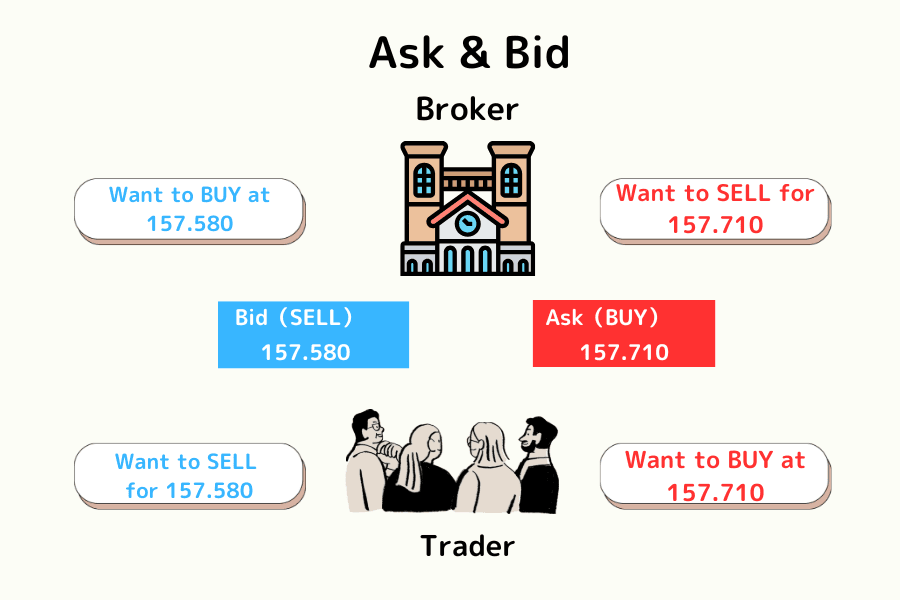
Understanding this distinction helps traders know exactly which price applies when they open or close a position.
3. Related Terms
The bid price appears under several names depending on the platform and context. Below are common synonyms and related terms from the trader's perspective.
- Sell price: The most direct label. It is the price the trader receives when selling a currency pair.
- Sell quote: Refers to the real-time selling price displayed on a trading platform.
- Sell order price: The executable sell price shown on the platform at any given moment.
- Limit sell price: The price a trader sets when placing a limit sell order, typically above the current bid.
Some platforms may label the sell side as "SELL" or use other variations. It is worth confirming the terminology on your specific broker's platform to avoid confusion.
4. Display Methods
The bid price is displayed prominently on trading platforms so traders can act on it without delay. Below are the main formats.
Two-Way Price
Most platforms show the bid and ask side by side in a two-way quote. This standard format lets traders see both the buying and selling prices at a glance.
Platform Display Examples
MetaTrader 4 (MT4) and MetaTrader 5 (MT5)
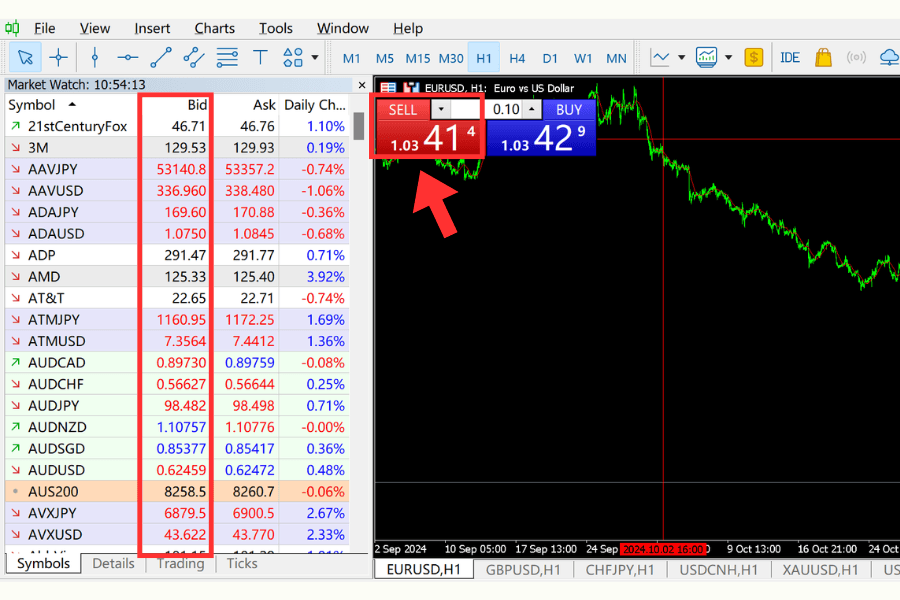
On MT4/MT5, the bid price appears in the Market Watch window and is also visible in the Quick Order tool. It is typically labeled as the sell price.
5. Bid and Trading Costs
The Role of the Spread
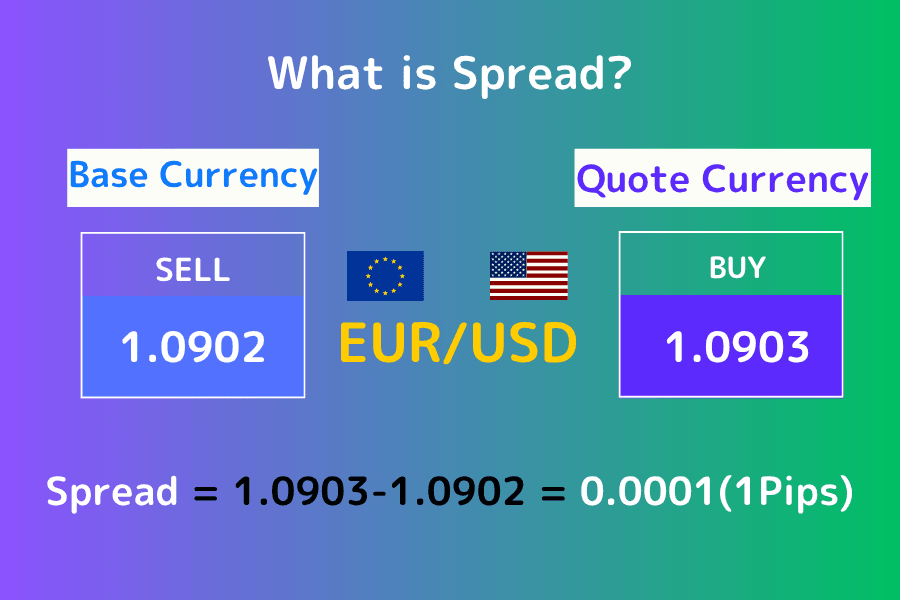
The spread is the difference between the bid and the ask. It is one of the primary costs in FX trading. For example, if the bid for a currency pair is 1.0902 and the ask is 1.0903, the spread is 1 pip.
How the Spread Affects Trading
Tight spread: Preferred by scalpers and short-term traders because the cost per trade is lower.
Wide spread: More common during high-volatility or low-liquidity conditions. Long-term position traders may be less sensitive to wider spreads because their profit targets span larger price ranges.
Choosing the right account type and timing trades around high-liquidity sessions can help manage spread costs.
6. Common Use Cases
Below are practical situations where the bid price plays a direct role.
Market Sell Orders
When a trader places a market sell order, the order executes at the current bid price. This is the most frequent interaction with the bid.
Limit Orders
A sell limit order lets a trader set a target price above the current bid. The order executes only if the market rises to that level.
Market Liquidity Analysis
Monitoring bid price movements can offer insight into selling pressure. A steadily falling bid may signal bearish sentiment in the market.
7. FAQ
Q1: Why is the sell price lower than the market price?
This is due to the spread. The bid (sell price) is always lower than the ask (buy price). The spread between the two constitutes a core trading cost.
Q2: Why does the bid price differ between platforms?
Each platform connects to different liquidity providers and may use its own pricing model. These differences typically produce small variations in the bid.
Q3: How can I judge market liquidity from the bid and ask?
Narrow spread: Indicates high liquidity and active trading.
Wide spread: Suggests lower liquidity or elevated volatility.
8. Summary
The bid price is one of the most fundamental concepts in FX trading. It is the price a trader receives when selling a currency pair and, together with the ask, determines the spread -- a key cost in every trade. By understanding how the bid is defined, displayed on platforms like MT4/MT5, and how it influences trading costs, traders can make better-informed decisions about entries, exits, and strategy selection.
Further Reading
- Forex Trading Basics
- What Is Ask? The Buy Price in Forex Trading
- What Is Spread? Definition, Calculation, and Impact on Trading Costs
- What Is FOMC? Meeting Schedule and Policy Decisions
Titan FX Trading Strategy Research. We produce educational content for investors covering forex, commodities (crude oil, precious metals, agricultural products), stock indices, U.S. stocks, and digital assets.
Primary Sources by Category
- Market structure and data: BIS (Bank for International Settlements) -- Triennial Central Bank Survey; CME Group -- FX market structure documentation
- Regulatory and educational resources: CFTC -- Forex Trading guidance; NFA -- Forex glossary and investor education