

SGD(Singapore Dollar)
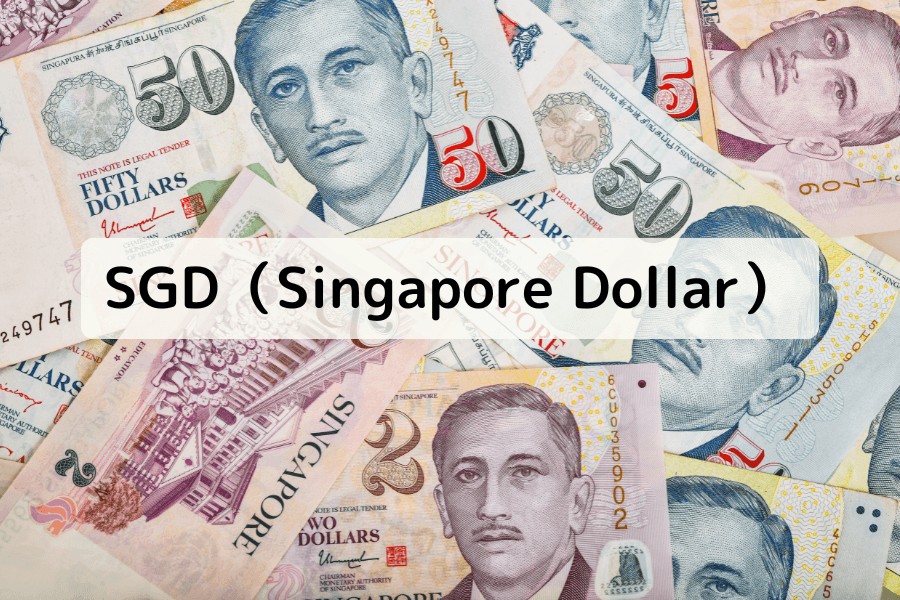
The Singapore Dollar (SGD) is Singapore's official currency, managed by the Monetary Authority of Singapore (MAS) via an S$NEER (nominal effective exchange rate) band. It trades around 1 USD ≈ 1.3–1.4 SGD and is regarded as one of Asia's most stable currencies, reflecting Singapore's role as a regional financial hub.
The Singapore Dollar (SGD) has been the official currency of Singapore since 1967. As a key financial hub in Southeast Asia, the SGD has gained prominence in international markets, becoming one of the essential currencies for global trade and investment.
- The Singapore Dollar (SGD) became Singapore's official currency in 1967 and is one of the most important hub currencies in Southeast Asia.
- The Monetary Authority of Singapore (MAS) uses an exchange-rate-centred policy framework — managing the S$NEER band rather than setting interest rates like the Fed or ECB.
- Main drivers: MAS semi-annual policy statements, Singapore core inflation, Southeast Asian trade flows, safe-haven inflows, and regional currency dynamics.
- SGD also carries safe-haven properties (political stability, AAA credit rating, large FX reserves) and tends to attract capital during global crises.
- On Titan FX, trade USD/SGD CFD long or short with leverage and 24-hour access for low-capital exposure.
History of the Singapore Dollar
The history of the Singapore Dollar began shortly after Singapore gained independence. In 1965, Singapore separated from Malaysia and subsequently introduced its own currency. By 1967, the Singapore Dollar officially replaced the Malaysian Dollar as the country’s legal tender.
To strengthen the currency’s stability, the Singapore government implemented various monetary policies. These measures gradually positioned the SGD as a trusted currency in international markets.
Over time, the Singapore Dollar underwent several revaluations, stabilizing its exchange rate against major currencies and enhancing its role in international trade.
Key Factors Influencing the Singapore Dollar Exchange Rate
The value of the Singapore Dollar is influenced by various factors, including economic performance, monetary policies, and global market trends.
1. Singapore's Economic Performance
Indicators such as Gross Domestic Product (GDP), export levels, and inflation rates play a significant role in determining the exchange rate of the SGD.
- When the economy experiences strong growth, particularly with robust exports, the SGD typically appreciates.
- Conversely, during economic slowdowns or declining global demand, the SGD may depreciate.
Given Singapore's trade-oriented economy, global economic conditions have a direct impact on its exchange rate.
A trade-oriented economy refers to an economic model primarily driven by international trade, where policies and industrial development heavily rely on import and export activities.
2. Monetary Policy by the Monetary Authority of Singapore (MAS)
The Monetary Authority of Singapore (MAS), which functions as the country's central bank, directly influences the SGD exchange rate through its monetary policies.
MAS manages the exchange rate and interest rates to regulate demand for the SGD and ensure currency stability.
These policies balance inflation forecasts and economic growth, aiming to maintain purchasing power and market confidence in the Singapore Dollar.
3. Global Market Sentiment
Global market trends and investor risk appetite can significantly impact the value of the SGD.
- During periods of economic uncertainty, the SGD is often considered a safe-haven asset, leading to increased demand and appreciation.
- For instance, during global recessions or heightened geopolitical risks, investors may shift to the SGD as a relatively safe investment option.
Key Economic Indicators for the Singapore Dollar
The following are key economic indicators that help analyze the performance of the SGD:
| Indicator | Description |
|---|---|
| GDP Growth Rate | A vital measure of economic health; often correlates with SGD appreciation. |
| Inflation Rate | Impacts the currency's purchasing power; rising inflation may cause depreciation. |
| Trade Surplus/Deficit | Influences supply and demand for the SGD; larger surpluses typically drive appreciation. |
| Foreign Reserves | High reserves reflect confidence in the SGD and help stabilize the exchange rate. |
| Unemployment Rate | Indicates labor market health; lower unemployment generally aligns with economic growth. |
Titan FX offers free access to economic indicators
Titan FX provides economic data indicators for major countries such as the US, EU, Japan, and China. You can query data by release time, country, and importance.
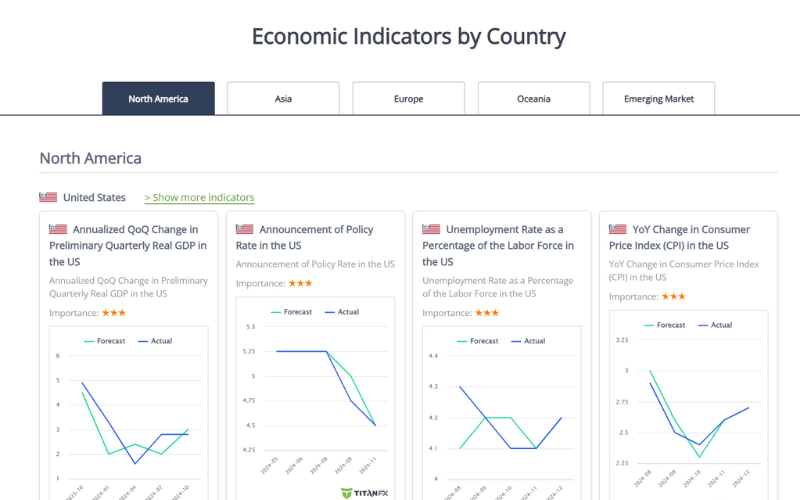
How to Check Economic Indicators Economic Indicator Lookup Page
The Characteristics of the Singapore Dollar
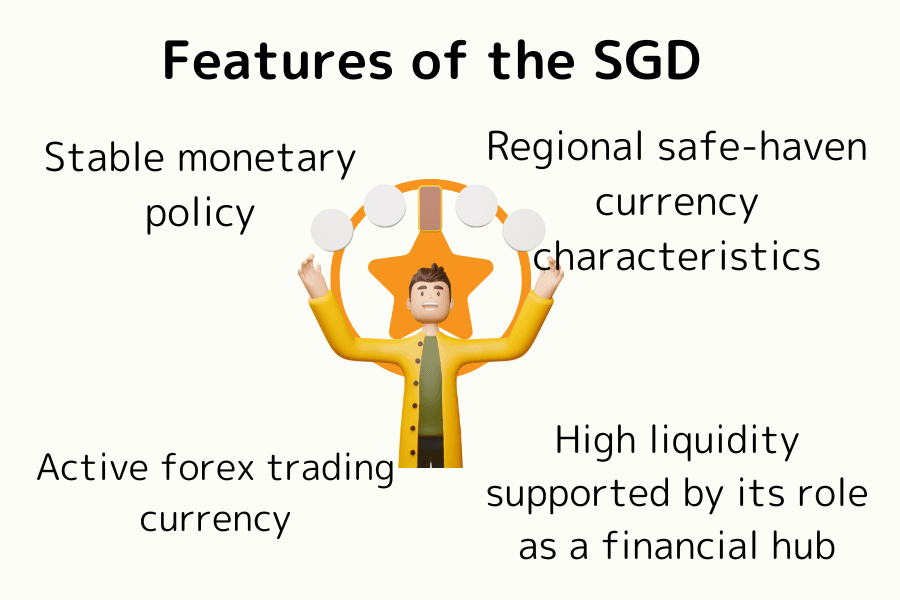
The Singapore Dollar (SGD) is a prominent international currency with several key features:
1. Stable Monetary Policy
The Monetary Authority of Singapore (MAS) adopts a flexible monetary policy to ensure the stability of the SGD. By focusing on exchange rate stability, MAS intervenes when necessary to safeguard Singapore’s economic interests. This approach allows the SGD to perform consistently during periods of market volatility.
2. Safe-Haven Currency
During times of economic uncertainty, the SGD is often viewed as a safe-haven asset, particularly within the Asia-Pacific region. Its stability attracts international investors and financial institutions, positioning it as a key currency in safe-haven trades. This quality has led to the SGD performing strongly during global financial crises.
3. Regional Financial Hub
As a financial hub of Southeast Asia, Singapore attracts substantial foreign investments and multinational corporations. This enhances the global recognition and circulation of the SGD. Many companies issue bonds and financial products denominated in SGD, driving its demand. Singapore's robust legal and regulatory environment further bolsters its appeal to foreign investors.
4. Diverse Financial Products
Singapore’s financial market offers a wide range of financial products, including SGD-denominated bonds, derivatives, and investment funds. These products increase the international usage of the SGD and provide investors with diverse opportunities, boosting liquidity and global market participation.
5. High Liquidity
The SGD is actively traded in international foreign exchange markets, offering high liquidity. This liquidity makes it a preferred settlement currency for many international trade and investment activities. Its increasing use within the region further cements its role as a key currency for cross-border transactions.
The Role of the Singapore Dollar in the Financial System
The Singapore Dollar holds a critical position in the global financial system, particularly in Southeast Asia. As an international financial center, Singapore facilitates significant SGD trading volumes, making the currency a key player in global trade and financial transactions.
1. Key Player in Global Forex Markets
The SGD ranks among the most traded currencies in global forex markets, particularly against the Malaysian Ringgit (MYR), Australian Dollar (AUD), and US Dollar (USD). Many foreign enterprises rely on the SGD for trade, further strengthening its role in international finance.
2. International Trade and Investment
Singapore’s status as a major trading nation ensures the SGD’s widespread use in global trade. Its stability makes it a preferred currency for cross-border transactions and foreign direct investments, solidifying its importance in regional trade.
Future Outlook for the Singapore Dollar
The future of the Singapore Dollar is filled with opportunities and challenges.
1. Continued Economic Growth
The Singaporean government actively promotes innovation and technological development, which is expected to drive economic growth and support the value of the SGD. Emerging industries will diversify Singapore’s economy, further enhancing the currency’s stability.
2. Global Economic Conditions
Global economic uncertainty and market fluctuations will continue to impact the SGD’s exchange rate. A stable global market may benefit the SGD, while major events like trade wars or financial crises could trigger volatility.
3. Impact of Digital Currencies
The Monetary Authority of Singapore’s exploration of digital currencies may influence the future circulation and use of the SGD. As digital transactions increase and financial technology evolves, the SGD’s role in the digital economy will likely expand, further solidifying its global presence.
How to Trade the Singapore Dollar (SGD)
Trading the Singapore Dollar (SGD) can be done through various methods, with forex margin trading being the most common. Forex trading offers advantages such as leverage, which allows investors to control larger positions with smaller capital.
Additionally, forex margin trading enables both long and short positions, allowing investors to capitalize on market fluctuations. With the forex market operating 24 hours a day, it provides high flexibility and liquidity, making it suitable for different trading strategies and risk profiles.
Further Reading: Introduction to Forex Margin Trading
Titan FX offers leverage up to 1:1,000.
Trading Forex with Titan FX
1. Open a Trading Account:
Titan FX offers a fast and simple account opening process with no requirement for ID or address verification.
Titan FX provides Standard and Blade account types. Traders can choose their preferred type during registration.
Titan FX Account Opening Guide2. Deposit Funds:
After registration, deposit funds into your account. Titan FX supports multiple deposit methods, with credit card deposits being the fastest and most convenient, usually processed instantly.
Titan FX Credit Card Deposit Guide3. Download and Install Trading Platforms (MT4/MT5):
Titan FX offers MT4 and MT5 platforms for Windows, Mac, iOS (iPhone/iPad), and Android.
Titan FX MT5 Installation and Login Titan FX MT4 Installation and Login4. Choose Currency Pair
Titan FX offers around 60 currency pairs.The most common currency pair traded with the Singapore Dollar (SGD) is the United States Dollar (USD), which is USD/Singapore Dollar (USD/SGD).
Query for all currency pairs5. Place Trades:
Log into the MT4 or MT5 platform, select your trading instrument, and start buying or selling.
MT5 Interface and Order Methods
MT4 Interface and Order Methods
Titan FX Provides Free Trading Tools (Custom Indicators and EAs)
Titan FX is dedicated to providing traders with advanced trading support, including free trading tools such as custom indicators and EAs (Expert Advisors). These tools are designed to enhance traders' efficiency and strategy precision.
Custom indicators help traders analyze market trends more accurately and identify potential trading opportunities.
Meanwhile, EAs can automatically execute pre-set trading strategies, avoiding emotional interference and ensuring that each trade is executed accurately.
With these free tools, Titan FX helps you gain an edge in the competitive financial market and improve your trading performance.
All Custom Indicators EA Trading Program RankingsFurther Reading
- VIX Volatility Index — How global risk sentiment hits Asian currencies.
- US Treasury Yields — Fed–MAS policy divergence and the USD/SGD trajectory.
- Inflation — The core variable MAS manages.
- Monetary Policy — Contrast with rate-based regimes at the Fed, ECB, and BoJ.
- Raise Interest Rates — Why MAS can tighten without raising rates directly.
- Asset Allocation — Where SGD fits in an Asia-Pacific currency portfolio.
The Titan FX Research team covers global macroeconomic indicators, foreign exchange (FX), commodities (oil, precious metals, agriculture), equity indices, US stocks, and crypto assets, producing educational content for investors and traders.
Primary Sources by Category
- Official data and regulators: Monetary Authority of Singapore (MAS) — Monetary Policy Statement (semi-annual), S$NEER policy framework; Singapore Department of Statistics — Singapore GDP, CPI, unemployment statistics; Singapore Ministry of Trade and Industry (MTI); Singapore Exchange (SGX).
- International institutions and research: International Monetary Fund (IMF) — Currency Composition of Official Foreign Exchange Reserves (COFER); Bank for International Settlements (BIS) — Triennial Central Bank Survey of FX; OECD — Economic Surveys: Singapore.
- Media and historical references: Bloomberg, Reuters, Financial Times, The Straits Times, Channel News Asia; the 1985–87 Asian currency stress, the 1997–98 Asian financial crisis, the 2008 GFC, the 2020 COVID episode (SGD strength), and the 2022–2024 MAS tightening cycle (NEER band steepening).