

TRY(Turkish Lira)
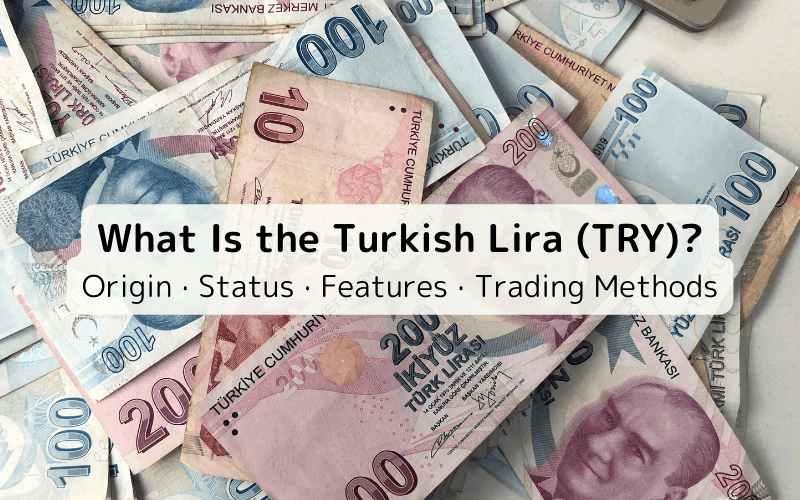
Few major currencies move with the volatility of the Turkish Lira. That turbulence is exactly what draws traders in — and exactly what can unravel a position when policy or politics shift overnight. For anyone weighing carry-trade yield against tail risk, TRY is a currency worth studying in depth.
- The Turkish Lira (TRY) is the legal tender of Turkey and Northern Cyprus, defined by high inflation and political intervention
- High policy rates make TRY popular for carry trade, but sudden policy reversals and geopolitical shocks can trigger sharp drops
- USD/TRY is liquid with concentrated movement during European hours
- Risk control (stop-loss, position sizing, monitoring current account and FX reserves) is essential when trading TRY
- TRY belongs to the 'Fragile Five' — vulnerable to global risk-off and US rate hikes
- 1. History of the Turkish Lira
- 2. Key Factors Affecting the Turkish Lira Exchange Rate
- 3. Characteristics of the Turkish Lira
- 4. Key Economic Indicators for the Turkish Lira
- 5. The Turkish Lira in the Global Financial System
- 6. Outlook for the Turkish Lira
- 7. Why is Trading the Turkish Lira (TRY) Popular?
- 8. How to Trade the Turkish Lira (TRY)
- 9. FAQ on Trading the Turkish Lira
- 10. Summary
1. History of the Turkish Lira
The Turkish Lira's origins date back to 1923, when the Republic of Turkey was established, and the lira became the official currency. On January 1, 2005, Turkey implemented a currency reform, introducing the "New Turkish Lira" to replace the old lira at a ratio of 1 new lira to 1,000,000 old lira. This measure aimed to address hyperinflation and its impact on the lira's face value.
However, the Turkish Lira's exchange rate has continued to fluctuate significantly over recent decades due to economic instability and political uncertainty, especially during periods of high inflation and external debt pressures.
2. Key Factors Affecting the Turkish Lira Exchange Rate
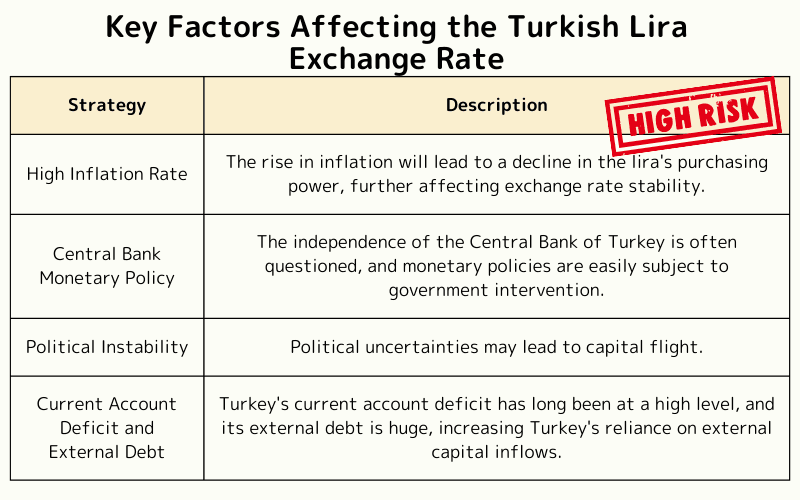
1. High Inflation Rate
Turkey has faced persistent inflation, which erodes the purchasing power of the lira and destabilizes the exchange rate. High inflation often reduces investor confidence in Turkish assets, further weakening the currency.
2. Central Bank Monetary Policy
The Turkish central bank's monetary policy, particularly interest rate decisions, directly impacts the lira's exchange rate. However, the central bank's independence is frequently questioned, as policies are often subject to political influence. Interest rate cuts under pressure have exacerbated the lira's depreciation in the past.
3. Political Instability
Domestic political uncertainty and shifting foreign policies in Turkey also influence the lira's exchange rate. Political instability can trigger capital outflows, undermining investor confidence and putting downward pressure on the currency.
4. Current Account Deficit and External Debt
Turkey's persistent current account deficit and significant external debt increase its reliance on foreign capital inflows. Any decline in foreign investment or increased global financial market volatility can negatively impact the lira's exchange rate.
3. Characteristics of the Turkish Lira
The Turkish Lira has the following key characteristics in the foreign exchange market:
1. High Volatility
The lira's exchange rate is highly volatile, driven by economic and political instability, inflation, and policy interventions. This volatility makes the lira a high-risk currency that is often subject to speculative trading.
2. High Interest Rate Environment
To combat inflation, Turkey typically maintains high interest rates. However, frequent government interventions undermine confidence, as sudden changes in rates increase uncertainty for investors.
3. Dependence on Foreign Capital
Turkey's economy heavily relies on foreign capital inflows to finance its current account deficit and external debt. Changes in global conditions, such as U.S. interest rate hikes or increased risk aversion, make the lira vulnerable to depreciation.
4. Geopolitical Influence
Turkey's geopolitical position makes its economy and currency sensitive to international developments, particularly relations with Europe and the Middle East. Geopolitical risks add further uncertainty to the lira's exchange rate.
4. Key Economic Indicators for the Turkish Lira
| Indicator | Description |
|---|---|
| Inflation Rate | A major factor impacting the lira's purchasing power; persistent high inflation increases depreciation pressure. |
| Interest Rate Policy | The central bank's interest rate decisions influence the lira's stability and ability to attract foreign investment. |
| GDP Growth | Economic growth drives investor confidence; stable growth supports the lira's stability. |
| Current Account Balance | A sustained current account deficit reflects reliance on foreign capital, making the lira vulnerable to external shocks. |
| Foreign Exchange Reserves | Adequate reserves enhance the central bank's ability to stabilize the currency, while low reserves limit intervention capacity. |
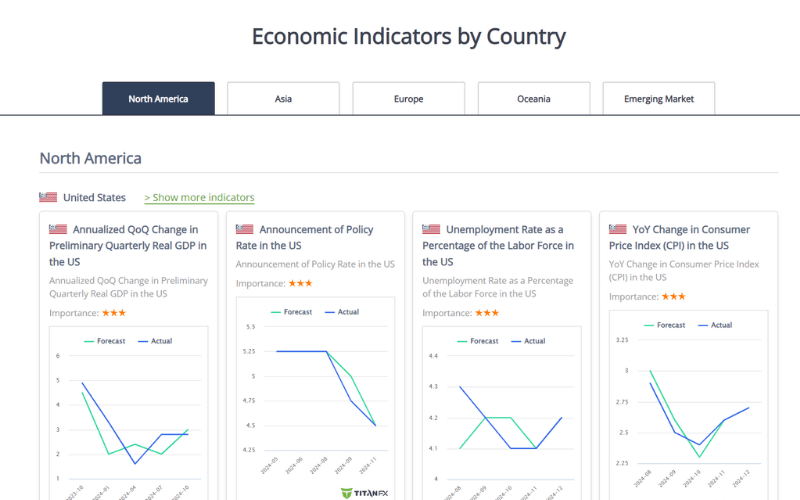
Titan FX Provides Free Economic Indicator Queries
Titan FX provides economic data indicators for major countries such as the United States, Europe, Japan, and China. You can query these indicators based on publication time, country, and importance.
5. The Turkish Lira in the Global Financial System
1. A Representative Currency in Emerging Markets
The Turkish lira plays a notable role among emerging market currencies, particularly in cross-border trade across the Middle East and Europe. Turkey’s strategic position between Europe and Asia enhances its significance in regional trade and investment.
2. A High-Risk, High-Return Investment Instrument
Due to its high interest rates and volatility, the Turkish lira attracts investors seeking high returns. However, this comes with substantial risk, making it one of the first currencies to be sold off during periods of global market uncertainty.
6. Outlook for the Turkish Lira
1. Controlling Inflation is Key
The ability of the Turkish government and central bank to control inflation will be a decisive factor for the lira’s stability. Failure to curb inflation will continue to erode the lira’s purchasing power and negatively impact its exchange rate.
2. Political Stability and Central Bank Independence
The independence and consistency of Turkey’s central bank policies will play a crucial role in determining investor confidence. A stable political environment and independent monetary policies will support a more stable lira.
3. Influence of the Global Economic Environment
Global economic conditions and changes in international financial markets will also impact the lira. For example, monetary policy shifts in major economies such as the US and the EU could cause capital to flow back to developed markets, putting downward pressure on the lira.
7. Why is Trading the Turkish Lira (TRY) Popular?
The Turkish lira is considered a high-risk currency in the foreign exchange market due to its sharp fluctuations, economic and political instability, and government influence on central bank policies.
While the lira offers opportunities for high returns, its high volatility also increases the risk of significant depreciation during global market turmoil. Investors must carefully assess their risk tolerance when trading the Turkish lira.
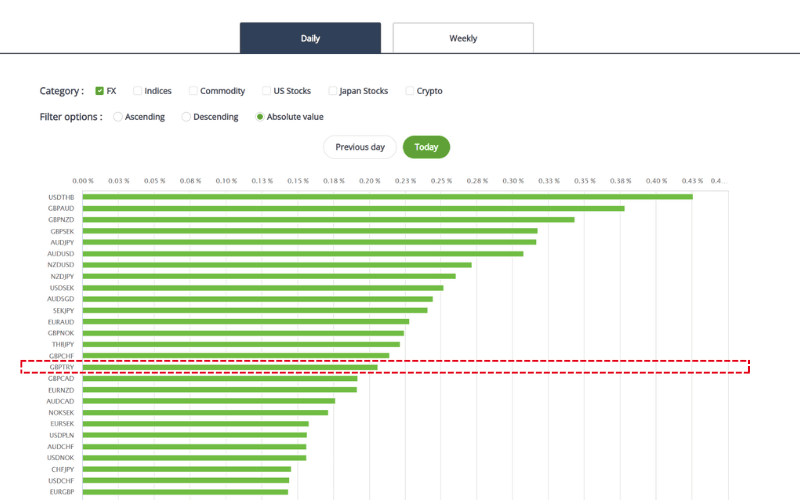
1. Profit from Exchange Rate Volatility
The Turkish lira frequently experiences significant price movements, providing opportunities for traders to profit from fluctuations.
By analyzing market trends and economic data, traders can capitalize on buying or selling opportunities during upward or downward price movements.
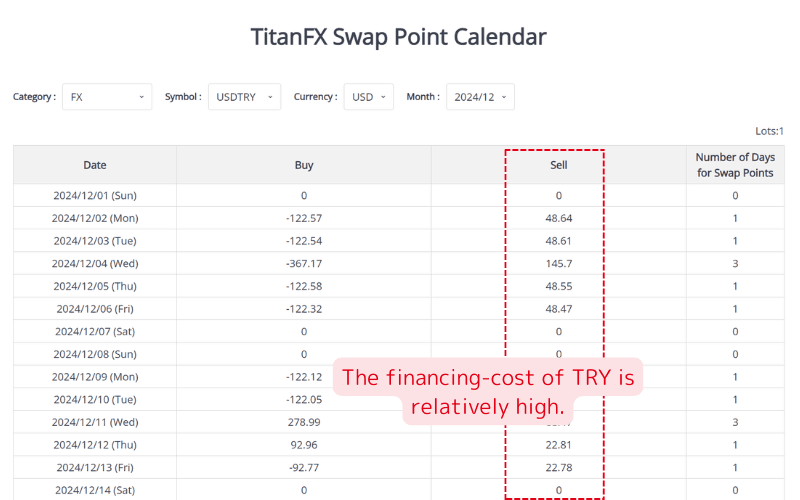
2. Earn Interest from High Financing Costs
Turkey’s high interest rate policies allow traders holding Turkish lira positions to earn substantial financing costs (swap interest).
This means that even during periods of low market activity, investors can increase their returns through interest income.
Traders can take advantage of this feature to enhance their overall profitability.
Further Reading: What is Financing Cost in Forex Trading?
8. How to Trade the Turkish Lira (TRY)
Trading the Turkish lira can be done through various methods, with forex margin trading being the most common. This method allows investors to use leverage, enabling them to control larger positions with smaller capital.
Additionally, forex margin trading allows for two-way operations, meaning investors can take long or short positions based on market fluctuations.
The forex market operates 24 hours a day, making it the largest and most liquid financial market globally. This flexibility and liquidity make it suitable for different trading strategies and risk tolerance levels.
Further Reading: Introduction to Forex Margin Trading
Titan FX offers up to 2,000x leverage on Micro accounts (eligibility required); Standard and Blade accounts offer up to 1,000x.
Trading Forex with Titan FX
1. Open a Trading Account:
Titan FX offers a fast and simple account opening process with no requirement for ID or address verification.
Titan FX provides Standard, Blade, and Micro account types. Traders can choose their preferred type during registration.
Titan FX Account Opening Guide2. Deposit Funds:
After registration, deposit funds into your account. Titan FX supports multiple deposit methods, with credit card deposits being the fastest and most convenient, usually processed instantly.
Titan FX Credit Card Deposit Guide3. Download and Install Trading Platforms (MT4/MT5):
Titan FX offers MT4 and MT5 platforms for Windows, Mac, iOS (iPhone/iPad), and Android.
Titan FX MT5 Installation and Login Titan FX MT4 Installation and Login4. Choose a Currency Pair:
Titan FX offers around 60 currency pairs, with the most commonly traded pair involving the Turkish Lira (TRY) being the US Dollar (USD), specifically the USD/TRY.
Query for all currency pairs5. Place Trades:
Log into the MT4 or MT5 platform, select your trading instrument, and start buying or selling.
MT5 Interface and Order Methods
MT4 Interface and Order Methods
Titan FX Provides Free Trading Tools (Custom Indicators and EAs)
Titan FX is dedicated to providing traders with advanced trading support, including free trading tools such as custom indicators and EAs (Expert Advisors). These tools are designed to enhance traders' efficiency and strategy precision.
Custom indicators help traders analyze market trends more accurately and identify potential trading opportunities.
Meanwhile, EAs can automatically execute pre-set trading strategies, avoiding emotional interference and ensuring that each trade is executed accurately.
With these free tools, Titan FX helps you gain an edge in the competitive financial market and improve your trading performance.
All Custom Indicators EA Trading Program Rankings9. FAQ on Trading the Turkish Lira
Common investor questions about the Turkish Lira (TRY).
Q1: Why is the Turkish Lira called a 'Fragile Five' currency?
'Fragile Five' refers to five emerging markets with large current account deficits and high foreign capital dependence: Turkey, Indonesia, India, South Africa, and Brazil. TRY relies heavily on foreign capital inflows, so when global risk appetite drops or the Fed hikes rates, TRY faces sharp depreciation pressure.
Q2: Is TRY suitable for carry trade?
Yes — the high policy rate attracts carry traders who borrow low-yielding currencies (like JPY or CHF) to invest in TRY assets. However, TRY's extreme volatility amplifies the risk, so risk control tools (stop-loss, position sizing) are essential.
Q3: How does TRY differ from other emerging market currencies?
TRY has materially higher volatility and policy uncertainty than most emerging market currencies. Concerns about central bank independence and political intervention produce atypical price action, so investors must watch headline risk closely.
Q4: Can I hedge TRY exposure?
Beyond stop-loss orders, some investors use options or assets that are negatively correlated with TRY (such as gold or the US Dollar Index) to hedge. Diversifying away from any single currency pair is key.
Q5: Which economic data affects TRY short-term moves the most?
Beyond CPI and policy rate decisions, CBRT's FX reserves data, sovereign bond auction results, and the president's policy statements often trigger sharp intraday moves. These should be built into the intraday risk model.
10. Summary
The Turkish Lira (TRY) is one of the most volatile emerging market currencies, shaped by persistent high inflation, geopolitical risk, central bank policy shifts, and global capital flows. Its sharp swings and policy uncertainty represent real risk — but the same conditions create opportunities for carry trade and short-term tactical positioning.
When the structural risks are understood and risk-management tools (stop-loss, position sizing, correlated hedges) are applied, TRY can serve not just as a challenging instrument but as a high-return candidate within a diversified emerging market allocation. For beginners and experienced traders alike, mastering TRY's characteristics is a first step toward capturing emerging market opportunity.
Further Reading
- What Are Emerging-Market Currencies?
- What Is Monetary Policy?
- What Is Financing Cost (Swap)?
- What Is the South African Rand (ZAR)?
- USD/TRY
Titan FX Research Team. We cover a broad set of financial instruments — foreign exchange, commodities, equity indices, US equities, and digital assets — producing practical, research-backed educational content for investors.
Primary Sources (by Category)
- Central bank: Central Bank of the Republic of Turkey (CBRT), Inflation Report
- Macro statistics: Turkish Statistical Institute (TÜİK)
- FX turnover: BIS Triennial Central Bank Survey
- Outlook: IMF World Economic Outlook