

Sugar Basics: History, Types, Uses, and Market Impact — Full Guide
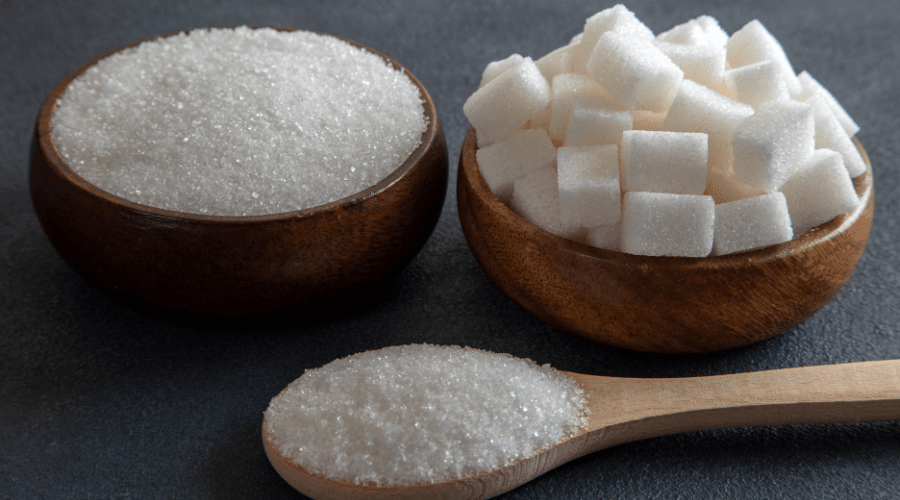
Sugar is one of the largest soft-commodity markets globally, with annual production of ~180 million tonnes. Sucrose is the primary traded form, Brazil supplies ~45% of world exports, and ICE Sugar No.11 futures set the global price benchmark.
Sugar is one of the largest soft-commodity markets in the world, with annual production of approximately 180 million tonnes (per the International Sugar Organization (ISO)). From the food industry to energy (Brazilian sugarcane ethanol), sugar's supply-demand balance and price dynamics ripple through emerging-market agricultural economies and developed-market food industries alike.
This article walks through the chemical definition of sugar, its historical development, major types and chemical properties, the global supply-demand structure, the key drivers of sugar prices, sugar futures contract specifications, and how to trade sugar CFDs with Titan FX, with an FAQ section at the end.
- The essence of sugar: The commercially traded "sugar" is overwhelmingly sucrose — a soft commodity with annual production around 180 million tonnes
- Five major sugar types: Sucrose / fructose / glucose / maltose / lactose, each with distinct chemical structure and use cases
- Five major producers: Brazil, India, EU, China, Thailand — Brazil alone accounts for ~45% of global exports
- Key price drivers: Weather (Brazilian rainfall / Indian monsoon), oil price (ethanol arbitrage), policy (export bans / sugar tax), FX (Brazilian real)
- Trading instruments: ICE Sugar No.11 (international) and No.16 (US domestic) futures; Titan FX offers Sugar CFDs with live pricing
- 1. What Is Sugar?
- 2. The Historical Development of Sugar
- 3. Sugar Types and Chemical Properties
- 4. Global Sugar Supply and Demand Structure
- 5. Key Drivers of Sugar Prices
- 6. Sugar Futures Contract Specifications and Major Exchanges
- 7. Trading Sugar CFDs with Titan FX
- 8. Frequently Asked Questions (FAQ)
- 9. Conclusion
1. What Is Sugar?
Sugar in the broad sense refers to edible sweet carbohydrates. Chemically, it falls within carbohydrates, classified into monosaccharides and disaccharides. The "sugar" traded commercially is almost always sucrose, a disaccharide formed by one glucose molecule plus one fructose molecule.
Sucrose is one of the most widely cultivated and traded food commodities in the world, with annual production of about 180 million tonnes and a market size exceeding $70 billion. Its uses span the food industry (~70-80% of total consumption), energy (Brazilian sugarcane ethanol absorbs roughly half of cane usage), pharmaceuticals, cosmetics, and bio-based feedstocks.
The two principal sources of sugar:
- Sugarcane: A tropical / sub-tropical crop. Provides about 80% of global sucrose. Major producers are Brazil, India, Thailand, and China.
- Sugar beet: A temperate-zone crop, contributing about 20%. Major producing regions are the EU, Russia, the United States, and Ukraine.
Although the sucrose extracted from each is chemically identical, the geographic and cost structures differ significantly — an essential distinction in sugar-price analysis.
2. The Historical Development of Sugar
2.1 Ancient origins
The history of sugar can be traced back to ancient civilizations. The earliest source was sugarcane, native to New Guinea. As early as the 8th century BCE, residents of India began extracting sugar from sugarcane. By boiling cane juice, they produced what is recognized as the world's first refined sugar.
As trade expanded, sugar-making technology spread to China, Persia, and ultimately to the Arab world.
2.2 The medieval sugar trade
In the medieval period, sugar production and trade flourished in the Arab regions. Arab merchants brought sugar to the Mediterranean, and especially after the Crusades, sugar became a luxury good of the European nobility — sought after on a par with spices and silk.
2.3 Colonial-era expansion
European demand for sugar peaked in the colonial era. In the 15th and 16th centuries, following the discovery of the New World, Portugal and Spain began large-scale sugarcane cultivation in the Caribbean and Brazil. This dramatically increased sugar production while also intensifying demand for slave labor. The Dutch and British later joined in, making sugar a key commodity in global trade.
2.4 Industrial revolution and modernization
The 18th and 19th-century industrial revolutions further transformed sugar production. Mechanized harvesting and processing reduced labor dependency and substantially boosted output.
In the late 19th century, the invention of beet sugar opened a new production pathway, particularly in Europe — reducing reliance on colonial cane sugar. This is the origin of the modern dual supply structure (cane sugar 80% / beet sugar 20%).
3. Sugar Types and Chemical Properties
There are many types of sugar, each with distinctive chemical structures, sweetness, and uses. Commercial trading centers on sucrose, but each variety plays a different role in the food industry.
| Type | Source | Chemical properties | Main uses & distribution |
|---|---|---|---|
| Sucrose | Sugarcane, sugar beet | Disaccharide (glucose + fructose); white crystals; water-soluble | The core of global commercial trading; tropical (Brazil, India, Thailand) + temperate (EU, US) |
| Fructose | Fruits, honey, root vegetables | Monosaccharide; ~1.7× the sweetness of sucrose; rapidly absorbed; relatively low blood-sugar impact | Beverages and processed foods; high-fructose corn syrup (HFCS) is heavily used in US soft drinks |
| Glucose | Plant photosynthesis; starch hydrolysis | Monosaccharide; colorless solid; primary cellular energy source | Medical IV drips, sports nutrition, confectionery |
| Maltose | Enzymatic breakdown of starch | Disaccharide; two glucose molecules | Beer brewing, fermentation industries |
| Lactose | Mammalian milk | Disaccharide (glucose + galactose); difficult to digest for many lactose-intolerant adults, especially in Asia | Dairy products; pharmaceutical filler and stabilizer |
3.1 Raw sugar vs refined sugar
Sugar circulates in two commercial forms:
- Raw sugar: A primary product where molasses is not yet fully separated. Yellow-brown crystals with sucrose content of ~96-98%. The international standard is the underlying for ICE Sugar No. 11 futures.
- Refined / white sugar: Further refined and bleached white crystals with sucrose content of 99.7% or higher. Tied to ICE White Sugar futures (ICE Europe, London).
Refined sugar typically trades $80-150 per tonne above raw sugar, reflecting the refining cost and quality premium.
3.2 Alternative sweeteners
In recent years, rising health awareness has put traditional sugar in competition with alternative sweeteners:
- Natural alternatives: Stevia, erythritol, monk-fruit extract
- Artificial sweeteners: Aspartame, sucralose, acesulfame K
- Health-market favorites: Coconut sugar, agave syrup, maple syrup
The alternative-sweetener market is growing at 7-9% CAGR, exerting long-term pressure on traditional sugar demand.
4. Global Sugar Supply and Demand Structure
4.1 Major producers
- Brazil: World's largest producer, around 42 million tonnes per year (~23% of global), and the largest exporter (~45% of global exports)
- India: Around 35 million tonnes per year, primarily for domestic consumption (large population, high festive usage)
- EU: Largest beet-sugar region, ~17 million tonnes per year; export share rose markedly after the 2017 quota abolition
- China: ~10 million tonnes per year, mainly cane in Guangxi/Yunnan and beet in Inner Mongolia/Xinjiang, but still a net importer
- Thailand: ~10 million tonnes per year, primarily exporting to Southeast Asia and China
4.2 Major consumers and importers
- India: World's largest consumer (~28 million tonnes per year)
- EU: ~18 million tonnes per year
- United States: ~11 million tonnes per year, partially dependent on imports under the U.S. Sugar Program quotas
- China: ~15 million tonnes per year, with the gap filled by imports from Thailand and Brazil
- Indonesia, Iran, Algeria: Major importers, with high import dependency
4.3 Brazil's special position
As the world's largest sugar exporter, Brazil's sugarcane output can flexibly switch between sugar and ethanol. When oil prices are high and ethanol becomes profitable, Brazilian mills allocate more cane to ethanol, reducing sugar exports. When oil prices are low, sugar is prioritized. This "sugar/ethanol arbitrage" is one of the most important transmission mechanisms in global sugar pricing.
5. Key Drivers of Sugar Prices
5.1 Weather conditions
Sugar is a highly weather-sensitive crop. Rainfall in Brazil's southeastern producing region (90% of national output), Indian monsoon levels, and Thai droughts directly affect sugar production:
- Drought in Brazil's southeast (2010, 2015, 2021): Sugar prices typically rise sharply
- Weak Indian monsoon: Reduces export capacity and lifts international sugar prices
- El Niño / La Niña cycles: Influence the broader Southern-Hemisphere climate
5.2 Oil prices and ethanol arbitrage
Brazil's "sugar/ethanol switch" creates a meaningful correlation between sugar and crude oil (especially Brent crude):
- High oil prices → ethanol becomes profitable → Brazilian mills shift cane to ethanol → sugar exports fall → sugar prices rise
- Low oil prices → ethanol unprofitable → mills favor sugar production → exports rise → sugar prices fall
5.3 Policy factors
- Indian export policy: India imposed several sugar export bans in 2022-2023, each triggering sharp spikes in international sugar prices
- EU sugar quota (abolished in 2017): The abolition triggered a surge in EU exports, pressuring global sugar prices lower
- U.S. Sugar Program: Guaranteed-price purchases and import quotas keep US domestic sugar prices 30-50% above international levels in the long run
- Sugar tax: The UK, Mexico, Philippines, and other jurisdictions levy taxes on sugar-sweetened beverages, pressuring long-term demand
5.4 FX factors
As the largest exporter, Brazil's Brazilian real (BRL) vs USD exchange rate is an important driver of sugar prices:
- BRL weakens → Brazilian producers' local-currency revenue rises → export incentive grows → international sugar prices come under pressure
- BRL strengthens → export incentive falls → support for sugar prices
6. Sugar Futures Contract Specifications and Major Exchanges
Sugar is one of the most liquid soft-commodity futures globally, traded mainly on the following exchanges:
| Contract | Exchange | Underlying | Contract size | Quote |
|---|---|---|---|---|
| Sugar No. 11 | ICE US (New York) | International raw sugar FOB | 112,000 lb (50.8 t) | cents / lb |
| Sugar No. 16 | ICE US (New York) | US domestic raw sugar | 112,000 lb | cents / lb |
| White Sugar | ICE Europe (London) | International refined FOB | 50 t | USD / tonne |
| White sugar | Zhengzhou Commodity Exchange (ZCE, China) | Domestic white sugar | 10 t | CNY / tonne |
Sugar No. 11 is the most familiar to international investors — it has the deepest daily liquidity and the tightest spreads. The benchmark sugar price is most often quoted as the "Sugar No. 11 closing price (cents/lb)."
6.1 Contract delivery months
Sugar No. 11's delivery months are March, May, July, and October (four contract months) — aligned with the global sugarcane harvest cycle.
6.2 Composition of futures market participants
- Hedgers: Sugar mills, traders, food companies (Coca-Cola, Nestlé etc.), chocolate manufacturers
- Speculators: Hedge funds, CTA funds, retail speculators
- Index funds: Long-only positions tracking commodity-index baskets
7. Trading Sugar CFDs with Titan FX
Titan FX offers Sugar CFDs that let you participate in global sugar-market price action with relatively small capital and flexible session timing — without the futures-contract expiry-date pressure.
Sugar Live Pricing7.1 CFD vs futures: which suits retail traders?
| Item | Sugar futures (ICE Sugar No. 11) | Titan FX Sugar CFD |
|---|---|---|
| Minimum margin | ~$2,000 per lot | From $200 |
| Contract size | 112,000 lb | From 0.01 lot |
| Trading hours | Limited per ICE schedule | 24 hours (Mon-Fri) |
| Expiry date | Yes (every 3 months) | None |
| Leverage | Set by exchange | Up to 50x (leverage explainer) |
| Suitable participants | Institutions, large-capital hedgers | Retail short-term traders |
CFDs offer retail traders the advantages of low entry barriers, flexible leverage, and no expiry date — well suited to short-to-medium-term swing trading.
7.2 Sugar CFD trading strategies
- Trend following: Combine with moving averages (MA) to identify medium-term trends and trade in their direction
- Seasonality: Sugar prices tend to face downward pressure in April-May (Brazilian harvest) and rebound in September-November (ahead of the Indian harvest)
- Weather-event trading: Price reactions to hurricanes, droughts, and frosts
- Ethanol-arbitrage trade: Pair a long sugar bias with a strong rally in oil (Brent)
7.3 Titan FX platform advantages
- Tight spreads: Blade accounts offer institutional-grade spreads — sugar CFD pricing is competitive
- Fast execution: Connected to institutional liquidity providers, with very low slippage
- MT4 and MT5 dual platforms: Support for automated trading (EAs) and technical indicators
- Free educational resources: Titan FX Research provides strategy articles and market analysis from beginner to advanced level
8. Frequently Asked Questions (FAQ)
Q1. Which benchmark is most commonly cited for sugar prices?
International sugar prices are most often referenced as the closing price of ICE Sugar No. 11 futures, in cents per pound (cents/lb). For example, "Sugar No. 11 = 18.50 cents/lb" implies $0.1850 per pound, or roughly $408 per tonne. Refined sugar pricing typically references London ICE's White Sugar futures (USD per tonne).
Q2. Why does Brazilian rainfall affect global sugar prices?
Brazil represents around 45% of global sugar exports, and production is concentrated in the southeastern region (São Paulo state and Minas Gerais state). Excess rainfall in this region delays sugarcane harvesting and crushing, while too little rainfall hurts cane growth. Any unusual Brazilian weather event is reflected immediately in ICE Sugar No. 11 prices.
Q3. What is the relationship between sugar prices and oil prices?
Brazilian sugarcane can be processed into either sugar or ethanol. When oil prices are high, ethanol becomes relatively profitable and mills shift cane toward ethanol, reducing sugar exports and pushing sugar prices higher; the reverse is also true, with sugar exports rising and prices coming under pressure. This "sugar/ethanol arbitrage" is the single most important transmission mechanism in the global sugar market.
Q4. How can individual investors participate in the sugar market?
Main routes: (1) Sugar CFDs (e.g. Titan FX) — low entry barrier, 24-hour, two-way trading; (2) Sugar futures (e.g. ICE Sugar No. 11) — large contracts, suitable for larger capital; (3) Agricultural ETFs — indirect exposure but with imperfect correlation to sugar; (4) Sugar-industry equities — Brazilian Cosan, Raízen, etc., though heavily influenced by company-specific factors.
Q5. What is the biggest difference between sugar futures and sugar CFDs?
Sugar futures are listed on regulated exchanges such as ICE — contracts are standardized with explicit expiries, and margin requirements are high (around $2,000 per lot). Sugar CFDs are difference contracts traded on a broker's platform — no expiry, sizes from 0.01 lot, 24-hour trading — though traders should be mindful of spread and overnight-financing costs. Titan FX does not offer futures; only CFDs.
Q6. Will alternative sweeteners replace traditional sugar?
Not in the short term. Although stevia, aspartame, and other alternative sweeteners have rapidly expanded share in beverages and snacks, traditional sugar remains essential in baking, confectionery, jams, and other categories where the physical properties of sugar (moisture retention, preservation, crystallization) are needed. Long-term aggregate sugar demand growth slows, but sugar remains a core carbohydrate.
9. Conclusion
Sugar is one of the largest soft-commodity markets in the world — annual production around 180 million tonnes, market size exceeding $70 billion. The supply-demand structure is highly concentrated among major producers like Brazil (45% of exports), India, and Thailand, and prices are driven by four primary factors: weather, oil, policy, and FX.
For retail traders, sugar CFDs are the most practical entry point — low barriers, 24-hour trading, flexible leverage. Titan FX provides sugar CFDs with live pricing, tight spreads, and institutional-grade execution, paired with MT4 / MT5 and free educational resources — making it an ideal venue for participating in the sugar commodity market.
Sugar's high volatility brings both opportunities and risks. Traders should familiarize themselves with contract specifications, understand the multiple drivers of sugar prices, and apply rigorous capital and risk management.
Further Reading
- Corn Basics
- Cotton Basics
- Coffee Basics
- Brent Crude Oil Basics
- What Is a CFD (Contract for Difference)?
- Forex Leverage Explained
The Titan FX Financial Markets Research and Analysis Team. Covering forex (FX), commodities (crude oil, precious metals, agricultural products), stock indices, US equities, and crypto assets, the team produces educational content for investors across a broad range of financial instruments.
Primary Sources (by category)
- Official statistics: International Sugar Organization (ISO), USDA Foreign Agricultural Service, Brazilian Sugarcane Industry Association (UNICA)
- Exchanges: ICE Futures U.S. — Sugar No. 11, ICE Europe — White Sugar
- Education and research institutions: CFA Institute, Investopedia: Sugar, Wikipedia: Sugar
- Media and research: Bloomberg, Reuters, Financial Times soft-commodity coverage