

Rare Earth Elements
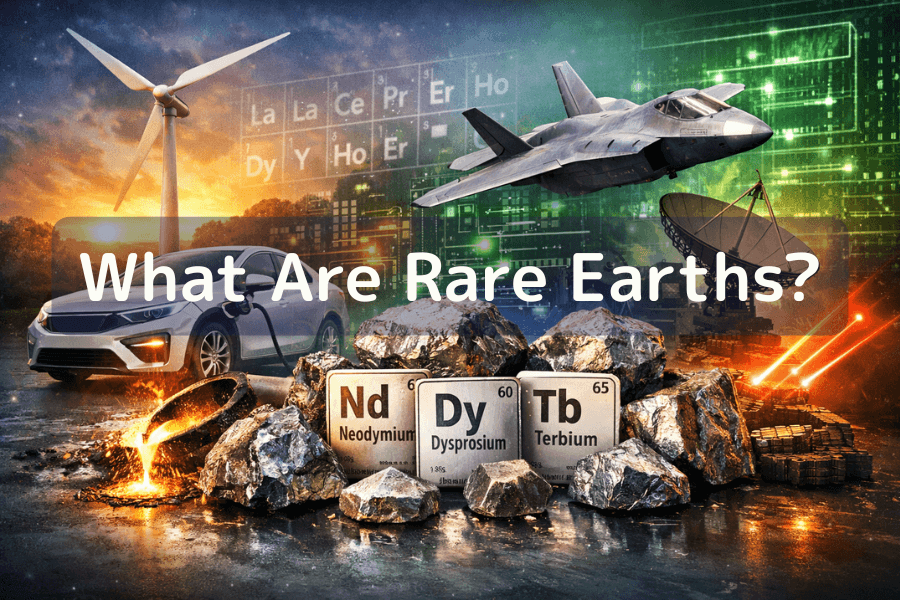
Rare earths are called the technology metals of the 21st century, essential to electronics, defense, and new-energy industries. Though not scarce in nature, they are extremely hard to refine, giving them high strategic weight in modern industry and geopolitics. For markets, REEs are not just a raw material but a key variable affecting supply-chain stability and industry valuation.
This article covers the definition and element classification, the real reasons for scarcity, the impact on key industries and global supply, and how traders can indirectly engage via related assets.
- Definition: REEs are 17 metallic elements; split into light and heavy rare earths
- Not rare yet scarce: crustal abundance is fine; by-product ores, tech and cost limit supply
- Key uses: electronics/semis, new-energy & EV magnets, defense/aerospace; low substitutability
- Supply: mining and especially separation/refining concentrated in China (~90% separation)
- Market meaning: U.S.-stock CFDs for sector divergence, metal CFDs to hedge; a flow lens
- 1. What Are Rare Earths? 17 Key Elements
- 2. Not Rare, Yet Highly Scarce - the Real Reason
- 3. Real Uses and Key Industry Impact
- 4. Global Supply Structure and China's Core Position
- 5. How REEs Affect Markets and Investment Logic
- 6. Trading Ideas and Titan FX Products
- 7. Frequently Asked Questions (FAQ)
- 8. Conclusion
1. What Are Rare Earths? 17 Key Elements
Rare earth elements (REEs) are not a specific soil or mineral but a collective name for 17 metallic elements on the periodic table. Their distribution in nature is not rare, but their magnetic, catalytic, and optical properties make them hard-to-replace materials in modern high-tech industry. From smartphones and EVs to wind power and defense equipment, many core components depend on specific REEs.
Composition and classification
By atomic weight and chemistry, REEs split into light and heavy rare earths.
- ▸Light (lanthanum, cerium, neodymium, etc.): broadest use - permanent magnets, glass polishing, petrochemical catalysis.
- ▸Heavy (terbium, dysprosium, yttrium, etc.): low volume but used in high-performance magnets, lasers, and defense; harder to mine/separate and usually more strategic.
The 17 elements and main uses
| Class | Element | Symbol | Main use |
|---|---|---|---|
| Light | Lanthanum | La | High-index glass, lenses, oil catalysis |
| Light | Cerium | Ce | Polishing powder, catalytic converters, alloys |
| Light | Praseodymium | Pr | Permanent magnets, lasers, glass dye |
| Light | Neodymium | Nd | Permanent-magnet motors, EVs, wind power |
| Light | Promethium | Pm | Nuclear batteries, luminescent materials |
| Light | Samarium | Sm | Permanent magnets, military gear, lasers |
| Light | Europium | Eu | Phosphors, displays, lighting |
| Light | Gadolinium | Gd | Medical imaging, reactor materials |
| Heavy | Terbium | Tb | High-performance magnets, phosphors |
| Heavy | Dysprosium | Dy | EV motors, heat-resistant magnets |
| Heavy | Holmium | Ho | Lasers, magnetic applications |
| Heavy | Erbium | Er | Fiber-optic comms, lasers, medical |
| Heavy | Thulium | Tm | Portable X-ray devices |
| Heavy | Ytterbium | Yb | Lasers, stainless alloys |
| Heavy | Lutetium | Lu | Medical radiology |
| Other | Yttrium | Y | Superconductors, phosphors, magnets |
| Other | Scandium | Sc | Aluminum alloys, aerospace materials |
Why not all REEs are equally important
Roles differ greatly: some are higher-output but mainly general-industrial, while others are low-volume but indispensable in high-tech and defense due to critical performance. Neodymium and dysprosium in permanent-magnet motors directly shape EV and high-efficiency generation performance; with low substitutability and hard production/separation, they have higher supply sensitivity and are seen as key elements of the REE system.
2. Not Rare, Yet Highly Scarce - the Real Reason
The name suggests an extremely scarce resource, but the opposite is true: many REEs have ample crustal content, some exceeding gold and silver. What makes them strategic is not "do they exist" but "can they be produced stably at a reasonable cost." Scarcity stems from supply-side structural limits - mining method, technical bar, environmental cost - that make supply hard to expand.
Trait 1: by-product mining limits supply elasticity
Most REEs are not standalone deposits but co-mined as by-products of iron, aluminum, uranium, etc. Firms cannot raise output just because demand rises; they must follow the host mineral's plan and market, so supply is inherently inelastic.
Trait 2: complex separation with a high technical bar
The 17 elements are chemically very similar; isolating a single high-purity element needs extensive, repeated solvent extraction. It is time-consuming and demanding on equipment, patents, and process control, so few players hold the core technology.
Trait 3: environmental and compliance costs raise the barrier
Separation and refining often produce acidic wastewater and radioactive residue. In strictly regulated countries, waste treatment and long-term monitoring cost heavily - sometimes more than the ore's economic value - which is why many regions with deposits struggle to build commercial capacity.
Overall, REE scarcity comes not from natural abundance but from multiple production constraints - the root cause of global supply concentrating in a few countries.
3. Real Uses and Key Industry Impact
REEs hold long-term strategic value because their uses are deeply embedded in modern technology and hard to fully substitute.
Industry 1: consumer electronics & semiconductors
In smartphones, laptops, and displays, several REEs are key: lanthanum in high-index lens glass and precision optics; neodymium in micro-motors and speakers; europium and terbium as the core red/green phosphors in displays, directly affecting brightness and color accuracy.
Industry 2: new energy & EVs
In the energy transition, REEs matter even more. Wind turbines and EVs widely use permanent-magnet motors, and high-performance magnets rely on neodymium and dysprosium to keep magnetism under heat and long operation. As EV adoption and renewables build out, demand grows structurally.
Industry 3: defense & advanced equipment
In defense and aerospace, REEs carry higher strategic meaning. Precision guidance, laser ranging, night vision, and radar materials rely on specific REE properties, with very high stability/reliability needs and almost no viable substitute - a resource tied to national security.
Overall, REE value spans consumer markets, new energy, and defense, forming a multi-layered, long-lasting demand structure.
4. Global Supply Structure and China's Core Position
Globally, the issue is not "are there resources" but "who can supply the market stably." Many countries have deposits, but production is skewed to a few, creating a clear supply imbalance.
Major mining countries and distribution
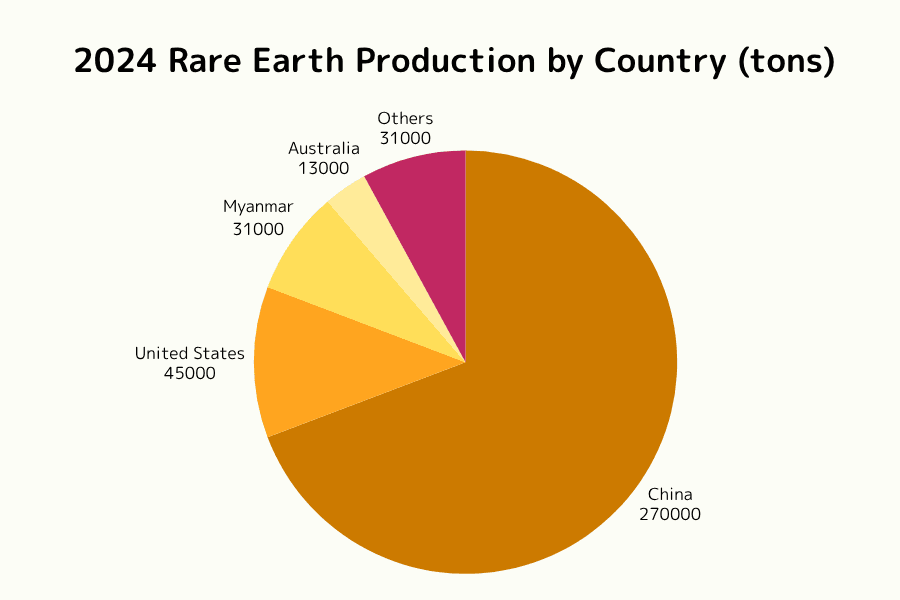
Recent public statistics put global REE mine production at about 390,000 tonnes (REO basis; source: USGS and others; figures vary by year and methodology). The top three countries hold most of global supply.
| Rank | Country | Annual mining (t) | Global share |
|---|---|---|---|
| 1 | China | ~270,000 | ~70% |
| 2 | United States | ~45,000 | ~12% |
| 3 | Myanmar | ~31,000 | ~8% |
| 4 | Others | ~31,000 | ~8% |
| 5 | Australia | ~13,000 | ~3% |
China's output alone clearly exceeds the sum of other major producers. Even with U.S. and Australian expansion, the overall share gap with China remains significant.
Why China has long held supply leadership
China's influence rests not on deposit count but on a complete, mature industry chain.
- Highly concentrated separation/refining: even ore mined elsewhere is often shipped to China for separation/refining; China is estimated to hold ~90% of global separation capacity, so "can you process" is more decisive than "can you mine."
- Long-accumulated cost/scale advantage: early development built a scaled system of technology, talent, and infrastructure, plus historically looser environmental/regulatory conditions, keeping costs lower long-term.
- Policy integration and concentration: quota management and consolidation raised concentration, curbed illegal and inefficient capacity, and made supply a policy-adjustable strategic resource.
Because supply depends heavily on one country, any export-policy shift, environmental inspection, or capacity change can quickly move expectations - why REEs often become a focus of geopolitics and trade talks.
5. How REEs Affect Markets and Investment Logic
REEs are not a popular directly tradable commodity but more of a latent variable. When supply/demand, policy, or geopolitics shift, the impact does not stay at the raw-material level but transmits down the chain, ultimately showing in U.S. companies' cost structure, profit expectations, and share prices. The point for investors is not predicting one metal's price but judging which industries and types of companies face latent risk or structural opportunity.
Trait 1: from input cost to profit expectations
For tech and new-energy firms dependent on precision materials, REEs are an irreplaceable cost item. If a supply squeeze and price rise cannot be passed through, gross margins compress. For example, Apple (AAPL) and Tesla (TSLA) use permanent-magnet and display materials heavily, so cost swings feed directly into EPS expectations.
Trait 2: supply stability as a market-premium factor
Amid supply-chain de-risking, REEs are not only a cost question but "can you source stably." Semiconductor leader Nvidia (NVDA) or aerospace-defense giant Boeing (BA) are highly supply-sensitive: an export-control signal can pull capital out early for hedging even if fundamentals are unchanged.
Trait 3: a risk-sentiment gauge when geopolitics heats up
Because capacity is highly concentrated, REE issues interweave with trade disputes. When REEs become a bargaining chip, overall risk appetite (risk-on/risk-off) tends to contract together, driving capital toward safe-haven assets (e.g., gold) and creating cross-asset linkage.
6. Trading Ideas and Titan FX Products
REEs are not a directly tradable instrument, but their market impact shows clearly in affected industries and asset prices. The key is using suitable tools to engage the sector divergence and hedging demand the theme creates.
U.S.-stock CFDs: catch leaders and laggards in sector divergence
Supply changes first show in new energy, EVs, semiconductors, industrial equipment, and aerospace/defense - usually not a broad up/down move but clear sector and single-stock divergence. With Titan FX U.S.-stock CFDs, traders can engage related companies' price moves without holding shares, going long or short by view. Titan FX supports many U.S.-stock CFDs across major tech, industrial, and new-energy names, with up to 20x leverage.
| Step | Action |
|---|---|
| 1. Open an account | Go to Titan FX support, enter basics and verify identity to activate. |
| 2. Fund | In the client portal, deposit via card, e-wallet, or bank transfer. |
| 3. Install MT5 | U.S.-stock CFDs trade on MT5, for Windows/Mac/iOS/Android/Web. |
| 4. Start trading | In MT5 "Market Watch," search the symbol and buy (long) or sell (short). |
Precious-metal CFDs: hedging under supply risk
REE issues often arrive with geopolitics, trade policy, and supply-chain security. When markets worry about disruption or policy conflict, risk appetite contracts and capital shifts to safe havens. Here gold and silver are used to balance the volatility of tech and growth assets. Titan FX offers gold (XAU), silver (XAG), platinum (XPT), and palladium (XPD) CFDs with up to 1,000x leverage on gold and 500x on silver and other precious metals, letting traders allocate flexibly by scenario.
Free Titan FX support tools
Beyond products, Titan FX provides several free trading aids to observe market rhythm from multiple angles.
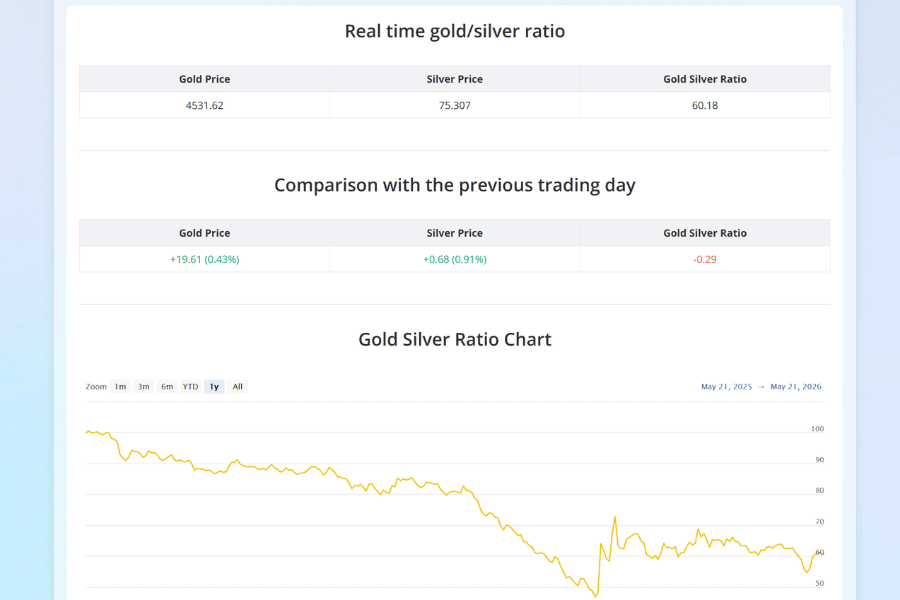
- Gold/silver ratio chart: compare gold vs silver to spot when silver is under/overvalued. Titan FX gold/silver ratio
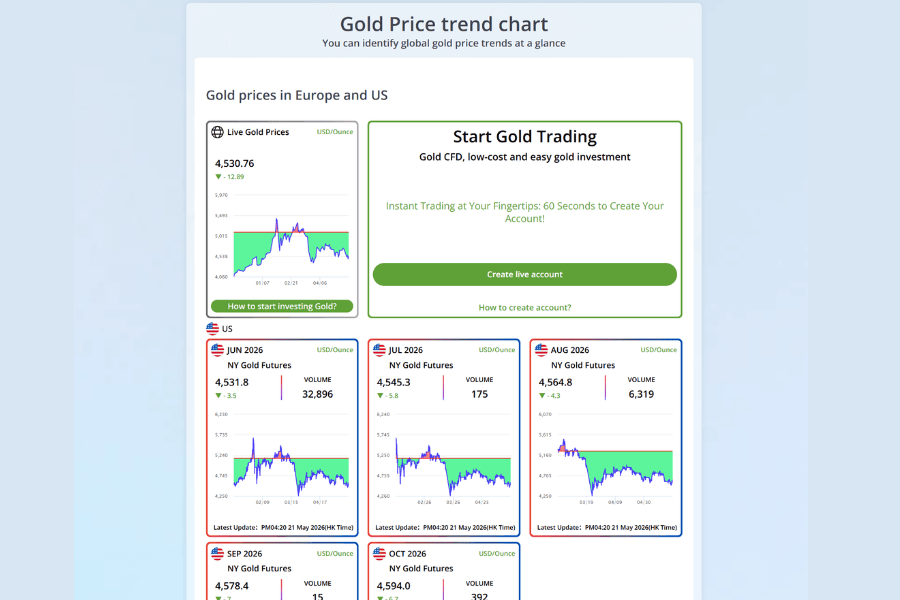
- Global gold price chart: real-time and historical gold price with RSI and MACD to judge trend strength and timing. Global gold price
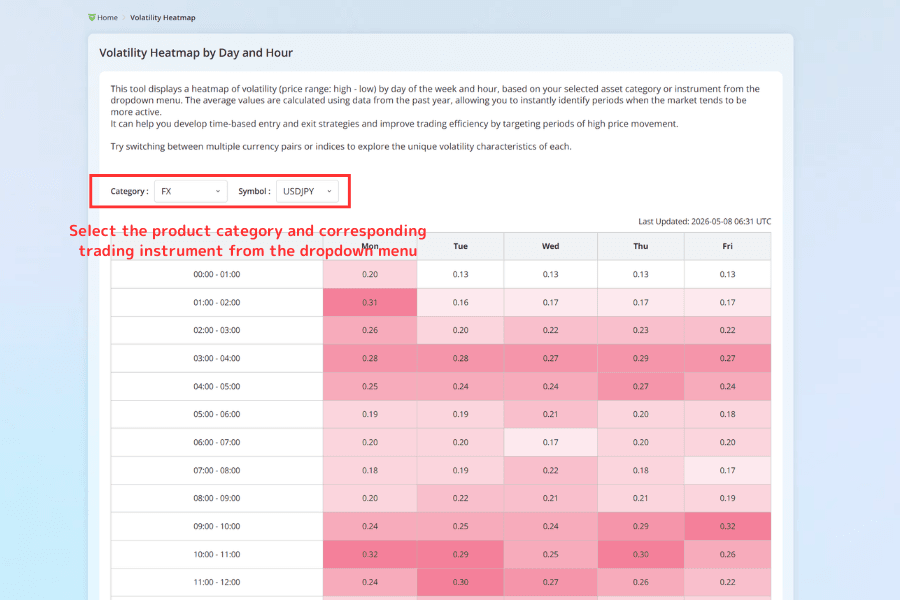
- Volatility heatmap: visualize volatility by time of day for entry timing. Volatility heatmap
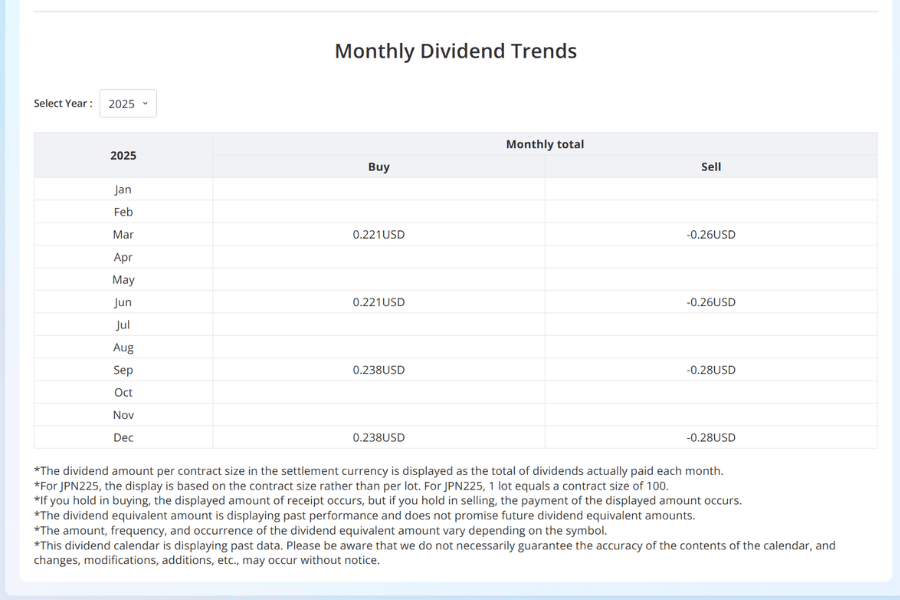
- Dividend calendar: aggregated U.S.-stock dividend dates/amounts to assess dividend impact on CFD positions. Dividend calendar
7. Frequently Asked Questions (FAQ)
Q1. What are rare earth elements and which 17?
Rare earth elements (REEs) are a collective name for 17 metallic elements on the periodic table, not a single mineral. By atomic weight and properties they split into light (lanthanum, cerium, neodymium, etc.) and heavy (terbium, dysprosium, yttrium, etc.), with magnetic, catalytic, and optical properties that make them key high-tech materials.
Q2. Why are they 'not rare yet highly scarce'?
Most REEs are not scarce in the crust - some exceed gold and silver. Scarcity comes from supply-side structural limits: they are mostly by-product ores, separation/refining has a high technical bar, and environmental/compliance costs are large, so supply is inelastic and hard to scale fast.
Q3. Why has China long led REE supply?
Not just deposits but a complete supply chain: about 90% of global separation capacity is concentrated in China, plus long-accumulated cost/scale advantages and policy integration. Whether you can process matters more than whether you can mine.
Q4. How do REEs affect financial markets?
They are an irreplaceable cost item for tech and new-energy firms; a supply squeeze compresses margins and feeds into EPS expectations (Apple, Tesla, Nvidia). Supply-chain stability becomes a market premium factor, and rising geopolitics drives risk-on/risk-off and safe-haven flows.
Q5. How can traders engage the REE theme?
There is no REE spot to trade directly. Use U.S.-stock CFDs to participate in sector divergence across new energy, semiconductors, and aerospace/defense (long or short), and use gold/silver precious-metal CFDs to hedge when risk sentiment rises. Treat REEs as a lens on industry and capital flow, not a single commodity price to chase.
8. Conclusion
REEs are called "technology metals" not because of crustal abundance but because hard separation, high environmental cost, and concentrated supply make the market especially sensitive to supply stability. When supply/demand or policy shifts, the impact spreads down the chain to EVs, renewables, semiconductors, industrial equipment, and aerospace/defense, showing in profit expectations and risk sentiment.
Titan FX does not offer REE spot trading, but traders can engage related sector rotation via U.S.-stock CFDs and hedge with gold, silver, platinum, and palladium CFDs when risk sentiment rises. Treating REEs as "a lens on industry and capital flow" builds a more logical trading framework than chasing a single raw-material price.
Further Reading
Titan FX's financial market research and analysis team produces investor education content across a wide range of financial instruments, including foreign exchange (FX), commodities (crude oil, precious metals, and agricultural products), stock indices, U.S. equities, and crypto assets.
Primary Sources by Category
- REE definition and element classification: USGS Mineral Commodity Summaries (Rare Earths); Investopedia / Wikipedia (Rare Earth Elements)
- Supply structure and industry applications: IEA Critical Minerals reports (general framework); national geological-survey public statistics
- Markets and geopolitics: general public knowledge on supply-chain and geopolitical risk