

Brexit
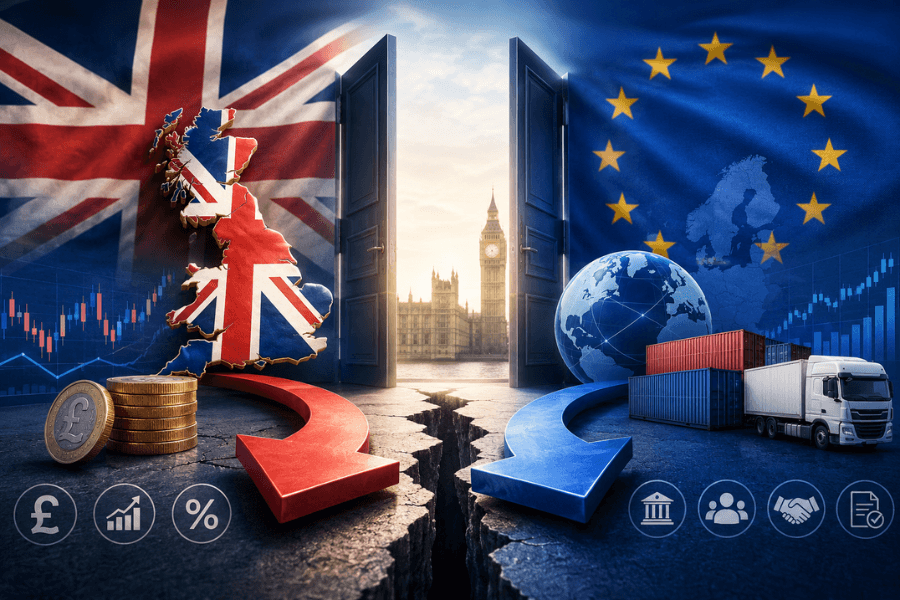
Brexit is the political and economic process by which the United Kingdom left the European Union (EU). After the 2016 referendum voted to leave, the UK formally exited in 2020 and finished its transition period in 2021, moving to a new trade and cooperation framework with the EU.
Brexit reshaped far more than the UK–EU relationship. It also left a lasting mark on the global economy, financial markets, international trade, and the investment landscape. In the currency market especially, the British pound (GBP), the euro (EUR), and related instruments all moved sharply on Brexit headlines, which is why it remains a topic investors still follow closely.
This article explains what Brexit is, why it happened, and how the timeline unfolded, then covers its impact on the UK economy, financial markets, and investors—along with where things stand today and the questions people ask most.
- Brexit is the political and economic process of the UK leaving the EU. After the 2016 referendum and years of negotiation, the UK formally left in 2020.
- The main drivers were immigration policy, national sovereignty, economic costs and benefits, and differing views on the EU's institutions.
- Economically, Brexit brought new trade procedures, supply-chain restructuring, labour-market shifts, and inflationary pressure.
- In markets, it drove volatility in the pound, equities, and safe-haven assets, and made the currency market more sensitive to policy and economic data.
- The UK and EU now operate under a new cooperation framework, and markets continue to watch UK economic performance and policy developments.
- 1. What Is Brexit? Definition and Background
- 2. Why Did the UK Leave the EU? The Main Reasons
- 3. How Did Brexit Unfold? The Key Timeline
- 4. How Has Brexit Affected the UK Economy?
- 5. How Has Brexit Affected Financial Markets? Pound, Equities, and Forex
- 6. Where Does Brexit Stand Today? Latest Developments
- 7. Brexit FAQ
- 8. Summary
1. What Is Brexit? Definition and Background
Definition: What Brexit Means
Brexit is the political and economic process by which the United Kingdom withdrew from the European Union (EU). The word combines "Britain" and "Exit," and it is the term used across global media and financial markets.
The change rebuilt how the UK and the EU handle trade, law, and policy cooperation, making it one of the defining international political and economic events of recent years.
What Exactly Did the UK Leave?
The European Union is a political and economic bloc made up of European countries. Members share a single market, a customs union, and a set of common policies, which lets goods, services, capital, and people move freely across most member states.
While the UK was a member, those arrangements applied to it too. Leaving therefore meant both sides had to build a new framework from scratch and handle trade, investment, and other cross-border matters under a fresh agreement.
Key Point: Brexit's Main Milestones
| Item | Detail |
|---|---|
| Referendum | 2016 |
| Formal exit | 2020 |
| End of transition | 2021 |
Brexit was not a single event but a transformation that took a referendum, years of negotiation, and institutional change to complete. Getting the basics straight makes its economic and market effects much easier to follow.
2. Why Did the UK Leave the EU? The Main Reasons
Brexit had no single cause. It was the product of long-running debates over immigration policy, national sovereignty, economic costs and benefits, and political positioning. Those arguments built up over years and led to the 2016 referendum, the turning point of the whole story.
Reason 1: Immigration Policy and Border Control
EU membership comes with freedom of movement, which lets EU citizens work, live, and study in other member states.
Some in the UK argued that high levels of migration were straining housing, healthcare, and education, and wanted the country to decide its own border and immigration rules again.
Reason 2: Sovereignty and Regulatory Autonomy
As an EU member, the UK had to follow a share of common rules and policies.
Leave supporters argued that outside the EU, the UK could write its own laws, tailor industrial policy to its own needs, and sign free trade agreements with other countries—giving it more room to set its own direction.
Reason 3: Economic Costs and the EU's Institutions
The UK was long one of the EU's major economies and one of its larger net contributors to the budget.
Some voters felt that staying meant carrying a fiscal cost while accepting constraints from shared institutions. Others countered that the trade and investment benefits of the single market still outweighed that. The two views were never reconciled.
Those pressures accumulated over time and ultimately produced the 2016 referendum, which formally set the withdrawal process in motion.
3. How Did Brexit Unfold? The Key Timeline
Brexit took more than four years, running from the referendum through withdrawal talks to formal exit and then to a new cooperation framework. Each stage shaped what the UK–EU relationship looks like now. Here are the milestones in order.
The Referendum and Triggering Withdrawal
In June 2016, the UK held a referendum on whether to remain in the EU. Leave won with roughly 52% of the vote.
The following year, the government formally notified the EU under Article 50 of the Treaty of Lisbon, and withdrawal negotiations began.
Negotiations and Institutional Change
During the talks, the two sides worked through trade, citizens' rights, the Northern Ireland border, and the shape of their future relationship.
Because parts of the draft agreement proved contentious in Parliament, the exit deadline was extended several times and the process ran considerably longer than first expected.
Formal Exit from the EU
On 31 January 2020, the UK formally left the EU, ending nearly 47 years of membership. A transition period kept most arrangements temporarily in place, giving businesses and markets time to prepare for the new framework.
The New Relationship Takes Effect
At the end of 2020, the UK and EU concluded the Trade and Cooperation Agreement (TCA), which took effect from 2021. Since then, the two sides have handled trade, tariffs, and other cross-border matters under that framework, and the UK has pursued free trade agreements with other countries in its own right.
| Year | Milestone |
|---|---|
| 2016 | Referendum votes to leave the EU |
| 2017 | Article 50 of the Treaty of Lisbon triggered |
| 2020 | UK formally leaves the EU |
| 2021 | UK–EU Trade and Cooperation Agreement takes effect |
4. How Has Brexit Affected the UK Economy?
Since leaving the EU, UK economic activity has gradually adapted to a new trading system and a new cooperation framework. Companies have had to rework supply chains, export processes, and staffing, and that has changed the picture for growth, jobs, and investment.
Impact 1: Trade Costs and Supply-Chain Adjustment
The UK and EU still trade with zero tariffs and no quotas, but exporters must now meet new customs, rules-of-origin, and inspection requirements, which makes the paperwork more involved than before.
Some firms have restructured their supply chains as a result, and others have spread logistics hubs across several markets to hold operating costs down.
Impact 2: Economic Growth and Business Investment
In the early period, heightened uncertainty led some companies to delay investment plans, and UK growth slowed for a time.
More recently the UK has pushed to sign free trade agreements with other countries, aiming to open markets beyond the EU and generate fresh investment and export opportunities.
Impact 3: The Labour Market
With freedom of movement over, some sectors have faced labour shortages—logistics, agriculture, hospitality, and health and social care most of all.
Alongside raising wages to attract staff, companies have gradually added automation and stepped up training to ease the gaps.
Impact 4: Inflation and the Cost of Living
The new trading arrangements pushed up import and logistics costs for some goods, and external factors such as energy prices compounded the effect, keeping UK inflation elevated for a period. With food, energy, and everyday spending all rising, the cost of living has remained a central economic issue.
5. How Has Brexit Affected Financial Markets? Pound, Equities, and Forex
Brexit changed more than UK–EU trade—it redirected flows of money across global markets. From the moment the 2016 result came in, the pound, European equities, safe-haven assets, and the currency market all moved sharply.
Even with Brexit complete, markets keep repricing the assets involved as UK economic data, central bank policy, and the UK–EU relationship evolve.
The Pound: Confidence Became the Main Driver
The British pound was one of the instruments most directly exposed to Brexit. When the referendum result was announced in 2016, concerns about UK growth, the investment climate, and trade prospects sent GBP/USD to its lowest level in decades.
Since then, the pound has traded not only on UK data but also on Bank of England rate decisions, UK–EU trade talks, and market sentiment—which is why Brexit is still one of the key inputs when analysing sterling.
Equities: The Effect Varied by Sector
Brexit raised uncertainty about future earnings, and sectors that lean on European markets—finance, autos, manufacturing, and retail—came under real operating pressure for a time.
Large multinationals, on the other hand, earn much of their revenue abroad, so a weaker pound actually improved their export competitiveness.
UK equities therefore saw sector performance diverge from phase to phase, while European equities moved with the state of UK–EU cooperation and broader sentiment.
Safe Havens: Money Moved into Gold and the Dollar
Major political events usually lift demand for safety. After the referendum, a good deal of capital moved into gold, the US dollar, and US government bonds, pushing those prices up.
That rotation reflects investors trimming risk exposure and waiting for uncertainty to fade before reallocating to equities, currencies, and other risk assets.
The Currency Market: Higher Volatility, More Activity
Brexit lifted volatility across pound crosses noticeably, with GBP/USD and EUR/GBP drawing the most attention. Every UK GDP, CPI, or employment release—and every Bank of England rate decision—can still move these pairs meaningfully.
For forex traders, big policy and economic events mean more opportunity but also more risk, so staying on top of the news and managing your capital carefully matter equally.
6. Where Does Brexit Stand Today? Latest Developments
The Brexit process finished in 2021, but its effects did not stop there. The UK continues to adjust its trading arrangements with the EU and other partners, and markets are still watching whether the economy settles and where policy goes next.
UK–EU Cooperation Has Settled into a New Normal
The UK and EU remain important trading partners, and businesses have largely adapted to the new customs procedures, rules of origin, and cross-border arrangements. Talks continue on specific issues, but trade overall now runs on a steadier footing.
Economic and Policy Shifts Still Deserve Attention
Brexit's long-run economic impact still depends on growth, inflation, the labour market, and international trade. Bank of England rate policy, progress on UK–EU cooperation, and the wider global environment can all keep moving the pound and financial markets.
Use the Right Tools to Track the Market
To keep up with what follows Brexit, it helps to check the major economic data and policy announcements regularly, not just the headlines.
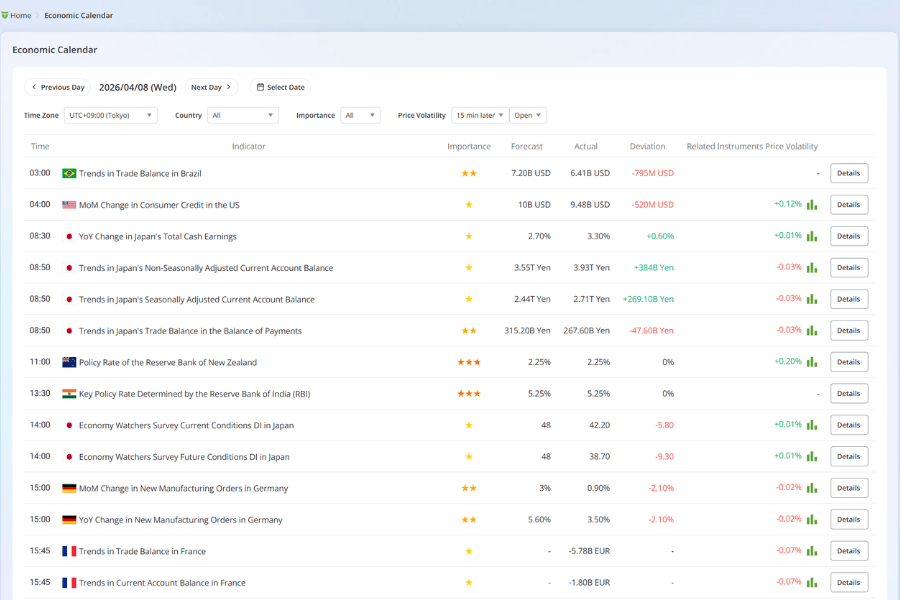
Titan FX's economic calendar lets you track central bank rate decisions, inflation prints, employment data, and other major events worldwide, so you know in advance when markets are most likely to move.
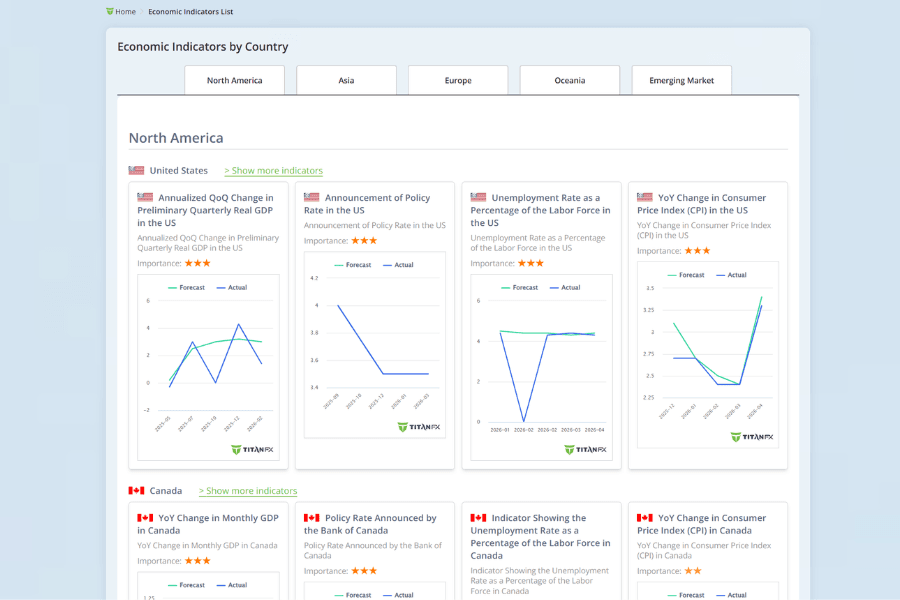
If you want a quick read on how individual indicators are trending, Titan FX's global economic indicators tool tracks GDP, PMI, CPI, and other key data, helping you judge whether the economic cycle is turning.
7. Brexit FAQ
Q1. Can the UK rejoin the EU?
In principle yes, but if the UK ever wanted back in, it would have to apply again through the EU's accession process and win the agreement of every member state. There is no formal timeline for rejoining.
Q2. Does Brexit have anything to do with the euro?
Not directly. The UK has always used the pound (GBP) as its currency and never joined the eurozone. Brexit was an exit from the EU, not from the euro.
Q3. Is the UK still in the Schengen Area?
The UK never joined Schengen, so Brexit did not change its status there. Entry rules for the UK and for most Schengen countries have always been different.
Q4. What is the Northern Ireland Protocol?
The Northern Ireland Protocol is the arrangement the UK and EU designed to avoid a hard border on the island of Ireland, and it was among the most closely watched issues in the negotiations. The two sides have continued to adjust and discuss the details since.
Q5. Does Brexit affect studying or working in the UK?
Yes. UK and EU citizens no longer have the freedom-of-movement rights they once did, so studying, working, and long-term residence now run through new visa and immigration rules, with different eligibility criteria and procedures than before.
Q6. Is Brexit still worth following?
The exit itself is done, but UK–EU cooperation policy, UK economic performance, and major international events can still shift market expectations. That keeps Brexit-related questions squarely on the radar in both international politics and financial markets.
8. Summary
Brexit was a landmark moment in the UK's history. It changed how the UK and the EU work together, and it continues to shape the UK economy, global financial markets, and the forex trading environment.
For investors, understanding the background and the effects is only the starting point. Keeping up with UK economic data, central bank policy, and shifts in international markets is what makes for a fuller judgement when markets move.
Further Reading
- What Does It Mean to Raise Interest Rates?
- What Is the Consumer Price Index (CPI)?
- What Is the London Fixing?
- What Is Volatility?
- Gold (XAU/USD) Live Rate
Titan FX Trading Strategy Lab. We produce investor-education content covering forex, commodities (crude oil, precious metals, agricultural goods), stock indices, US equities, and digital assets.
Primary Sources (by category)
- Government & legal: UK Government (GOV.UK) Brexit publications and the UK–EU Trade and Cooperation Agreement (TCA); European Commission — UK–EU relations and agreement texts
- Central bank & statistics: Bank of England Monetary Policy Reports and rate decisions; Office for National Statistics (ONS) — GDP, CPI, and labour market statistics
- Referendum & institutions: UK Electoral Commission — 2016 EU referendum results; Article 50 of the Treaty of Lisbon — the procedure for withdrawing from the EU