

MXN(Mexican Peso)
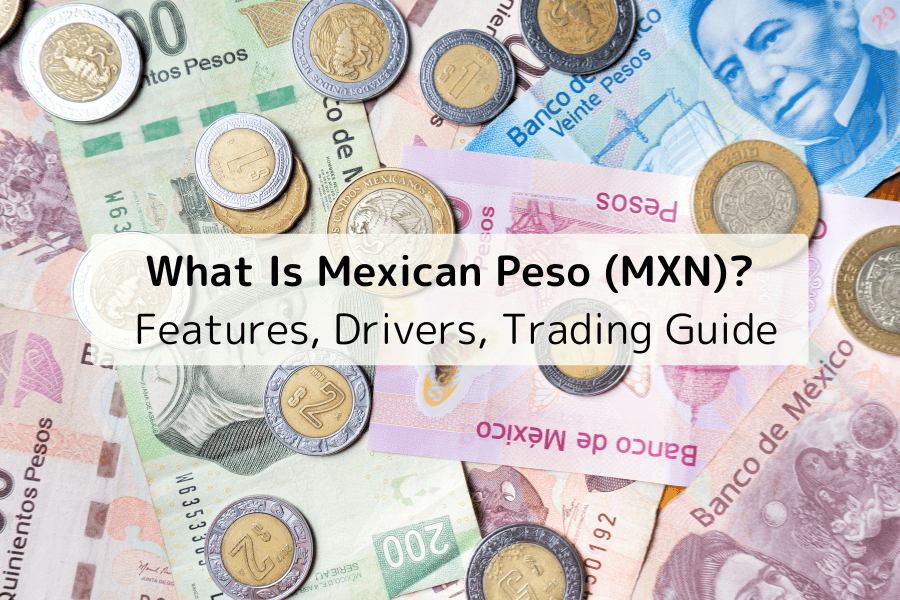
The Mexican Peso (MXN) is Mexico's official currency and a major emerging-market currency. Its close trade ties to the US and Mexico's role as an oil exporter give it high-volatility, high-interest-rate characteristics.
Among emerging-market currencies, the Mexican peso stands out for pairing high interest rates with deep economic ties to the United States — a mix that makes it both a popular carry-trade candidate and highly sensitive to oil prices and US policy, so reading those drivers often matters more than watching the rate alone.
As an emerging market currency, the Mexican Peso has relatively high liquidity in the global forex market, especially in its trading volume with the US Dollar. Mexico's economic development and fluctuations in global commodity prices often directly influence the Peso's exchange rate.
This article explores the history of the Mexican Peso, the key factors influencing its exchange rate, its characteristics, major economic indicators, and its future outlook.
- MXN as a high-volatility emerging market currency and its historical background
- Carry trade potential and risks in a high-interest-rate environment
- Key drivers: U.S. economy, oil prices, political risk
- Practical approaches to trading USD/MXN
- History of the Mexican Peso
- Key Factors Influencing the Exchange Rate of the Mexican Peso
- Characteristics of the Mexican Peso
- Major Economic Indicators of the Mexican Peso
- The Position of the Mexican Peso in the Global Financial System
- Future Outlook for the Mexican Peso
- Why is MXN (Mexican Peso) Trading Popular?
- How to Trade MXN (Mexican Peso)
- Frequently Asked Questions (FAQ)
- Summary
History of the Mexican Peso
The history of the Mexican Peso dates back to the 16th century, when it was one of the key currencies during the Spanish colonial period. The term "Peso" comes from Spanish, meaning "weight," and was originally used as a unit for silver coins.
After Mexico gained independence, the Peso became its national currency and underwent several reforms. In 1993, the Mexican government implemented a major currency overhaul, removing three zeros from the currency, which led to the current form of the Peso (MXN).
With the economic growth of Mexico, especially after the signing of the North American Free Trade Agreement (NAFTA), the Peso gradually became one of the more active emerging market currencies in the global forex market.
Mexico's close economic ties with the United States make the Peso particularly sensitive to US economic data, policy changes, and global commodity prices.
Key Factors Influencing the Exchange Rate of the Mexican Peso
1. Global Commodity Prices
Mexico is a major oil exporter, so fluctuations in global oil prices directly impact the exchange rate of the Mexican Peso. When oil prices rise, the Peso typically appreciates, and vice versa.
2. US Economic Conditions and Policies
Mexico and the US have strong economic links, especially in trade and investment. Therefore, economic performance in the US, including interest rate policies and inflation rates, has a significant impact on the exchange rate of the Mexican Peso.
3. Mexican Economic Data
Domestic economic performance in Mexico, such as GDP growth, inflation, trade balance, and unemployment rates, directly affects the supply and demand for the Peso, and thus its exchange rate.
4. Political Risk
Mexico's internal political stability and government economic and monetary policies significantly influence investor confidence in the forex market. Political instability can lead to increased volatility in the Peso's exchange rate.
Characteristics of the Mexican Peso
High Volatility
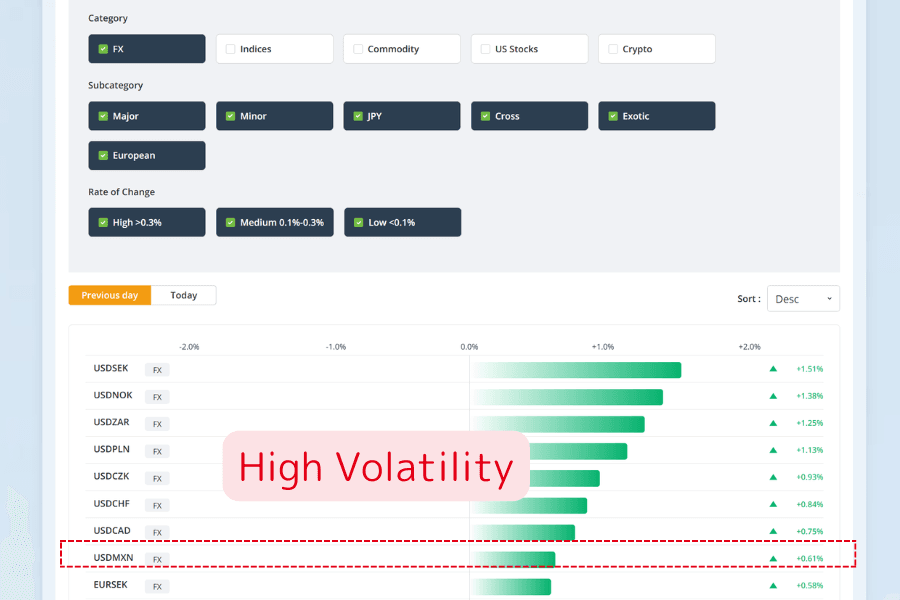
The Mexican Peso is a highly volatile emerging market currency, particularly when there are shifts in global market sentiment. This makes the Peso an important tool for investors managing risk in the global forex market.
Strong Correlation with the US Dollar
Due to Mexico's close trade relationship with the United States, the USD/MXN currency pair is one of the most traded pairs in the world. Consequently, the Peso's exchange rate against the US Dollar is highly correlated with US economic conditions.
Dependence on Commodity Exports
Mexico's economy is highly dependent on exports of oil and other natural resources. Therefore, fluctuations in global commodity prices significantly affect the exchange rate of the Peso.
Major Economic Indicators of the Mexican Peso
| Indicator | Description | Impact on Exchange Rate |
|---|---|---|
| GDP Growth Rate | Reflects changes in Mexico's Gross Domestic Product. Strong economic growth typically increases demand for the Peso, causing the exchange rate to rise. | Strong growth may lead to Peso appreciation |
| Inflation Rate | Shows changes in the price levels within Mexico. High inflation erodes the purchasing power of the Peso and typically leads to a depreciation of the exchange rate. | High inflation may lead to Peso depreciation |
| Trade Balance | Reflects Mexico's import/export balance. A trade surplus, where exports exceed imports, usually has a positive impact on the Peso's exchange rate. | Trade surplus may lead to Peso appreciation |
| Benchmark Interest Rate | The interest rate set by Mexico's central bank. When interest rates rise, foreign investment is attracted, pushing the Peso higher. | Rising interest rates may lead to Peso appreciation |
| Unemployment Rate | Indicates the health of Mexico's labor market. A high unemployment rate suggests economic weakness, which typically has a negative impact on the Peso's exchange rate. | Rising unemployment may lead to Peso depreciation |
| Foreign Reserves | Foreign exchange reserves held by the Mexican government. High reserves typically help stabilize the exchange rate and reduce market volatility. | Higher reserves may stabilize the Peso exchange rate |
Titan FX Provides Free Economic Indicator Queries
Titan FX provides economic data indicators for major countries such as the United States, Europe, Japan, and China. You can query these indicators based on publication time, country, and importance.
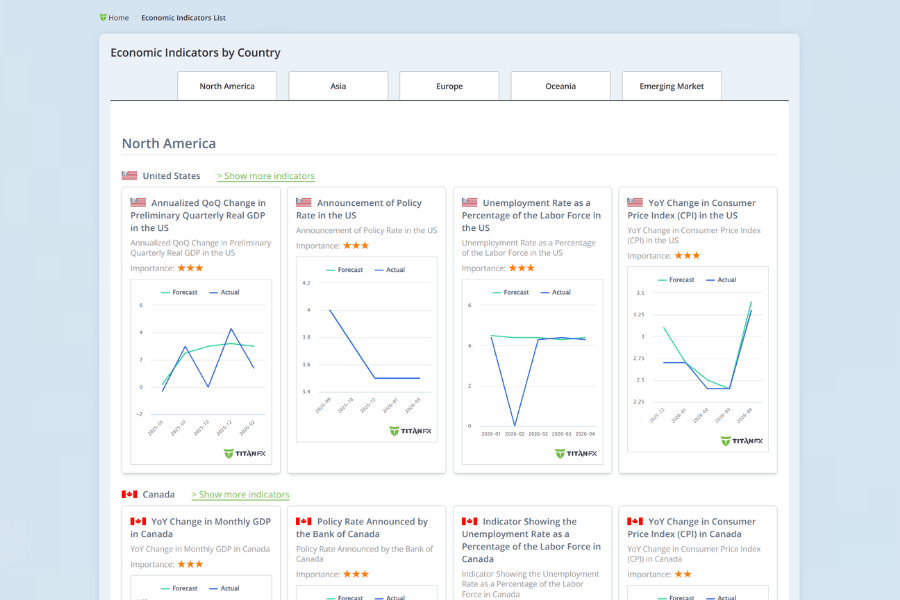
How to Query Economic Data Indicators Economic Data Indicator Query Page
The Position of the Mexican Peso in the Global Financial System
As an emerging market currency, the Mexican Peso has secured its place in the global forex market.
Due to its strong correlation with the US Dollar, the Peso is often used as a tool for speculation and risk management in the forex market. Especially given its close ties to commodity prices like oil, the Peso's fluctuations are frequently used by global investors to hedge against commodity risks.
Moreover, Mexico is one of the most important economies in Latin America, and its financial market is one of the most developed in the region, making the Mexican Peso an important player in both regional and global trading.
Future Outlook for the Mexican Peso
Looking ahead, the future movement of the Mexican Peso will primarily depend on the global economic environment, commodity prices, and changes in US monetary policy. As global market uncertainty increases, Mexico may face both domestic and international economic challenges. The interest rate policies of the Federal Reserve will be particularly influential on the Peso’s exchange rate.
If Mexico continues to drive economic reforms, improves the investment environment, and reduces its dependence on oil, the stability of the Peso will likely improve. However, investors should continue to monitor global economic changes, Mexico's political situation, and domestic economic indicators to make timely currency forecasts.
Why is MXN (Mexican Peso) Trading Popular?
The Mexican Peso is viewed as an emerging market currency in the forex market, characterized by medium to high risk. Its exchange rate is quite volatile, primarily affected by global economic conditions, US economic policies, and domestic political and economic situations in Mexico. Mexico's close trade relationship with the US makes the Peso particularly sensitive to US economic data and policies.
Although the exchange rate volatility brings higher risk, it also offers significant potential returns. Therefore, when trading the Mexican Peso, investors should carefully assess the risks.
1. Mexican Peso Profit Strategy: Leveraging Exchange Rate Fluctuations
The Mexican Peso is often influenced by US economic data, oil prices, and domestic policy changes, causing significant exchange rate fluctuations, providing traders with opportunities to profit from short-term price movements.
By analyzing market trends and economic indicators, traders can buy or sell at the right moments, seizing the profit opportunities brought by price fluctuations.
2. Mexican Peso Profit Strategy: High-Interest Rate Arbitrage
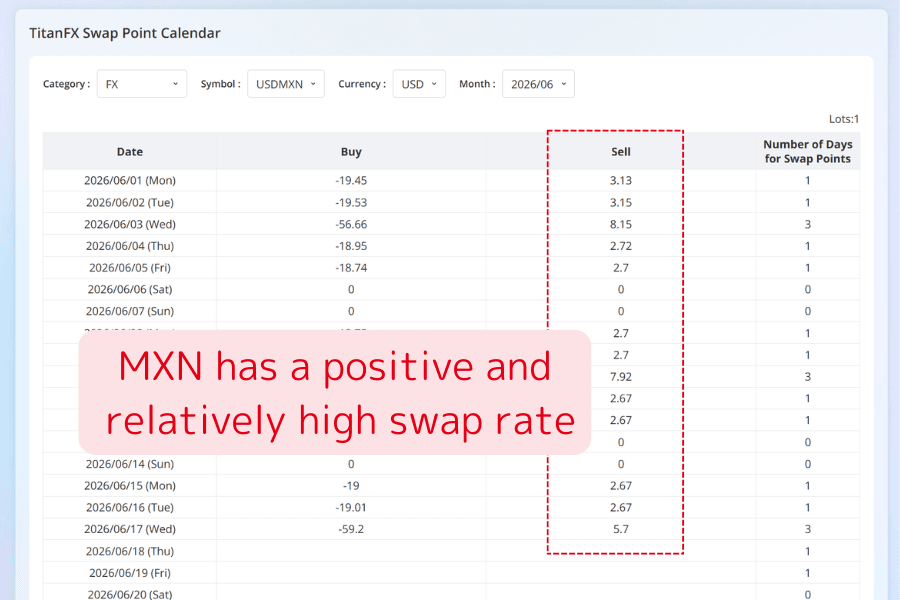
Mexico's interest rates are generally higher, allowing traders holding the Mexican Peso to earn relatively high overnight interest income.
This means that even if the market doesn't fluctuate significantly, investors can still earn interest income from holding the Peso, which enhances overall returns. This characteristic makes the Peso one of the ideal currencies for high-interest arbitrage strategies. Further Reading: What is Financing Cost in Forex Trading?
How to Trade MXN (Mexican Peso)
Trading the Mexican Peso (MXN) can be done in various ways, with the most common being forex margin trading. This trading method offers the advantage of leverage, allowing investors to control larger positions with smaller amounts of capital.
Moreover, forex margin trading allows for both long and short positions, so traders can engage in bidirectional trading based on market fluctuations.
With the forex market operating 24 hours a day, it is one of the largest markets globally, providing high flexibility and liquidity, suitable for different trading strategies and risk tolerance levels.
Further Reading: Introduction to Forex Margin Trading
Titan FX offers up to 500x leverage on MXN pairs (USD/MXN, MXN/JPY).
Trading Forex with Titan FX
1. Open a Trading Account:
Titan FX offers a fast and simple account opening process with no requirement for ID or address verification.
Titan FX provides Standard and Blade account types. Traders can choose their preferred type during registration.
Titan FX Account Opening Guide2. Deposit Funds:
After registration, deposit funds into your account. Titan FX supports multiple deposit methods, with credit card deposits being the fastest and most convenient, usually processed instantly.
Titan FX Credit Card Deposit Guide3. Download and Install Trading Platforms (MT4/MT5):
Titan FX offers MT4 and MT5 platforms for Windows, Mac, iOS (iPhone/iPad), and Android.
Titan FX MT5 Installation and Login Titan FX MT4 Installation and Login4. Choose a Currency Pair:
Titan FX offers around 60 currency pairs, with the most commonly traded pair involving the Mexican Peso (MXN) being the US Dollar (USD), specifically the USD/MXN.
Query for all currency pairs5. Place Trades:
Log into the MT4 or MT5 platform, select your trading instrument, and start buying or selling.
MT5 Interface and Order Methods
MT4 Interface and Order Methods
Titan FX Provides Free Trading Tools (Custom Indicators and EAs)
Titan FX is dedicated to providing traders with advanced trading support, including free trading tools such as custom indicators and EAs (Expert Advisors). These tools are designed to enhance traders' efficiency and strategy precision.
Custom indicators help traders analyze market trends more accurately and identify potential trading opportunities.
Meanwhile, EAs can automatically execute pre-set trading strategies, avoiding emotional interference and ensuring that each trade is executed accurately.
With these free tools, Titan FX helps you gain an edge in the competitive financial market and improve your trading performance.
All Custom Indicators EA Trading Program RankingsFrequently Asked Questions (FAQ)
Q1. What advantages does MXN have over other LatAm currencies?
MXN has the highest liquidity and tightest spreads among Latin American currencies, with mature price discovery and broad institutional participation.
Q2. When does USD/MXN show the most volatility?
During the New York morning session, especially around U.S. economic data releases. The London-New York overlap also offers active trading.
Q3. Is USD/MXN suitable for carry trades?
Yes. Mexico maintains relatively high interest rates, making short USD/MXN positions attractive for positive swap income. However, sharp currency moves can offset interest gains.
Q4. What risks should I be aware of when trading MXN?
MXN is highly sensitive to political events (elections, trade disputes), oil price swings, and shifts in global risk appetite. Sudden capital outflows during risk-off episodes can cause sharp depreciation. Always use stop-loss orders and manage position sizes carefully.
Q5. What trading style suits MXN best?
MXN responds well to technical indicators like trend lines, Bollinger Bands, and RSI, making it suitable for momentum-based short-to-medium-term strategies. Its high volatility also works for traders combining trailing stops with hedging tools.
Summary
The Mexican Peso (MXN) combines liquidity and strategic value in the global forex market. Driven by the U.S. economy, energy prices, domestic policy, and political risk, it exhibits typical emerging market currency characteristics. For traders seeking carry trade opportunities and short-term volatility plays, MXN offers a high-risk, high-potential trading environment.
Related Articles
Titan FX Research. We produce educational content for investors, covering a wide range of financial instruments including forex, commodities (crude oil, precious metals, agricultural products), stock indices, U.S. equities, and digital assets.
Primary Sources (by category)
- Official: Banco de México (Banxico); IMF — WEO
- Market: CME Group; Bloomberg; Reuters
- Energy: EIA; OPEC; Pemex