

CAD(Canadian Dollar)
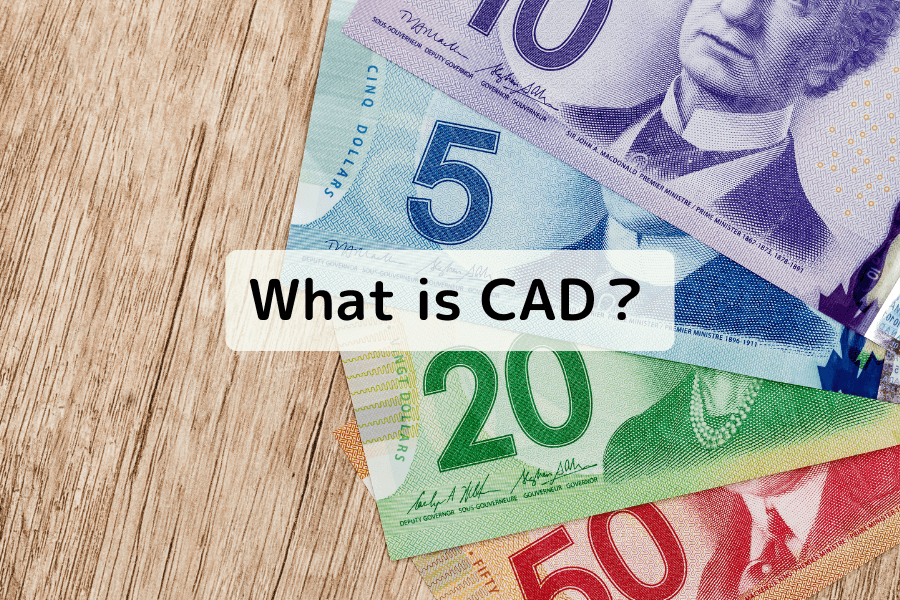
The Canadian Dollar (CAD), nicknamed the "loonie" (symbol C$), is Canada's official currency. As a major oil exporter, Canada makes CAD move closely with crude prices, marking it a classic commodity currency.
Among the major currencies, the Canadian dollar stands out for how closely it tracks crude oil — which makes it a useful window into risk sentiment and the energy cycle. For traders, understanding the oil prices, rate differentials, and US-Canada economic links that drive CAD often matters more than memorising the rate itself.
As a key currency in international trade and investment, the Canadian Dollar (CAD) is frequently traded in the global forex market and closely tied to Canada's economic fluctuations.
This article explores the historical background of the CAD, key factors influencing its exchange rate, its characteristics, and future development prospects.
- CAD Definition: Canada's official currency, symbol C$, nicknamed the "Loonie"
- 6 Characteristics: Commodity currency / Oil correlation / US economic dependence / Float regime / G7 member / Reserve currency
- Core Drivers: Crude oil prices, Bank of Canada (BoC) policy, US economic data (75%+ of exports go to US)
- Key Pairs: USD/CAD (largest), CAD/JPY (carry trade candidate), EUR/CAD, AUD/CAD
- Seasonality: Winter (Q4-Q1) heating-oil + natural-gas demand → oil price support → CAD tendency to strengthen
Canadian Economy and the History of the Canadian Dollar
Canada, a resource-rich nation, heavily depends on natural resources such as oil, natural gas, and minerals. The Canadian Dollar has been Canada’s official currency since the 19th century, evolving alongside the nation's economic growth.
In the 20th century, Canada's economy grew rapidly, particularly after World War II, driven by the development of industrial and energy sectors. The Canadian Dollar was once pegged to gold until the 1970s when Canada adopted a floating exchange rate system, making its exchange rate more dependent on market forces and global economic factors.
With the increasing importance of energy markets, the Canadian Dollar became a key currency in global energy trade, especially due to the direct impact of oil price fluctuations on its exchange rate.
You can check the real-time relative strength of major currencies with the Currency Strength Meter.
Key Factors Affecting CAD Exchange Rate
The Canadian Dollar's exchange rate fluctuates due to several factors, primarily linked to global economic dynamics and the economic conditions in Canada.
1. Commodity Prices
As a commodity currency, CAD is particularly sensitive to oil prices. Canada is one of the world's largest oil exporters, so an increase in oil prices typically drives the Canadian Dollar up, while a drop in oil prices often causes a decline in the CAD exchange rate.
2. Canadian Economic Performance
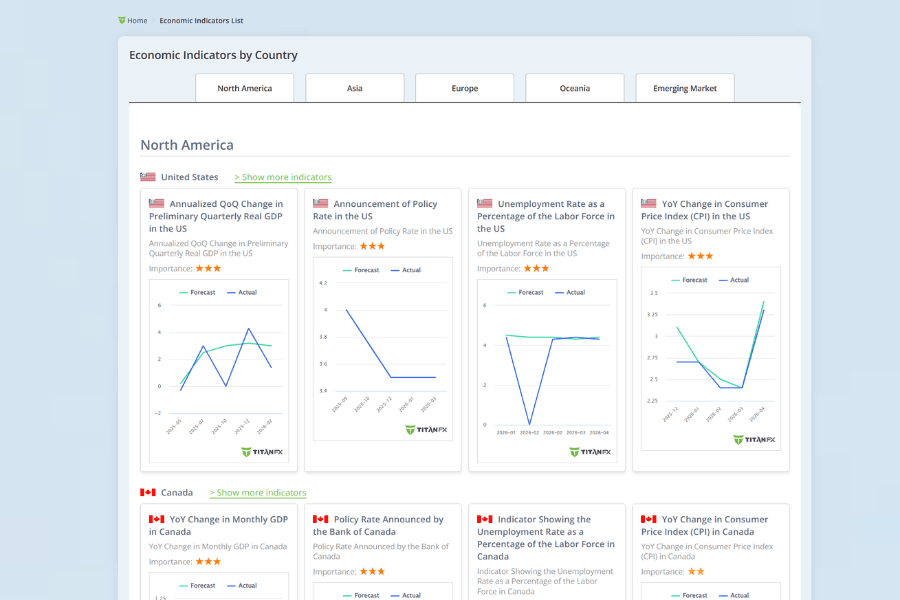
Key economic indicators such as GDP, employment rate, inflation, and trade conditions play an essential role in determining CAD's exchange rate. A strong economic performance, coupled with controlled inflation, tends to increase demand for the CAD, raising its value. Conversely, a weak economy or out-of-control inflation may cause the CAD to depreciate.
3. Bank of Canada's Monetary Policy
The Bank of Canada (BOC)'s interest rate decisions directly affect the Canadian Dollar's value. When the central bank raises interest rates, demand for CAD increases, leading to an appreciation. On the other hand, rate cuts tend to cause CAD to depreciate.
4. Global Economic Conditions
As an export-oriented economy, Canada’s economic performance is closely tied to the economic health of its major trading partners, such as the United States and China. Since the U.S. is Canada’s largest trading partner, fluctuations in the U.S. economy often have a direct impact on the CAD exchange rate.
Characteristics of the Canadian Dollar
As one of the world's leading currencies, the Canadian Dollar has several important characteristics:
1. Resource-Dependent Currency
The CAD is heavily influenced by the price fluctuations of energy and other commodities, particularly oil and natural gas. Therefore, its exchange rate often experiences significant volatility due to changes in commodity markets.
2. Floating Exchange Rate System
Since the 1970s, Canada has implemented a floating exchange rate system where the CAD is determined by market supply and demand. This allows the Canadian Dollar to adjust flexibly to global economic changes and market sentiment.
3. Stable Economy and Financial System
Canada boasts a stable economy and a robust financial system. Its banking sector, considered one of the most stable in the world, gives the CAD a level of credibility and stability in the international financial markets.
4. Sensitivity to Commodity Markets
As a resource-based economy, Canada’s Dollar is highly sensitive to fluctuations in commodity prices, especially in the energy sector. This sensitivity makes the CAD more volatile, particularly when energy prices experience sharp swings.
The Role of CAD in the Global Financial System
While the Canadian Dollar is not a major reserve currency, it holds a significant position in the forex market due to Canada's stable economy and its close links to the global commodity markets.
1. Role in the Global Forex Market
The Canadian Dollar maintains a relatively stable position in global forex trading. As a leading exporter of commodities, many international transactions and financial activities involve CAD, making it one of the most liquid currencies globally.
2. Importance in Trade and Investment
As a major resource-exporting country, particularly in energy, CAD plays a crucial role in international trade and investment. Price fluctuations in energy markets can directly influence global demand for the Canadian Dollar.
3. Hedging Exchange Rate Volatility and Risks
Due to the CAD's strong correlation with commodity prices, it becomes an attractive option for investors seeking to hedge against risks in global markets, especially those heavily involved in the energy sector.
The Future Outlook for the Canadian Dollar
As global economic dynamics and energy markets evolve, the Canadian Dollar's future trends will face both challenges and opportunities.
1. Changes in the Global Energy Market
The future value of CAD will be closely tied to global energy market developments, especially oil prices. If global energy demand rises, leading to higher oil prices, CAD may benefit. However, a decline in energy demand could put downward pressure on the CAD.
2. Bank of Canada's Policy Direction
Moving forward, the Bank of Canada’s monetary policies, particularly interest rate adjustments, will have a direct impact on the CAD’s value. In an increasingly uncertain global economy, the BOC's responses will be crucial in determining the Canadian Dollar’s long-term outlook.
3. Relationship with the U.S. Economy
The United States, Canada’s largest trading partner, will continue to significantly influence the CAD. Future shifts in U.S.-Canada trade relations and the performance of the U.S. economy will be critical factors in the CAD's exchange rate movements.
How to Trade CAD (Canadian Dollar)
Trading CAD can be done through various methods, with forex margin trading being the most common. This method offers leverage, allowing traders to control larger positions with smaller capital.
Additionally, forex margin trading allows for both long and short positions, enabling traders to capitalize on market fluctuations in either direction.
With the forex market operating 24 hours a day, it is one of the largest and most liquid markets globally, offering great flexibility and liquidity for traders with different strategies and risk appetites.
For further reading: Forex Margin Trading Basics
Titan FX Forex Margin Trading Process
1. Open an Account:
Titan FX's account opening process is simple and quick, with no identity or address verification required for online registration.
Titan FX offers both Standard and Blade trading accounts. Traders can choose their account type during registration.
Titan FX Account Opening Guide2. Deposit Funds:
After registering, you can deposit funds into your account. Titan FX offers various deposit methods, with credit card deposits being the fastest and most convenient, typically credited immediately.
Titan FX Credit Card Deposit Guide3. Download and Install Trading Platforms (MT4/MT5):
Titan FX offers both MT4 and MT5 platforms, available for download on Windows, Mac, iOS (iPhone/iPad), and Android systems.
Titan FX MT5 Installation and Login Titan FX MT4 Installation and Login4. Choose Currency Pair
Titan FX offers about 60 currency pairs. The most commonly traded pair with CAD is USD/CAD, which is highly active in the forex market due to the strong trade ties between Canada and the U.S.
5. Place a Trade:
After logging into MT4 or MT5, select a currency pair and proceed with either a buy or sell order.
MT5 Interface and Order Methods MT4 Interface and Order MethodsTitan FX Provides Free Trading Tools (Custom Indicators and EAs)
Titan FX is dedicated to offering advanced trading support, including free tools such as custom indicators and EAs (Expert Advisors). These tools are designed to enhance traders' efficiency and accuracy.
Custom indicators help traders analyze market trends and identify potential trading opportunities more accurately.
EAs automatically execute predefined trading strategies, preventing emotional interference and ensuring that each trade is executed precisely.
Through these free tools, Titan FX helps traders gain an advantage in the competitive financial markets and improve their trading performance.
All Custom Indicators EA Trading Program RankingsFrequently Asked Questions
Q1: How is CAD different from other commodity currencies?
CAD shares "commodity currency" status with AUD and NZD, but its strongest correlation is with crude oil prices (Canada's main exports are oil and natural gas). AUD/NZD are more sensitive to metals and agricultural commodities. CAD also has a higher dependency on the US economy — about 75% of Canadian exports go to the US, making CAD highly responsive to US economic data.
Q2: Is there seasonality in CAD's exchange rate?
Yes. CAD often shows seasonal patterns tied to energy demand. In winter (Q4-Q1), North American heating-oil and natural-gas demand rises, supporting oil prices and CAD. Summer pushes gasoline and industrial-fuel demand. Watch North American energy inventories and futures for forward signals.
Q3: Is CAD suitable for carry trade?
CAD is generally not a high-yield currency, so it's not the top pick for carry trade. However, during BoC tightening cycles, CAD can attract inflows. Paired against low-yield currencies like JPY, CAD/JPY becomes a viable carry-trade vehicle.
Q4: What special news sources should CAD traders watch?
Beyond standard Canadian CPI / GDP / BoC statements, also follow:
- OPEC and IEA crude-oil market outlooks
- Canadian pipeline-policy developments (e.g., Keystone XL)
- Federal budget and Department of Finance projections
- US-Canada energy cooperation or trade frictions
Q5: Which currency pairs are most representative for CAD?
- USD/CAD: Most-traded CAD pair, dominated by US economic data and oil prices
- CAD/JPY: Combines CAD's commodity-currency character with JPY's safe-haven property — carry-trade candidate
- EUR/CAD, AUD/CAD: Cross-currency pairs reflecting EU/Australia vs Canada divergence
Further Reading
- What is AUD (Australian Dollar)?
- Natural Gas Trading Guide
- What is WTI Crude Oil?
- Forex Trading Basics
- What is Stop Loss?
- The 2% Risk Rule
Titan FX Trading Strategy Lab. We produce investor-education content covering forex, commodities (crude oil, precious metals, agricultural goods), stock indices, U.S. equities, and digital assets.
Primary Sources (by category)
- Official records: Bank of Canada (BoC) — policy rate, FX intervention history; Statistics Canada — GDP / CPI / employment data
- Energy markets: U.S. Energy Information Administration (EIA) — crude oil inventories and exports; International Energy Agency (IEA) — North American demand outlook
- Industry data: BIS — Triennial Central Bank Survey (2022) global forex turnover (CAD = 5.5%, world #6)
- Academic: Cashin, P. et al. (2004) "Commodity Currencies and the Real Exchange Rate", Journal of Development Economics — commodity-currency theory