

What Is the Singapore Straits Times Index (SING30)? Components, Features & Trading Strategies
SING30 is the benchmark index tracking the performance of Singapore's equity market, comprising the 30 largest and most liquid companies listed on the Singapore Exchange (SGX). From the three major banks — DBS, OCBC, and UOB — to Singapore Airlines and Singtel, these constituents represent Singapore's economic strength as a leading Asian financial hub.
For CFD traders, SING30 offers a unique window into Southeast Asian economic dynamics. As the world's third-largest foreign exchange trading center and a key financial hub in Asia, Singapore's index moves in close correlation with the Chinese and ASEAN economies. This article provides a systematic analysis of SING30's trading logic — from index composition and price drivers to practical trading strategies.
What Is the Singapore Straits Times Index (SING30)?
The Singapore Straits Times Index (STI), established in 1966, is jointly compiled by the Singapore Exchange (SGX) and The Straits Times newspaper. It is Singapore's oldest and most representative stock market index, tracking the 30 largest and most liquid companies listed on SGX. Calculated using a free-float market-capitalization weighting methodology, the index covers approximately 70% of SGX's total market capitalization.
| Item | Details |
|---|---|
| Official Name | Straits Times Index (STI) |
| Trading Symbol | SING30 (CFD) |
| Year Established | 1966 |
| Number of Constituents | 30 |
| Weighting Method | Free-Float Market-Cap Weighted |
| Market Coverage | Approximately 70% of SGX's total market cap |
| Review Frequency | Quarterly (March, June, September, December) |
| Compiled By | Singapore Exchange (SGX) and The Straits Times |
How the Straits Times Index Is Calculated
SING30 uses a free-float market-capitalization weighting methodology — each constituent's market cap is calculated by multiplying its free-float shares (excluding locked-in holdings by major shareholders) by its share price, and weights are assigned proportionally. Unlike the price-weighted approach used by the Dow Jones Industrial Average (US30), SING30's market-cap weighting gives larger companies such as DBS, OCBC, and UOB greater influence over the index's movement.
The index undergoes quarterly constituent reviews to ensure it always includes the most representative and liquid stocks on SGX.
Components & Sector Breakdown
SING30's constituents span multiple sectors including financials, real estate, telecommunications, industrials, and aviation, closely reflecting Singapore's economic structure. Below is the full list of 30 constituents:
Financials (Highest Weight)
| Company | Ticker | Sector |
|---|---|---|
| DBS Group | D05 | Banking |
| OCBC Bank | O39 | Banking |
| UOB | U11 | Banking |
The three major banks — DBS, OCBC, and UOB — account for over 40% of the index weight combined, making them the primary drivers of SING30's price action. Singapore's banking sector is known for its prudent management and high dividend yields, holding a prominent position within the Asian banking system.
Real Estate & REITs
| Company | Sector |
|---|---|
| CapitaLand Investment | Real Estate Investment Management |
| CapitaLand Integrated Commercial Trust | Commercial REIT |
| CapitaLand Ascendas REIT | Industrial/Logistics REIT |
| Mapletree Pan Asia Commercial Trust | Commercial REIT |
| Mapletree Industrial Trust | Industrial REIT |
| Mapletree Logistics Trust | Logistics REIT |
| Hongkong Land | Commercial Real Estate |
| City Developments | Property Development |
| UOL Group | Property Development/Hotels |
Singapore is one of the most developed REIT markets globally, and the real estate/REITs sector accounts for approximately 20% of the index weight.
Industrials & Infrastructure
| Company | Sector |
|---|---|
| ST Engineering | Aerospace & Defense |
| Sembcorp Industries | Energy & Urban Development |
| Keppel Ltd | Infrastructure/Asset Management |
| Seatrium | Marine & Offshore Engineering |
Telecommunications & Technology
| Company | Sector |
|---|---|
| Singtel | Telecommunications Operator |
| Venture Corporation | Electronics Manufacturing Services |
Aviation & Transport
| Company | Sector |
|---|---|
| Singapore Airlines | Air Transport |
| SATS Ltd | Airport Ground Handling/Catering |
Agriculture & Consumer
| Company | Sector |
|---|---|
| Wilmar International | Palm Oil/Agri-Processing |
| Thai Beverage | Beverages |
| DFI Retail Group | Retail |
| Genting Singapore | Integrated Resort/Gaming |
Sector Breakdown
| Sector | Weight (approx.) | Key Companies |
|---|---|---|
| Financials | ~45% | DBS, OCBC, UOB |
| Real Estate/REITs | ~20% | CapitaLand group, Mapletree group |
| Industrials | ~12% | ST Engineering, Sembcorp, Keppel |
| Telecommunications | ~5% | Singtel |
| Aviation/Transport | ~5% | Singapore Airlines, SATS |
| Consumer/Agriculture/Other | ~13% | Wilmar, Thai Beverage, Genting |
The financial sector's dominance at over 45% is SING30's most distinctive characteristic, making the index particularly sensitive to interest rate environments, bank earnings, and credit cycles. The high proportion of real estate/REITs reflects Singapore's position as a key real estate investment hub in the Asia-Pacific region.
Key Factors Influencing the Index
Global Economy & Trade Environment
Singapore is a highly open, small economy with total trade amounting to roughly three times its GDP, making it extremely sensitive to global trade conditions:
- Changes in global trade volumes directly affect Singapore's port throughput, air cargo, and re-export revenues
- International commodity price fluctuations significantly impact the earnings of constituents such as Wilmar (palm oil) and Sembcorp (energy)
- When global recession risks rise, Singapore — as a trade hub — tends to be among the first to feel the impact
Asian Regional Dynamics (China + ASEAN)
Singapore's economy is closely linked to its Asian neighbors, particularly China and the ASEAN markets:
- China GDP Growth Rate: China is Singapore's largest trading partner, and a Chinese economic slowdown directly impacts SING30's industrial and trade-related constituents
- China Manufacturing PMI: Reflects China's manufacturing sector health and has far-reaching implications for Singapore's exports and re-export trade
- ASEAN economic growth: DBS, OCBC, and UOB continue to expand their ASEAN operations, and regional economic vitality directly influences the three banks' lending and revenue performance
- China Retail Sales: Consumer recovery momentum affects regional trade and investment flows
Singapore's Domestic Economy
The following domestic economic indicators are worth monitoring closely:
- GDP Growth Rate: Despite its small size, Singapore's high dependence on global trade makes GDP data a core indicator of economic health
- CPI (Consumer Price Index): Inflation levels influence the direction of MAS monetary policy
- Unemployment Rate: Labor market conditions reflect the strength of domestic demand
- Property market: Government cooling measures (such as the Additional Buyer's Stamp Duty, or ABSD) directly impact REITs and property developers' valuations
MAS Monetary Policy & the Singapore Dollar
The Monetary Authority of Singapore (MAS) conducts monetary policy differently from most central banks, using the management of the Singapore dollar's (SGD) Nominal Effective Exchange Rate (NEER) as its primary tool, rather than directly setting interest rates:
- MAS releases its monetary policy statement semi-annually (April and October), adjusting the slope, center, and width of the SGD exchange rate band
- An appreciating SGD typically signals a tighter MAS stance — curbing inflation but potentially dampening export competitiveness
- A depreciating SGD indicates an easing stance, supporting exports but potentially pushing up import costs
Since Singapore does not have an independent benchmark interest rate, domestic rates largely follow the Fed's rate trajectory. This means the Fed's rate decisions indirectly but significantly affect Singapore's bank net interest margins and property market, which then transmit to SING30.
Capital Flows
As Asia's wealth management hub and a major financial center, international capital flows have a significant impact on SING30:
- When global risk appetite shifts, capital allocation across Asian markets adjusts rapidly
- Singapore's safe-haven status attracts risk-averse capital during regional instability
- Foreign investors hold substantial stakes in the three major banks and REITs; capital inflows and outflows are directly reflected in index volatility
Use Titan FX's Economic Calendar and Singapore Economic Indicators page to track the release times and market expectations for all the key economic data mentioned above in real time.
Influence in Asia
A Barometer of Asia's Financial Hub
Singapore is the world's third-largest foreign exchange trading center, one of Asia's largest wealth management hubs, and the most important capital market in the ASEAN region. SING30's price action reflects not only Singapore's own economic conditions but also serves as an important gauge of economic confidence across Southeast Asia.
The three major banks (DBS, OCBC, and UOB) have extensive operations across the ASEAN region, and their results often lead in reflecting changes in the regional credit cycle.
Correlation with Regional Markets
SING30 demonstrates notable correlations with other major Asian indices:
- Hang Seng Index (HK50): Singapore and Hong Kong are both Asian financial centers, and financial stocks in both markets show high correlation. Chinese economic policy adjustments often impact both markets simultaneously
- Nikkei 225 (JPN225): Japan is a significant source of investment and a major trading partner for Singapore, and BOJ policy changes have system-wide effects on Asian capital flows
- FTSE China A50 Index (CN50): Chinese economic data and policy shifts are important external factors influencing SING30
Trade Bellwether Role
Singapore's re-export trade volume serves as a leading indicator of global trade activity. When Singapore's Non-Oil Domestic Exports (NODX) data shows notable changes, it often foreshadows shifts in Asia's — and the world's — trade environment. As the stock index of this trade hub, SING30 naturally serves as a reference point for international investors monitoring Asian trade conditions.
Regional Confidence Indicator
With its political stability, strong rule of law, and foreign-investor-friendly environment, Singapore has established itself as a safe haven among Asian investors. When regional geopolitical risks escalate, capital tends to flow from riskier emerging markets back to Singapore, providing a degree of support for SING30.
Advantages & Risks of Investing
Advantages
-
Direct exposure to Asia's financial hub: SING30 provides access to Singapore's 30 most representative companies in a single trade, covering diverse sectors including banking, REITs, industrials, and aviation
-
High dividend characteristics: SING30 constituents are known for attractive dividend yields. The stable payouts from the three major banks and REITs give it a unique income appeal among Asia-Pacific indices
-
ASEAN growth exposure: With DBS, OCBC, and UOB rapidly expanding their ASEAN operations, investing in SING30 offers indirect participation in the growth of Southeast Asia's 600-million-strong market
-
Political stability and rule of law: Singapore's policy transparency and regulatory quality rank among the best in Asia, reducing systemic risk
-
Diversified sector exposure: While the financial sector dominates, REITs, industrials, aviation, and consumer sectors offer a degree of diversification
Risks
-
High financial sector concentration: The three major banks account for over 40% of the index weight, meaning negative news from the banking sector could have a disproportionate impact on the index
-
Heavy dependence on external economies: Singapore's economy is highly reliant on global trade, the Chinese market, and regional capital flows — making the transmission of external shocks particularly pronounced
-
Interest rate sensitivity: Both bank net interest margins and REIT funding costs are highly sensitive to the interest rate environment. A Fed policy pivot would affect the Singapore market through the interest rate channel
-
Property policy risk: Singapore's government frequently adjusts property cooling measures, and a sudden tightening could weigh on REIT and property developer valuations
-
Relatively limited liquidity: Compared to US equity indices (NAS100, US500), SING30's average daily volume is lower, and liquidity may contract rapidly in extreme market conditions
Trading Strategies
Technical Analysis Tools (Titan FX Exclusive)
Titan FX offers a variety of analytical tools to help traders assess SING30's technical picture:
-
Support & Resistance: Identify key price levels for SING30 and assess the likelihood of breakouts or rebounds. Price zones where bank stocks cluster tend to form significant support and resistance bands
-
Order Book (Position Information): Observe how other traders' pending orders are distributed and the long/short ratio to understand market sentiment on SING30
-
Trend Analysis: Determine whether SING30 is in an uptrend, downtrend, or ranging phase, and formulate trend-following or counter-trend strategies
-
RSI Analysis: Identify overbought or oversold conditions in SING30 to help time short-term reversals
-
Volatility Heatmap: Understand SING30's volatility patterns across different trading sessions — the Asian session is typically the primary period of activity
-
Percentage Change Ranking: Compare SING30's real-time performance against the Hang Seng, Nikkei 225, and other Asian indices to gauge regional capital flows
-
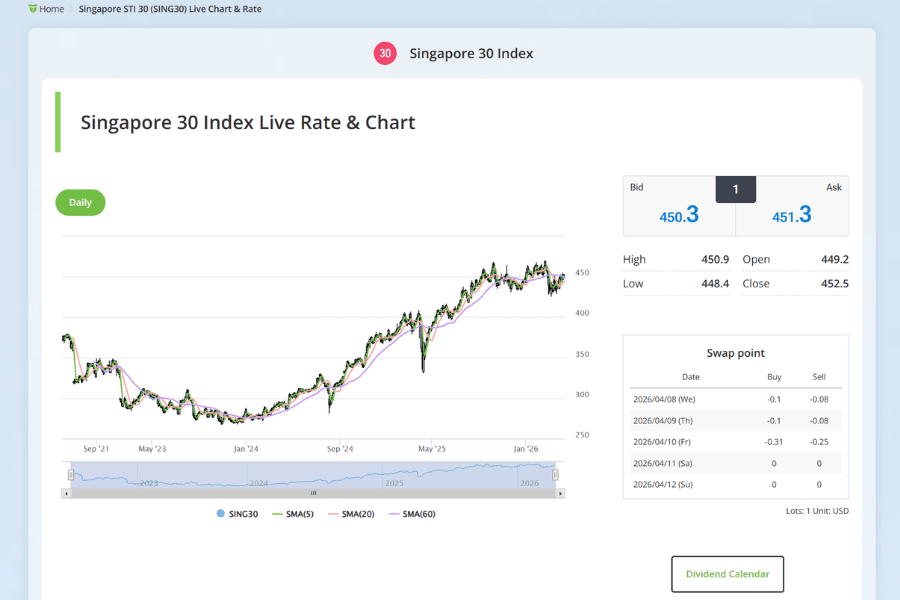
Swap Calendar: Check the latest overnight financing rates for SING30 CFD and calculate holding costs — especially important for medium- to long-term trades
-
Dividend Calendar: Track ex-dividend dates for SING30 constituents. Index CFDs undergo dividend adjustments when constituents go ex-dividend
-
Margin Calculator: Accurately calculate the margin required for SING30 at different lot sizes and plan appropriate position sizing
Trading Approaches: Trend, Regional Correlation, Event-Driven
Trend Trading
SING30 tends to form medium-term trends lasting weeks to months when interest rate cycles and regional economic trends are clearly defined. Use daily or 4-hour moving averages to confirm direction, enter on pullbacks to key support levels or moving averages, and hold with the trend. Given the high weight of financial stocks, interest rate cycles are the central clue for judging medium-term trends.
Regional Correlation Trading
Monitor the price action of the Hang Seng, Nikkei 225, and China A50 indices. When major Asian markets develop directional moves, SING30 tends to follow. For example, if Hong Kong stocks surge on positive Chinese policy developments, SING30 typically shows a positive response in the subsequent session. Use the Trend Analysis tool to simultaneously observe trend directions across multiple Asian indices.
Event-Driven Trading
MAS's semi-annual monetary policy statements (April and October), Singapore GDP releases, the three major banks' quarterly earnings, and key Chinese economic data (GDP, PMI, etc.) can all trigger significant short-term moves in SING30. Position sizing is critical around such events — consider reducing standard position sizes by half or more and setting wider stop-loss levels.
How to Trade SING30 on Titan FX
On Titan FX, the Singapore Straits Times Index is available as SING30, traded via CFDs (Contracts for Difference). You can also trade directly in your browser using WebTrader.
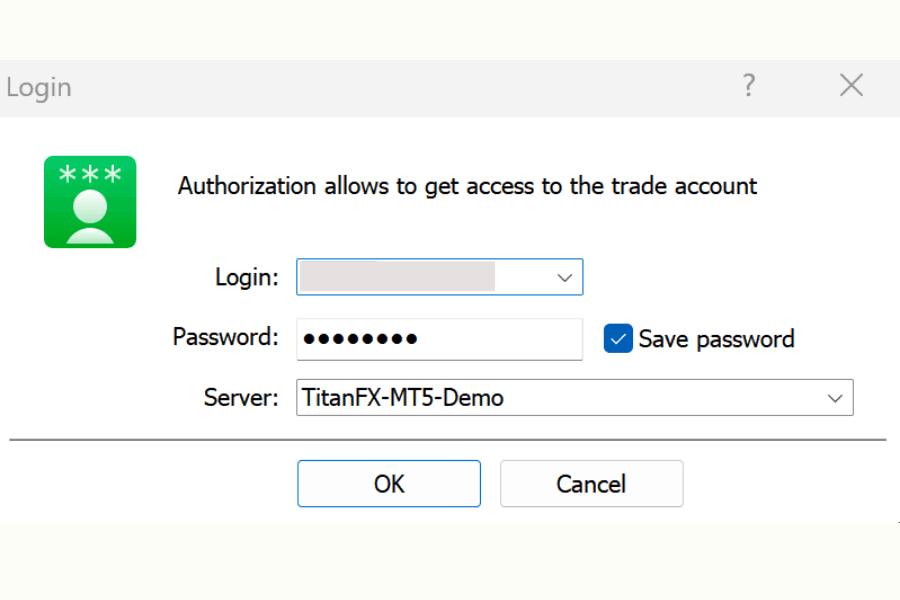
Step 1: Log In to Your Trading Account
Open a Titan FX trading account (Zero Standard or Zero Blade), complete your deposit, download the MT4 or MT5 platform, and log in with your account credentials.
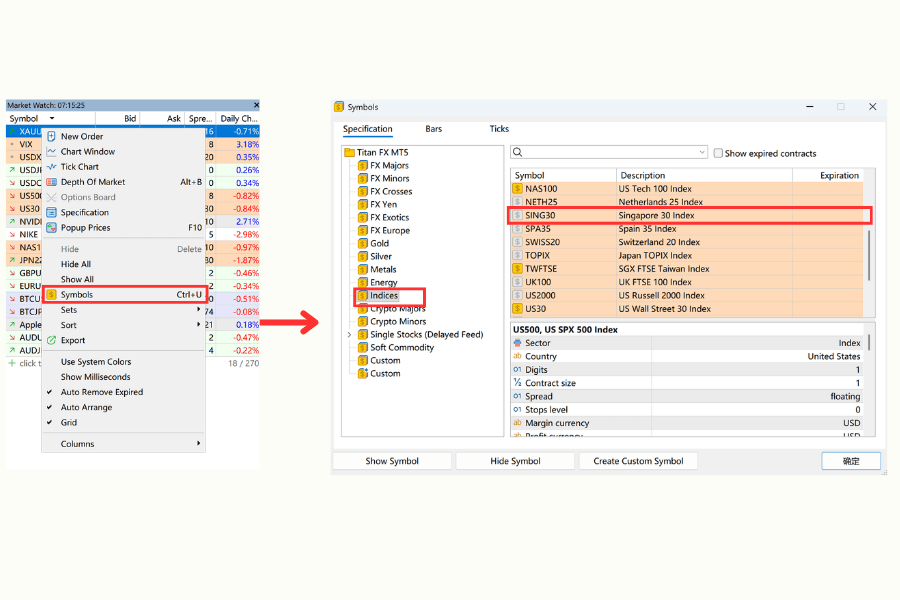
Step 2: Add SING30 to Your Watchlist
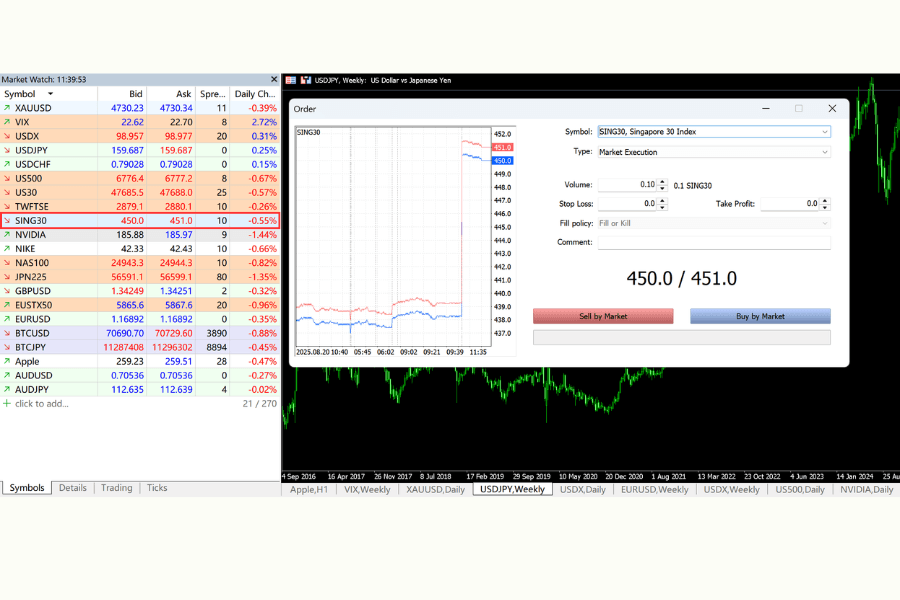
Right-click in the Market Watch window and select "Symbols." Expand the "Indices" category, find SING30, and double-click to add it to your quotes list.
Step 3: Start Trading
Double-click on the SING30 quote or open a chart to access the order window. Enter your lot size (minimum 0.1 lots), choose your direction (buy or sell), set your stop-loss and take-profit levels, and execute the trade.
Trading hours (MT4/MT5 Server Time GMT+3):
| Session | Server Time (GMT+3) | Eastern Time (GMT-4) |
|---|---|---|
| Morning Session | 03:30 - 12:20 | 20:30 (prev. day) - 05:20 |
| Market Break | 12:20 - 12:50 | 05:20 - 05:50 |
| Afternoon Session | 12:50 - 23:45 | 05:50 - 16:45 |
SING30 trading hours are split into two sessions with a 30-minute break in between. The morning session covers SGX's regular trading hours, while the afternoon session extends into the trading hours of other global markets.
For the latest trading conditions and spreads, visit the official page.
Start Trading the SING30 Index
Trade SING30 CFDs with Titan FX — up to 500x leverage, tight spreads, and the flexibility to go long or short. Both Zero Standard and Zero Blade accounts support index CFD trading (Zero Micro accounts do not support index CFDs).
Key Points for Beginners
Leverage & Risk Management
Titan FX offers up to 500x leverage (Zero Standard / Zero Blade accounts). While SING30's overall volatility is lower than US equity indices, it can spike sharply around specific events (bank earnings, MAS policy statements, Chinese data releases):
- Keep risk per trade within 1–2% of your account equity
- SING30 liquidity is highest during the Asian session; spreads may widen during non-Asian hours
- Use Titan FX's Margin Calculator to determine required margin and appropriate position sizing
Financial Sector Concentration Risk
The three major banks account for over 40% of the index weight, meaning that any one of DBS, OCBC, or UOB missing earnings expectations could cause significant index-wide volatility. When trading SING30, be sure to track the quarterly earnings release dates and consensus estimates for Singapore's three major banks.
Split Trading Session Considerations
SING30's trading hours are divided into morning and afternoon sessions with a 30-minute break in between. Liquidity may decrease and spreads may widen around the break period. Avoid entering positions in the final minutes before the break to prevent unfavorable execution prices.
External Factor Transmission
Singapore's economy is highly sensitive to external conditions. The Fed's rate decisions (affecting Singapore's banking sector through the interest rate channel), Chinese economic data (affecting exports through the trade channel), and regional geopolitical risks (affecting capital flows) can all trigger SING30 volatility in short order. Beginner traders should develop the habit of regularly checking the Economic Calendar to stay informed about major events that could move the market.
FAQ
What Are the Trading Costs for Singapore Straits Times Index CFDs?
The main costs of CFD trading include the spread (bid-ask difference), swap (overnight financing), and potentially commissions. SING30's spread levels and specific trading conditions can be found on the Titan FX website. Holding positions overnight incurs swap costs, and the latest rates can be checked via the Swap Calendar. Additionally, index CFDs may involve dividend adjustments — when constituents go ex-dividend, your account will be debited or credited accordingly.
What Risks Should I Be Aware of When Trading the Singapore Straits Times Index?
Key risks when trading SING30 include: financial sector concentration risk (three banks accounting for over 40%), external economic dependence risk (exposure to global trade and the Chinese market), interest rate environment risk (Fed policy transmitting through the rate channel), and liquidity risk (spreads may widen outside the Asian session). It is advisable to use stop-loss orders to manage per-trade losses and avoid holding oversized positions around major data releases. Use the Volatility Heatmap to understand volatility characteristics across different sessions.
What Type of Investor Is the Singapore Straits Times Index Suited For?
SING30 is well-suited for the following types of traders: investors focused on Asian markets and particularly Southeast Asian economies, income-oriented investors who favor financial stocks and high-dividend names, traders looking to diversify their global portfolio through an Asian financial hub, and technical traders leveraging regional correlations for cross-market strategies. Since SING30's overall volatility is lower than that of US equity indices, it may also appeal to more conservative investors seeking a relatively stable trading instrument.
Conclusion
SING30 is the primary index for tracking Singapore's economy and Southeast Asian regional dynamics. Financial stocks led by the three major banks form the backbone of the index, while REITs and industrials provide diversified sector exposure. Its unique positioning as an Asian financial hub gives SING30 an irreplaceable role within the global index landscape.
Understanding MAS monetary policy direction, tracking Chinese and ASEAN economic developments, monitoring the three major banks' quarterly results, and combining technical analysis tools for entry and exit timing form the core framework for trading SING30.
Make use of Titan FX's SING30 Live Price & Chart page to stay on top of market developments, and apply the analytical framework from this article to your actual trading.