

What Is the DAX 40 Index (GER40)? Components & Trading Guide
GER40 is the flagship index tracking the performance of the German stock market, launched by the Frankfurt Stock Exchange (Xetra trading system) in 1988. It comprises the 40 largest and most liquid listed companies in Germany. From SAP and Siemens to Allianz, these constituents represent the core competitiveness of Europe's largest economy.
For CFD traders, GER40 offers one of the most direct channels for accessing European equities. The index is driven by multiple factors including European Central Bank (ECB) monetary policy, German manufacturing sentiment, EU trade dynamics, and euro exchange rate movements, providing abundant trading opportunities. This article provides a comprehensive analysis of GER40's trading logic, covering the index definition, constituents, price drivers, and practical trading methods.
What Is the Germany DAX 40 Index (GER40)?
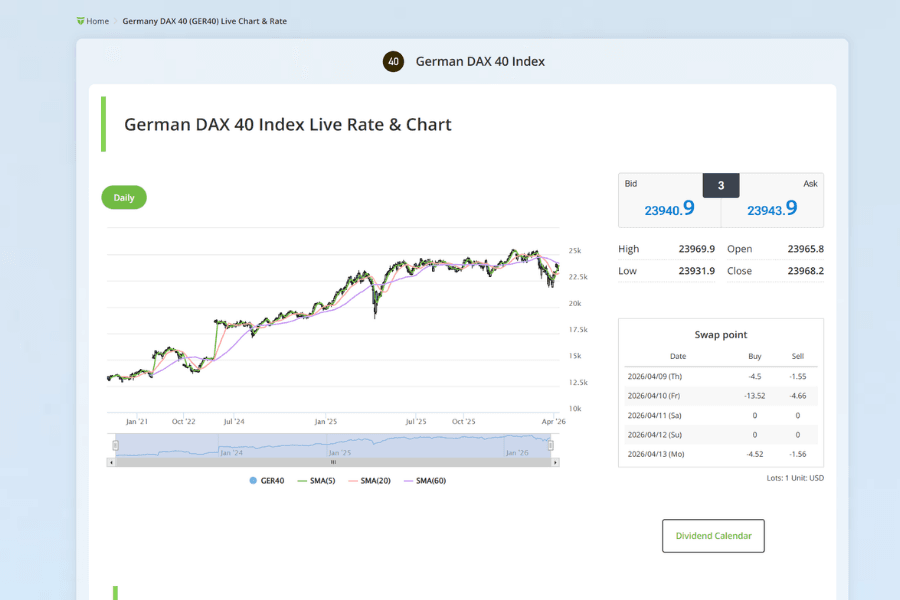
The Germany DAX 40 Index (Deutscher Aktienindex) is Germany's flagship stock market index managed by the Frankfurt Stock Exchange. Originally launched on July 1, 1988 with 30 constituents (DAX 30), it was expanded to 40 stocks in September 2021 and rebranded as the GER40 Index. In CFD trading, the Germany DAX 40 Index uses GER40 as its trading symbol.
The index selects the 40 largest and most liquid companies listed on the Frankfurt Stock Exchange (Xetra trading system), serving as the core barometer for Germany's economic health and widely regarded as a bellwether for the broader European economy.
| Item | Details |
|---|---|
| Official Name | Deutscher Aktienindex (DAX 40 Index) |
| Trading Symbol | GER40 (CFD) |
| Launch Date | July 1, 1988 |
| Index Provider | Frankfurt Stock Exchange (Deutsche Boerse) |
| Weighting Method | Free-float market capitalization weighted |
| Number of Constituents | 40 |
| Review Frequency | Semi-annual (March and September) |
GER40 is a Total Return Index, incorporating dividend reinvestment into its calculation. This distinguishes it from many indices that only track price changes. This feature allows GER40 to more comprehensively reflect actual investor returns.
Unlike the FTSE 100 Index (UK100), which tracks companies listed on the London Stock Exchange, GER40 focuses on the core blue-chip stocks on the Frankfurt Stock Exchange, directly reflecting the market performance of Europe's largest economy.
Constituents and Index Characteristics
Index Methodology
GER40 selects its constituents based on the following criteria:
- Market capitalization and liquidity: Companies must be listed on the Frankfurt Stock Exchange (Xetra trading system) and rank among the top by market cap and trading volume.
- German registration or significant operations: Constituents are primarily German-registered companies or multinational corporations with significant operations in Germany.
- Regular reviews: Constituents are reviewed in March and September each year, with adjustments based on market cap, liquidity, and sector representation.
Key Constituents
As of 2025, GER40 includes the following representative companies:
Technology and Software
| Company | Ticker Reference | Sub-Sector |
|---|---|---|
| SAP | SAP SE | Enterprise Software |
| Infineon Technologies | Infineon Technologies | Semiconductors |
Industrials and Manufacturing
| Company | Ticker Reference | Sub-Sector |
|---|---|---|
| Siemens | Siemens AG | Automation / Energy Systems |
| Airbus | Airbus SE | Aerospace |
| BASF | BASF SE | Chemicals |
Automotive
| Company | Ticker Reference | Sub-Sector |
|---|---|---|
| BMW | BMW AG | Luxury Vehicles |
| Mercedes-Benz | Mercedes-Benz Group | Luxury Vehicles |
| Volkswagen | Volkswagen AG | Automobile Manufacturing |
| Porsche | Porsche AG | Luxury Sports Cars |
Financials and Insurance
| Company | Ticker Reference | Sub-Sector |
|---|---|---|
| Allianz | Allianz SE | Insurance / Asset Management |
| Deutsche Bank | Deutsche Bank | Investment Banking |
| Munich Re | Munich Re | Reinsurance |
Telecommunications and Consumer
| Company | Ticker Reference | Sub-Sector |
|---|---|---|
| Deutsche Telekom | Deutsche Telekom | Telecommunications |
| adidas | adidas AG | Sportswear |
Sector Composition Characteristics
GER40's sector composition features the following characteristics:
- Sector diversity: Covers automotive, chemicals, financials, technology, and more, reflecting the diversity of the German economy.
- Export orientation: Many constituents are globally active companies (such as Siemens and SAP), making them significantly influenced by international market demand.
- Eurozone correlation: Index performance is closely linked to euro area economic conditions and monetary policy.
GER40 serves as the core indicator for measuring the health of the German economy. As the representative index of Europe's largest economy, its movements are widely watched as a barometer of European economic conditions. The semi-annual constituent review (March and September) ensures the index reflects the latest market dynamics. GER40 is widely used in ETF, futures, options, and CFD (Contract for Difference) trading, making it an essential tool for investors seeking exposure to the German market.
How the EU Economy Affects GER40
As the EU's largest economy, Germany's economic performance is closely interconnected with the EU, and the GER40 index is influenced by the following factors:
Factor 1: Trade and Markets
EU Market Dependence
Approximately 60% of Germany's exports go to EU countries, with automotive (BMW, Volkswagen) and chemical (BASF) companies' earnings driven by EU demand. EU economic growth boosts GER40; recession puts downward pressure on the index.
- Germany GDP Growth Rate: Economic growth is the core indicator affecting corporate earnings expectations
- Germany Manufacturing PMI: As a manufacturing powerhouse, PMI is a key leading indicator for GER40 direction
- Eurozone GDP Growth Rate: Overall eurozone economic conditions directly impact German export companies
Trade Policy
EU internal free trade agreements support German corporate competitiveness. Changes in tariffs or trade barriers can affect corporate earnings and consequently impact the index.
Factor 2: Finance and Investment
ECB Monetary Policy
The European Central Bank's (ECB) interest rate adjustments and quantitative easing policies affect corporate financing costs and investor confidence. Accommodative policies generally support GER40, while tightening may create downward pressure.
- ECB Interest Rate Decision: Central bank rate policy directly affects market liquidity and risk appetite
- Eurozone CPI (Consumer Price Index): Inflation data drives ECB policy direction
Capital Flows
A prosperous EU economy attracts foreign capital into German equities, boosting GER40; economic weakness may lead to capital outflows.
Factor 3: Consumer Spending and Labor Market
Consumer Spending
EU consumer expenditure directly affects retail and consumer goods-related constituents (such as adidas).
- Germany Consumer Confidence: Reflects consumer sentiment toward economic outlook, influencing domestic demand
Labor Market
German employment data affects consumer purchasing power and economic vitality, which in turn impacts GER40.
- Germany Unemployment Rate: Labor market conditions are a key indicator for assessing economic health
Factor 4: Exchange Rates and Politics
Euro Exchange Rate
A weaker euro benefits German exporters' international competitiveness and may support GER40; a stronger euro compresses export margins.
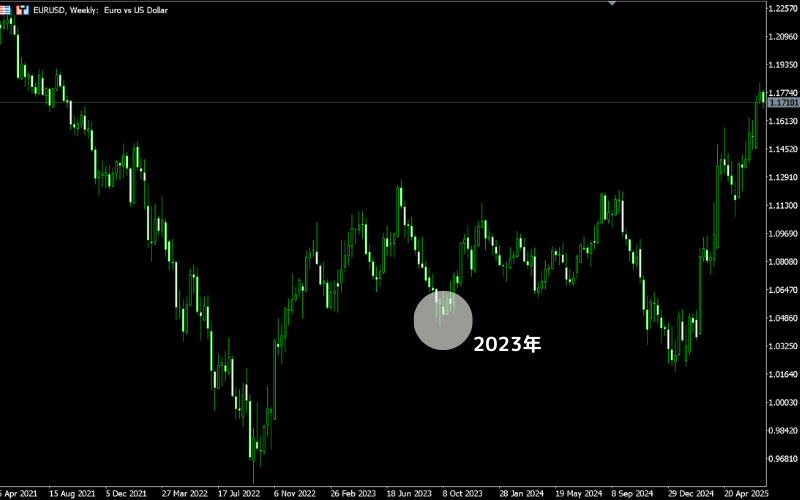
The EUR/USD (Euro vs US Dollar) exchange rate is an important reference for gauging GER40's export competitiveness.
Political Stability
Political stability within the EU (such as elections or geopolitical tensions) significantly impacts market confidence and economic outlook. Political turmoil can increase market uncertainty, weigh on investor sentiment, and ripple through to the GER40 index.
Overall, the EU economy exerts multi-layered influence on GER40, from trade and finance to consumption and policy. These factors collectively determine the earnings performance and equity valuations of Germany's major listed companies.
Use Titan FX's Economic Calendar, Germany Economic Indicators page to track the release times and market expectations of these key data points in real time.
Index Comparison and Trading Strategies
GER40 vs UK100 vs EUSTX50
| Item | GER40 (DAX 40) | UK100 (FTSE 100) | EUSTX50 (Euro Stoxx 50) |
|---|---|---|---|
| Constituent Scope | Top 40 on Frankfurt Stock Exchange | Top 100 on London Stock Exchange | Top 50 across 11 eurozone countries |
| Sector Focus | High automotive / industrial / tech weighting | High financial / energy / pharma weighting | Diversified multi-country sector mix |
| Index Type | Total Return Index (dividends reinvested) | Price Index | Price Index |
| Trading Currency | EUR | GBP | EUR |
| Volatility | Medium-High | Medium | Medium |
| Titan FX Symbol | GER40 | UK100 | EUSTX50 |
Key Trading Strategy Considerations
-
High ECB policy sensitivity: GER40 reacts most directly to ECB rate decisions and quantitative policies. Monitor ECB rate decisions, inflation data, and economic outlooks
-
Manufacturing sentiment correlation: Germany's Manufacturing PMI is the core leading indicator for GER40. PMI readings above expectations typically support the index; readings below expectations create downward pressure
-
Currency correlation: When the euro weakens, German exporters benefit, providing support for GER40; when the euro strengthens, export competitiveness declines, potentially weighing on the index
-
US equity correlation: Global risk events and US market movements (such as the Dow Jones Industrial Average (US30) and Nasdaq 100 (NAS100)) frequently influence GER40 through sentiment and capital flow channels
How to Trade GER40 on Titan FX
On the Titan FX platform, the Germany DAX 40 Index is traded under the symbol GER40, available on both MT4 and MT5 platforms via CFD (Contract for Difference) with leverage up to 500:1. You can also trade using WebTrader directly in your browser.
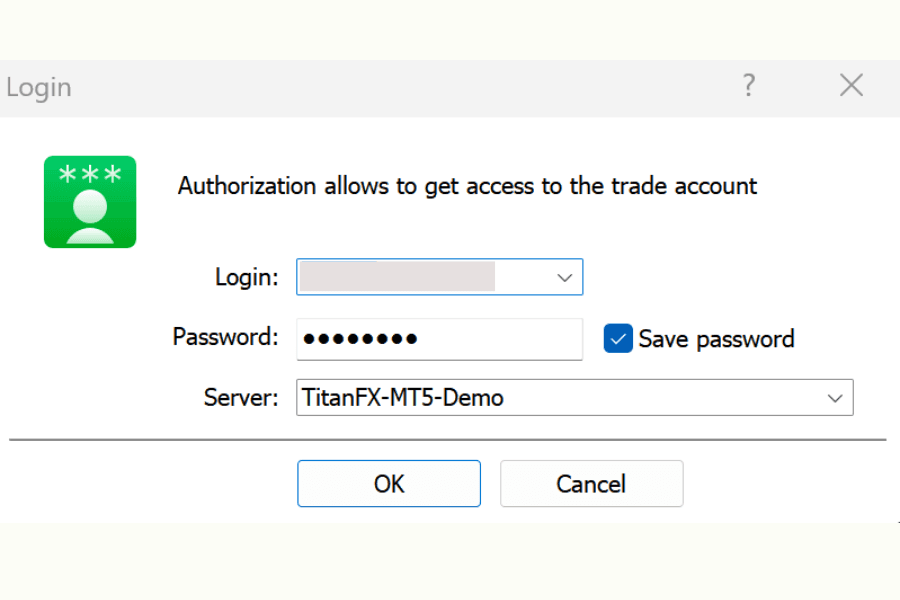
Step 1: Log In to Your Trading Account
Open a Titan FX trading account (Zero Standard or Zero Blade), complete your deposit, then download the MT4 or MT5 platform and log in with your credentials.
Step 2: Add GER40 to Market Watch
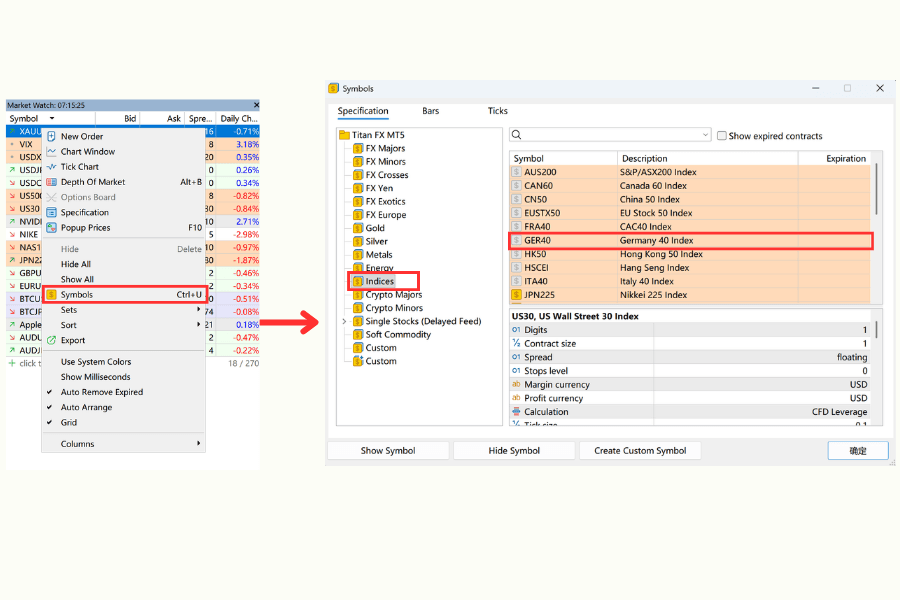
Right-click in the Market Watch window, select "Symbols," expand the "Indices" category, find GER40 (Germany 40 Index), and double-click to add it to your quote list.
Step 3: Place a Trade
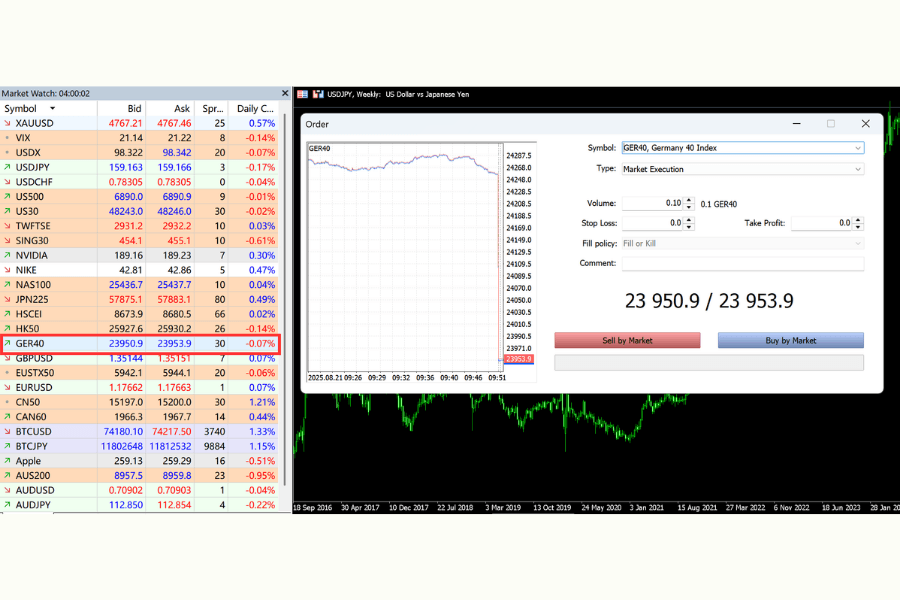
Double-click the GER40 quote or open a chart to access the order window. Enter your lot size (minimum 0.01 lots), select Buy or Sell, set your stop loss and take profit, and execute the trade.
Titan FX offers a free demo account, allowing you to familiarize yourself with GER40 trading procedures and platform operations in a risk-free environment.
Trading Hours
GER40 CFD trading hours are as follows:
| Time Zone | Standard Time (GMT+2) | Daylight Saving Time (GMT+3) |
|---|---|---|
| MT4/MT5 Server | 01:02-02:15, 03:15-23:59 (Mon 01:05 open / Fri 23:00 close) | 01:02-23:59 (Mon 01:05 open / Fri 23:00 close) |
| Eastern Time (ET) | 19:02-20:15, 21:15-17:59 | 19:02-17:59 |
| Taiwan / Hong Kong / Beijing (GMT+8) | 07:02-08:15, 09:15-05:59 next day | 06:02-04:59 next day |
| Japan (GMT+9) | 08:02-09:15, 10:15-06:59 next day | 07:02-05:59 next day |
The European trading session (approximately 09:00-17:30 CET) offers the highest liquidity and overlaps with the German cash market. After the US market opens, GER40 volatility may increase further.
Titan FX Analysis Tools
Titan FX provides a range of analysis tools to help traders assess GER40's technical outlook:
- Support and Resistance: Identify key GER40 price levels to assess breakout or reversal potential
- Order Book (Position Information): Observe other traders' pending order distribution and long/short ratios
- Trend Analysis: Determine whether GER40 is in an uptrend, downtrend, or consolidation phase
- RSI Analysis: Identify overbought or oversold conditions to support reversal timing decisions
- Volatility Heatmap: Understand GER40's volatility patterns across different trading sessions
- Percentage Change Ranking: Compare GER40's real-time performance against other indices
- Swap Calendar: Check GER40 overnight financing rates
- Dividend Calendar: Track the impact of constituent ex-dividend dates on CFD accounts
- Margin Calculator: Calculate required margin and appropriate position sizing
- Economic Calendar: Track key economic data releases that impact GER40
For the latest trading conditions and spreads, please refer to the official page.
For the latest trading conditions and live prices, see the GER40 instrument page.
Start Trading the GER40 Index
Trade GER40 CFDs with Titan FX and enjoy up to 500:1 leverage, tight spreads, and the flexibility to go long or short. Both Zero Standard and Zero Blade accounts support index CFD trading (Zero Micro accounts do not support index CFDs).
FAQ
Is GER40 a Total Return Index?
Yes. GER40 (DAX 40) is a Total Return Index that incorporates dividend reinvestment into its calculation. This differs from price indices such as the FTSE 100 Index (UK100), which only reflect price changes. By including dividend returns, GER40 provides a more comprehensive reflection of actual investor returns, and its long-term performance typically exceeds that of comparable price indices.
What are the main risks of trading GER40?
The main risks include: (1) European economic risk -- eurozone economic slowdown or recession can directly weigh on German corporate earnings and index performance; (2) Currency risk -- euro exchange rate fluctuations affect the competitiveness of export-oriented constituents; (3) Geopolitical risk -- European political uncertainty (elections, trade disputes, etc.) can trigger market volatility; (4) Leverage risk -- GER40 supports up to 500:1 leverage, and high-leverage trading requires strict stop-loss discipline, keeping risk per trade within 1-2% of account equity. We recommend tracking German economic fundamentals using the Economic Indicators page.
What are the characteristics of GER40 trading sessions?
GER40 CFD trading covers nearly the entire day, but liquidity and volatility characteristics vary significantly across sessions. The European trading session (approximately 09:00-17:30 CET) offers the highest liquidity and represents the optimal trading window. After the US market opens (approximately 15:30 CET), GER40 volatility may increase further due to the influence of US equity movements. During Asian hours, trading volume tends to be lower and spreads may widen. Traders are advised to select appropriate trading sessions based on their individual strategies.
Summary
The Germany DAX 40 Index (GER40) is one of Europe's most representative stock market benchmarks, bringing together core German companies from the technology, industrial, automotive, and financial sectors. As a Total Return Index, GER40 incorporates dividend reinvestment into its calculation, providing a more comprehensive reflection of investment returns. As the German economy continues to evolve, GER40's sector allocation is continually adjusted, offering traders abundant opportunities.
Understanding ECB monetary policy direction, tracking German manufacturing sentiment and euro exchange rate dynamics, and applying technical analysis tools to time entries and exits form the fundamental framework for trading GER40.
Use Titan FX's GER40 live quotes and charts page to stay on top of market developments, and refer to the FTSE 100 Index (UK100) Trading Guide and the Euro Stoxx 50 Index (EUSTX50) Trading Guide to learn more about trading strategies for European market indices.