

V-shaped and Inverted V Patterns: Features and Strategies
A V-shaped pattern is a bullish reversal where price falls sharply then rebounds in a "V," while an inverted V is a bearish reversal that spikes up then drops — both marking sharp, fast trend reversals.
In technical analysis, V-shaped and inverted V-shaped patterns are among the easiest to spot yet the hardest to act on — because they tend to form in an instant, without warning, at the very end of a trend.
This article explores the characteristics, identification methods, and applications of V-shaped and inverted V-shaped patterns in technical analysis to help readers better understand and apply these chart patterns.
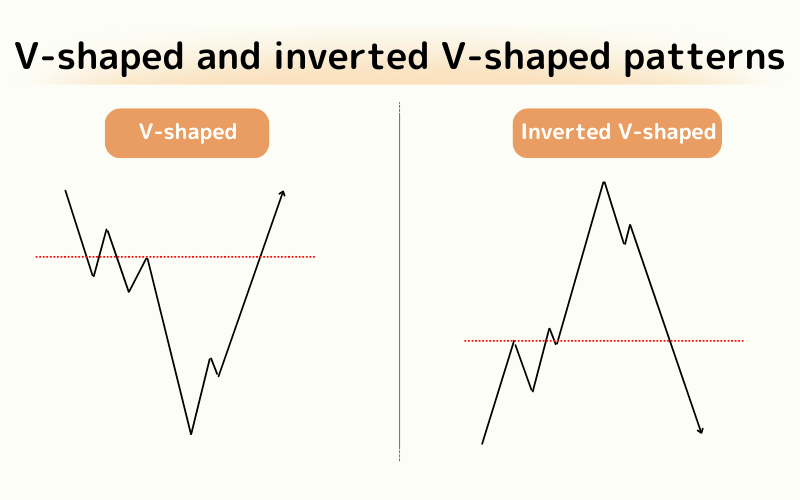
- V pattern: a sharp fall then quick rebound forming a bullish "V"
- Inverted V: a sharp rise then quick drop forming a bearish reversal
- Character: a sudden, fast trend reversal over a short period
- Confirmation: a volume spike at the turn and a break of the recent high/low
- Caveat: prone to false signals — use stops and multiple confirmations
1. What is a V-shaped Pattern?
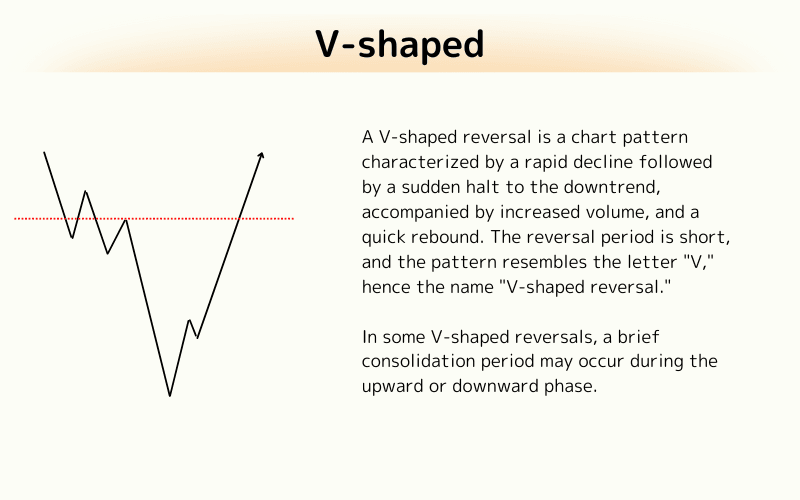
A V-shaped reversal is a chart pattern characterized by a rapid decline followed by a sudden halt to the downtrend, accompanied by increased volume, and a quick rebound. The reversal period is short, and the pattern resembles the letter "V," hence the name "V-shaped reversal."
In some V-shaped reversals, a brief consolidation period may occur during the upward or downward phase.
How to Identify a V-shaped Reversal
Observe price behavior in a clear downtrend, paying attention to the speed and steepness of the decline.
The bottom of the pattern is sharp, and the reversal occurs within a very short time frame.
Volume significantly increases during the reversal, with price and volume rising simultaneously during the uptrend.
In some cases, there may be slight price adjustments during the upward or downward phase.
Implications of a V-shaped Reversal
When a V-shaped reversal occurs with increased volume and the price halts its decline to start rising, it is often seen as a buy signal. The V-shaped reversal typically appears at the end of a downtrend or when the market receives positive news.
After identifying a V-shaped pattern, traders can consider entering a position once the price reversal is confirmed and begins rising, using the momentum from the quick reversal to profit in the short term.
2. What is an Inverted V-shaped Pattern?
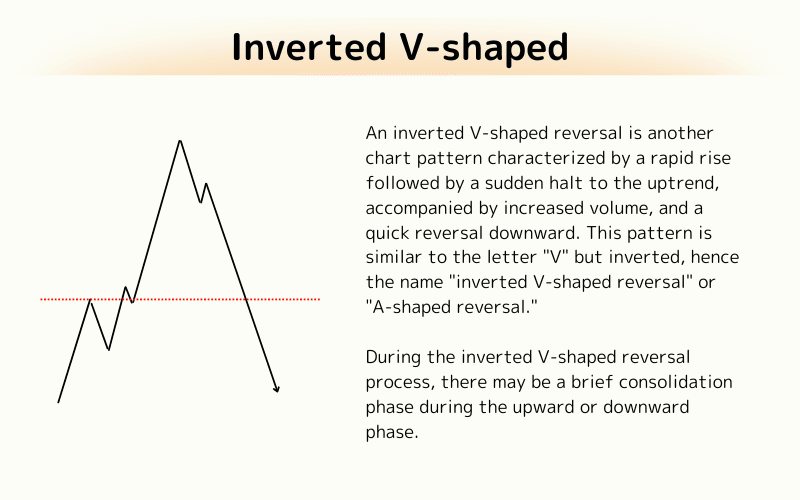
An inverted V-shaped reversal is another chart pattern characterized by a rapid rise followed by a sudden halt to the uptrend, accompanied by increased volume, and a quick reversal downward. This pattern is similar to the letter "V" but inverted, hence the name "inverted V-shaped reversal" or "A-shaped reversal."
During the inverted V-shaped reversal process, there may be a brief consolidation phase during the upward or downward phase.
How to Identify an Inverted V-shaped Reversal
Observe price behavior in a clear uptrend, paying attention to the speed and steepness of the rise.
The top of the pattern is sharp, and the reversal occurs within a very short time frame.
Volume significantly increases during the reversal, with price and volume falling simultaneously during the downtrend.
In some cases, there may be slight price adjustments during the upward or downward phase.
Implications of an Inverted V-shaped Reversal
When an inverted V-shaped reversal occurs with increased volume and the price halts its rise to start falling, it is often seen as a sell signal. The inverted V-shaped reversal typically appears at the end of an uptrend or when the market receives negative news.
After identifying an inverted V-shaped pattern, traders should consider entering a position once the price reversal is confirmed and begins falling, using the quick reversal to profit in the short term.
3. Summary
This article provides an in-depth analysis of two significant price reversal patterns in the stock and forex markets: the V-shaped and inverted V-shaped patterns.
Here is a summary of the key details of both patterns:
| Feature/Pattern | V-shaped Reversal | Inverted V-shaped Reversal |
|---|---|---|
| Definition | A rapid decline followed by a quick rise, resembling the letter "V" | A rapid rise followed by a quick decline, resembling an inverted "V" |
| Identification | Rapid price changes, sharp bottom, increased volume at the bottom | Rapid price changes, sharp top, increased volume at the top |
| Trading Strategy | Enter after confirming stable upward movement, seeking short-term profit | Enter after confirming stable downward movement, seeking short-term profit |
| Risk Management | Combine with other technical indicators and market factors to confirm the reversal | Combine with other technical indicators and market factors to confirm the reversal |
4. Frequently Asked Questions (FAQ)
Q1. How do V and inverted-V patterns differ?
A V pattern is a bullish reversal at a low, while an inverted V is a bearish reversal at a high — the same shape flipped (§1, §2).
Q2. Why do V-reversals happen?
They tend to occur when supply and demand flip suddenly — exhausted bad news, a shock headline, or a short squeeze or capitulation (§1).
Q3. How do I confirm one?
A volume spike at the turn and a break of the recent high or low add reliability (§2).
Q4. How can I avoid false signals?
Do not judge on a single candle — wait for the close, use multiple indicators, and set stops (§3).
Q5. How does it differ from other reversals?
Double tops or head-and-shoulders form slowly, while a V reverses sharply over a short period (§1).
Further Reading
Titan FX Trading Strategy Lab. We produce educational content for investors across forex, precious metals, energy, indices, US stocks, and crypto, covering technical analysis and how markets work.
Primary Sources (by Category)
- Educational & research: Investopedia, CMT Association
- Market & data: Bloomberg, Reuters, and TradingView chart analysis and commentary