

ZAR(South African Rand)
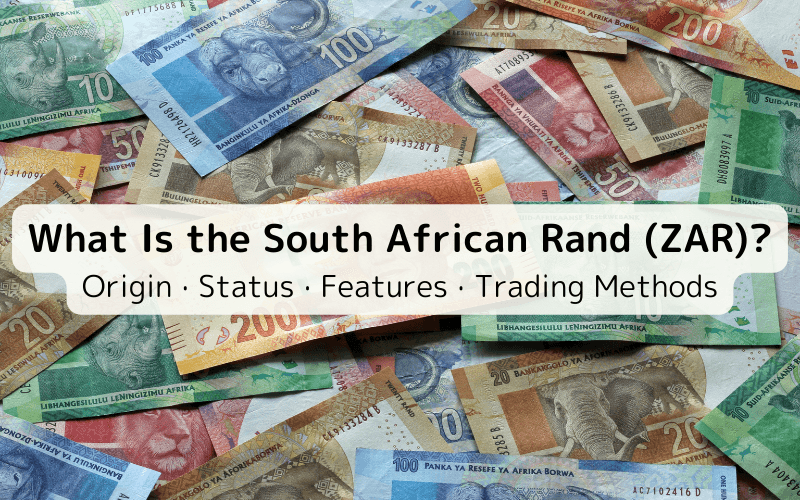
The South African Rand (ZAR), also known as the South African Pound, is the official currency of South Africa. As the currency of Africa's largest economy, the Rand plays an important role in international trade and the forex market. However, due to structural issues within South Africa's economy and the impact of global market fluctuations, the Rand is considered a high-risk currency in the forex market, experiencing significant exchange rate volatility.
This article will explore the history, key factors influencing the Rand's exchange rate, its characteristics, major economic indicators, and its position in the global financial system, along with future prospects.
- The South African Rand (ZAR) is the legal tender of South Africa, issued by the South African Reserve Bank (SARB) and one of the most representative commodity currencies in emerging markets.
- ZAR shows a strong long-term correlation with gold, platinum, and other commodity prices — South Africa is among the world's largest exporters of these metals.
- As one of the "Fragile Five," ZAR is highly exposed to global risk-off episodes and EM capital outflow cycles.
- SARB tends to maintain elevated policy rates, making ZAR a popular target for carry-trade strategies — though FX volatility can wipe out interest-rate gains quickly.
- Primary pairs include USD/ZAR, EUR/ZAR, and ZAR/JPY; liquidity is lower than majors and spreads widen sharply during stress events.
- 1. History of the South African Rand
- 2. Key Factors Influencing the South African Rand Exchange Rate
- 3. Characteristics of the South African Rand
- 4. Key Economic Indicators of the South African Rand
- 5. The Position of South African Rand in the Global Financial System
- 6. Future Outlook for the South African Rand
- 7. Why is ZAR (South African Rand) Trading Popular?
- 8. How to Trade ZAR (South African Rand)
- 9. FAQ on the South African Rand
- 10. Summary
1. History of the South African Rand
The South African Rand officially replaced the South African Pound in 1961 as the country's legal tender. South Africa, rich in natural resources, is well-known for its exports of commodities, particularly gold, platinum, and diamonds. This has closely linked the Rand with global commodity prices.
Historically, South Africa was a leading gold producer, and its gold exports provided strong economic support, helping stabilize the Rand. However, with commodity price fluctuations and increasing domestic economic challenges, the Rand’s exchange rate began to experience significant volatility.
In the 21st century, global market instability, political changes in South Africa, and structural economic issues have contributed to frequent and severe fluctuations in the Rand's exchange rate.
2. Key Factors Influencing the South African Rand Exchange Rate
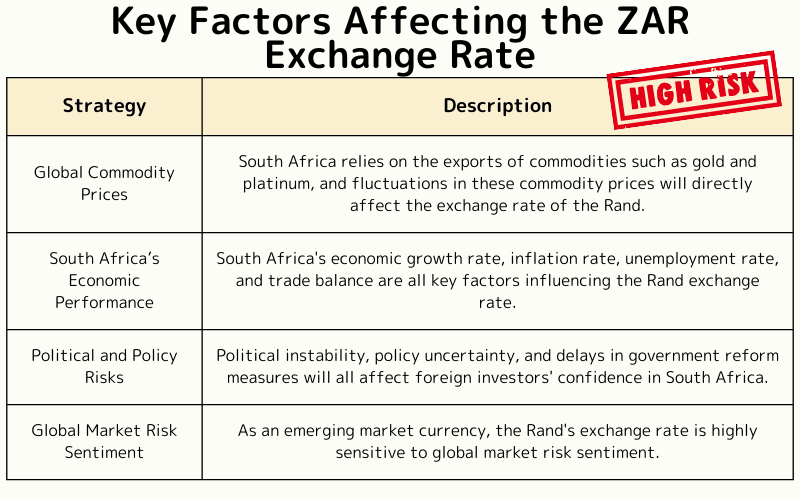
Several factors affect the Rand's exchange rate, making it a volatile currency in the forex market.
1. Global Commodity Prices
South Africa’s economy heavily relies on the export of commodities like gold and platinum, and price changes of these commodities directly impact the Rand. When commodity prices rise, South Africa's export income increases, boosting demand for the Rand and causing its value to appreciate. Conversely, when commodity prices decline, the Rand faces downward pressure.
2. South Africa’s Economic Performance
Economic indicators such as GDP growth, inflation rate, unemployment rate, and trade balance are crucial to the Rand's exchange rate. South Africa’s high unemployment rate and relatively weak economic growth put continuous pressure on the Rand's value.
3. Political and Policy Risks
South Africa often faces political instability, and policy uncertainty or slow government reforms can negatively impact investor confidence in the country, thus affecting the Rand. Major political events or policy shifts often trigger market reactions, leading to significant fluctuations in the Rand’s exchange rate.
4. Global Market Risk Sentiment
As an emerging market currency, the Rand is highly sensitive to global market sentiment. In times of heightened global risk, investors tend to pull their investments from emerging markets and seek safe-haven currencies like the US Dollar, which leads to the depreciation of the Rand.
3. Characteristics of the South African Rand
The Rand's characteristics in the forex market reflect its status as an emerging market currency with high volatility and its close correlation with commodity prices.
1. Commodity Currency
The Rand is a commodity currency, meaning its value is closely tied to South Africa’s primary export commodities such as gold, platinum, and other minerals. When global commodity markets experience volatility, the Rand’s exchange rate often fluctuates accordingly.
2. High Volatility
Due to South Africa's economic and political instability, coupled with its dependence on commodities, the Rand experiences significant volatility. This makes it a high-risk currency in forex trading, attracting speculators looking to capitalize on its price swings.
3. Emerging Market Currency
As an emerging market currency, the Rand's exchange rate is heavily influenced by global capital flows. During times of heightened market risk, foreign investors tend to withdraw capital from emerging markets, leading to severe depreciation of the Rand.
4. Sensitivity to Monetary Policy
The South African Reserve Bank's (SARB) monetary policy decisions, such as interest rate changes, significantly impact the Rand’s exchange rate. An increase in interest rates attracts capital inflows, strengthening the Rand, while a rate cut can lead to capital outflows, weakening the currency.
4. Key Economic Indicators of the South African Rand
The Rand’s exchange rate is closely tied to South Africa’s economic performance. The following are major economic indicators that influence the Rand's value:
| Economic Indicator | Description | Impact on Exchange Rate |
|---|---|---|
| GDP Growth | The overall growth of South Africa’s economy, reflecting its economic vitality. | Strong growth increases demand for the Rand, causing its value to rise. Weak growth may lead to depreciation. |
| Inflation Rate | Measures the change in price levels. High inflation erodes the Rand’s purchasing power. | High inflation often leads to Rand depreciation, while controlled inflation helps stabilize the exchange rate. |
| Unemployment Rate | South Africa’s high unemployment rate affects consumption and economic growth. | High unemployment creates economic strain, leading to Rand depreciation. |
| Trade Balance | The difference between exports and imports. A trade surplus boosts capital inflows, while a deficit increases demand for foreign currency. | A trade surplus strengthens the Rand, while a deficit puts pressure on its value. |
| Foreign Reserves | South Africa’s foreign reserves reflect its ability to manage forex market volatility. | Adequate reserves strengthen South Africa’s ability to stabilize the Rand’s exchange rate. |
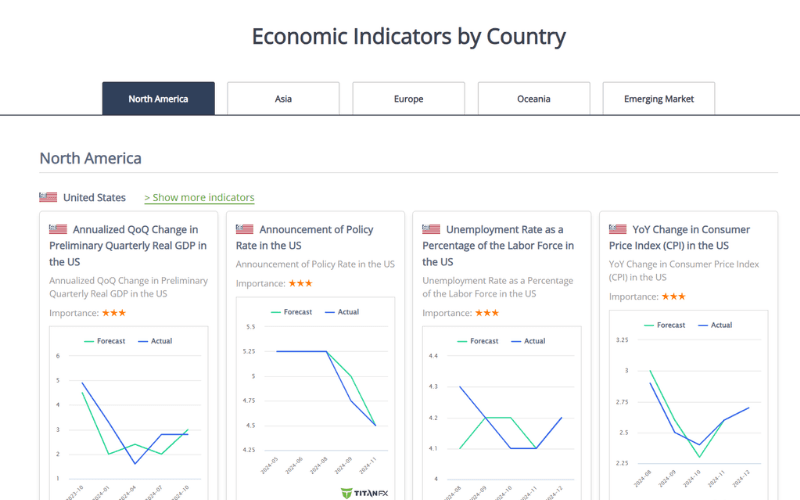
Titan FX offers free access to economic indicators
Titan FX provides economic data indicators for major countries such as the US, EU, Japan, and China. You can query data by release time, country, and importance.
5. The Position of South African Rand in the Global Financial System
The South African Rand (ZAR) is the currency of Africa's largest economy. Although its trading volume globally is relatively small, it still holds an important position in the regional foreign exchange markets.
1. Representative of Emerging Market Currencies
As one of the emerging market currencies, the Rand, like other emerging market currencies, frequently appears in international investors' portfolios. Due to South Africa's abundant mineral resources, the Rand's trading volume is particularly influenced by the global commodities market.
2. Regional Influence
Within the African region, the Rand is often used as the settlement currency for regional trade, especially in the Southern African Development Community (SADC). As South Africa is an important economic entity in Africa, its currency plays a significant role in the regional financial system.
6. Future Outlook for the South African Rand
The future trajectory of the South African Rand will depend on the effectiveness of the country’s economic reforms, global commodity price fluctuations, and domestic and international political stability.
1. Economic Reforms and Growth Potential
If South Africa successfully implements structural economic reforms, improves employment, and boosts economic growth, the Rand could gradually stabilize and attract more foreign investment. However, challenges remain, particularly concerning widening income inequality and persistently high unemployment rates.
2. Impact of Commodity Markets
The global commodity market's trends will continue to have a significant impact on the Rand's exchange rate. With fluctuations in global demand, especially from major economies like China, the Rand's exchange rate may rise or fall in line with commodity price changes.
3. Global Financial Market Risk Sentiment
As an emerging market currency, the Rand will continue to be affected by global financial market risk sentiment. In times of heightened risk aversion in global markets, the Rand may face depreciation pressure.
7. Why is ZAR (South African Rand) Trading Popular?
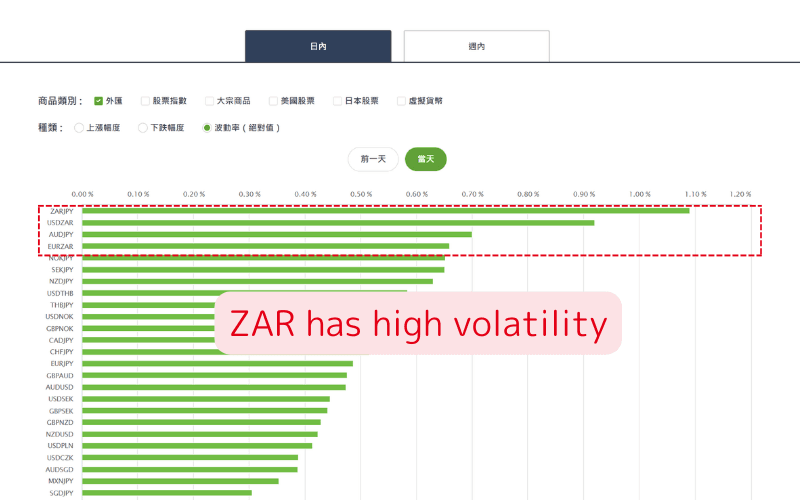
The South African Rand is seen as a high-risk currency in the foreign exchange market, primarily due to its significant exchange rate fluctuations, South Africa's vulnerable economic structure, and the country's heavy reliance on global commodity prices (such as gold and minerals). These characteristics make the Rand highly susceptible to global economic changes, leading to substantial exchange rate volatility.
While high risk may bring high returns, it also increases trading risks. Therefore, investors need to carefully evaluate their risk tolerance when trading the South African Rand.
1. Profit Methods with the South African Rand: Capitalizing on Exchange Rate Volatility
The South African Rand's exchange rate is often significantly affected by global economic factors, providing traders with opportunities to profit from price fluctuations.
Traders can analyze market trends, commodity prices, and economic indicators to buy or sell at the right time, taking advantage of profit opportunities from price rises or falls.
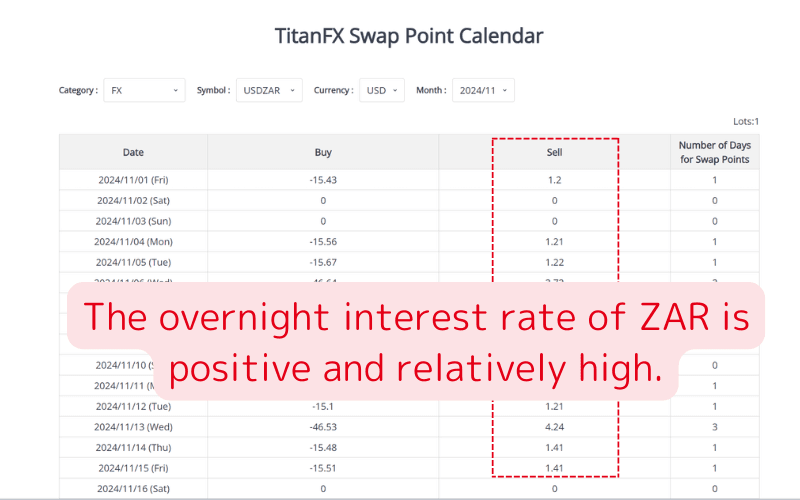
2. Profit Methods with the South African Rand: High Interest Rate Strategy
South Africa's high interest rate policy allows traders holding the Rand to earn substantial overnight interest income.
Even in less active market conditions, traders can increase their earnings through interest income. This makes the South African Rand a popular choice for investors seeking high-interest returns.
Further Reading: What is Financing Cost in Forex Trading?
8. How to Trade ZAR (South African Rand)
Trading the South African Rand (ZAR) can be done through various methods, with margin forex trading being the most common. This trading method allows investors to leverage small amounts of capital to control larger positions.
Additionally, margin forex trading allows for both long and short positions, enabling investors to trade in either direction depending on market movements.
With the forex market operating 24 hours a day, it has become one of the largest markets globally, offering high flexibility and liquidity, making it suitable for different trading strategies and risk tolerance levels.
Further Reading: Introduction to Forex Margin Trading
Titan FX offers up to 500x leverage on ZAR pairs (USD/ZAR, EUR/ZAR, ZAR/JPY).
Trading Forex with Titan FX
1. Open a Trading Account:
Titan FX offers a fast and simple account opening process with no requirement for ID or address verification.
Titan FX provides Standard and Blade account types. Traders can choose their preferred type during registration.
Titan FX Account Opening Guide2. Deposit Funds:
After registration, deposit funds into your account. Titan FX supports multiple deposit methods, with credit card deposits being the fastest and most convenient, usually processed instantly.
Titan FX Credit Card Deposit Guide3. Download and Install Trading Platforms (MT4/MT5):
Titan FX offers MT4 and MT5 platforms for Windows, Mac, iOS (iPhone/iPad), and Android.
Titan FX MT5 Installation and Login Titan FX MT4 Installation and Login4. Choose a Currency Pair:
Titan FX offers around 60 currency pairs, with the most commonly traded pair involving the South African Rand (ZAR) being the US Dollar (USD), i.e., USD/ZAR
Query for all currency pairs5. Place Trades:
Log into the MT4 or MT5 platform, select your trading instrument, and start buying or selling.
MT5 Interface and Order Methods
MT4 Interface and Order Methods
Titan FX Provides Free Trading Tools (Custom Indicators and EAs)
Titan FX is dedicated to providing traders with advanced trading support, including free trading tools such as custom indicators and EAs (Expert Advisors). These tools are designed to enhance traders' efficiency and strategy precision.
Custom indicators help traders analyze market trends more accurately and identify potential trading opportunities.
Meanwhile, EAs can automatically execute pre-set trading strategies, avoiding emotional interference and ensuring that each trade is executed accurately.
With these free tools, Titan FX helps you gain an edge in the competitive financial market and improve your trading performance.
All Custom Indicators EA Trading Program Rankings9. FAQ on the South African Rand
Q1: How tightly is the South African Rand correlated with gold prices?
South Africa is one of the world's top gold producers and exports a large share of its commodities, so ZAR and gold show a positive correlation over the medium-to-long term. Short-term moves can diverge due to USD strength or rate-differential dynamics, but in commodity supercycles a rising gold price typically supports the rand.
Q2: Do non-economic events like the power crisis move the rand?
Yes. South Africa's long-running load-shedding (rolling blackouts) directly drags on manufacturing and mining utilization. When the level of load-shedding is escalated in official announcements, ZAR often sells off on growth and export concerns — a channel of pressure that exists outside of standard economic releases.
Q3: Which South Africa-specific events tend to trigger sharp ZAR moves?
SARB rate decisions (roughly six per year), the Medium-Term Budget Policy Statement (MTBPS) from National Treasury, ANC leadership conferences and reshuffles, and sovereign credit-rating reviews by S&P, Moody's, and Fitch are the most common triggers. Volatility tends to rise around these events and position sizing should be adjusted accordingly.
Q4: How widely is ZAR used for cross-border settlement within Africa?
ZAR functions as legal tender or a peg currency in Namibia, Lesotho, and Eswatini, and circulates widely as a settlement currency within the Southern African Customs Union (SACU). Its role as a regional settlement currency could expand further as the African Continental Free Trade Area (AfCFTA) progresses.
Q5: How is ZAR used in options markets and hedging strategies?
Because of its elevated volatility, ZAR is a common building block in EM-hedging baskets traded via options and derivatives. Around inflection points in US monetary policy — for example, FOMC pivots or shifts in quantitative easing posture — ZAR implied volatility tends to spike as it acts as a proxy for broader EM hedging demand.
10. Summary
The South African Rand combines three defining traits: commodity-currency sensitivity, emerging-market volatility, and a high-rate carry-trade profile. Gold and platinum prices, SARB policy decisions, and the political stability of the country feed directly into the exchange rate, and ZAR functions as a barometer for global risk appetite at large.
For traders, ZAR offers a flexible set of opportunities across short-to-medium-term technical setups and carry-trade structures. The downside is that its volatility delivers outsized risk alongside the return — disciplined position sizing and stop placement are non-negotiable.
Reading South Africa's structural economy, SARB's policy stance, the global commodity cycle, and broader emerging-market capital flows together is what raises the win rate on ZAR trades.
Further Reading
- Emerging Markets (Forex Trading)
- USD/ZAR (US Dollar / South African Rand)
- Turkish Lira (TRY)
- Offshore Chinese Yuan (CNH)
- Policy Interest Rate
This article was prepared by the Titan FX Research editorial team, drawing on South African Reserve Bank (SARB) policy statements, IMF World Economic Outlook data, BIS Triennial Central Bank Survey results, and World Bank country data for South Africa. The aim is to translate the structural risk profile of an emerging-market commodity currency into a practical decision framework for live trading.
Primary Sources by Category
- Central bank: South African Reserve Bank (SARB), SARB Monetary Policy Statements
- Macro data: IMF World Economic Outlook, World Bank — South Africa
- FX turnover: BIS Triennial Central Bank Survey
- Commodity prices: World Gold Council, World Bank Commodity Markets Outlook