

Emerging Markets
In global financial markets, "Emerging Markets" generally refers to economies that combine growth potential with relatively high volatility and uncertainty. These markets tend to be particularly sensitive to capital-flow shifts and changes in risk sentiment during global economic cycles.
For traders, emerging markets are more than a geographical category — they are a key contextual concept used to observe global risk appetite and capital-allocation shifts.
- Definition: Developing economies with high volatility and external-funding sensitivity
- Main regions: Asia (China/India/Vietnam), Latin America (Brazil/Mexico/Argentina), Middle East & Africa (South Africa/Saudi Arabia), Europe (Turkey/Poland)
- Representative currencies: South African Rand (ZAR), Turkish Lira (TRY), Mexican Peso (MXN)
- Representative pairs: USD/ZAR, USD/MXN, GBP/TRY
- Core features: High growth / High volatility / USD-rate sensitive / Policy-event driven
- Core risks: Inflation / Political instability / Low liquidity / Carry-trade reversal
- 1. What Are Emerging Markets?
- 2. Key Characteristics of Emerging Markets
- 3. Why Are Emerging Markets Prone to High Volatility?
- 4. The Role of Emerging-Market Currencies in FX
- 5. Titan FX Tools and Research Resources for Trading Emerging-Market Currencies
- 6. From Market Observation to Actual Trading
- 7. Conclusion
1. What Are Emerging Markets? Which Countries Are Typically Included?
Emerging Markets generally refer to countries or regions whose economies are still developing but are progressively participating in the global trade and financial systems. These markets tend to grow faster than mature economies, but they still differ in terms of policy stability and market maturity.
Countries frequently classified as emerging markets in market discussions include the following:
| Region | Representative emerging-market countries (examples) |
|---|---|
| Asia | China, India, Indonesia, Vietnam |
| Latin America | Brazil, Mexico, Argentina |
| Middle East & Africa | South Africa, Saudi Arabia |
| Emerging Europe | Turkey, Poland, and others |
It is important to note that the list of emerging markets is not fixed but rather a relative concept. As economies develop and markets mature, some countries may gradually be reclassified as developed markets, while others may enter the emerging-market category.
For traders, what matters is not precise classification but the understanding that emerging markets generally exhibit higher volatility and greater sensitivity to changes in the global financial environment.
2. Key Characteristics of Emerging Markets
Although emerging markets span different regions and economic structures, they share several common characteristics when viewed through the lens of financial markets. These characteristics define the main differences between emerging and mature markets.
Characteristic 1: Higher economic growth potential Many emerging markets are in transition or expansion phases, with room to grow in domestic demand and industrial development, giving them relatively strong long-term growth momentum.
Characteristic 2: Higher market volatility Because market depth and liquidity are relatively limited, emerging-market assets tend to show pronounced price swings when capital flows in or out.
Characteristic 3: High sensitivity to external conditions Emerging markets are typically more affected by global interest-rate changes, USD movements, and risk sentiment, and they often react faster to these shifts.
Characteristic 4: Significant policy and structural differences Emerging markets vary widely in policy stability, financial systems, and regulatory environments, which is a major reason behind their divergent performance.
These characteristics make emerging markets both an opportunity-rich and uncertainty-laden segment of the global financial system.
3. Why Are Emerging Markets Prone to High Volatility?
Compared with mature markets, emerging markets tend to exhibit more pronounced price volatility. This is not the result of any single event but the combined effect of market structure and capital characteristics.
Because market size and liquidity are relatively limited, price movements become more pronounced when capital flows accelerate. Emerging markets also rely more heavily on external funding, so when global risk sentiment shifts, capital flows often concentrate, amplifying volatility further.
In addition, policy adjustments, inflation changes, and exchange-rate moves tend to produce more direct market reactions in emerging markets. Combined with USD movements and shifts in the global rate environment, which are quickly reflected in emerging-market asset prices, emerging markets often act as an amplifier of global financial-environment changes.
In other words, emerging-market volatility fundamentally reflects high sensitivity to external conditions and market sentiment, rather than being driven by a single market event.
4. The Role of Emerging-Market Currencies in the FX Market
In the FX market, emerging-market currencies are generally seen as more volatile trading instruments than major currencies, with price performance closely tied to global capital flows, interest-rate environments, and market risk sentiment. These currencies usually come from economies with high external-trade exposure and significant sensitivity to capital-flow changes, so they tend to display pronounced price moves under specific market conditions.
Emerging-market currencies that often draw attention include the South African Rand (ZAR), Turkish Lira (TRY), and Mexican Peso (MXN). These currencies are typically traded in pairs against major currencies, such as USD/ZAR, USD/MXN, and GBP/TRY. Because their economic structures and policy backgrounds differ from those of mature markets, exchange-rate moves often reflect macro data, policy signals, and sentiment shifts more directly.
Compared with major currencies, emerging-market currencies share several common features: high sensitivity to global interest-rate changes, greater volatility during shifts in risk appetite, and meaningful exposure to single events or policy factors during certain periods. These features make emerging-market currencies an important reference for traders looking to observe changes in the global financial environment.
Related reading: Currency pairs explained: definitions, classifications, trading mechanics, drivers, and a beginner's selection guide
As FX trading tools diversify, traders can focus on major pairs and, through platforms that offer emerging-market currencies, also observe the real-time quotes and market moves of these currencies. Using real-time quotes and market data, traders can compare the relative performance of major and emerging-market currencies within the same environment, gaining a deeper understanding of capital-flow and sentiment dynamics.
5. Titan FX Tools and Research Resources for Trading Emerging-Market Currencies
When trading emerging-market currencies, beyond watching exchange-rate moves themselves, traders often need real-time data, macroeconomic context, and relative-performance comparison tools to gauge market sentiment and capital flows. Titan FX Research offers several research and market-observation tools that support systematic analysis of emerging-market currency dynamics.
Live Rates and Market Movement Observation
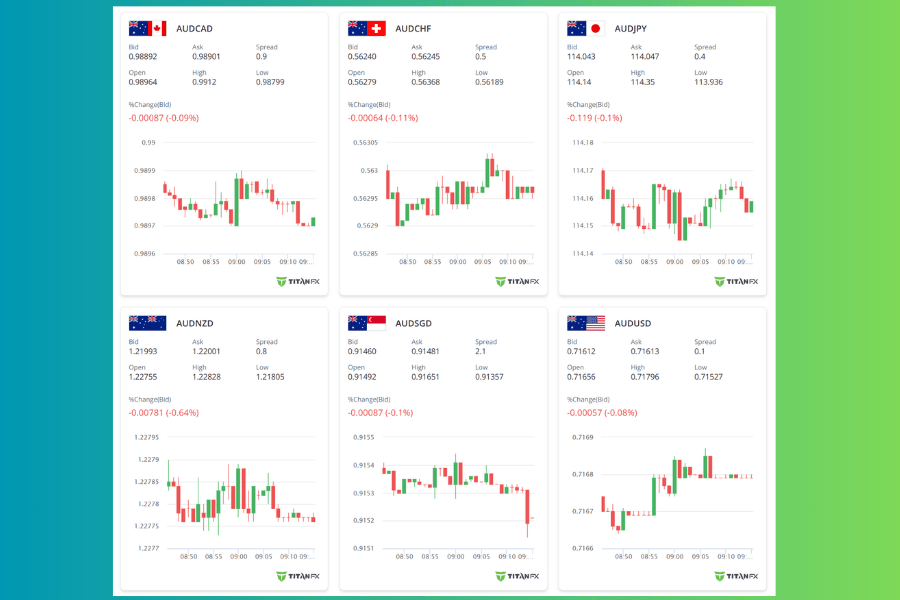
For emerging-market currencies, real-time prices and short-term volatility ranges are key indicators of market reaction. The FX live rates tool lets traders quickly check the latest prices of major and emerging-market currency pairs as a starting point for market judgment.
▸ Check the FX Live Rates
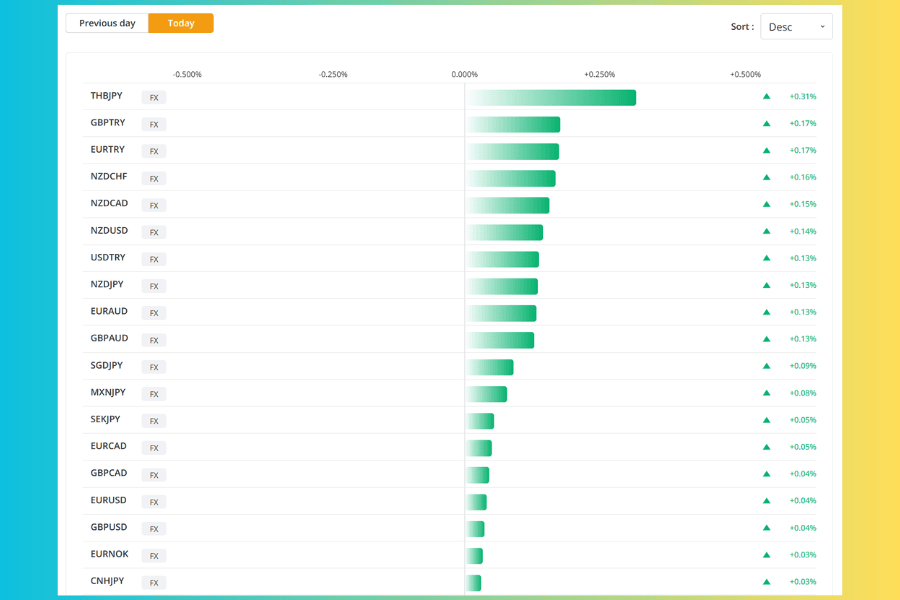
To compare different currencies' performance more intuitively, the Percentage Change Ranking quickly identifies recently volatile currencies — useful for observing short-term relative-strength shifts in emerging-market currencies.
▸ Check the Percentage Change Ranking
Macro Events and Long-Term Trend Analysis
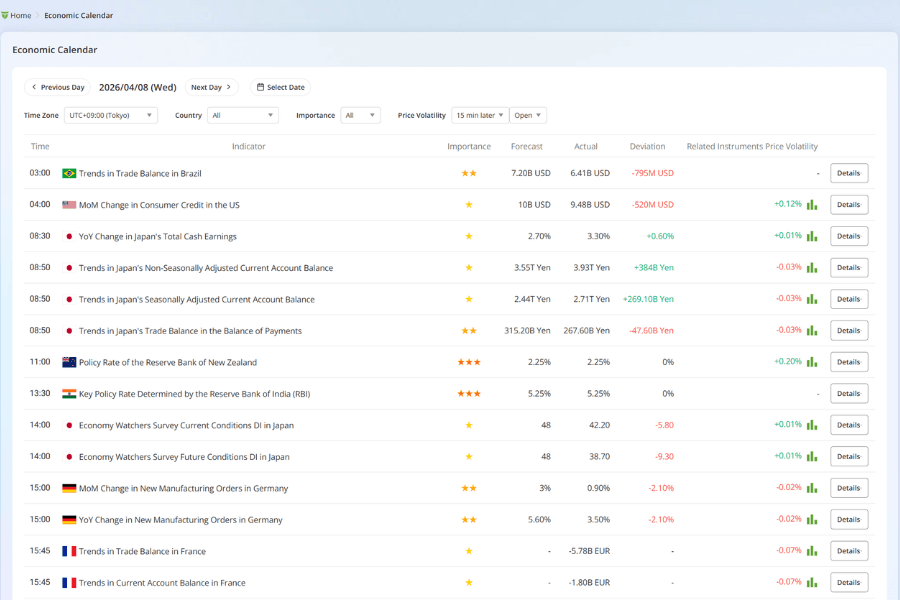
Emerging-market currencies tend to react sharply to macro data and policy events, so being aware of event timing in advance helps traders prepare for market observation. The Economic Calendar provides information on major global economic releases and events, helping traders identify key moments that may affect market volatility.
▸ Check the Economic Calendar
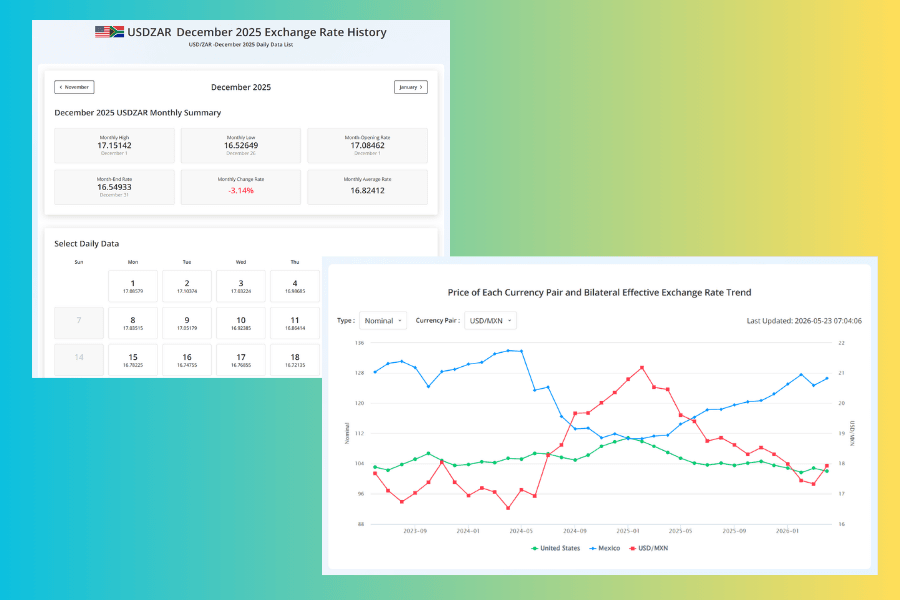
For a longer-term view of exchange-rate structure, historical exchange rate data and the Effective Exchange Rate analysis allow comparison of currency performance across different time horizons, providing context for understanding the broader trend of emerging-market currencies.
Explore:
Advanced Tools Available After Account Registration
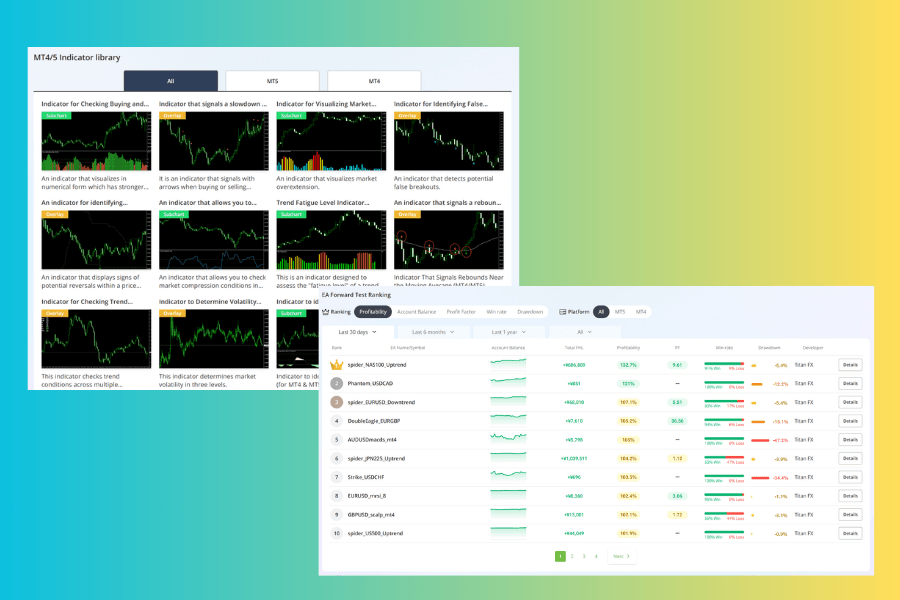
After opening a Titan FX account, traders gain access to additional trading-support resources. For example, Free EAs (Expert Advisors) offer reference automated strategies, and MT4/MT5 custom indicators help build analysis environments tailored to individual trading styles.
Explore:
These tools serve as supporting resources to help traders further optimize their workflow and analysis as they grow more familiar with the market.
6. From Market Observation to Actual Trading
After understanding the characteristics and FX-market role of emerging-market currencies, traders typically focus next on how to monitor and participate in different types of FX markets within the same trading environment. In practice, observing emerging-market currencies alongside major currency pairs supports a more comprehensive understanding of global capital flows and sentiment shifts.
Titan FX provides FX instruments covering both emerging-market currency pairs (such as the South African Rand, Turkish Lira, and Mexican Peso) and major currency pairs, allowing traders to compare price performance under different market conditions on the same platform and pick instruments that fit their strategy.
After completing the market-understanding and tool-familiarization stages, traders can begin actual FX trading through Titan FX's account system. For details on account types, opening procedures, and basic operations, see the resource below.
How to Open a Titan FX Account and Start Trading FX
For account-opening procedures, see the Titan FX support page.
Titan FX Registration Page7. Conclusion
Emerging markets have long played an important role in connecting growth momentum with market volatility within the global financial system. Whether in terms of FX-market currency performance or changes in capital flows and risk sentiment, emerging markets often reflect shifts in the global economic environment more quickly than mature markets.
For traders, understanding emerging markets is not about chasing short-term trends but about building a more complete market perspective. By observing emerging-market currencies alongside major pairs, traders can grasp market structure more fully and make better-informed decisions under varying market conditions.
As market information and trading tools become more accessible, emerging markets are no longer just a macro concept — they are an essential part of FX-market analysis. Continued attention to their dynamics helps traders maintain clear and rational trading thinking in complex global markets.
Related reading: FX Trading Introduction
8. Frequently Asked Questions
Q1: What is the biggest difference between emerging-market currencies and major currencies?
The main differences lie in volatility and sensitivity to external conditions. Emerging-market currencies (ZAR, TRY, MXN, etc.) have lower market depth and liquidity, so price reactions tend to be more pronounced when global capital flows or risk sentiment shift. In addition, emerging-market policy rates are typically higher, which attracts carry trade flows but also exposes traders to rapid reversals when risk turns.
Q2: Which currency pairs are most often classified as emerging-market FX trades?
The most representative examples include:
- USD/MXN (US Dollar / Mexican Peso): highly linked to the U.S. economy
- USD/ZAR (US Dollar / South African Rand): influenced by metals and mineral exports
- GBP/TRY (British Pound / Turkish Lira): high carry but heavy inflation pressure
- USD/BRL, USD/INR, USD/CNH are also common in macro strategies
Q3: Are emerging-market currencies suitable for carry trade?
In theory they are attractive (high carry), but the risks cannot be ignored. When risk appetite drops or major central banks hike, capital tends to leave emerging markets quickly, causing sharp currency depreciation that can wipe out carry returns. Even when running a carry trade, it is advisable to combine it with stop-loss discipline and risk-management rules such as the 2% rule.
Q4: Which economic events should EM-FX traders watch most closely?
- U.S. FOMC / Non-farm payrolls / CPI: U.S. rate direction shapes global capital flows
- EM central bank policy statements: Banxico (Mexico), SARB (South Africa), CBRT (Turkey), and others
- Commodity prices (oil, metals): strong effects on resource-exporting currencies
- Political events: elections, government changes, geopolitical conflicts often trigger sharp moves
Q5: How can traders reduce trading costs on low-liquidity emerging-market currencies?
Prioritize major trading sessions (the New York / London overlap, generally 12:00–17:00 UTC) to get the best spreads. Avoid trading right before or after major event releases — use the Economic Calendar to plan ahead. Titan FX's live rates and Percentage Change Ranking are also useful for tracking short-term volatility.
Further Reading
- What is the South African Rand (ZAR)?
- What is the Turkish Lira (TRY)?
- What is the Mexican Peso (MXN)?
- Currency Pairs Explained
- FX Margin Trading Introduction
- What is a Stop Loss?
- The 2% Rule
Titan FX Trading Strategy Research Institute. We produce investor-focused educational content covering a broad range of financial instruments including forex, commodities (crude oil, precious metals, agricultural products), stock indices, U.S. equities, and digital assets.
Primary Sources (by category)
- Official data: IMF — World Economic Outlook (emerging-market classification); World Bank — Global Economic Prospects; BIS — Triennial Central Bank Survey (2022)
- EM central banks: Banxico (Mexico), SARB (South Africa), CBRT (Turkey) — policy rates and FX intervention history
- Market statistics: MSCI Emerging Markets Index — EM equity benchmark; JP Morgan EMBI — EM bond benchmark
- Academic: Calvo, G. & Reinhart, C. (2002) "Fear of Floating", Quarterly Journal of Economics — EM exchange-rate policy theory