
 Home
Home- Investment Guide: Strategies for Stocks, Forex, and Metals
- Trend Following in Forex: Strategies, Indicators, and Tips
Trend Following in Forex: Strategies, Indicators, and Tips

"Don't fight the trend" is one of the oldest maxims in trading. Rather than straining to predict when a market will reverse, it can pay to ride the trend already in place—that is the essence of trend following.
This article explains what trend following is, how it differs from counter-trend trading, its pros and cons, how to execute it, recommended indicators, and the risks and precautions to keep in mind.
- Definition: Entering in the direction of the existing trend—buy uptrends, sell downtrends.
- vs counter-trend: Trend following rides the trend; counter-trend bets on reversals at higher risk.
- How to execute: Three common entries—buying pullbacks, selling rallies, and breakouts.
- Indicators: Confirm direction with moving averages, trendlines, and the RSI.
- Risks: False signals in ranges and reversals; use strict stops and avoid chasing highs.
- 1. What is Trend Following?
- 2. Trend Following vs. Counter-Trend Trading
- 3. Advantages and Disadvantages of Trend Following
- 4. How to Execute Trend Following
- 5. Recommended Technical Indicators for Trend Following
- 6. Risks and Precautions in Trend Following
- 7. FAQs About Trend Following in Forex
- 8. Conclusion
1. What is Trend Following?
Trend Following, also known as Trend Trading, is a strategy where traders follow the market’s primary trend—buying during uptrends and selling during downtrends. Its counterpart, Counter-Trend Trading (or Return Reversal), involves selling at highs and buying at lows, anticipating a reversal.
Core Concept
The essence of trend following in forex is to hold positions in line with the market trend:
- Uptrend: Buy.
- Downtrend: Sell.
Forex trends, once established, often persist for a while, making trend following a popular and relatively stable strategy. However, its success hinges on the presence of a clear trend:
- Trending Markets: Ideal for trend following, as prices move consistently in one direction.
- Range-Bound Markets: Ineffective, as prices oscillate within a range, potentially leading to losses.
2. Trend Following vs. Counter-Trend Trading
Counter-trend trading involves taking positions against the prevailing trend:
- Uptrend: Sell.
- Downtrend: Buy.
Trends eventually end, often reversing after a prolonged move. Counter-trend strategies aim to capitalize on these reversals or profit in range-bound conditions by selling near resistance and buying near support.
| Strategy | Definition | Suitable Market |
|---|---|---|
| Trend Following | Trade with the trend | Trending markets |
| Counter-Trend | Trade against the trend | Ranges or reversals |

3. Advantages and Disadvantages of Trend Following
Advantages
| Advantage | Explanation |
|---|---|
| Aligns with Market | Follows the dominant trend, boosting success odds. |
| Reduces Overtrading | Avoids frequent entries/exits, cutting costs and stress. |
| Suits Long-Term Traders | Captures larger moves on extended timeframes. |
Disadvantages
| Disadvantage | Explanation |
|---|---|
| Struggles in Ranges | Losses likely in choppy, trendless markets. |
| Delayed Entries/Exits | Signals often lag, missing optimal entry points. |
| False Breakout Risk | Brief breakouts may reverse, triggering losses. |
4. How to Execute Trend Following
Effective trend following in forex relies on three principles:
- Follow the Trend: Identify the trend and find optimal entry points.
- Use Oscillators: Gauge overbought/oversold conditions to avoid chasing extremes.
- Set Stop Losses: Manage risk and limit losses.
Following the Trend
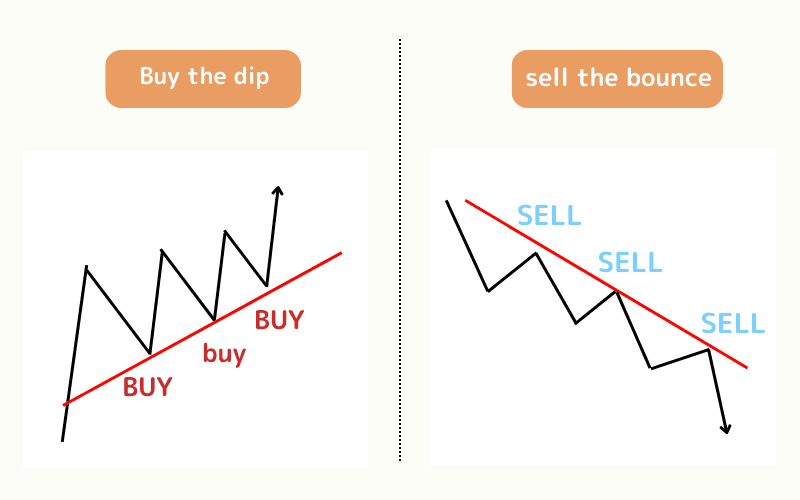
The key is to enter trades in the direction of the current trend, not against it. Entering during pullbacks can improve risk-reward ratios:
- Uptrend: Buy on pullbacks to support (e.g., “buy the dip”).
- Downtrend: Sell on rallies to resistance (e.g., “sell the bounce”).
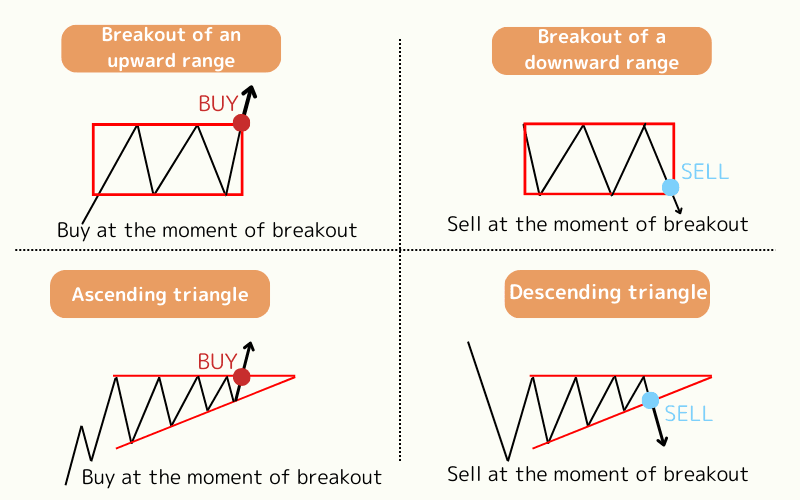
Trend following isn’t just for established trends—it’s also effective for catching emerging trends. For instance:
- Range Breakout: Enter when price breaks out of a consolidation zone.
- Pennant Breakout: Trade after price exits a consolidation pattern.
These tactics allow traders to enter early in a trend, maximizing profit potential.
Using Oscillators to Assess Market Conditions
Oscillators help determine if the market is overbought or oversold, preventing entries at risky extremes:
- Uptrend: Avoid buying if an oscillator signals overbought conditions.
- Downtrend: Avoid selling if oversold conditions suggest a potential bounce.
Learn more: What Are Oscillators?
Setting Stop Losses
Stop losses are critical for risk management, closing trades when the market moves unfavorably. Common approaches include:
- Capital-Based: “Exit if loss hits $XX.”
- Technical-Based: “Exit if price moves XX pips against me.”
Automated stop-loss orders enhance efficiency, especially during volatile moves:
Stop-Loss Order Types
| Order Type | Function |
|---|---|
| Stop Order | Triggers a buy/sell when price hits a level. |
| IFD Order | Sets a trade with an automatic stop/profit target. |
| OCO Order | Pairs take-profit and stop-loss; one cancels the other. |
| IFO Order | Combines IFD and OCO for entry, stop, and profit. |
| Trailing Stop | Adjusts stop dynamically as price moves favorably. |
More info: Stop-Loss Order Types
5. Recommended Technical Indicators for Trend Following
Here are three key technical indicators recommended for trend-following strategies in forex trading:
- Trendlines
- Moving Averages
- RSI
Trendlines
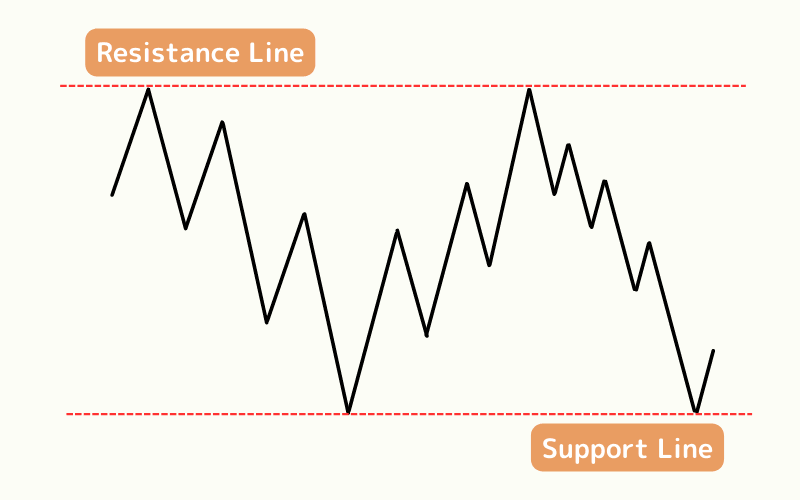
Trendlines are a fundamental tool in technical analysis, formed by connecting two or more highs or lows on a chart. They serve as support (a potential buying area during pullbacks) or resistance (a selling area during rallies), helping traders identify optimal entry points for trend following, such as “buying the dip” or “selling the bounce.”
- Resistance Line: Links highs, acting as an upper barrier.
- Support Line: Links lows, acting as a lower foundation.
How to Use Trendlines
Uptrend: Buy when price pulls back to the support line.
Downtrend: Sell when price rallies to the resistance line.
Note: A break through a trendline may signal a trend reversal, requiring caution.
For more: Support and Resistance: Concepts, Drawing, and Trading Tips
Moving Averages
Moving Averages (MA) plot the average closing price over a set period, making them a popular trend-following indicator:
- Rising MA: Indicates an uptrend.
- Falling MA: Signals a downtrend.
Two key crossovers also guide entries:
- Golden Cross: Short-term MA crosses above long-term MA (buy signal).
- Death Cross: Short-term MA crosses below long-term MA (sell signal).
Learn more: Moving Averages (MA): Basics, Types, and Applications
RSI
The Relative Strength Index (RSI) is an oscillator that measures market momentum:
- 20%–30% or below: Oversold.
- 70%–80% or above: Overbought.
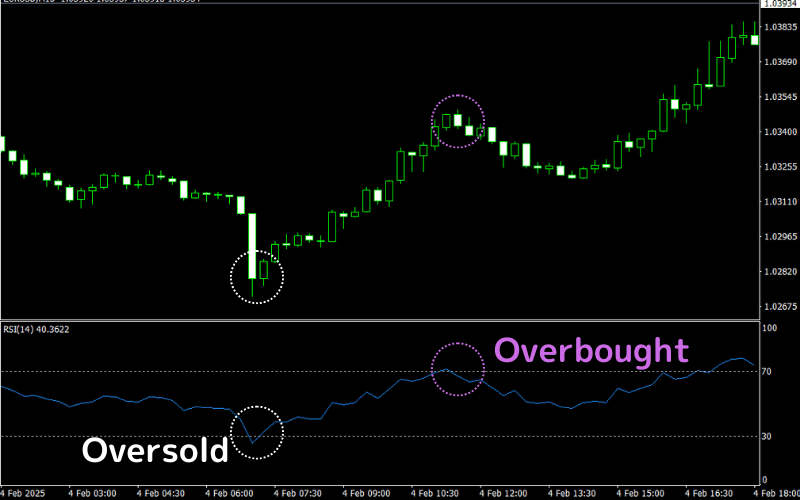
While RSI is often used for counter-trend trading, it supports trend following by using 50% as a pivot:
- RSI breaks above 50%: Suggests a sustained uptrend (buy).
- RSI drops below 50%: Indicates a continued downtrend (sell).
Read more: RSI Basics: Calculation, Interpretation, and MT4/MT5 Setup
6. Risks and Precautions in Trend Following
Trend following involves two primary risks that traders must manage to avoid unfavorable outcomes.
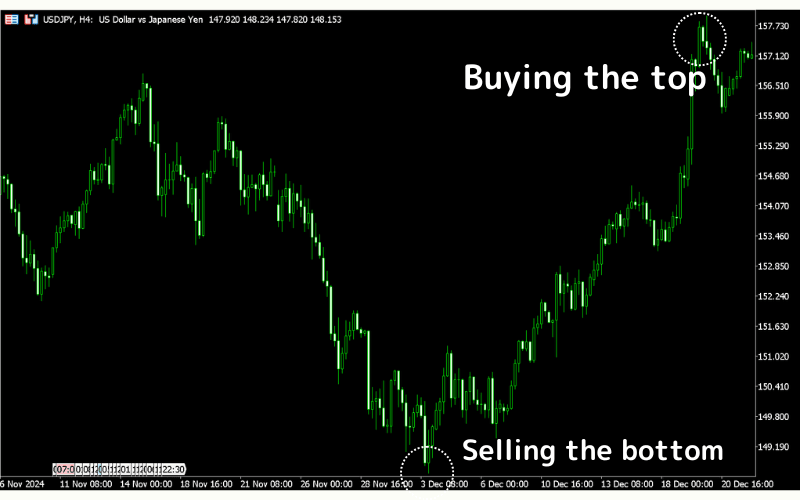
1. Avoid Chasing Highs or Lows
Following a trend doesn’t mean jumping in blindly—chasing highs or lows can amplify risks:
- Chasing Highs: Buying after a sharp rise risks a reversal, leaving you “buying the top.”
- Chasing Lows: Selling after a steep drop may lead to “selling the bottom” if prices rebound.
Timely stop-losses are critical when trends show reversal signs to cap losses.
Solutions
Verify Trend Strength: Ensure the trend is still active before entering late.
Set Stop Losses: Plan exits assuming every trend will eventually end.
2. Beware of False Signals
False signals occur when price action contradicts the expected trend, leading to poor trades. For example, buying at a support line expecting a bounce, only for price to break lower, is a classic false breakout.
Solutions
Confirm with Multiple Indicators: Don’t rely on one signal alone.
Wait for Confirmation: Hold off until the market validates the signal.
7. FAQs About Trend Following in Forex
Q1. Should Beginners Choose Trend Following or Counter-Trend Trading?
It depends on market conditions:
- Trending Markets: Trend following shines with “buy the dip” or “sell the bounce” tactics.
- Range-Bound Markets: Counter-trend trading works better near range highs and lows.
Q2. How Do I Spot Entry Points for Trend Following?
Ideal entries often occur at:
- Uptrend Pullbacks: Buy when price dips to support and resumes rising.
- Downtrend Rallies: Sell when price bounces to resistance and falls back.
Use trendlines or moving averages to pinpoint these moments.
8. Conclusion
Trend following in forex involves trading with the market’s direction—buying in uptrends and selling in downtrends.
Common tactics include “buying pullbacks,” “selling rallies,” or entering on breakouts. Success requires blending fundamental and technical analysis, using tools like trendlines, moving averages, and RSI.
Watch out for chasing extremes and false signals, and always use stop-losses to maintain control.
Further Reading
Titan FX Trade Strategy Research Lab covers forex (FX), commodities (oil, precious metals, agricultural products), stock indices, U.S. equities, and crypto assets, producing educational content for retail investors across asset classes.
Primary Sources (by Category)
- Educational Resources: Investopedia — Trend Trading, BabyPips
- Market Analysis: Trend and technical analysis from Bloomberg, Reuters, and other financial media