

Liquidation
In financial markets, liquidation — an account effectively wiped out — is the risk every leveraged trader must watch most closely.
It is not an ordinary loss but an extreme state: when account funds can no longer support a position's loss, the system automatically performs a forced close to prevent a negative balance, leaving the principal almost entirely gone.
This article explains, in beginner-friendly terms, the definition, market-by-market differences, main causes, and prevention of liquidation, then clarifies how it relates to a forced close (loss cut).
Whether you trade forex, stocks, or crypto, this will help you protect capital through volatility and avoid the worst outcome — a zeroed account.
- Definition: margin below maintenance, then a forced close wipes the account near zero
- Vs forced close: forced close is the action; liquidation is the result
- By market: forex (1:50-1:500), stock margin (with margin call), crypto (1:100+, 24h)
- Four causes: high leverage, no stop, oversized position, insufficient margin
- Five defenses: control leverage, strict stops, free margin, diversify, avoid events
1. The Correct Definition of Liquidation
In leveraged trading, liquidation (Liquidation) is the core risk every beginner must understand. Put simply, it is when market moves leave an account short of funds, unable to keep its positions, so the system auto-closes them and the trader loses all or most of the principal.
Technically, it happens when account equity falls below the maintenance margin requirement. To stop losses widening, the platform closes all positions to avoid a negative balance.
Think of margin as a "deposit" you put down to rent a position. If the market goes against you, that deposit thins out; once it can no longer absorb the loss, the position is forcibly reclaimed — that is liquidation.
Liquidation vs Forced Close
The two are easily confused. In fact:
- Liquidation is a state: account funds are exhausted.
- A forced close is an action: the automatic mechanism a platform triggers to avoid a negative balance.
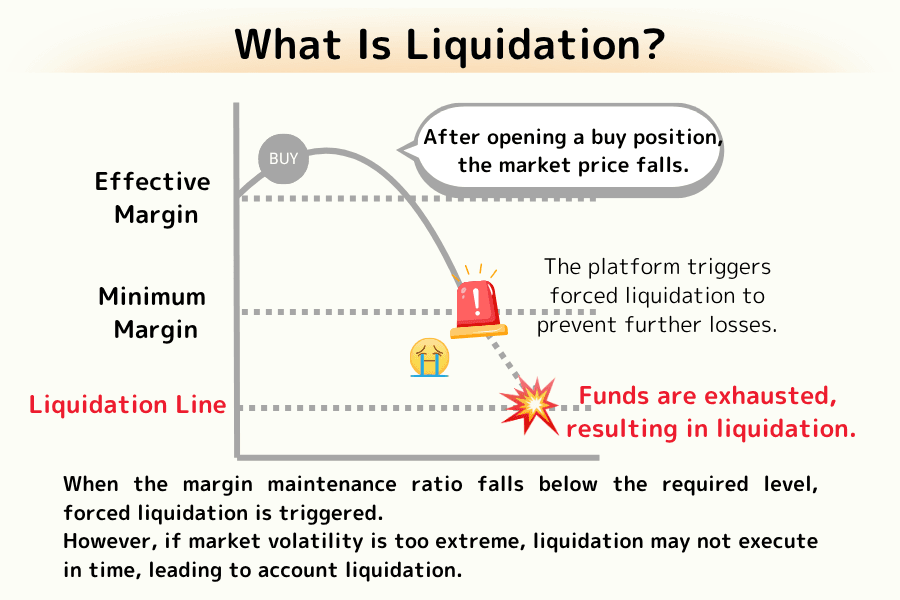
When the market moves sharply, the system uses a "forced close" to stop the loss; after that process the account is near zero — that is liquidation.
Why is liquidation so dangerous?
Because it happens very fast. For traders using leverage, a few-percent adverse move can trigger it — and in forex and crypto markets such moves happen almost daily.
2. Liquidation Across Different Markets
Liquidation can occur in any leveraged market, but rules, leverage caps, and risk mechanisms differ, so its conditions and consequences vary.
Liquidation in forex
Forex is the classic high-leverage environment, typically 1:50 to 1:500. A small margin controls dozens of times the capital — high upside, but losses move very fast too. When the exchange rate moves adversely and equity falls below the Margin Level, a forced close triggers.
- All positions are auto-closed after the trigger
- A fast gap can briefly produce a negative balance
- Most regulated brokers offer negative-balance protection (zero-cut) so traders do not owe money
High liquidity and 24-hour trading bring opportunity, but excessive leverage or loose stop-loss discipline makes liquidation more likely.
Liquidation in stock trading
In stocks, margin (financing) trading can lead to liquidation. If the margin ratio drops below the warning line, the broker takes these steps:
- Step 1: Margin Call — you must add margin within a set period
- Step 2: Forced sale — if you do not, the broker auto-sells shares to recover the loan
Unlike forex, stock accounts are rarely zeroed; instead the remaining value shrinks sharply after the forced sale.
Liquidation in crypto trading
Crypto carries some of the highest liquidation risk. Price swings are extreme and some venues offer 1:100+ leverage, so a 1-2% adverse move can trigger it.
- Auto-Deleveraging: positions are settled immediately, no manual step
- Insurance fund: some exchanges hold a fund to absorb extreme-market losses
- 24-hour market: no close, so a sudden move can liquidate at any time
For beginners, understanding the margin ratio, setting stops, and avoiding very high leverage are the three basic principles.
3. The Main Causes of Liquidation
Liquidation is never an "accident" — it is the inevitable result of weak risk control. Four causes dominate.
Cause 1: Excessive leverage
Leverage moves big money with small capital — magnifying gains and losses. The higher the multiple, the smaller the adverse move needed to wipe equity. At 1:100, a 1% adverse move loses the entire margin.
Cause 2: No stop-loss line
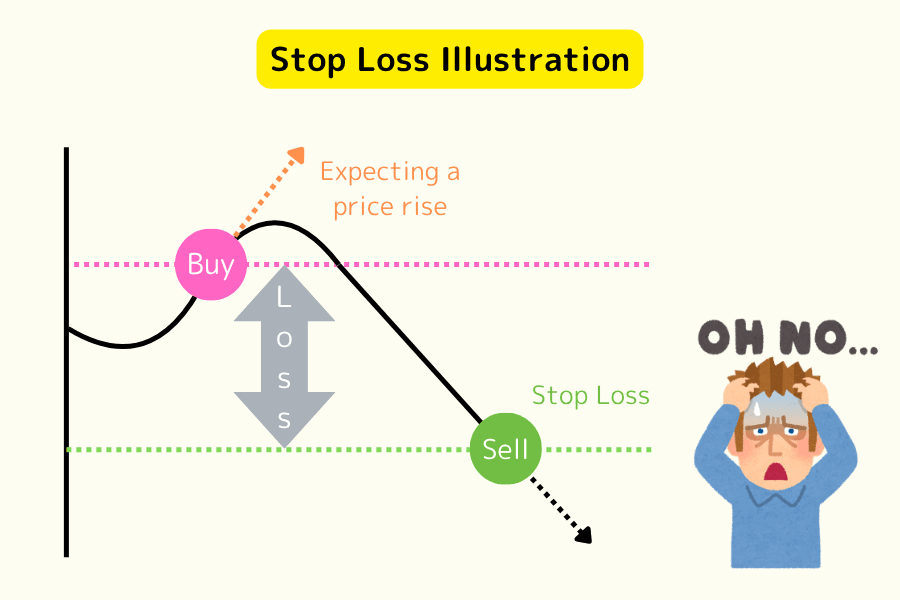
"No stop set" is the most common cause. Hoping "it will bounce if I wait" misses the best exit; as the market keeps moving against you, losses compound and consume the margin. A stop is not self-punishment — it is the floor that protects capital.
Cause 3: Oversized positions
Even with low leverage, too large an allocation is dangerous. Concentrating most funds in one market or instrument leaves no room to adjust when it reverses.
Cause 4: Insufficient margin
The direct trigger is insufficient margin. When price moves push equity below the Maintenance Margin, the system executes a forced close. Do not assume "still holding a position means safe" — keep free margin as a buffer.
4. How to Avoid Liquidation
Once you know the causes, build defenses across funds, position, and mindset to cut risk sharply.
Method 1: Manage leverage sensibly
Leverage is double-edged. Beginners should start low so a single move is not fatal. Professionals generally keep per-trade risk under 2%-3% of total capital. Set a maximum-drawdown cap (e.g., 10%) and pause to review when reached.
Method 2: Set a stop-loss
A stop is the first line against cascading liquidation. Before entering, define a stop price or maximum acceptable loss and do not cancel it on short-term noise. A trailing stop raises the stop automatically as the market moves in your favor.
Method 3: Keep free funds in the account
Never commit all capital to trades. Ample free margin as a buffer makes a forced close less likely during short, sharp moves. Check your Margin Level regularly.
Method 4: Diversify positions and risk
Do not concentrate everything in one market or instrument.
- Different currencies/instruments (forex with gold, crude oil)
- Different directions (some long, some short)
- Different horizons (short-term plus swing)
Diversification avoids a total wipeout when one market reverses violently.
Method 5: Watch events and volatility cycles
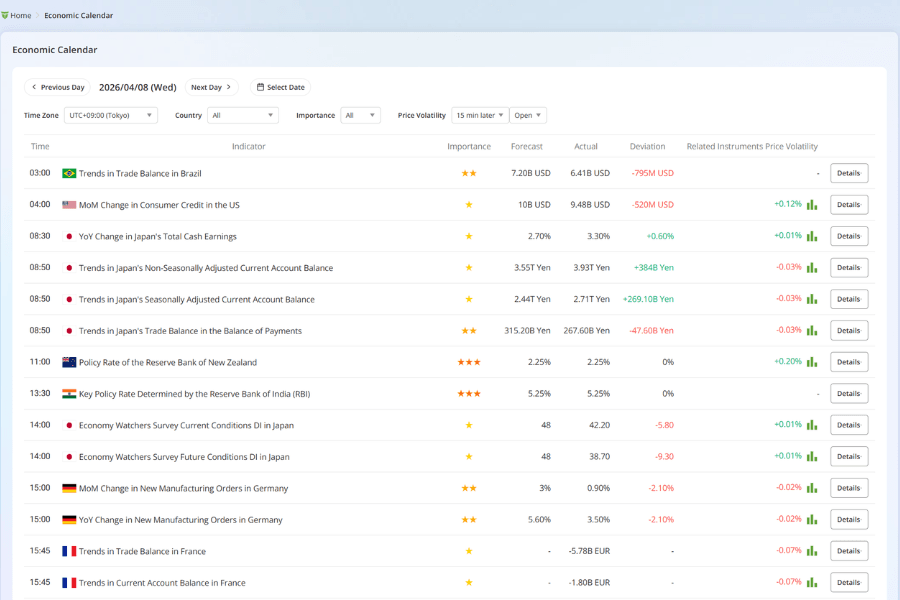
Major data (NFP, CPI, Treasury yields), central-bank policy, and breaking news can trigger extreme moves. Around events, cut leverage or size and prefer waiting over chasing. Titan FX offers a free economic calendar to track GDP, CPI, and employment releases.
Key takeaway: the core of avoiding liquidation is not "never lose" but "never let losses run out of control." Sensible leverage, strict stops, diversification, and good money management are what keep a trader alive long term.
5. Liquidation vs Forced Close: A Closer Look
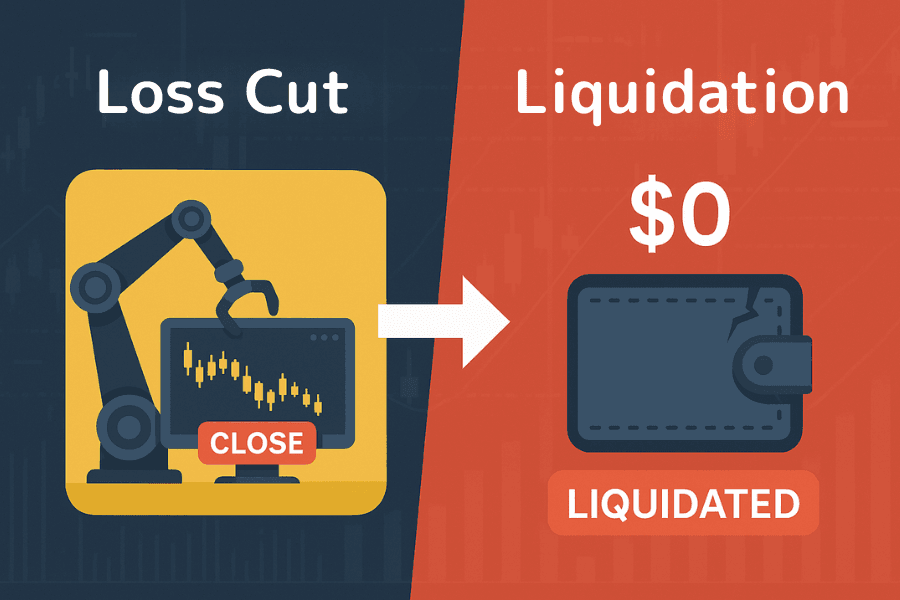
In short, a forced close is the process where the system auto-closes positions when risk is too high, while liquidation is the result where the account ends near zero.
| Item | Liquidation | Forced Close (Loss Cut) |
|---|---|---|
| Nature | Result: account near zero | Process: system auto-closes |
| Triggered by | Trader's weak risk control | Platform executes automatically |
| Timing | After the forced close runs | When margin falls below maintenance |
| Purpose | Ends trading, clears funds | Prevents losses widening |
| Outcome | Principal almost all lost | Some funds remain |
6. Frequently Asked Questions (FAQ)
Q1. What is the difference between liquidation and loss cut (forced close)?
A forced close (loss cut) is an action — the platform automatically closes positions to prevent a negative balance when margin runs low. Liquidation is the result — the state where, after that forced close, the account is nearly wiped to zero. The action is the loss cut; the worst-case outcome is liquidation.
Q2. After liquidation, could I owe the broker money?
It depends on the broker. Most regulated forex brokers offer negative-balance protection (zero-cut): if a gap move briefly pushes the balance negative, the broker absorbs it and your loss is capped at your deposit. Without such protection you may have to top up the shortfall. Always confirm negative-balance protection before trading.
Q3. How can I tell I am close to liquidation?
Continuously monitor your Margin Level = equity / required margin x 100%. The closer it gets to the platform's forced-close threshold, the higher the risk; most platforms send margin alerts. Keeping ample free margin as a buffer is the most effective early defense.
Q4. Does liquidation happen in stock trading too?
Yes. With margin (financing) trading, if the margin ratio falls below the warning line the broker first issues a margin call; if you do not top up in time, shares are force-sold. Unlike forex, stock accounts are rarely zeroed — instead the remaining value shrinks sharply after the forced sale.
Q5. How should I restart after a liquidation?
Stop trading, review the risk-management gaps, then rebuild discipline with lower leverage, strict stop-losses, and sensible position sizing (per-trade risk ≤2%–3%). Treating liquidation as a risk-management lesson rather than bad luck is the key to not repeating it.
7. Conclusion
In markets, liquidation is not a sudden accident but the result of unbalanced risk management. Excess leverage, concentrated positions, missing stops, and emotional trading turn a small loss into a zeroed account.
Mature traders accept losses but, more importantly, prevent them from running away. Sound leverage, strict stops, and an ample margin buffer let you survive volatile markets. The market always offers another chance — but only if you still have capital. Controlling risk is the first step to long-term profit.
Further Reading
- What Is a Forced Close (Loss Cut)?
- What Is the Zero-Cut System?
- What Is Leverage?
- What Is a Stop-Loss?
- What Is Maximum Drawdown?
- What Is Forex Margin Trading?
Titan FX's financial market research and analysis team produces investor education content across a wide range of financial instruments, including foreign exchange (FX), commodities (crude oil, precious metals, and agricultural products), stock indices, U.S. equities, and crypto assets.
Primary Sources by Category
- Risk management and margin fundamentals: Investopedia (Liquidation / Margin Call / Maintenance Margin); CFA Institute (Leverage and Risk)
- Market rules: exchange and regulator margin frameworks (general principles for FX / margin stock / crypto derivatives)
- Education and practice: CMT Association risk-management curriculum; Titan FX economic-calendar tool