

OECD (Organisation for Economic Co-operation and Development)
When you analyse the global economy, judge the relative strength of currencies, or build medium-to-long-term trading strategies, you need consistent economic data that can be compared across countries. The OECD (Organisation for Economic Co-operation and Development) is one of the most important international bodies providing exactly this kind of information. Through standardised statistical methods and cross-country research, it helps markets understand global economic trends and reveals differences in economic strength between nations — making it a key tool for FX traders building a macro view.
This article explains the OECD's role, structure, and member countries in plain terms, summarises the data types traders use most, shows how it influences financial markets, and offers a practical guide to applying OECD information in your trading logic on Titan FX.
- OECD: A 38-member international body founded in 1961, providing comparable cross-country economic data.
- Key outputs: OECD Data, the twice-yearly Economic Outlook, Composite Leading Indicators (CLI), and policy research.
- FX impact: Outlook revisions shift risk sentiment and rate expectations, moving currencies and safe havens (JPY, CHF).
- How to use it: Compare countries' relative cycle positions and cross-check with the IMF, World Bank, and central banks.
- Trading priority: OECD sets direction; confirm entries on Titan FX with indicators and technical analysis.
1. OECD Overview: Role, Structure, and Member Countries
Background: What the OECD Is and Why It Exists
The OECD (Organisation for Economic Co-operation and Development) was founded in 1961 as an international cooperation body made up of advanced economies. Its purpose is to help member countries improve the quality of economic development, raise living standards, and promote fair trade. The OECD does not make laws; instead, it supports better economic decisions through research, data, and policy recommendations.
Today its members are mainly advanced economies in Europe, North America, and the Asia-Pacific, which gives OECD data high credibility. Because its statistical methods are consistent, data from different countries can be compared directly — extremely useful for studying economic trends.
Global Role: Helping Read National Economic Trends
The OECD's value lies not in producing a single economic indicator, but in using a consistent statistical framework to organise each country's changes in inflation, employment, industrial activity, and growth, presenting a fuller picture of the business cycle. Cross-country comparison makes it clearer which economies are accelerating and which may be slowing.
For FX traders, the OECD's most important function is to help build the habit of comparing global business cycles. When judging a currency's medium-to-long-term direction, you should look not only at one country's data but also at relative strength across countries. The OECD's cross-country statistics and analysis help newer traders quickly grasp where each market sits in its cycle and sharpen their reading of currency strength.
Related reading: What Is the Business Cycle?
Institutional Structure: How the OECD Operates
To keep cross-country research and data analysis consistent, the OECD maintains a clear organisational structure, with dedicated units handling everything from decision-making to research.
| Unit | Main Function |
|---|---|
| Council | The OECD's top decision-making body, made up of representatives from all member countries; sets overall direction, policy priorities, and organisational guidelines. |
| Committees | Composed of government officials and field experts; lead cross-country research and policy cooperation in economics, education, trade, taxation, energy, and more. |
| Secretariat | Made up of economists, statisticians, and researchers; the OECD's core operational arm, responsible for compiling statistics, writing reports, and advancing research projects. |
Membership: The OECD's Current 38 Members
OECD members are mostly high-income economies with mature institutions, concentrated in Europe, North America, and the Asia-Pacific, giving the data strong consistency and reliability. The list below reflects the latest publicly available data.
| Region | Member Countries |
|---|---|
| North America | United States, Canada, Mexico |
| Western/Northern Europe | United Kingdom, France, Germany, Switzerland, Netherlands, Belgium, Luxembourg, Denmark, Norway, Sweden, Iceland, Ireland, Finland, Austria |
| Southern/Eastern Europe | Italy, Spain, Portugal, Greece, Czechia, Slovakia, Slovenia, Poland, Hungary, Estonia, Latvia, Lithuania |
| Asia-Pacific | Japan, South Korea, Australia, New Zealand |
| Middle East | Israel, Turkey |
| Central/South America | Chile, Colombia, Costa Rica |
The OECD currently has 38 full member countries. China, Brazil, India, Indonesia, and South Africa are all "Key Partners" but have not yet become full members.
2. Key OECD Outputs Every Investor Should Watch
The OECD publishes a wide range of data, but for new investors and FX traders the goal is not to read everything — it is to focus on the core content that genuinely affects "the direction of the cycle" and "relative currency strength." Broadly, the information most worth watching falls into three groups: statistical data, economic outlook, and thematic research.
Output Type 1: The OECD Data Statistical Database
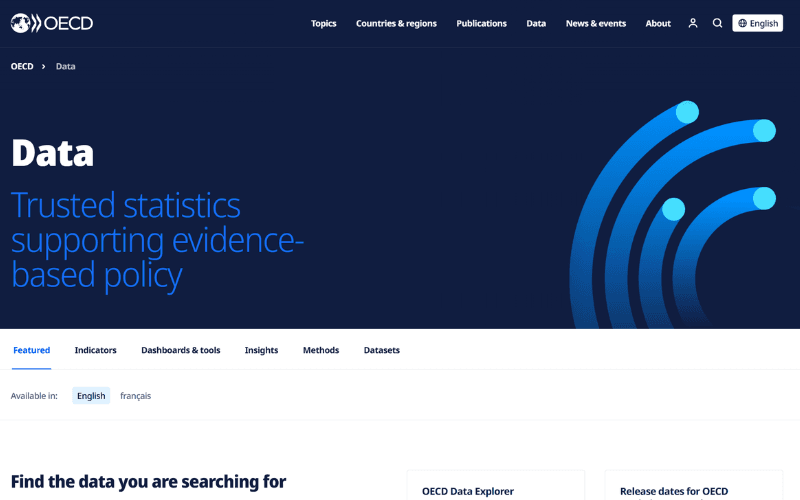
OECD Data is a cross-country statistical platform that collects official economic data from each country, including GDP growth, inflation, the Consumer Price Index (CPI), wage changes, trade flows, consumer behaviour, the labour market, and housing indicators. Its greatest value is that every country uses the same statistical framework, so you can directly compare the relative economic strength of different nations.
Among these, the Composite Leading Indicators (CLI) deserve special attention from traders: they combine forward-looking data such as manufacturing orders, construction, and confidence surveys to anticipate turning points in each country's cycle. For traders, this helps reveal which economies have more momentum and which may be slowing, providing an important basis for the medium-to-long-term direction of the FX market.
Output Type 2: The OECD Economic Outlook
The Economic Outlook is the OECD's flagship economic report, published twice a year. It covers growth, inflation, and risk-scenario forecasts for the world and individual countries over the next one to two years.
Beyond the baseline forecast, it also presents alternative scenarios — for example, if global demand slows, energy shortages emerge, or financial volatility intensifies — giving investors a more rounded view.
For the FX market, the Outlook provides a sense of "direction": which countries may raise rates and which face downward pressure, guiding shifts in currency strength.
Output Type 3: Policy and Thematic Research
The OECD also publishes cross-country research on themes such as energy, trade, technology, labour, and supply chains. These topics often align with long-term trends — for example, the transformation of the tech industry, shifts in globalisation, or the impact of carbon-neutral policies on national industrial structures.
While they do not create short-term volatility the way real-time data can, they are very important for judging medium-to-long-term cycles and national competitiveness.
Overall, OECD data does not sway intraday prices the way a rate decision does, but it provides a clear framework for large trends and international comparison — an important tool for traders building a macro view and longer-term strategy.
3. How the OECD Moves Global Markets and FX
The OECD does not set interest rates, nor is it a policy body that directly steers markets. Yet its economic forecasts, cross-country comparisons, and research reports are often seen as a "barometer of the global cycle." Because the content is consistent and credible, markets reassess risk sentiment, monetary policy expectations, and cross-country growth gaps in line with the direction the OECD signals — which in turn affects foreign exchange, equities, and commodity prices.
Channel 1: Market Sentiment and Risk Appetite
When the OECD upgrades growth forecasts for the world or major economies, markets often read it as a signal of improving conditions; risk appetite rises relatively, equities and cyclical assets find support more easily, and some commodity currencies may strengthen alongside.
Conversely, if the OECD downgrades forecasts or flags weakening demand and rising external risks, markets tend to turn more cautious and risk-off sentiment increases — favouring safe-haven currencies such as the Japanese yen (JPY) and Swiss franc (CHF).
Channel 2: Rate Expectations and Reading Central Banks
OECD reports are often used by markets as a basis for judging the direction of each country's central bank.
If the OECD lowers a country's growth or inflation forecast, markets may begin to expect that country's central bank to slow the pace of tightening or even pivot to easing; conversely, if forecasts point to rising inflation pressure, rate-hike expectations may strengthen in step.
While a central bank will not necessarily adjust policy exactly as the OECD suggests, the shift in market expectations alone is enough to move FX prices.
Channel 3: Reading the Medium-to-Long-Term Cycle
The OECD's biggest advantage is providing cross-country comparable cycle data, letting traders quickly understand where different countries sit in the business cycle.
For example, a country entering expansion with a clear path toward policy normalisation may see its currency strengthen relatively; a country facing slowing growth or weak employment may see its currency come under greater pressure.
This difference in "relative cycle position" is an important source of medium-to-long-term moves in the FX market — and where OECD data delivers the most value.
Overall, the OECD's impact is not as immediate as a rate decision, but it carries strong reference value in shaping market direction and sentiment over time, making it well-suited to building a macro framework for FX trading.
4. How to Use OECD Data in Your Trading
OECD data leans medium-to-long-term, but it has high reference value for judging each country's cycle position, relative currency strength, and market risk sentiment. The four simplified steps below help traders apply this information more systematically.
Step 1: Check the Latest OECD Outlook and Forecast Revisions
Start with the OECD's annual and semi-annual Economic Outlook, and watch which countries' growth or inflation forecasts have been revised up or down.
These changes reflect the OECD's latest read on the global cycle and can be used to gauge the sentiment direction of the market's next phase.
Step 2: Cross-Check Against Other Official Data
The OECD's view should be used alongside other sources, such as the IMF, the World Bank, and national central banks' forecasts. When multiple institutions agree on a country's growth direction, that country's medium-term currency path is usually more reliable as a reference.
Step 3: Translate It into Sentiment and Currency-Strength Analysis
Once you understand the forecasts, assess their likely impact on market sentiment. For example, upward growth revisions usually favour risk assets, while downgrades may lift safe-haven demand. Converting these changes into a view on relative currency strength helps you plan medium-term strategy and asset allocation.
Step 4: Plan Trades with Technical Analysis on Titan FX
After forming a macro view, use technical indicators, trendlines, and multi-timeframe charts on the Titan FX platform to confirm your entry and stop-loss levels. Macro analysis provides direction, while technical analysis helps execute the strategy — making trades more concrete and disciplined.
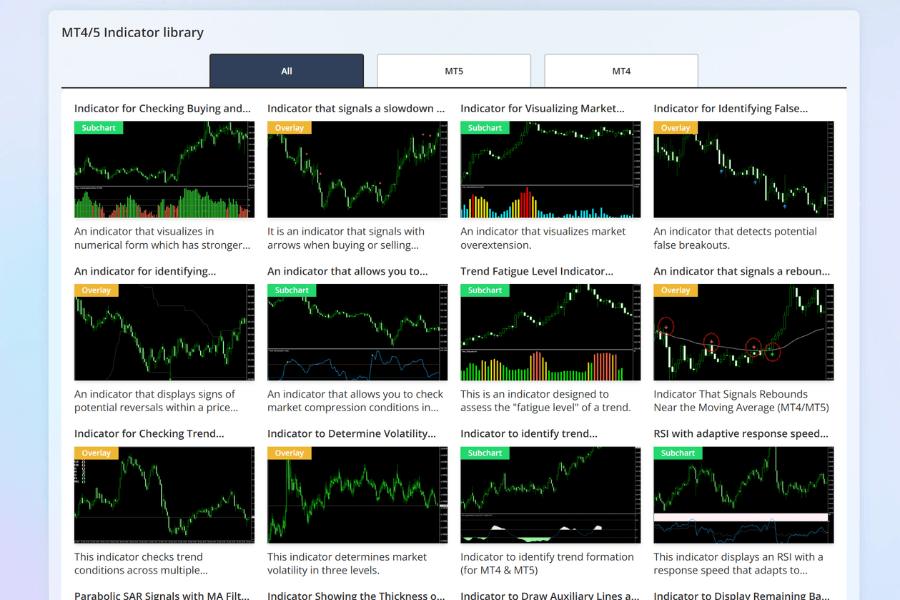
▸See the MT5/MT4 indicators Titan FX offers
Bonus: Titan FX Lets You Quickly Check Economic Indicators by Country
The Titan FX platform integrates economic indicators and real-time financial data from many countries, including the core indicators common to OECD members (GDP, inflation, employment, and more). By combining this information with live quotes and charting tools, traders can more easily turn OECD data into concrete trading decisions.
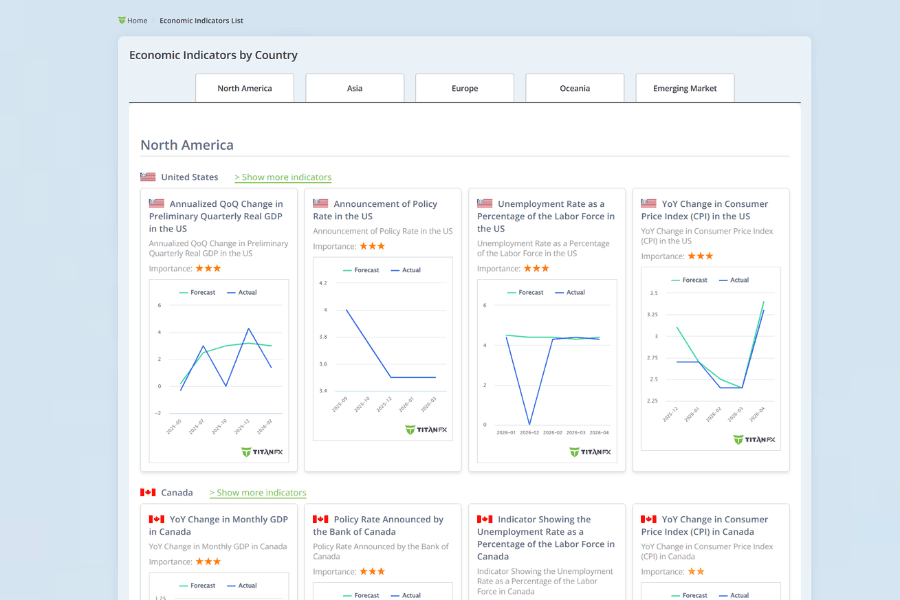
▸See economic indicators by country
5. Frequently Asked Questions
Q1: How does the OECD differ from the IMF and the World Bank?
All three are major international economic institutions, but their roles differ. The OECD focuses on advanced economies, specialising in cross-country policy research, statistical standardisation, and economic outlooks — providing "comparable cycle analysis." The IMF (International Monetary Fund) focuses on global financial stability, balance of payments, and crisis lending. The World Bank centres on long-term development loans and poverty-reduction projects for developing countries. For FX traders, the OECD is well-suited to building a macro framework of "relative cycles across countries," while the IMF's global outlook often moves with market risk sentiment.
Q2: Does OECD data cause short-term price swings?
Usually not in the way a rate decision or non-farm payrolls report triggers immediate, sharp moves. The OECD's role is closer to a "medium-to-long-term direction indicator"; its outlooks and forecast revisions mostly shape the market's overall expectations for the cycle and policy — a slow-moving variable. That said, when the OECD substantially upgrades or downgrades a major economy's growth forecast, or diverges clearly from market consensus, it can still move risk sentiment after release and indirectly affect currencies and equities.
Q3: Why aren't large economies like China and India full OECD members?
OECD membership is not determined by economic size alone, but by institutional maturity, market openness, and commitment to the organisation's standards (governance, transparency, trade and investment rules). China, India, Brazil, Indonesia, and South Africa are all currently "Key Partners" that join some research and dialogue, but have not completed the formal accession process. As a result, while OECD data centres on advanced economies, its analysis still incorporates the influence of these large emerging economies.
Q4: Which OECD data should FX traders watch most?
Three are most practical. First, the Economic Outlook, used to track the direction of each country's growth and inflation forecasts. Second, the Composite Leading Indicators (CLI), used to anticipate turning points in the cycle. Third, the OECD Data statistical database, handy for comparing core data such as GDP, inflation, and employment across countries. Master these three and you can quickly build a relative-cycle read of which countries are strengthening and which are weakening — the foundation of a medium-to-long-term FX strategy.
Q5: How do I combine OECD data with trading on Titan FX?
The recommended flow is "set direction with macro, find position with technicals." First use the OECD's outlook and CLI to judge each country's relative cycle and currency strength; then cross-check the latest data on Titan FX's economic indicators by country. Finally, on MT4/MT5, use technical analysis to confirm your entry and stop-loss levels, and manage risk carefully.
6. Summary: Why the OECD Matters to Traders
The OECD is not a decision-making body, yet it provides exceptionally comprehensive and consistent global economic data, helping traders build a complete view of the cycle, inflation, and the direction of policy. This information does not create instant volatility the way a rate decision does, but it carries important value for judging trends in the FX market.
By understanding the content and uses of OECD data — and combining it on the Titan FX platform with economic indicators, technical analysis, and a multi-country product selection — investors can grasp market direction more effectively and make their strategies more stable and logical.
Further Reading
- What Is the Business Cycle?
- What Is GDP?
- What Is Inflation?
- What Is Monetary Policy?
- What Is the IMF?
- Forex Trading Basics
Titan FX Research. Investor-education content covering forex (FX), commodities (oil, precious metals, agricultural products), stock indices, US equities, and crypto assets across global markets.
Primary Sources by Category
- Official materials and international bodies: OECD official site (oecd.org); OECD Economic Outlook; OECD Data; OECD Composite Leading Indicators (CLI)
- Cross-country comparison and research: IMF World Economic Outlook; World Bank Open Data; national central banks' published statistics
- Market data: Titan FX economic indicators page; OECD report commentary from major financial media