

Copper Investing Guide: Uses, Price Drivers, and Opportunities
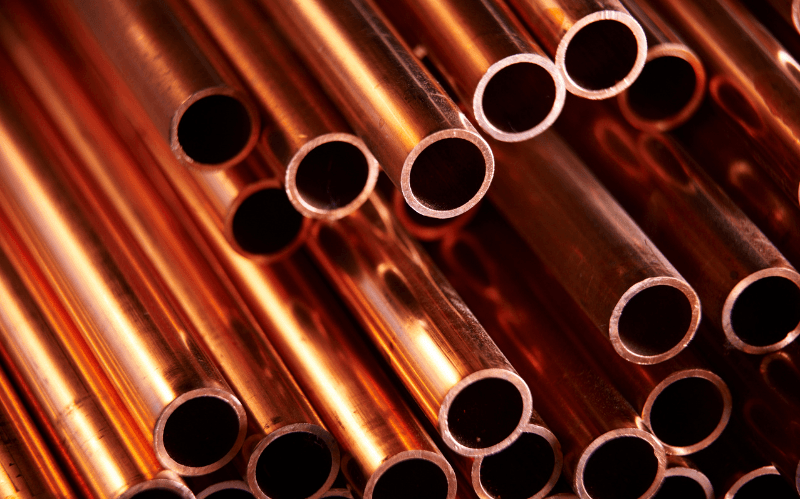
Copper prices are driven mainly by global industrial demand — especially Chinese manufacturing, infrastructure, and EV use — and are further shaped by the US dollar, mine-supply disruptions, and exchange inventories.
In the global metals market, copper (Copper) is not a traditional safe-haven asset, yet it has earned the nickname "barometer of the economy."
Copper price movements often signal the strength or weakness of the global economy ahead of time, making them a key reference for investors gauging trends in manufacturing, energy, and infrastructure.
As the renewable-energy and electric-vehicle industries grow rapidly, demand for copper keeps climbing, putting it firmly in the market spotlight in recent years.
This article takes a deep look at the factors behind copper prices, the ways to invest, and the associated risks and opportunities, helping investors understand the value hidden within this "red metal."
- "Dr. Copper": Copper signals economic health, with demand spanning power, construction, transport, and manufacturing.
- Energy-transition core: EVs use 3–4x more copper than gas cars; solar, wind, and grids add to demand.
- Price drivers: Supply, demand, the US dollar and rates, plus sentiment and speculative flows all interact.
- Concentrated supply risk: South America dominates output; new mines take 7–10 years, so supply is inelastic.
- Ways to invest: Futures, ETFs, miner stocks, CFDs, or physical; Titan FX offers Copper CFDs with flexible leverage.
- 1. Why Copper Prices Matter
- 2. Copper's Core Uses and Market Position
- 3. The Main Factors Driving Copper Prices
- 4. A Review of Global Copper Price Trends
- 5. Copper Compared with Other Metals
- 6. Common Ways to Invest in Copper
- 7. The Risks and Opportunities of Investing in Copper
- 8. Frequently Asked Questions About Copper Prices and Copper Investing
- 9. Summary
1. Why Copper Prices Matter
The copper price (Copper Price) is one of the most telling indicators of global economic activity.
Because copper is used so widely across power, electronics, construction, transport, and manufacturing, shifts in its demand reflect the economy's strength or weakness almost directly.
When growth, infrastructure spending, and manufacturing accelerate, corporate demand for copper rises and prices follow. Conversely, when the economy slows or industrial demand weakens, copper prices tend to fall first, serving as an early warning of recession.
For this reason, the investment world often calls copper "Dr. Copper" — a metal that, "without a degree, can still diagnose the health of the economy."
By tracking copper price movements, analysts and investors gauge the strength of global manufacturing and trade, and even use them to anticipate cycles in equity and commodity markets.
Beyond its traditional industrial uses, copper has in recent years become a core raw material for the energy transition and emerging technology industries. As electric vehicles, solar power, and wind generation expand rapidly, copper's strategic importance keeps rising.
This makes the copper price not only a "thermometer" for the economy, but also a key gauge for watching future energy and technology trends.
Live Copper Price (Copper Price) Chart
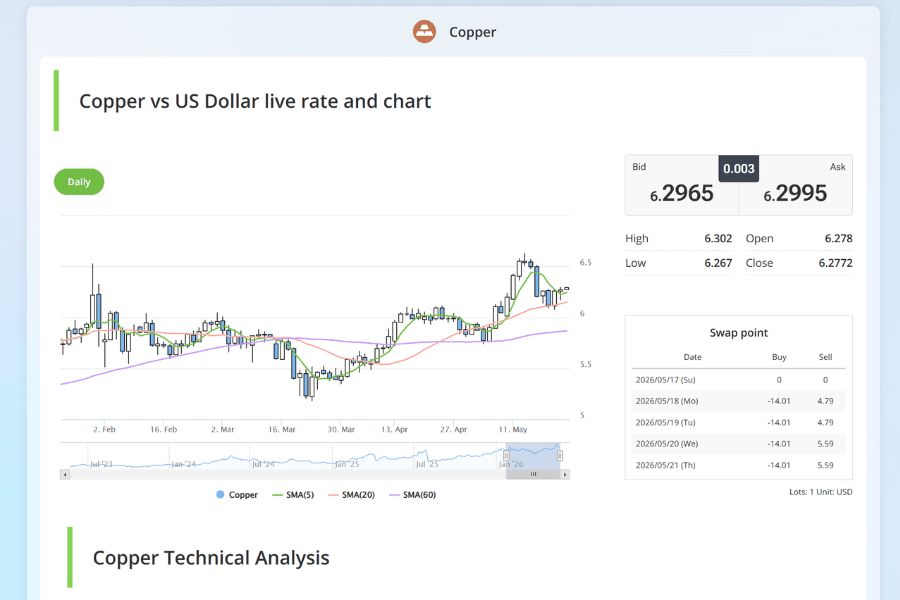
View the Titan FX Copper (Copper) chart to follow real-time movements.
2. Copper's Core Uses and Market Position
With its outstanding electrical conductivity, thermal conductivity, and ductility, copper (Copper) is one of the most essential base metals in modern industry and energy systems.
It is used across infrastructure, power transmission, manufacturing, and renewable energy, acting as the "circulatory system" that keeps the global economy running.
Copper's Main Applications
Power and electronics: Copper is the core material in wires, cables, electric motors, and transformers, accounting for more than half of global copper consumption.
Construction and infrastructure: As a durable, corrosion-resistant conductor and piping material, copper is widely used in building structures, water-supply systems, and urban power grids.
Transport and electric vehicles: Electric vehicles (EVs) require about 3–4 times more copper than conventional cars, spanning battery connections, motor windings, and charging infrastructure.
Renewable energy: Solar panels, wind turbines, and energy-storage systems all rely on copper to improve conductivity, making it an indispensable metal for the "green energy transition."
Major Global Producers and Consumers
| Region | Role | Characteristics |
|---|---|---|
| Chile | World's largest copper producer | Home to several world-class mines, such as Escondida; exports account for about one-third of the global total. |
| Peru | Second-largest producer | Mining policy, strikes, and climate change frequently cause supply fluctuations. |
| China | World's largest consumer | Urbanization, infrastructure, and the new-energy sector drive demand, accounting for more than 50% of global consumption. |
| US and Europe | Mature markets | Stable demand, focused mainly on maintenance and energy upgrades. |
Global copper supply is heavily concentrated in South America, leaving it exposed to geopolitics, environmental policy, and climate conditions.
When strikes, droughts, or power outages hit major mining regions, the global supply chain can tighten and trigger swings in copper prices.
This is one key reason copper is regarded as a commodity carrying "structural supply risk."
3. The Main Factors Driving Copper Prices
Copper price movements are not the result of any single factor, but rather the combined effect of supply-side changes, global demand trends, monetary policy, and the flow of market capital.
Because copper has the dual nature of both an "industrial metal" and an "investment commodity," it reflects the strength of the real economy while also responding to the financial environment and speculative capital.
Understanding these key drivers helps investors more accurately judge the direction and rhythm of copper price swings.
Overview of Copper Price Drivers
| Factor Category | Description | Typical Direction of Impact |
|---|---|---|
| Supply | Mine output, energy costs, geopolitics, and policy changes | Lower supply → higher copper prices |
| Demand | Copper usage in manufacturing, infrastructure, and renewable energy | Rising demand → higher copper prices |
| The US dollar and macro policy | The US dollar exchange rate, inflation, and interest-rate changes | Weaker dollar or lower rates → higher copper prices |
| Market sentiment and speculative capital | Capital flows in futures and ETFs | Inflows → short-term gains |
Supply Side: Copper Mining and Production Costs
Global copper mining is concentrated in regions such as Chile, Peru, and the Democratic Republic of the Congo.
Any political turmoil, labor strike, mine accident, or tightening of environmental policy can disrupt supply and push copper prices higher.
In addition, as ore grades decline and energy prices rise, extraction costs gradually increase, making the market increasingly sensitive to supply-side risk.
When inventories fall or supply is expected to tighten, copper prices often react with upward pressure ahead of time.
Demand Side: The Drive from Industry and the Energy Transition
Demand for copper comes mainly from the power, electronics, construction, and transport sectors.
Amid the global energy transition, emerging industries such as electric vehicles, solar power, and wind generation have become new engines of copper consumption.
For example, an electric vehicle uses on average about three times as much copper as a conventional car; renewable-energy infrastructure also requires large amounts of copper conductors.
As a result, when manufacturing expands or new-energy investment accelerates, copper prices generally show a long-term upward trend.
The US Dollar and Macro Policy: The Influence of the Monetary Environment
Copper is priced in US dollars, so dollar movements have a clear inverse relationship with copper prices.
When the dollar strengthens, purchasing costs rise for buyers outside the US, weighing on copper prices; when the dollar weakens, copper prices tend to benefit.
At the same time, inflation and interest-rate policy also sway market sentiment. In a low-rate, high-inflation environment, investors lean toward allocating to real assets, including copper and commodities such as gold.
Market Sentiment and Speculative Capital: Catalysts for Short-Term Swings
Beyond fundamental factors, copper prices are also shaped by financial-market sentiment and capital flows.
In futures and ETF markets, inflows of institutional and speculative capital often amplify price volatility.
When the market is optimistic about the economic outlook or expects a demand recovery, copper prices tend to rise in the short term; conversely, when risk-off sentiment intensifies or rates climb, capital exits and prices retreat.
Overall, the copper price is a combined expression of industrial activity and financial sentiment.
Grasping supply-and-demand dynamics and the direction of policy is the core key to analyzing copper price trends.
4. A Review of Global Copper Price Trends
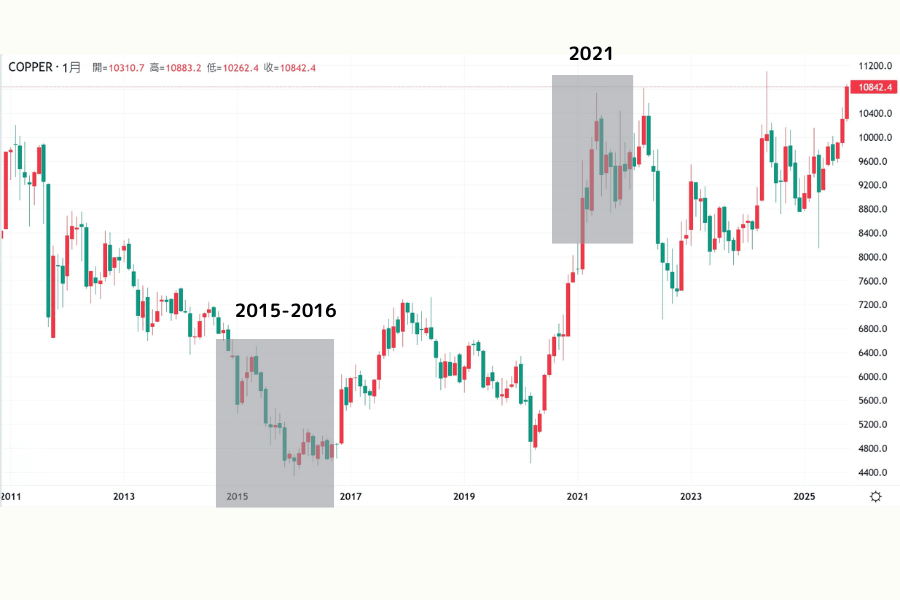
Looking back at the past decade of copper prices, it is clear how closely they have tracked the global economic cycle, the dollar, and the energy transition.
Copper reflects not only the health of traditional manufacturing, but has gradually become an important gauge for monitoring investment in new energy and green infrastructure.
2015–2016: Economic Slowdown and a Price Trough
During this period, China's economic growth slowed and global manufacturing activity cooled, causing copper demand to shrink.
International copper prices fell at one point to around US$4,500 per tonne, a post-financial-crisis low.
The market widely expected a supply surplus, and mining investment slowed — setting the stage for the copper price rebound that followed.
2020: Pandemic Shock and Policy Stimulus
After the COVID-19 outbreak, the global economy briefly stalled and copper prices dropped sharply.
However, as governments rolled out massive fiscal and infrastructure stimulus programs, industrial activity recovered quickly.
As a core material for infrastructure and electrification, copper saw demand rebound rapidly, driving prices sharply higher in the second half of the year and demonstrating strong resilience.
2021: A Peak Driven by the Energy Transition
Entering 2021, fueled by a boom in electric vehicle, solar, and wind investment, the copper market entered a fresh round of gains.
Tight global supply and falling inventories pushed prices through US$10,000 per tonne, a near-decade high.
Investors widely viewed this stage as the first sign of "green inflation," with copper seen as a core raw material of the new-energy economy.
2022–2023: An Adjustment Period Amid Rate Hikes
As major central banks raised rates one after another and the US dollar index strengthened, commodity markets came under broad pressure.
Copper prices pulled back from their highs but overall remained above their historical average.
Although short-term demand softened, China's infrastructure policies and energy-transition demand provided medium- to long-term support for the copper market.
Investors began to refocus on how supply bottlenecks and improving recycled-copper utilization would shape the price structure over the long run.
The Current Stage: A Stable Pattern Under Structural Supply-Demand Tension
At present, the global copper market remains caught between tight supply and resilient demand.
New-energy infrastructure, the spread of electric vehicles, and the expansion of renewable energy continue to push actual consumption higher.
Against this backdrop, copper prices maintain a medium- to long-term upward trend. Investors are broadly watching whether a new round of "green inflation" will emerge, and whether supply can keep pace with the metal demand required for the global energy transition.
5. Copper Compared with Other Metals
Although they all fall under the precious-metals or industrial-metals umbrella, copper differs markedly in both its uses and its price logic.
Understanding these differences helps investors analyze the interconnections within the metals market and their allocation value from multiple angles.
Overview of Metal Properties
| Metal | Type | Main Uses | Investment Characteristics |
|---|---|---|---|
| Copper (Copper) | Industrial metal | Construction, power, electronics manufacturing | Highly correlated with the global economic cycle; nicknamed "Dr. Copper" |
| Gold (Gold) | Precious metal | Investment, reserves, and jewelry | Safe-haven asset; usually inversely correlated with copper prices |
| Silver (Silver) | Precious metal + industrial metal | Solar cells, electronic components | High volatility; combines safe-haven and growth characteristics |
| Aluminum, nickel, etc. | Industrial metals | New energy, aerospace, battery materials | Strongly driven by technology and policy; growth potential |
Copper and Gold: The Two Extremes of the Economic Cycle
Copper and gold are often seen as two opposing symbols for reading market sentiment.
When the economy is healthy and manufacturing is expanding, rising copper prices reflect strong real demand; when risk-off sentiment intensifies or rates rise, capital tends to flow into gold while copper prices come under relative pressure.
For this reason, the "Copper-to-Gold Ratio" is widely used to gauge the economic cycle and the direction of interest rates.
When the copper-to-gold ratio rises, it usually signals economic recovery and rising risk appetite; when it falls, it indicates the market is turning more cautious.
Copper and Silver: A Blend of Growth and Volatility
Silver combines precious-metal and industrial-metal properties, overlapping with copper in both energy and electronics applications.
The two often rise together when investment in new energy and green technology heats up, but silver is more volatile and more heavily influenced by speculative capital.
For investors, copper offers a more stable "economic signal," while silver tends to move more dramatically in short-term swings.
Copper and Other Industrial Metals: The Resonance of Policy and Technology
Aluminum, nickel, and zinc are industrial metals that belong to the same "infrastructure metals family" as copper, but their drivers differ somewhat.
- Aluminum: Significantly influenced by energy prices and supply policy;
- Nickel: Used mainly in batteries and stainless steel, closely tied to electric-vehicle demand.
By comparison, copper has broader uses and a more stable demand structure, so it better reflects overall global economic activity.
6. Common Ways to Invest in Copper
Copper prices are driven by the global economy and supply and demand, and investors can choose different ways to participate based on their risk appetite.
| Investment Method | Characteristics | Suited For |
|---|---|---|
| Futures (LME, COMEX) | Tracks copper prices directly; high leverage, high volatility | Experienced traders |
| Copper-related ETFs / ETNs | No physical delivery; tracks copper prices or futures indices | Those seeking long-term copper exposure |
| Copper mining stocks | Move with copper prices, with potential dividend income | Investors who prefer equities |
| Contracts for difference (CFDs) | Can trade in both directions, highly flexible | Short-term traders |
| Physical copper or funds | High cost, low liquidity | Long-term value-preservation investors |
Investors can choose their method of participation according to their risk appetite and capital size.
Further reading:
- An Introduction to Precious Metals Trading
- Asset Allocation Explained: How to Distribute Capital to Reach Your Financial Goals
Titan FX offers CFD trading on gold (XAU), silver (XAG), copper (Copper), platinum (XPT), and palladium (XPD), making it well suited to investors who value flexibility. Account opening is fast and can be completed within a day; to register, visit the Titan FX website.
Guide to Opening a Titan FX Trading Account| Advantage | Description |
|---|---|
| High leverage | Up to 50:1 on copper CFDs, amplifying return potential. |
| Low spreads | Competitive spreads that lower trading costs. |
| Fast execution | Reduced slippage for efficient trading. |
| Advanced platforms | Supports MT4 and MT5, ideal for technical analysis. |
| Free tools | Dozens of technical analysis tools to support precise decisions. |
| Multilingual support | Chinese, English, and Japanese customer service for quick problem-solving. |
| Educational resources | Precious-metals trading tutorials and daily market analysis. |
7. The Risks and Opportunities of Investing in Copper
Copper prices are highly correlated with the global economic cycle, reflecting the heat of industrial activity while also responding to policy, monetary conditions, and market expectations.
For investors, understanding the potential risks and long-term opportunities is the most important homework before entering the copper market.
Investment Risks
Risk 1: Sharp Price Volatility
Copper is a classic cyclical commodity.
When global manufacturing or infrastructure slows, copper prices often see clear pullbacks, with short-term swings reaching double digits.
Short-term trading should therefore be approached with caution, avoiding chasing prices at the highs.
Risk 2: Policy and Geopolitical Uncertainty
If major copper-producing nations such as Chile and Peru experience strikes, energy shortages, or changes in tax policy, supply may be disrupted and inventories may fall, in turn triggering swings in copper prices.
In addition, environmental policy and carbon-emissions regulations are gradually reshaping the cost structure and production pace of the mining industry.
Risk 3: US Dollar and Interest-Rate Movements
Copper is priced in US dollars. When the dollar strengthens or US interest rates rise, costs increase for investors outside the dollar zone and demand weakens, generally weighing on copper prices.
Investment Opportunities
Opportunity 1: The Energy Transition and the EV Wave
Copper is the "core metal" of the energy transition. Whether for electric vehicles, renewable-energy facilities, or grid upgrades, large amounts of copper are needed as a conductor.
As global net-zero transition investment continues to expand, long-term copper demand is expected to grow steadily.
Opportunity 2: Constrained Supply Growth
Bringing new copper mines online and expanding production often takes 7 to 10 years.
In recent years, strict environmental approvals and difficult financing have kept global mining capital expenditure broadly low.
If demand grows while supply stays constrained, copper prices could find structural support in the future.
Opportunity 3: The Push from Green Policy
Carbon-reduction policies and infrastructure programs around the world (such as the US Inflation Reduction Act and the EU Green Deal) are placing copper at the core of the green industrial chain.
In an era of "green inflation," copper has the potential to become an asset that combines both safe-haven and growth characteristics.
Trade Copper CFDs with Titan FX
Titan FX offers copper CFDs with up to 50:1 leverage and the flexibility to go long or short.
8. Frequently Asked Questions About Copper Prices and Copper Investing
Q1: Why is copper called "Dr. Copper"?
Because copper is used widely across power, electronics, construction, transport, and manufacturing, its demand spans nearly the entire real economy, so copper prices often signal the strength or weakness of the economy ahead of time. Prices rise when manufacturing and infrastructure expand and fall first when growth slows. This ability to "diagnose the health of the economy" is why the market jokingly calls it "Dr. Copper, without a degree."
Q2: What are the most critical factors driving copper prices?
There are four main categories: supply (mine output, strikes, energy costs, and environmental policy in regions such as Chile and Peru); demand (copper used in manufacturing, infrastructure, and new energy); the US dollar and macro policy (copper is priced in dollars, so a weaker dollar or lower rates favor prices); and market sentiment and speculative capital (flows in futures and ETFs amplify short-term swings).
Q3: How does copper differ from gold, and how is the "copper-to-gold ratio" used?
Copper is an industrial metal that reflects real-economy demand; gold is a safe-haven asset favored when the outlook is uncertain or rates are rising, so the two often move inversely. The market uses the "Copper-to-Gold Ratio" to read the economic cycle: a rising ratio usually signals economic recovery and rising risk appetite, while a falling ratio indicates a more cautious market.
Q4: How much does the energy transition affect copper demand?
The impact is significant. An electric vehicle uses about 3–4 times as much copper as a conventional car, and solar, wind, and energy-storage systems also require large amounts of copper conductors, on top of grid upgrades. As global net-zero transition investment expands, long-term copper demand is expected to grow steadily — one reason copper has come to be seen in recent years as combining safe-haven and growth characteristics.
Q5: What are the ways to invest in copper, and who is each suited to?
Common methods include: futures (LME, COMEX — high leverage and high volatility, suited to experienced traders); copper-related ETFs/ETNs (convenient for long-term allocation); copper mining stocks (with potential dividend income); contracts for difference (CFDs) (two-way and flexible, suited to short-term trading); and physical copper or funds (high cost, low liquidity). Investors can choose based on their risk appetite and capital size.
Q6: Can I trade copper at Titan FX?
Yes. Titan FX offers contracts for difference (CFDs) on copper (Copper) as well as gold, silver, platinum, and palladium, allowing two-way long-and-short trading with flexible leverage and no need to hold the physical metal. Before trading, it is advisable to understand copper's cyclical nature and volatility, and to set up stop-losses and capital management.
9. Summary
The copper price is not just the price of an industrial metal — it is a reflection of the pulse of the global economy.
It blends supply-and-demand structure, macroeconomics, and the energy transition into a key bellwether for the investment market.
For investors, understanding copper's fundamentals, the logic of its volatility, and its long-term trend is the key to building a sound investment strategy.
Facing the coming wave of green energy, copper's investment value is likely to keep drawing market attention.
Further Reading
- What Is a Gold CFD? Mechanism, Advantages, and Risks
- Silver Investing Basics: History, Properties, and Trading
- Precious Metals Trading Basics
- What Is a CFD (Contract for Difference)?
- Asset Allocation Explained: Splitting Capital to Reach Your Goals
Titan FX Research. Investor-education content covering forex (FX), commodities (oil, precious metals, agricultural products), stock indices, US equities, and crypto assets across global markets.
Primary Sources by Category
- Official data and market bodies: London Metal Exchange (LME); CME COMEX copper futures data; World Bank and IMF commodity price statistics
- Industry and research: International Copper Association; national energy-transition and EV industry reports
- Market data: Titan FX live quotes and commodity CFD prices; metals-market analysis from major financial media