

Day Trading
Why would a trader rather watch the screen all day and close every position before the bell than carry a single trade overnight? Welcome to day trading — a style that trades speed and discipline for opportunity while sidestepping the uncertainty of holding overnight.
This guide covers the definition, pros, cons, practical techniques, and beginner risk management strategies.
- How day trading differs from scalping, swing, and position trading
- Advantages: capital efficiency and avoiding overnight costs
- Disadvantages: spread costs and monitoring demands
- CCI and MACD techniques for day traders
- Six beginner risk-reduction methods
1. What Is Day Trading? Definition and Characteristics
Day trading (also called intraday trading) means opening and closing all positions within the same day. Its core feature is profiting from short-term price movements while avoiding overnight risks.
How It Differs from Other Trading Styles
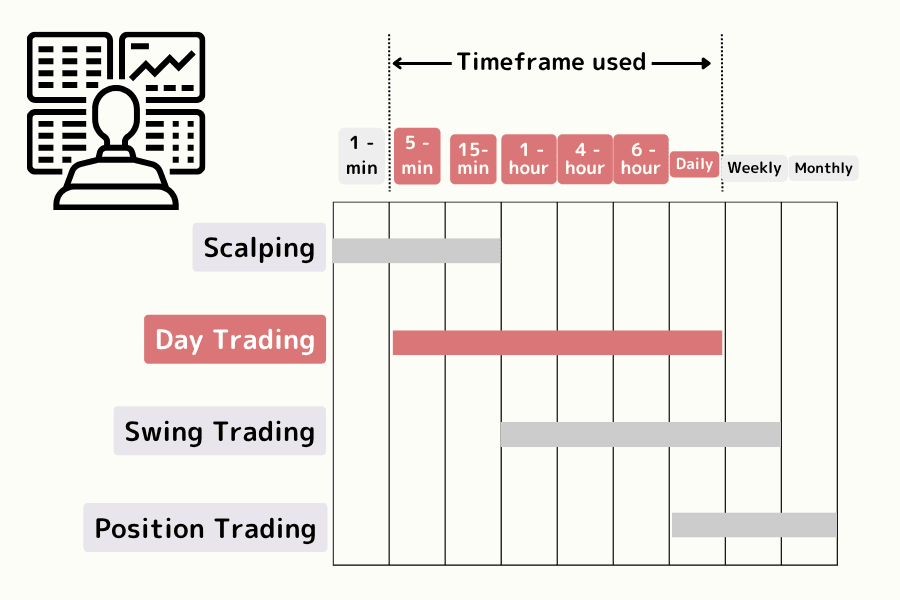
Day trading is distinct from scalping, swing trading, and position trading.
| Style | Timeframe | Pros | Cons |
|---|---|---|---|
| Scalping | 1-min to 15-min | Low risk per trade, high efficiency, no overnight | High spread costs, limited profit, constant monitoring |
| Day Trading | 5-min to daily | Low risk per trade, high efficiency, no overnight | Limited profit per trade, frequent checks needed |
| Swing Trading | 1-hour to weekly | Larger profits, less monitoring, more chances | Higher risk, overnight and weekend exposure |
| Position Trading | Daily to monthly | Large profit potential, minimal monitoring | High risk per trade, few opportunities, overnight risk |
2. Advantages of Day Trading
Day trading offers two main advantages.
Advantage 1: High Capital Efficiency
Day trading captures multiple price movements in a single day, compounding small profits quickly. Leverage lets modest capital generate meaningful returns, and funds are not tied up for long.
Advantage 2: No Overnight Swap Costs
Overnight positions can incur negative swap points or gap risk. Day trading eliminates both by closing within the session.
Example: a trader sells 100,000 USD at 0.6850, closes at 0.6820 for 300 AUD profit, and avoids roughly 50 AUD in potential swap costs by not holding overnight.
3. Disadvantages of Day Trading
Day trading also comes with challenges.
Disadvantage 1: Higher Spread Costs
Frequent trading means spread costs accumulate. While platforms advertise "commission-free" trading, spreads are a hidden cost that grows with volume.
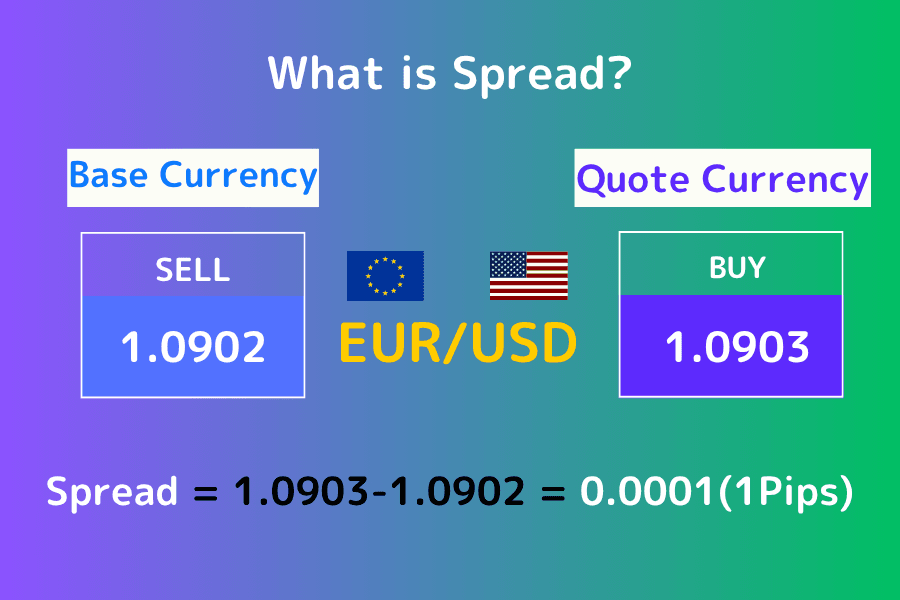
Learn More: What Is a Spread?
Disadvantage 2: Constant Monitoring Required
Day trading requires ongoing market attention, making it unsuitable for those unable to dedicate extended screen time. Prolonged monitoring can cause mental and physical fatigue.
4. Practical Day Trading Techniques
Here are two widely used day trading strategies.
Using CCI (Commodity Channel Index)
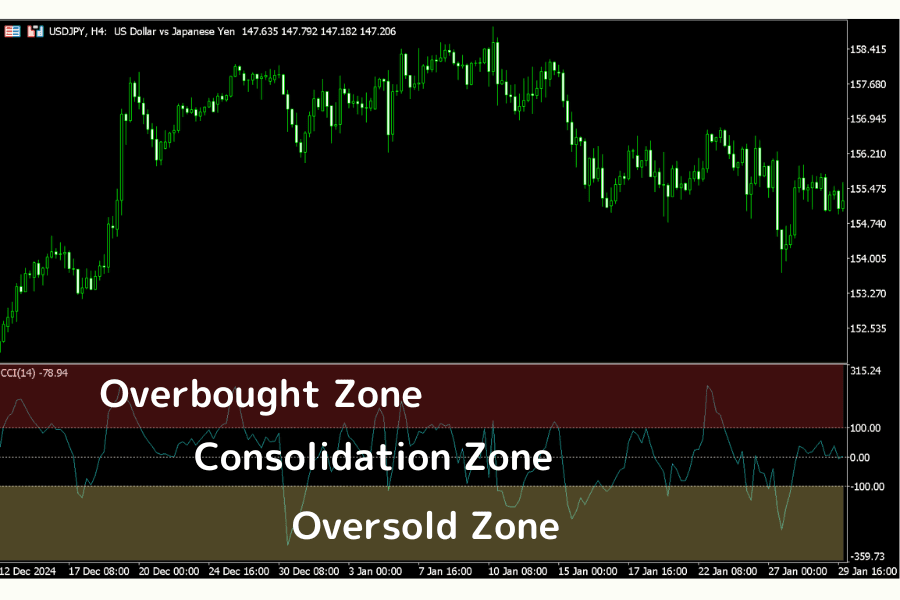
CCI measures how far price has deviated from its average, signaling overbought or oversold conditions.
- Steps:
-
Set CCI (period 20) on a 15-min or 30-min chart and confirm the trend.
-
Sell when CCI drops below +100 (overbought reversal) or buy when it rises above -100 (oversold reversal).
-
Set take-profit and stop-loss levels.
- Best for: Catching price reversals with quick entries and exits.
Learn More: CCI Indicator Explained
Using MACD
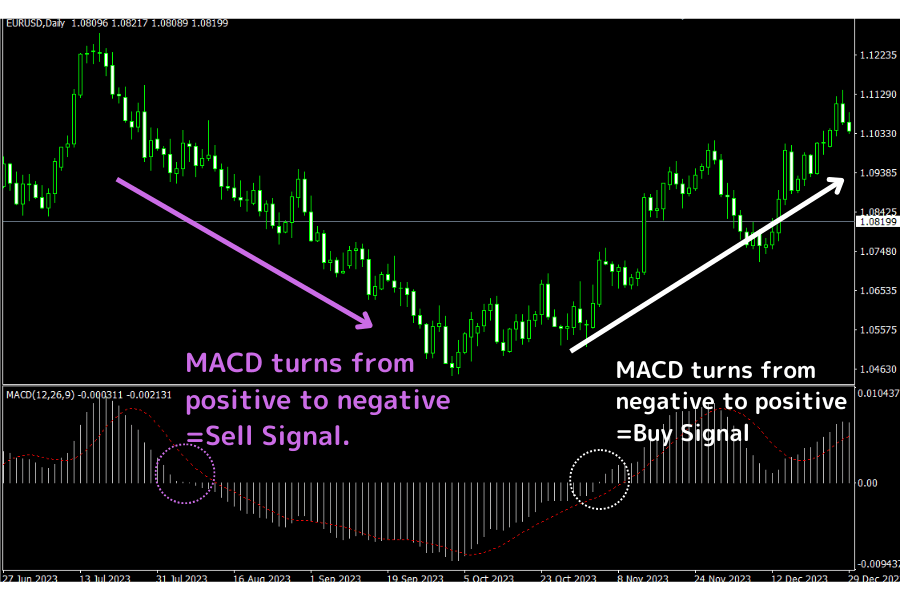
MACD combines a fast line (short-term EMA minus long-term EMA), a signal line, and a histogram to identify trend shifts and momentum.
- Steps:
-
Set MACD (12, 26, 9) on a 1-hour or 15-min chart and watch for line crossovers.
-
Buy on a golden cross (MACD above signal). Sell on a death cross (MACD below signal).
-
Set take-profit and stop-loss levels.
- Best for: Trend-following entries and confirming trade direction.
Learn More: MACD Basics
5. Day Trading Tips and Precautions
When day trading forex, keep these four key considerations in mind.
Tip 1: Assess Currency Pair Volatility
Volatility measures the magnitude and frequency of price movements. Some volatility is essential for day trading profits, but excessively volatile pairs carry greater risk for beginners.
Match pair volatility to your risk tolerance and adjust position sizes accordingly.
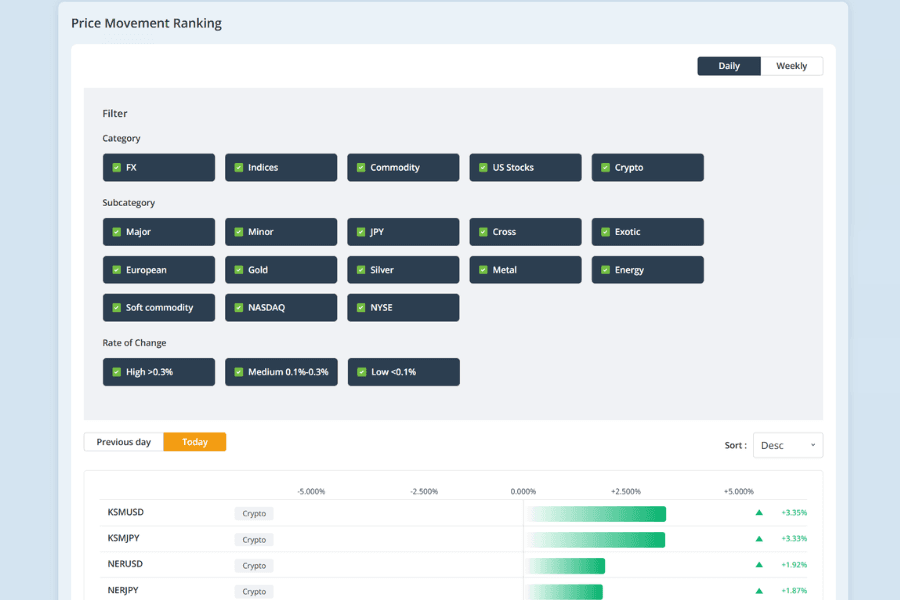
Titan FX provides daily and weekly price change rankings across forex, indices, and commodities to help traders assess volatility.
Learn More: Price Change Rankings
Tip 2: Check Currency Pair Liquidity
High-liquidity pairs offer tighter spreads and lower costs. USD/JPY and EUR/USD rank among the most traded pairs globally, with superior liquidity versus minor or exotic pairs.
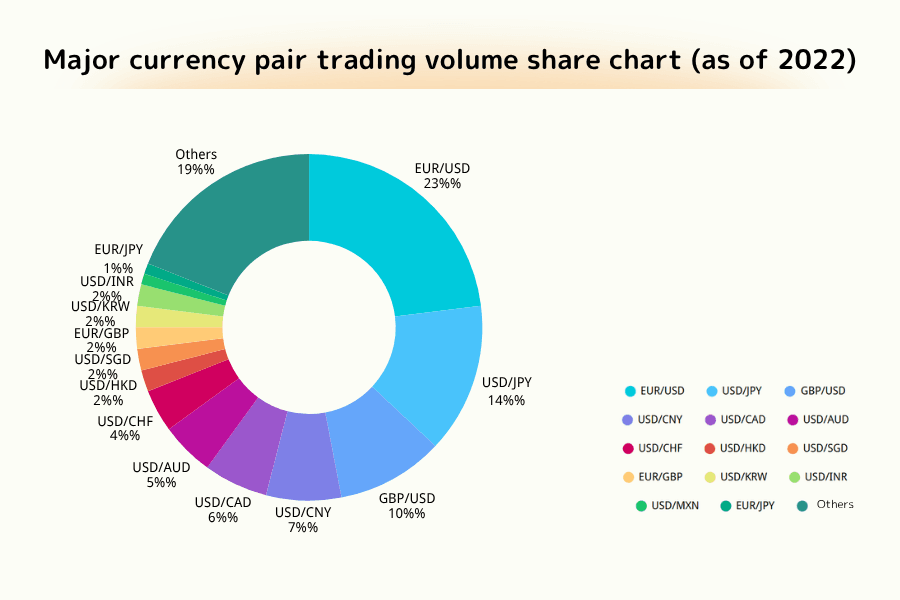
Based on BIS (Bank for International Settlements) 2022 data.
Tip 3: Handle Major Economic Releases Carefully
Releases like CPI or employment data can trigger sharp swings. Review schedules (e.g., U.S. CPI at 8:30 AM ET) and analyze expectations. Post-release surges may cause slippage.
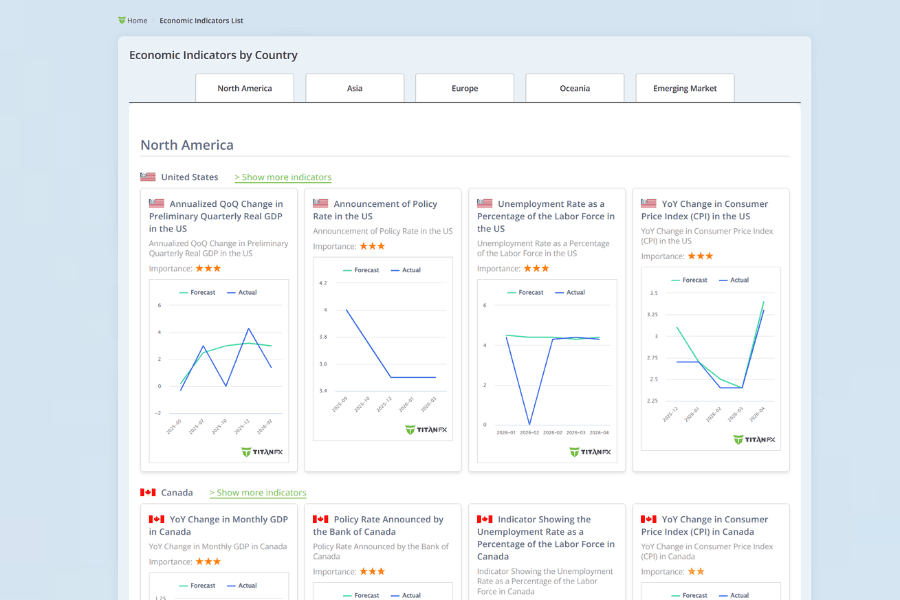
Learn More: Key Economic Indicators
Tip 4: Time Your Exits Precisely
Exits fall into two categories: taking profit (locking in gains) and stopping loss (limiting losses). To avoid letting greed or hesitation interfere:
- Pre-set both take-profit and stop-loss levels.
- Use trendlines or other technical indicators to identify optimal exit timing.
6. How Beginners Can Reduce Risks
Beginners can lower day trading risk with these six approaches.
Start with Small Positions
Begin with low leverage and modest capital, increasing position sizes gradually as you gain market familiarity.
Trade Based on Logic, Not Emotion
Every trade should have a clear rationale. Combine technical analysis (chart patterns) with fundamental analysis (economic factors) to build a learning framework. Aligning a moving average signal with a rate outlook strengthens conviction.
Always Use Stop-Losses
A stop order auto-closes at a pre-set threshold, reducing monitoring needs and the emotional burden of manual exits.
Limit Trade Frequency
Trading too often drives up spread costs. Focus on high-quality setups rather than forcing entries. Beginners should start with one to two trades per day.
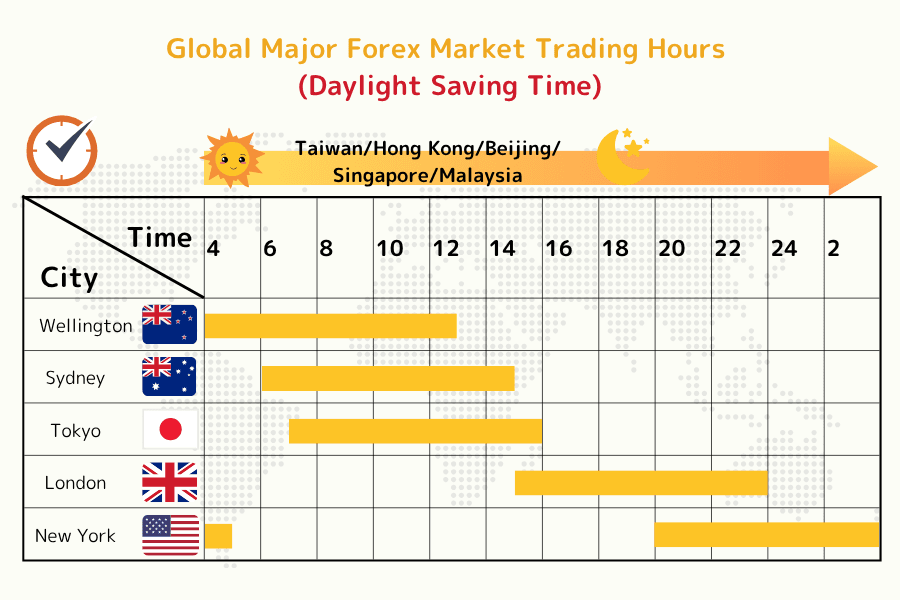
Master Active Market Hours
Target the most active sessions for optimal volatility and volume:
- 00:00-02:00 UTC: Tokyo session opening.
- 08:00-11:00 UTC: London session opening.
- 13:30-18:30 UTC: New York session opening.
These windows offer the strongest price movements and deepest liquidity.
Learn More: Forex Trading Hours Explained
Avoid Revenge Trading
Consecutive losses can trigger "revenge trading," forcing entries to recoup losses, which amplifies risk.
After three or more consecutive losses, step away and analyze before returning. A daily loss limit prevents losses from spiraling.
Learn More: How Beginners Can Start Forex Trading
7. FAQ
Common questions and answers about forex day trading.
Q1: What timeframes are commonly used in day trading?
Common choices are the 5-minute, 15-minute, 30-minute, 1-hour, 4-hour, and daily charts. Use a longer timeframe (e.g., 4-hour) for trend direction and a shorter one (e.g., 15-minute) for entries, known as multi-timeframe analysis.
Q2: Is day trading suitable for beginners?
It has both advantages and challenges. High capital efficiency and no overnight risk appeal to beginners, but frequent monitoring and technical analysis skills present a learning curve. Start small while building skills.
Q3: What kind of person is best suited to day trading?
Those with time to monitor markets, emotional discipline, and quick decision-making ability. Staying calm under volatility is essential.
Q4: If I hold a position overnight, is it still considered day trading?
Generally, no. Positions held beyond the trading day (defined by your broker's server rollover time) are typically classified as swing trading.
8. Summary
Day trading is a short-term strategy completed within hours to a single day. Its strengths are high capital efficiency and no overnight costs; its weaknesses are accumulated spread costs and the need for dedicated screen time.
Compared to other styles, day trading suits those who can devote consistent time to analysis. Start small, use stop-losses, and trade during active sessions to build skills.
Further Reading
- Forex Fundamentals
- What Is a Spread?
- Introduction to Technical Analysis
- What Is FOMC?
- Forex Trading Hours Explained
Titan FX's financial market research team produces investor education content across foreign exchange (FX), commodities, stock indices, U.S. equities, and crypto assets.
Primary Sources by Category
- Market data: BIS Triennial Survey (2022) / IMF Data
- Technical analysis: Investopedia - Day Trading / Investopedia - CCI / Investopedia - MACD
- Platform: Titan FX